Introduction
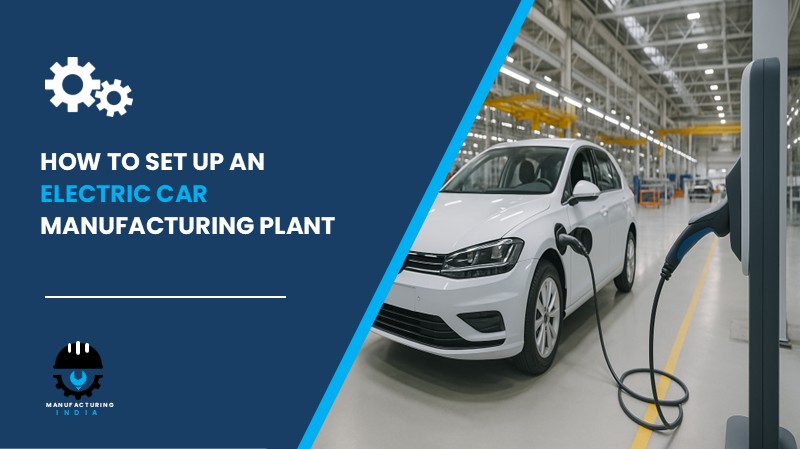
Electric vehicles (EVs) have become one of the fastest-growing segments in the global automotive industry. With rising fuel prices, stricter emission norms, and increasing interest in green mobility, the demand for electric cars continues to surge. This creates excellent opportunities for entrepreneurs, investors, and automakers looking to establish an electric car manufacturing plant.
This guide provides a clear overview of the EV industry, the step-by-step process of setting up a plant, and the key considerations needed to enter this high-growth sector.
Industry Overview
The electric vehicle market is expanding rapidly, driven by:
- Growing environmental concerns
- Government incentives and EV-friendly policies
- Advancements in battery technology
- Expanding charging infrastructure
- Rising consumer adoption of sustainable mobility solutions
Electric cars now play a crucial role in reducing carbon emissions and supporting clean transportation. As a result, new manufacturing plants are being developed across major automotive hubs to meet the growing demand for EVs across personal, commercial, and fleet applications.
Step-by-Step Process: How to Set Up an Electric Car Manufacturing Plant
Setting up an electric car manufacturing facility involves detailed planning, investment, and technical expertise. Below is a simplified step-by-step process to help guide your project.
Step 1: Conduct a Feasibility Study
Start by assessing the business potential:
- Market demand across regions
- Target customer segments
- EV models you plan to produce (compact, sedan, SUV, commercial EVs)
- Competition landscape
- Investment requirements and expected returns
- Supply chain availability (battery suppliers, component vendors)
A feasibility study helps you evaluate risks, opportunities, and long-term profitability.
Step 2: Choose an Ideal Location
An EV plant requires a strategic location with:
- Excellent transportation connectivity
- Access to skilled automotive workers
- Proximity to parts and battery suppliers
- Availability of water, electricity, and industrial infrastructure
- Supportive government incentives or tax benefits
Industrial zones, automotive clusters, and EV-focused regions are ideal for long-term operations.
Request for a Sample Report: https://www.imarcgroup.com/electric-car-manufacturing-plant-project-report/requestsample
Step 3: Plan the Plant Layout
Electric car plants require specialized areas for:
- Body and chassis fabrication
- Battery assembly and integration
- Electric motor assembly
- Power electronics (inverters, controllers)
- Paint shop
- Final assembly line
- Quality testing and inspection
- Warehousing and logistics
- R&D and prototype development
A well-designed layout improves automation, safety, and production efficiency.
Step 4: Procure Machinery and Equipment
EV manufacturing involves precision engineering and advanced technology. Key machinery includes:
- Robotic welding systems
- Stamping and fabrication machines
- Electric motor winding equipment
- Battery module and pack assembly equipment
- Adhesive and sealing systems
- Paint shop systems
- Automated assembly line conveyors
- Vehicle testing rigs (range tests, battery diagnostics, crash safety)
Automation and robotics enhance quality and reduce labor dependency.
Step 5: Source Raw Materials and Components
Electric car manufacturing relies on a wide network of suppliers. Key components include:
- Lithium-ion battery cells or modules
- Electric motors and controllers
- Vehicle body and chassis parts
- High-strength steel and lightweight aluminum
- Wiring harnesses
- Power electronics
- Tires, suspension systems, and interior components
Building long-term supplier relationships ensures cost efficiency and quality.
Step 6: Implement the Manufacturing Process
The EV production process typically includes:
1. Body Fabrication
Stamping, welding, and forming structural components.
2. Electric Motor Assembly
Winding stators, assembling rotors, and integrating motor controllers.
3. Battery Pack Assembly
Cell sorting, module assembly, cooling integration, and battery management system (BMS) installation.
4. Powertrain Integration
Combining the motor, battery, inverter, and transmission system.
5. Vehicle Assembly
Interior installation, wiring harness assembly, exterior components, and final build.
6. Paint Shop
Coating, painting, and finishing for durability and appearance.
7. Quality Testing
Performance tests, battery safety checks, range analysis, braking, and vehicle diagnostics.
A seamless process ensures high efficiency and consistent product quality.
Key Aspects of EV Manufacturing Plants
Setting up an EV plant involves several advanced and specialized aspects:
1. Battery Technology Integration
Battery assembly lines require temperature control, precision automation, and safety protocols.
2. EV-Specific Powertrain
Electric motors, inverters, and power electronics must meet strict performance standards.
3. Lightweight Materials
EVs use aluminum, composites, and high-strength steel to improve efficiency and range.
4. Robotics and Automation
Modern EV plants rely heavily on robotic assembly for precision and speed.
5. Environmental Management
EV production emphasizes recycling, waste reduction, and clean energy.
6. Digital Manufacturing
IoT, AI, and data analytics optimize production lines and quality monitoring.
Key Considerations for Setting Up a Plant
Before launching your EV manufacturing unit, analyze the following:
1. Regulatory Compliance
Ensure compliance with:
- Automotive safety standards
- Battery packaging and transport rules
- Environmental clearances
- Worker safety guidelines
2. Technology and R&D Requirements
EV manufacturing demands continuous innovation in battery, powertrain, and design.
3. Skilled Workforce
Electrical engineers, EV technicians, robotics specialists, and automotive experts are essential.
4. Supply Chain Stability
Battery availability and semiconductor supply are critical to EV production.
5. Capital Investment
Machinery, robotics, battery lines, and automated systems represent major CAPEX.
6. After-Sales Service and Dealer Network
Strong service infrastructure helps build brand reliability.
Setting up an electric car manufacturing plant is a high-potential opportunity in an industry transitioning toward sustainable mobility. With the right planning, technology, skilled workforce, and strong supplier partnerships, manufacturers can establish a competitive EV production facility.
Whether you aim to build compact electric cars or fleet-ready commercial EVs, careful project planning and investment evaluation are essential for long-term success.
About the Author