Introduction
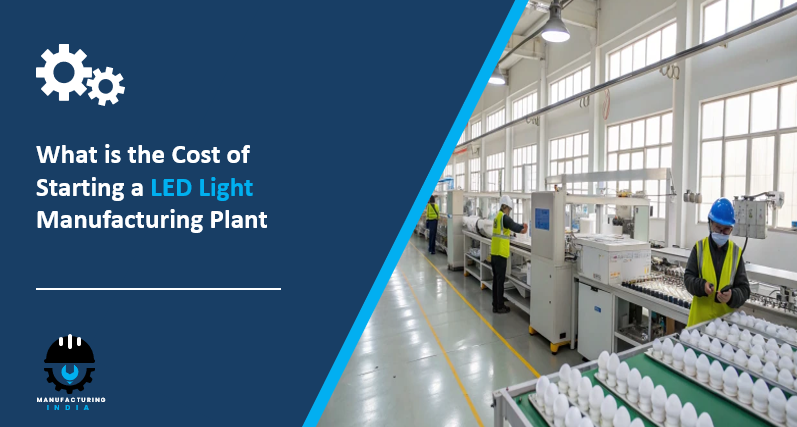
The LED light manufacturing industry represents one of the fastest-growing segments in the global lighting market, driven by increasing energy efficiency demands, environmental concerns, and government initiatives promoting sustainable lighting solutions. As traditional incandescent and fluorescent lighting gradually phases out, LED technology has emerged as the dominant lighting solution for residential, commercial, industrial, and public infrastructure applications. Starting an LED light manufacturing plant requires careful planning, technical expertise, substantial capital investment, and understanding of rapidly evolving technology standards. This venture demands entrepreneurs to balance innovation with cost efficiency while maintaining quality standards in an increasingly competitive marketplace driven by technological advancement and price pressures.
Step 1: Market Research and Feasibility Analysis
Understanding market dynamics forms the foundation of any successful LED manufacturing venture. Begin by analyzing lighting consumption patterns in your target region, examining factors like replacement rates, new construction activity, infrastructure development projects, and government lighting modernization programs. Study the competitive landscape thoroughly, identifying major domestic and international manufacturers, their market shares, product portfolios, pricing strategies, and distribution strengths. Research consumer and commercial segments ranging from budget to premium categories, understanding which niches offer the most viable entry opportunities.
Evaluate technological trends carefully, as LED technology continues evolving rapidly with improvements in efficiency, color rendering, smart features, and miniaturization. Examine regulatory environments including energy efficiency standards, safety certifications, quality marks, and labeling requirements that will shape your product development. Consider whether to focus on general lighting products, specialty applications, smart lighting systems, or industrial lighting solutions. Assess import competition levels, local manufacturing incentives, and whether domestic production offers advantages over importing finished products considering factors like tariff structures, transportation costs, and customization capabilities.
Step 2: Business Plan Development
Crafting a comprehensive business plan provides the strategic roadmap for your manufacturing venture. Define your production capacity based on market opportunities, capital availability, equipment capabilities, and growth projections. LED manufacturing plants range from small assembly operations focusing on bulb assembly to large integrated facilities producing LED chips, drivers, fixtures, and complete lighting systems. Your capacity decision influences equipment selection, facility size, workforce requirements, automation levels, and overall investment magnitude.
Outline your product strategy including LED product categories, wattage ranges, color temperatures, form factors, and feature sets. Consider whether to focus on bulbs, tube lights, panel lights, street lights, decorative fixtures, or specialized industrial lighting. Develop brand concepts and product positioning that differentiate your offerings in a crowded marketplace. Include detailed financial projections covering capital expenditures for machinery and infrastructure, operating costs including materials and labor, revenue forecasts based on realistic market penetration, profitability timelines, working capital requirements, and return on investment calculations.
Step 3: Legal Structure and Licensing
Establishing proper legal foundations ensures smooth business operations and regulatory compliance. Select an appropriate business structure considering liability protection, tax implications, ownership arrangements, and capital raising needs. Most LED manufacturers operate as private limited companies or corporations providing liability shields and facilitating institutional investment. Complete business registration with relevant authorities, obtaining corporate charters, tax identification numbers, import-export codes, and basic business permits.
Secure necessary manufacturing licenses and quality certifications that establish credibility in the marketplace. Applications typically require facility documentation, quality management systems, product testing capabilities, and technical competence demonstrations. Pursue relevant certifications like quality management standards, energy efficiency certifications, safety marks, and environmental compliance registrations. Many markets require specific product certifications before market entry, making early certification planning essential. Maintain ongoing compliance with evolving standards, periodic testing requirements, and regulatory updates throughout your operational life.
Step 4: Location and Land Selection
Choosing the optimal location significantly impacts operational efficiency and logistics costs. Prioritize areas with established industrial infrastructure including reliable electricity supply, transportation networks, and skilled workforce availability. Many regions offer industrial parks with ready infrastructure and government incentives for electronics and lighting manufacturers. Verify zoning permissions explicitly allow electronics manufacturing and that environmental clearances are obtainable for your planned operations.
Consider proximity to component suppliers if building an integrated supply chain, though many LED components are sourced globally. Evaluate transportation access for both raw material receipt and finished product distribution. Highway connectivity enables efficient logistics while proximity to ports benefits import-dependent operations or export-focused strategies. Assess utility infrastructure carefully, as LED manufacturing requires stable electrical power for automated production lines, clean rooms for chip processing if applicable, and adequate water supply for cooling systems. Climate-controlled facilities may be necessary depending on your technology choices and quality requirements.
Request a Sample Report for In-Depth Market Insights: https://www.imarcgroup.com/led-light-manufacturing-plant-project-report/requestsample
Step 5: Plant Layout and Infrastructure Development
Designing an efficient facility layout optimizes production flow while meeting technical and quality requirements. Work with consultants experienced in electronics or lighting manufacturing facility planning. The layout should separate key functional areas including component receiving and storage, LED assembly lines, driver circuit assembly, housing fabrication or processing, final assembly, testing and quality control, packaging, and finished goods storage. Arrange these areas to minimize material handling distances while maintaining appropriate segregation between different processing stages and quality zones.
Storage areas require appropriate climate control and inventory management systems for temperature-sensitive components like LED chips and electronic drivers. Design these spaces with adequate capacity for your production requirements plus safety stock buffers accounting for import lead times if sourcing internationally. Manufacturing areas house SMT machines for circuit assembly, LED mounting equipment, housing assembly stations, and packaging lines. These spaces need proper lighting for quality inspection, controlled environments protecting sensitive electronics, and efficient material flow patterns supporting lean manufacturing principles.
Step 6: Machinery and Equipment Procurement
Acquiring appropriate production machinery represents your largest capital investment and fundamentally determines manufacturing capabilities. LED bulb assembly lines constitute the production core, integrating LED modules, driver circuits, heat sinks, and housings into finished products. Modern automated lines achieve high throughput with consistent quality, while semi-automated systems offer flexibility for diverse product ranges at lower capital cost. Select equipment matching your production volume requirements, product complexity, automation preferences, and quality objectives.
SMT equipment for driver circuit assembly enables in-house electronics manufacturing, improving cost control and supply chain reliability. These systems place and solder electronic components onto printed circuit boards with precision and speed. Testing equipment including photometric integrating spheres, electrical parameter testers, and aging test fixtures ensure product quality and compliance with specifications. Automation levels vary widely, from manual assembly operations suitable for lower volumes to fully automated systems capable of producing thousands of units daily with minimal labor.
Step 7: Raw Material Supply Chain Establishment
Building reliable raw material supply chains ensures consistent production quality and cost competitiveness. LED chips represent your critical component, typically sourced from specialized semiconductor manufacturers. Establish relationships with reputable chip suppliers, negotiating contracts specifying specifications, quality grades, delivery schedules, and pricing mechanisms. Many manufacturers maintain dual sourcing strategies to mitigate supply disruptions and leverage competitive pricing.
Driver circuits, heat sinks, housings, lenses, wiring components, and packaging materials represent significant ongoing purchases requiring careful supplier selection. LED drivers must match your lamp specifications for power, voltage, current regulation, and efficiency. Aluminum heat sinks ensure proper thermal management critical for LED longevity. Housing materials vary from plastic for cost-sensitive products to metal for premium or high-power applications. Establish quality agreements with suppliers defining acceptance criteria, testing protocols, and non-conformance procedures ensuring incoming material quality.
Step 8: Workforce Recruitment and Training
Assembling a skilled workforce is essential for achieving production targets and maintaining quality standards. Develop an organizational structure encompassing production management, assembly operations, quality control, maintenance engineering, product development, supply chain management, and administrative functions. LED manufacturing requires specialized skills in electronics assembly, optical systems, thermal management, and quality testing that necessitate comprehensive training programs.
Recruit experienced professionals for leadership positions including plant manager, production manager, quality manager, and technical manager. Individuals with electronics or lighting industry backgrounds bring valuable expertise in managing technology challenges and quality requirements. Assembly line operators require training in handling sensitive electronic components, following standard operating procedures, quality inspection techniques, and equipment operation. Many equipment manufacturers provide operator training during installation, supplemented by ongoing internal skill development programs.
Step 9: Quality Control and Regulatory Compliance
Implementing rigorous quality control systems ensures product reliability and market acceptance. Establish comprehensive testing facilities equipped with instruments measuring luminous flux, power consumption, color temperature, color rendering index, power factor, and lifetime characteristics. Develop detailed testing protocols covering incoming component inspection, in-process monitoring, and finished product validation. Test samples from production batches verify conformance with specifications and regulatory standards before market release.
Create standard operating procedures documenting all manufacturing processes, quality control methods, and compliance activities. These procedures provide consistent guidance to operators and demonstrate systematic approaches during customer audits or certification assessments. Maintain detailed production records tracking component usage, assembly parameters, test results, and traceability information. Implement continuous improvement programs identifying quality issues, analyzing root causes, and implementing corrective actions that enhance product reliability and manufacturing efficiency.
Step 10: Marketing and Distribution Strategy
Developing effective go-to-market strategies is critical for establishing market presence and achieving sales targets. Focus on building distribution networks encompassing electrical wholesalers, lighting retailers, contractor channels, project specifiers, and direct institutional customers. Different customer segments require tailored approaches, from retail packaging and point-of-sale materials for consumer channels to technical specifications and project support for commercial customers.
Brand positioning requires clear differentiation in a competitive marketplace. Investment in product quality, innovative features, energy efficiency certifications, and warranty programs builds brand credibility. Marketing activities include trade show participation, contractor training programs, architect and designer outreach, online presence development, and technical literature creation. Consider pricing strategies carefully, balancing margin requirements against competitive pressures while positioning products appropriately across quality tiers. Digital marketing increasingly influences lighting purchasing decisions, making online visibility and e-commerce capabilities important for market success.
About the Author