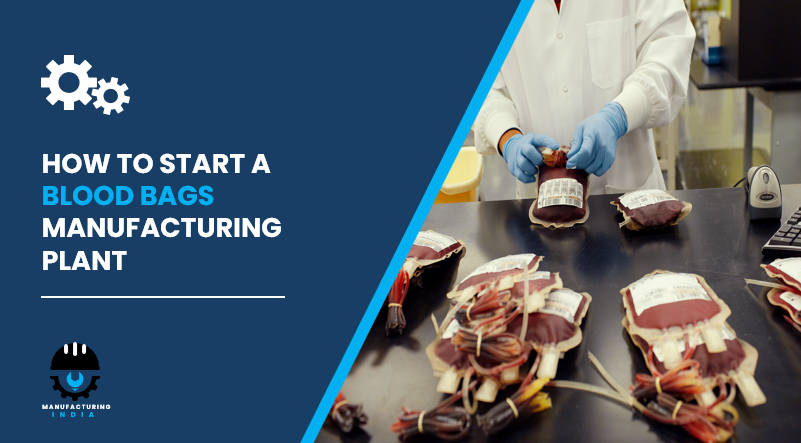
Setting up a blood bags manufacturing plant in India presents a highly strategic investment opportunity as global demand for safe blood collection, storage, and transfusion solutions continues to grow across hospitals, blood banks, surgical centers, and emergency care facilities. Blood bags have become indispensable medical devices in modern healthcare due to their critical role in ensuring contamination-free blood handling, component separation, and safe transfusion practices.
“With a rapidly expanding global market projected to grow at a CAGR of 7.38% through 2033, increasing demand from surgical procedures, trauma care, and chronic disease management, and strong profitability margins of 40–50%, blood bags manufacturing offers one of the most financially viable and socially impactful opportunities in the medical devices sector — with a break-even window of 2–5 years.”
What is a Blood Bag?
A blood bag is a sterile, flexible medical-grade plastic container specifically designed for the collection, storage, transportation, and transfusion of blood and its components, including whole blood, red blood cells (RBCs), plasma, platelets, and cryoprecipitate. Manufactured primarily from medical-grade polyvinyl chloride (PVC) compounded with plasticizers such as di(2-ethylhexyl) phthalate (DEHP) or newer non-DEHP alternatives, blood bags are engineered to maintain the biological integrity and sterility of blood products throughout their shelf life.
Blood bags are available in various configurations including single, double, triple, quadruple, and penta blood bag systems, each designed for specific clinical requirements. They are equipped with anticoagulant-preservative solutions such as CPDA-1, CPD, and SAGM to prevent clotting and extend the storage life of collected blood. Integrated components include donor tubing, transfer tubing, needle assemblies, clamps, transfusion ports, and in-line leukoreduction filters, depending on the system configuration.
Globally, blood bags are classified as Class II or Class III medical devices and are subject to stringent regulatory oversight by authorities including the U.S. FDA, European Medicines Agency (EMA), Central Drugs Standard Control Organisation (CDSCO) in India, and other national health regulators. The growing emphasis on voluntary blood donation programs, component therapy, and transfusion safety is further accelerating demand for high-quality blood bags across both developed and developing healthcare markets.
Request a Sample Report for In-Depth Market Insights: https://www.imarcgroup.com/blood-bags-manufacturing-plant-project-report/requestsample
Cost of Setting Up a Blood Bags Manufacturing Plant in India
The blood bags manufacturing plant cost depends on several parameters including production capacity, technology configuration, plant location, cleanroom classification, level of automation, raw material sourcing strategy, sterilization method, and regulatory compliance requirements. Here is a structured breakdown of all major cost components:
1. Capital Expenditure (CapEx)
The total capital investment in a blood bags manufacturing plant typically covers the following:
Land and Site Development
This includes land acquisition, boundary development, land registration charges, and basic site preparation. Cost varies significantly depending on whether the land is in a designated industrial zone, medical device park, Special Economic Zone (SEZ), or a privately purchased plot. Proximity to healthcare distribution networks, raw material suppliers, and key transportation routes is a critical factor in site selection.
Civil Works and Construction
Building costs cover the main production facility with ISO Class 7/Class 8 cleanroom environments, raw material warehousing, quality control and microbiology laboratory, sterilization area, administrative block, utility area, and worker amenities. Construction must comply with Good Manufacturing Practice (GMP) norms including HVAC systems with HEPA filtration, positive pressure zones, controlled humidity and temperature, epoxy flooring, and contamination prevention infrastructure.
Machinery and Equipment
This is the single largest component of CapEx. Key machinery required for a blood bags manufacturing plant includes:
- PVC Film Extrusion Lines (Medical-Grade Extruders)
- High-Frequency (RF) Welding and Bag Forming Machines
- Tube Extrusion and Cutting Systems
- Injection Molding Machines (for ports, clamps, needle covers)
- Automated Tube Welding and Assembly Lines
- Anticoagulant Solution Preparation and Filling Systems
- Sealing and Labeling Machines
- Sterilization Equipment (Autoclave / Ethylene Oxide / Gamma Irradiation)
- Leak Testing and Quality Inspection Systems
- Cleanroom HVAC and Environmental Monitoring Systems
- Automated Packaging Lines
- Process Control and Automation Systems (PLC/SCADA)
Machinery costs represent the largest share of overall capital expenditure, reflecting the high degree of precision engineering, cleanroom-compatible materials, sterilization validation, and regulatory compliance requirements involved in blood bag manufacturing.
Other Capital Cost
These include pre-operative expenses, commissioning charges, import duties (if machinery is sourced internationally), utilities installation, fire safety systems, cleanroom validation and qualification costs, Effluent Treatment Plant (ETP) setup, environmental management infrastructure, and regulatory certification expenses (ISO 13485, GMP, CE marking).
2. Operational Expenditure (OpEx)
Once the plant is commissioned, the ongoing cost structure is dominated by a few key components:
Raw Material Cost (Medical-Grade PVC, Plasticizers, and Components): 40–50% of Total OpEx
Medical-grade PVC resin and plasticizers (DEHP or non-DEHP alternatives such as BTHC, TOTM, or DINCH) are the primary raw materials and account for the largest portion of operating expenses. Additional materials include anticoagulant-preservative solutions (CPDA-1, CPD, SAGM), tubing compounds, injection-molded components (ports, clamps, needle assemblies), labels, and sterile packaging materials. The cost of anticoagulant solutions, though smaller in volume, is critical due to pharmaceutical-grade purity requirements.
Utility Cost: 10–15% of Total OpEx
Utilities include electricity (heavily consumed by extruders, injection molding machines, RF welding equipment, HVAC systems, and sterilization equipment), water (used in cooling systems, solution preparation, and cleaning processes), steam generation for autoclave sterilization, and compressed air supply. Cleanroom operation, including continuous HEPA filtration and environmental monitoring, is a significant ongoing utility expense. Energy-efficient equipment and heat recovery systems can help reduce utility costs over time.
Other Operating Costs
The remaining budget covers transportation, sterile packaging materials, salaries and wages (including trained cleanroom operators and quality personnel), maintenance, depreciation, insurance, regulatory compliance costs (periodic audits, re-certification), sterilization validation, environmental compliance, taxes, and miscellaneous overhead.
3. Plant Capacity
The proposed manufacturing facility can be designed across a range of production scales:
- Small-Scale Operations: 1–3 million units annually — suitable for regional healthcare markets, specialized configurations, and niche clinical applications with batch production and flexible equipment.
- Mid-Scale Plants: 5–15 million units annually — designed for national markets with semi-continuous production, moderate automation, diversified product portfolio covering single to quadruple bag systems, and multi-shift operations.
- Large-Scale Plants: 20+ million units annually — built for national or export markets with continuous production processes, high automation, multiple parallel production lines, comprehensive product portfolio spanning all configurations, and integrated sterilization facilities.
Profitability significantly improves with higher capacity utilization. Larger plants benefit from economies of scale in raw material procurement, energy efficiency, sterilization costs per unit, and distribution logistics.
4. Profit Margins and Financial Projections
- Gross Profit: 40-50%
- Net Profit: 20-30%
- Break-Even Period: 2 to 5 years, depending on production scale, market positioning, regulatory approval timelines, product mix, and sales efficiency.
Financial projections must account for capital investment, operating costs, capacity utilization rates, pricing trends, and demand outlook. A thorough analysis should also include sensitivity analysis, Net Present Value (NPV), Internal Rate of Return (IRR), and Payback Period.
Why Set Up a Blood Bags Manufacturing Plant in India?
The global market environment presents a uniquely favorable opportunity for establishing a blood bags manufacturing facility:
Surging Healthcare and Transfusion Demand
Blood bags are experiencing accelerating demand driven by rising surgical procedures, growing trauma and emergency care requirements, increasing prevalence of chronic and hematological disorders such as anemia, hemophilia, and leukemia, and an aging global population requiring more frequent medical interventions and transfusions.
Expanding Blood Donation Programs and Infrastructure
Government initiatives, non-governmental organizations, and international health bodies such as the World Health Organization (WHO) are actively promoting voluntary blood donation campaigns worldwide. The establishment of new blood banks, blood collection centers, and mobile donation units is creating sustained demand for high-quality blood bag systems across both developed and emerging markets.
Shift Toward Component Therapy
Modern transfusion medicine is rapidly shifting from whole blood transfusions to component-based therapy, where a single blood donation is separated into multiple components — red blood cells, platelets, plasma, and cryoprecipitate — to treat multiple patients. This trend is driving demand for multi-bag systems (double, triple, quadruple, and penta configurations) with integrated filters and separation capabilities.
Healthcare Infrastructure Expansion in Emerging Markets
Rapid expansion of hospitals, surgical centers, and blood banking facilities in emerging economies across Asia-Pacific, Africa, the Middle East, and Latin America is creating significant new demand. Countries investing heavily in universal healthcare coverage and blood safety programs represent high-growth markets for blood bag manufacturers.
Technological Advancements and Safety Innovations
Advancements in blood bag technology — including RFID-enabled traceability, pathogen reduction systems, DEHP-free materials, advanced leukoreduction filters, and smart inventory management solutions — are creating premium product segments with higher margins and differentiation opportunities for manufacturers.
Manufacturing Process Overview
The blood bags manufacturing process involves multiple precision-controlled stages conducted within cleanroom environments to ensure sterility and product integrity. The production is divided into several key operations:
- PVC Compounding and Film Extrusion — Medical-grade PVC resin is compounded with plasticizers (DEHP or non-DEHP alternatives), stabilizers, and lubricants. The compounded material is then extruded into thin, flexible sheets of controlled thickness and clarity using precision extrusion lines.
- Bag Forming and RF Welding — The extruded PVC sheets are cut to size and formed into blood bag shapes using high-frequency (RF) welding machines, which provide strong, leak-proof seals without leaving rough edges. Transfusion ports, donor tubes, and transfer tubes are precisely positioned and welded during this step.
- Component Assembly — Injection-molded components including transfusion ports, needle covers, clamps, and connectors are assembled into the bag system. Donor and transfer tubing are attached using automated tube welding equipment.
- Anticoagulant Solution Filling — Sterile anticoagulant-preservative solutions (CPDA-1, CPD, SAGM) are prepared under controlled pharmaceutical conditions and filled into the blood bags using automated filling and sealing systems.
- Sterilization — Assembled and filled blood bags are sterilized using steam autoclaving (the most common method for blood bags with anticoagulant solutions), ethylene oxide (ETO) gas, or gamma irradiation depending on the product configuration and regulatory requirements.
- Quality Inspection and Testing — Finished blood bags undergo rigorous quality control testing including leak testing, burst pressure testing, sterility testing, pyrogen testing, cytotoxicity evaluation, and visual inspection to ensure compliance with international standards.
- Labeling and Packaging — Blood bags are labeled with essential information including lot numbers, expiration dates, anticoagulant type, and regulatory markings. They are then sealed in sterile outer packaging for distribution.
Key Applications of Blood Bags
Blood bags serve a wide variety of healthcare and clinical applications:
- Blood Collection and Donation: Whole blood collection at blood banks, donation centers, and mobile blood drives for voluntary and replacement donor programs.
- Component Separation and Storage: Separation of whole blood into red blood cells, platelet concentrates, fresh frozen plasma, and cryoprecipitate using multi-bag systems.
- Blood Transfusion: Safe administration of blood and blood components during surgeries, trauma care, cancer treatment, organ transplants, and chronic disease management.
- Plasma Collection and Fractionation: Collection and processing of plasma for therapeutic use and fractionation into albumin, immunoglobulins, and clotting factor concentrates.
- Cord Blood Banking: Collection and cryogenic storage of umbilical cord blood stem cells for future therapeutic applications using specialized blood bag systems.
- Emergency and Military Medicine: Field-deployable blood collection and storage solutions for disaster response, military operations, and remote healthcare settings.
Global Market Outlook
The global blood bags market size was valued at USD 335.67 Million in 2025. According to IMARC Group estimates, the market is expected to reach USD 637.12 Million by 2034, exhibiting a CAGR of 7.38% from 2026 to 2034. This sustained growth is driven by increasing demand for blood transfusions, rising prevalence of chronic and haematological diseases, expanding blood donation infrastructure, growing surgical and trauma care volumes, advancements in component therapy and blood processing technologies, and expanding healthcare infrastructure in emerging markets.
North America dominated the market with approximately 40% revenue share in 2024, supported by established donation networks, high surgical volumes, and early adoption of advanced pathogen reduction and traceability technologies. Asia-Pacific is the fastest-growing region, driven by expanding healthcare infrastructure, government blood safety programs, and rising voluntary donation rates.
Leading global players in this industry include:
- Fresenius Kabi
- Terumo Corporation
- Macopharma
- Grifols S.A.
- Haemonetics Corporation
Timeline to Start a Blood Bags Manufacturing Plant
Setting up a blood bags manufacturing plant from ideation to commissioning typically requires 18 to 36 months. This covers:
- Feasibility study and detailed project report (DPR) preparation
- Land acquisition and site development
- Environmental impact assessment and regulatory approvals
- Cleanroom design, plant layout, and engineering
- Machinery procurement and installation
- Cleanroom validation and qualification (IQ/OQ/PQ)
- Utility setup and infrastructure commissioning
- Sterilization validation and process qualification
- Trial production, biocompatibility testing, and quality verification
- Regulatory submission and product certification (ISO 13485, CE, FDA 510(k), CDSCO)
- Commercial production launch
Licenses and Regulatory Requirements
Starting a blood bags manufacturing unit requires several approvals, which may vary by country and jurisdiction, including:
- Business registration and incorporation
- Factory License under applicable labor and manufacturing laws
- Medical Device Manufacturing License (e.g., CDSCO License in India, FDA 510(k) in the USA)
- Environmental Clearance from relevant pollution control authorities
- Fire Safety Certification (NOC)
- ISO 13485: Medical Device Quality Management System Certification
- ISO 14001: Environmental Management System Certification
- CE Marking (for European Union markets) under MDR 2017/745
- Good Manufacturing Practice (GMP) Compliance Certification
- Biocompatibility Testing Compliance (ISO 10993)
- Sterilization Validation Standards (ISO 11135 for ETO, ISO 11137 for Gamma)
- Occupational Health and Safety Certifications (ISO 45001)
- Drug and Cosmetics Act Compliance (where applicable)
Key Challenges to Consider
Before investing, entrepreneurs and investors should be aware of the common challenges in this business:
High Capital Requirements:
Initial CapEx for cleanroom construction, precision medical device manufacturing equipment, sterilization infrastructure, and regulatory certification is significant, especially for mid to large-scale plants meeting international standards.
Stringent Regulatory Compliance:
Blood bags are classified as critical medical devices subject to rigorous regulatory oversight. Meeting FDA, CE, CDSCO, ISO 13485, and GMP requirements demands continuous investment in quality management systems, documentation, trained personnel, periodic audits, and sterilization validation.
Raw Material Price Volatility:
Medical-grade PVC resin and plasticizer prices are linked to petrochemical supply chains and crude oil markets. Global fluctuations in raw material costs can directly impact production economics and profit margins, particularly for manufacturers dependent on imported materials.
Competition:
The market features established global medical device companies with significant production capacities, strong distribution networks, and entrenched hospital and blood bank relationships. New entrants must develop a clear differentiation strategy through product innovation, regulatory excellence, competitive pricing, or regional market focus.
Cleanroom and Sterility Management:
Maintaining consistent cleanroom conditions, sterilization validation, and contamination-free production requires highly trained operators, robust environmental monitoring systems, and disciplined adherence to standard operating procedures. Any sterility breach can result in product recalls, regulatory penalties, and reputational damage.
Frequently Asked Questions
The following questions are answered in the report:
- How much does it cost to set up a blood bags manufacturing plant?
- Is blood bags manufacturing a profitable business in 2026?
- What machinery and equipment are required for a blood bags manufacturing plant?
- What licenses and approvals are required to start a blood bags manufacturing facility?
- How long does it take to commission a blood bags manufacturing plant?
- What is the best location to set up a blood bags manufacturing plant?
- What government incentives are available for medical device manufacturers?
- What is the break-even period for a blood bags manufacturing plant?
- What are the ISO 13485 and GMP compliance requirements for blood bag production?
- What are the key raw materials and their sourcing strategies for blood bags manufacturing?
Key Takeaways for Investors
The blood bags manufacturing industry represents a stable, socially impactful, and financially attractive investment opportunity backed by growing global demand driven by expanding healthcare infrastructure, rising surgical volumes, increasing blood donation programs, and advancing transfusion medicine practices. With gross margins of 18–28% and a break-even window of 2–5 years, a well-planned blood bags manufacturing plant cost remains competitive and financially viable across plant capacities. The convergence of component therapy adoption, healthcare infrastructure expansion in emerging markets, technological innovation in traceability and safety, and sustained government support for blood safety programs creates a robust and diversified revenue base for blood bag manufacturers entering or expanding in this market.
About the Author