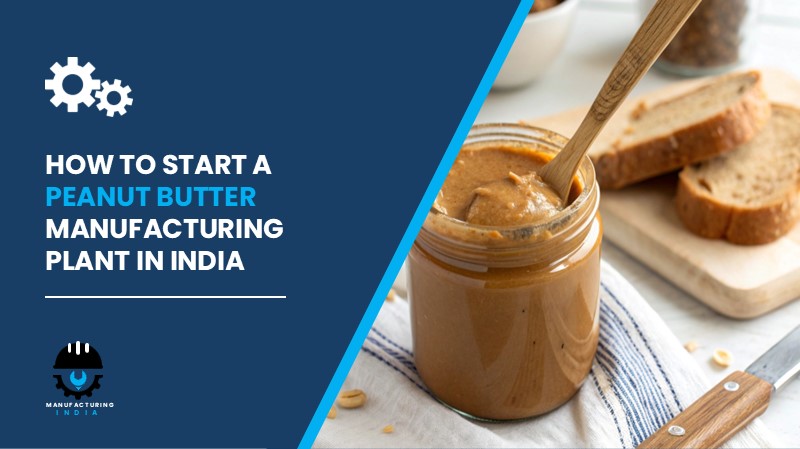
Setting up a peanut butter manufacturing plant in India presents a compelling investment case as the country rapidly emerges as one of the most cost-competitive and high-demand destinations for food processing and plant-based product manufacturing. Driven by booming demand from the food and beverages, health and nutritional applications, bakery, confectionery, and foodservice industries, peanut butter has become an increasingly vital part of India’s consumer economy.
“With over 1.4 billion consumers, a rapidly urbanizing population, make in India policy support, and a booming health food and FMCG sector, India offers one of the most financially attractive environments for peanut butter manufacturing — with a break-even window of 2–4 years and strong growth driven by rising plant-protein awareness.”
What is Peanut Butter?
Peanut butter is a semi-solid paste produced by grinding roasted peanuts into a fine texture, usually stabilized with emulsifiers and in some cases sweetened or salted. It is a nutrient-dense product that contains proteins, lipids (predominantly unsaturated fatty acids), and bioactive compounds, rendered stable and spreadable through colloidal dispersion. Globally respected regulatory institutions, including the U.S. FDA, recognize peanut butter as safe for consumption. In India, the growing push for plant-based, high-protein, and natural food products is further accelerating peanut butter demand across both urban and semi-urban markets.
Cost of Setting Up a Peanut Butter Manufacturing Plant in India:
The peanut butter manufacturing plant cost in India depends on several parameters including production capacity, technology used, plant location, level of automation, and regulatory compliance. Here is a structured breakdown of all major cost components:
1. Capital Expenditure (CapEx):
The total capital investment in a peanut butter manufacturing plant typically covers the following:
Land and Site Development:
This includes land acquisition, boundary development, land registration charges, and basic site preparation. Cost varies significantly depending on whether the land is in an industrial estate, Special Economic Zone (SEZ), or a privately purchased plot. Proximity to peanut (groundnut) growing regions such as Gujarat, Andhra Pradesh, Rajasthan, and Tamil Nadu can significantly reduce raw material logistics costs.
Civil Works and Construction:
Building costs cover the main manufacturing shed, utility area, raw material storage, quality control laboratory, administrative block, and worker amenities. Construction specifications depend on plant scale, food safety compliance norms, and local regulatory requirements. Food-grade flooring, hygienic wall finishes, and proper ventilation are essential considerations.
Machinery and Equipment:
This is the single largest component of CapEx. Key machinery required for a peanut butter manufacturing plant includes:
- Peanut Cleaning and Sorting Machines
- Roasting Machines
- Blanchers and Cooling Conveyors
- De-skinners and Grading Machines
- Grinding Mills
- Mixing Tanks and Blenders
- Vacuum Deaerators and Homogenizers
- Filling and Sealing Machines
- Labeling Units
- Packaging Systems and Conveyors
Machinery costs represent the largest share of overall capital expenditure, reflecting the high degree of precision engineering and food-grade compliance involved in peanut butter production.
Other Capital Costs:
These include pre-operative expenses, commissioning charges, import duties (if machinery is sourced internationally), utilities installation, fire safety systems, and Effluent Treatment Plant (ETP) setup. Allergen management systems and food-grade storage facilities also form part of the capital outlay.
2. Operational Expenditure (OpEx):
Once the plant is commissioned, the ongoing cost structure is dominated by a few key components:
Raw Material Cost (Peanuts and Additives): 70–80% of Total OpEx:
Peanuts (groundnuts) are the primary raw material and account for most operating expenses. Additional materials include salt, sugar or sweeteners, stabilizers such as hydrogenated vegetable oil, emulsifiers, and flavoring additives like honey or chocolate, depending on the product formulation. Securing long-term contracts with reliable suppliers helps mitigate price volatility.
Utility Cost: 10–15% of Total OpEx:
Utilities include electricity (consumed by roasting machines, grinders, and packaging lines), water (used in blanching and cooling systems), and compressed air supply. Energy-efficient equipment selection can materially reduce utility costs over the project lifecycle.
Other Operating Costs:
The remaining budget covers transportation, secondary packaging, salaries and wages, maintenance, depreciation, taxes, and miscellaneous overhead. Quality control, allergen management, and food safety compliance also form a recurring part of operational expenditure.
3. Plant Capacity:
The proposed manufacturing facility is designed with an annual production capacity scalable to meet both domestic and export demand. Capacity typically ranges from small-scale artisan setups to large, automated facilities processing several thousand metric tonnes of peanut butter annually. This range allows the plant to achieve economies of scale while maintaining flexibility to serve multiple end-use segments including retail food, bakery, confectionery, and health nutrition products. Smaller pilot setups with limited automation may start at lower capacity, but profitability significantly improves with higher capacity utilization.
4. Profit Margins and Financial Projections:
- Varies with product mix, capacity utilization, and sales channel
- Improves significantly with scale and efficient raw material sourcing
- 2 to 4 years, depending on production scale, market demand, raw material cost management, and sales efficiency
Financial projections must account for capital investment, operating costs, capacity utilization rates, pricing trends, and demand outlook. A thorough analysis should also include sensitivity analysis, Net Present Value (NPV), Internal Rate of Return (IRR), and Payback Period.
Request a Sample Report for In-Depth Market Insights: https://www.imarcgroup.com/peanut-butter-manufacturing-plant-project-report/requestsample
Why Set Up a Peanut Butter Plant in India?
India presents a uniquely favorable environment for establishing a peanut butter manufacturing plant:
Surging Domestic Demand:
India’s packaged food, health nutrition, and FMCG industries are growing rapidly. Increasing consumer awareness of plant-based proteins, fitness nutrition, and clean-label foods is driving peanut butter from a niche category into mainstream retail. The Indian health food and nutritional supplement market is expanding at a robust pace, creating massive demand for high-protein spreads and ingredients.
Policy and Regulatory Tailwinds:
The Government of India’s emphasis on food safety, domestic food processing under the Make in India initiative, circular economy principles, and agricultural value addition is creating a policy-friendly environment for peanut butter manufacturers. PLI schemes for food processing provide additional incentives for eligible investors.
Cost-Competitive Manufacturing:
India offers competitive land costs, a large pool of trained labor, and a well-established peanut (groundnut) agricultural supply chain. India is among the world’s largest producers of groundnuts, making it one of the most cost-effective locations for peanut butter production in Asia. Access to raw materials at farm-gate prices gives Indian manufacturers a structural cost advantage over importers in other markets.
Export Opportunities:
India-based manufacturers can tap into growing export demand from Southeast Asia, the Middle East, Africa, and Europe, where natural and value-added peanut products are in growing demand. India’s agricultural trade agreements and competitive export freight rates support international market entry.
Local Supply Chain Preference:
Food companies, bakeries, confectionery manufacturers, and QSR chains increasingly prefer sourcing ingredients locally to reduce logistics costs, improve responsiveness, and maintain better quality control — a direct opportunity for domestic peanut butter manufacturers in India.
Manufacturing Process Overview:
The peanut butter manufacturing process is a multi-step operation involving several unit operations, material handling, and quality checks:
- Injection Molding
- Peanut Cleaning and Sorting — removal of foreign material and defective nuts
- Roasting — controlled heat application to develop flavor and color
- Blanching and Cooling — removal of peanut skins and cooling the roasted nuts
- Grinding — conversion of peanuts into a smooth or crunchy paste using grinding mills
- Mixing — blending with stabilizers, salt, sweeteners, and emulsifiers per formulation
- Deaeration and Homogenization — removal of air pockets to ensure stability and texture
- Filling and Sealing — automated filling into jars, pouches, or bulk containers
- Labeling and Packaging — final packaging for retail, foodservice, or export dispatch
Hygienic practice, allergen management, temperature control, and rigorous quality inspection are essential at every stage to guarantee product safety and consistency.
Key Applications of Peanut Butter:
Peanut butter manufactured in India serves a wide variety of end-use industries:
- Sandwich spreads, toast toppings, and direct consumer use in retail jars
- Cookies, cakes, chocolates, energy bars, and peanut butter-filled products
- Protein bars, meal replacement products, sports nutrition, and gym supplements
- QSR chains, restaurants, and institutional catering for sauces and ingredients
- Peanut butter by-products and off-grade paste used in animal nutrition formulations
Global Market Outlook:
The global peanut butter market is witnessing sustained growth driven by rising health awareness, increasing demand for plant-based protein products, and expanding consumption in developing markets including India, Southeast Asia, and Africa. Key market drivers include the surging popularity of fitness nutrition, clean-label food trends, and the growing vegan and vegetarian population worldwide.
Leading global players in the peanut butter industry include:
- J.M. Smucker Company
- Kellogg Company
- Conagra Brands Inc.
- Hormel Foods Corporation
- Kraft Foods
- Mars Inc.
- The Hershey Company
- Unilever Plc
- Associated British Foods plc
- Oetker Group
Timeline to Start a Peanut Butter Plant:
Setting up a peanut butter manufacturing plant from ideation to commissioning typically requires 12 to 18 months. This covers:
- Feasibility study and project report preparation
- Land acquisition and site development
- Regulatory approvals and environmental clearances
- Factory license and fire safety compliance
- Machinery procurement and installation
- Trial production and quality testing
- Commercial production launch
Licenses and Regulatory Requirements:
Starting a peanut butter manufacturing unit in India requires several approvals, including:
- Business registration (Proprietorship, LLP, or Private Limited Company)
- Factory License under the Factories Act
- Environmental Clearance from the State Pollution Control Board
- GST Registration
- Fire Safety NOC
- FSSAI License (mandatory for all food manufacturing units in India)
- BIS Certification (where applicable for specific food-grade standards)
- Udyam Registration (for MSME benefits and government scheme eligibility)
Key Challenges to Consider:
Before investing, entrepreneurs should be aware of the common challenges in this business:
- Initial CapEx for food-grade machinery, infrastructure, and allergen compliance systems is significant, especially for mid to large-scale plants.
- Groundnut prices are subject to seasonal agricultural cycles and can fluctuate, directly impacting margins. Long-term supplier contracts help mitigate this risk.
- Meeting FSSAI, food-grade, and environmental standards requires continuous investment in quality management systems and compliance documentation.
- Peanuts are a major food allergen, requiring strict manufacturing protocols, dedicated equipment, and rigorous labeling compliance to protect consumers.
- The market includes both organized large FMCG players and local manufacturers, requiring a clear brand differentiation strategy on quality, organic certification, or price.
- Operating food-grade processing and packaging equipment requires trained technical and quality assurance staff.
Frequently Asked Questions:
The following questions are answered in the report:
- How much does it cost to set up a peanut butter manufacturing plant in India?
- Is peanut butter manufacturing profitable in India in 2026?
- What machinery is required for a peanut butter plant in India?
- What raw materials are required for peanut butter production?
- What licences and approvals are required to start a peanut butter plant in India?
- How long does it take to commission a peanut butter manufacturing plant in India?
- What is the best state or location to set up a peanut butter plant in India?
- What government incentives are available for peanut butter manufacturers in India?
- What is the break-even period for a peanut butter plant in India?
- What are the FSSAI compliance requirements for peanut butter manufacturing in India?
Key Takeaways for Investors:
The peanut butter manufacturing industry in India represents a strong and scalable investment opportunity backed by growing domestic demand, India’s position as a leading groundnut producer, and supportive government food processing policies. With a break-even window of 2–4 years and improving margins with scale, a well-planned peanut butter manufacturing plant cost in India remains competitive and financially viable across plant capacities. Investors who combine efficient raw material sourcing, FSSAI-compliant quality systems, and a clear go-to-market strategy stand to benefit significantly from this fast-growing segment of India’s food processing industry.
About the Author