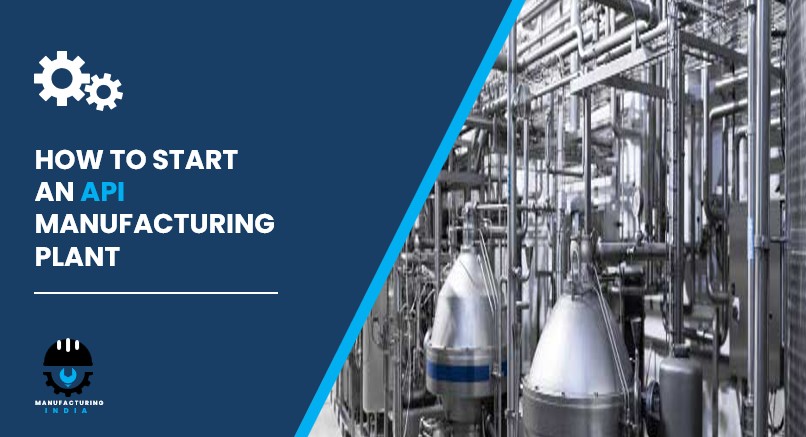
Setting up an API manufacturing plant in India presents a highly compelling investment opportunity as global demand for pharmaceutical raw materials continues to surge across generic drug manufacturing, branded formulations, biotechnology, and healthcare sectors. APIs are the bioactive molecules at the core of every pharmaceutical product, making them indispensable to global healthcare systems and drug security initiatives worldwide.
“With a rapidly expanding global market projected to grow at a CAGR of 4.2% through 2034, increasing demand for generic medicines, rising prevalence of chronic diseases, and gross margins of 50–65%, API manufacturing offers one of the most financially attractive opportunities in the pharmaceutical sector — with a break-even window of 3–5 years.”
What is an API (Active Pharmaceutical Ingredient)?
An Active Pharmaceutical Ingredient (API) is the biologically active component of any pharmaceutical formulation that produces the desired therapeutic effect upon administration. APIs are manufactured through complex processes of chemical synthesis, fermentation, and biotechnology under highly stringent regulatory and quality guidelines. They must comply with specific attributes pertaining to quality, strength, stability, and safety as per pharmacopoeia standards such as USP (United States Pharmacopeia), EP (European Pharmacopoeia), and IP (Indian Pharmacopoeia).
APIs are available in various forms including synthetic small molecules, biotech-derived biologics, high-potency active pharmaceutical ingredients (HPAPIs), and specialty intermediates tailored for specific therapeutic applications. They represent the active principle of all finished pharmaceutical products such as tablets, capsules, injectables, suspensions, syrups, and other dosage forms. APIs are widely used across therapeutic areas including cardiovascular, oncology, anti-infective, central nervous system, respiratory, and metabolic disorders.
Globally, regulatory bodies including the US FDA, EMA, WHO, and national drug authorities recognize stringent manufacturing standards for APIs under frameworks such as Current Good Manufacturing Practices (cGMP), ICH guidelines, and PIC/S standards. The increasing push for pharmaceutical supply chain security, affordable healthcare, and domestic drug manufacturing capabilities is further accelerating API demand across global markets.
Cost of Setting Up an API Manufacturing Plant in India
The API manufacturing plant cost depends on several parameters including production capacity, technology configuration, plant location, level of automation and containment, raw material sourcing strategy, and regulatory compliance requirements. Here is a structured breakdown of all major cost components:
1. Capital Expenditure (CapEx)
The total capital investment in an API manufacturing plant typically covers the following:
Land and Site Development
This includes land acquisition, boundary development, land registration charges, and basic site preparation. Cost varies significantly depending on whether the land is in a designated pharmaceutical zone, bulk drug park, Special Economic Zone (SEZ), or a privately purchased plot. Proximity to raw material suppliers, skilled manpower availability, and key transportation routes is a critical factor in site selection. India’s three dedicated bulk drug parks in Andhra Pradesh, Gujarat, and Himachal Pradesh offer subsidized infrastructure and common utilities that can significantly reduce initial land and development costs.
Request a Sample Report for In-Depth Market Insights: https://www.imarcgroup.com/api-manufacturing-plant-project-report/requestsample
Civil Works and Construction
Building costs cover the main production facility, clean room areas, raw material and solvent storage warehousing, quality control and analytical laboratories, administrative block, utility area, effluent treatment plant, and worker amenities. Construction must comply with pharmaceutical plant safety norms including cGMP-compliant design, HVAC and air handling systems, clean room classifications, chemical spill containment, fire resistance, and environmental management standards. Containment facilities for high-potency API production require additional specialized infrastructure.
Machinery and Equipment
This is the single largest component of CapEx. Key machinery required for an API manufacturing plant includes:
- Chemical Reactors and Fermenters (Glass-Lined/Stainless Steel)
- Filtration and Separation Systems (Centrifuges, Nutsche Filters)
- Chromatography and Purification Units
- Crystallizers and Evaporators
- Dryers (Vacuum Tray Dryers, Rotary Vacuum Dryers, Fluid Bed Dryers)
- Milling and Micronization Equipment
- Distillation and Solvent Recovery Systems
- Quality Control Analytical Instruments (HPLC, GC, IR, UV Spectrophotometry)
- Containment and Isolator Systems (for HPAPIs)
- Process Control and Automation Systems (DCS/SCADA)
- Packaging Lines (Drums, Fiber Containers, HDPE Bags)
- Effluent Treatment and Waste Management Systems
Machinery costs represent the largest share of overall capital expenditure, reflecting the high degree of precision engineering, corrosion-resistant materials, containment requirements, and process safety standards involved in API manufacturing.
Other Capital Cost
These include pre-operative expenses, commissioning charges, import duties (if machinery is sourced internationally), utilities installation, fire safety and explosion-proof systems, Effluent Treatment Plant (ETP) setup, environmental management infrastructure, regulatory filing and inspection costs, and technology transfer fees where applicable.
2. Operational Expenditure (OpEx)
Once the plant is commissioned, the ongoing cost structure is dominated by a few key components:
Raw Material Cost (Key Organic Intermediates, Solvents, and Catalysts): 40–50% of Total OpEx
Key organic intermediates, solvents, catalysts, and reagents are the primary raw materials and account for the largest share of operating expenses. Additional materials include excipients, buffers, chromatographic media, and specialty chemicals depending on the API type and synthesis route. For fermentation-based APIs, costs also include nutrient media, seed cultures, and biological raw materials. Long-term contracts with reliable suppliers are essential to mitigate price volatility and ensure consistent supply.
Utility Cost: 25–35% of Total OpEx
Utilities include electricity (heavily consumed by reactors, HVAC systems, clean room air handling, and process control equipment), water (used in cooling systems, washing, and purification processes), steam generation, compressed air supply, and nitrogen gas for inerting. API manufacturing is particularly energy-intensive due to requirements for temperature-controlled reactions, solvent distillation, and drying operations. Energy-efficient equipment and heat recovery systems can significantly reduce utility costs over time.
Other Operating Cost
The remaining budget covers transportation, packaging (drums, fiber containers, HDPE bags, cold chain logistics for sensitive APIs), salaries and wages, maintenance, depreciation, insurance, environmental compliance costs, quality assurance and analytical testing, regulatory filing expenses, taxes, and miscellaneous overhead.
3. Plant Capacity
The proposed manufacturing facility can be designed across a range of production scales:
- Small-Scale Operations: 50–200 metric tons annually — suitable for niche APIs, high-potency compounds, and specialized formulations with batch production and flexible multi-purpose equipment.
- Mid-Scale Plants: 200–500 metric tons annually — designed for national markets with semi-continuous production, moderate automation, and diversified product portfolio covering multiple therapeutic categories.
- Large-Scale Plants: 500+ metric tons annually — built for national and global markets with continuous production processes, high automation, dedicated production lines, comprehensive quality systems, and the capability to serve regulated markets including the US, EU, and Japan.
Profitability significantly improves with higher capacity utilization. Larger plants benefit from economies of scale in raw material procurement, energy efficiency, solvent recovery, and distribution logistics. Multi-product facilities that can manufacture different APIs on the same production line offer additional flexibility and revenue diversification.
4. Profit Margins and Financial Projections
- Gross Profit Margin: 50–65%
- Net Profit Margin: 25–40%
- Break-Even Period: 3 to 5 years, depending on production scale, market positioning, raw material cost management, product complexity, regulatory approvals, and sales efficiency.
Financial projections must account for capital investment, operating costs, capacity utilization rates, pricing trends, and demand outlook. A thorough analysis should also include sensitivity analysis, Net Present Value (NPV), Internal Rate of Return (IRR), and Payback Period. The high gross margins in API manufacturing reflect the value-added nature of pharmaceutical intermediates and the stringent quality barriers that protect established manufacturers from price erosion.
Why Set Up an API Manufacturing Plant in India?
The global market environment presents a uniquely favorable opportunity for establishing an API manufacturing facility in India:
Surging Global Pharmaceutical Demand
APIs are experiencing accelerating demand driven by the rising global prevalence of chronic diseases including cardiovascular disorders, diabetes, cancer, and respiratory conditions. The World Health Organization estimates that non-communicable diseases account for approximately 74% of global deaths annually, creating sustained demand for pharmaceutical products and their underlying active ingredients.
Generic Drug Expansion and Patent Cliff
The global shift toward affordable healthcare and the upcoming patent expiry of several blockbuster drugs are creating massive opportunities for generic API manufacturers. Indian pharmaceutical firms alone have an estimated USD 10 billion opportunity by 2029 as 15 blockbuster drugs with combined revenue exceeding USD 112 billion go off-patent. The generic API segment, which held a 56.8% revenue share in 2023, is expected to grow at the fastest pace through 2030.
Pharmaceutical Supply Chain Diversification
Post-pandemic supply chain disruptions and geopolitical tensions have prompted global pharmaceutical companies to diversify their API sourcing away from single-source dependence. India, recognized as the “Pharmacy of the World,” is a primary beneficiary of this shift. The passage of the US Biosecure Act has resulted in a significant increase in request-for-quotation volumes at leading Indian contract manufacturers, accelerating investment in domestic API production capacities.
Government Policy Support and Incentives
The Indian government’s Production Linked Incentive (PLI) Scheme for Bulk Drugs, with a financial outlay of ₹6,940 crore, has catalyzed domestic API manufacturing. As of 2025, cumulative investments have exceeded initial targets, with 34 projects commissioned for 25 bulk drugs. Three dedicated bulk drug parks in Andhra Pradesh, Gujarat, and Himachal Pradesh provide common infrastructure, effluent treatment, and subsidized utilities. The PLI Scheme for Pharmaceuticals adds an additional ₹15,000 crore in incentives for high-value pharmaceutical products.
India’s Competitive Manufacturing Advantage
India manufactures over 500 different APIs, holds approximately 57% of all APIs on the WHO prequalified list, and has the highest number of US FDA-compliant pharmaceutical manufacturing facilities outside the United States. India’s pharmaceutical exports reached USD 30.38 billion in FY25, with the country supplying one in five generic medicines globally. The availability of skilled chemists, cost-efficient production methods, and a robust regulatory framework make India an ideal location for API manufacturing investment.
Contract Manufacturing and Export Potential
API plants in India benefit from strong export opportunities and long-term supply contracts with global formulation companies. India exports approximately 50% of its APIs to developed markets including the US and Europe. The country’s Contract Research, Development and Manufacturing Organization (CRDMO) industry is expected to double to USD 14 billion by 2028, further reinforcing the investment case for API manufacturing capacity.
Manufacturing Process Overview
The API manufacturing process varies depending on the type of molecule being produced but primarily involves chemical synthesis, fermentation, or biotechnology-based processes under stringent quality controls. The production is typically divided into several key areas:
- Chemical Synthesis Route — Key starting materials (KSMs) and drug intermediates undergo multi-step chemical reactions including coupling, oxidation, reduction, hydrogenation, and functional group transformations in glass-lined or stainless-steel reactors to yield the target API molecule.
- Fermentation Route — Microbial fermentation using bacterial, yeast, or fungal cultures in bioreactors to produce APIs such as antibiotics, statins, and immunosuppressants, followed by extraction and purification.
- Biotechnology Route — Recombinant DNA technology and cell culture processes to produce biologic APIs including monoclonal antibodies, recombinant proteins, and peptides.
The complete process flow involves raw material sourcing and quality testing, chemical reaction and polymerization or fermentation, extraction and purification (including chromatography and crystallization), solvent recovery and distillation, drying and milling, quality control testing and analytical validation, packaging under controlled conditions, and final dispatch with complete batch documentation and certificates of analysis.
Key Applications of APIs
APIs serve a wide variety of pharmaceutical and healthcare applications:
- Generic Drug Manufacturing: Production of affordable versions of off-patent medicines across all therapeutic categories for domestic and export markets.
- Branded Pharmaceutical Formulations: Supply of APIs to innovator and branded generic companies for tablets, capsules, injectables, syrups, and other dosage forms.
- Oncology and High-Potency Drugs: Manufacturing of HPAPIs for cancer treatment, hormonal therapies, and other targeted medications requiring containment facilities.
- Cardiovascular and Metabolic Disorders: APIs for statins, anti-hypertensives, anti-diabetics, and lipid-lowering agents — the largest therapeutic segment by revenue.
- Anti-Infective and Antibiotics: Production of APIs for antibacterial, antiviral, and antifungal medications addressing global infectious disease burden.
- Contract Manufacturing (CDMO/CMO): Third-party API manufacturing services for global pharmaceutical companies under long-term supply agreements.
Global Market Outlook
The global API market size was valued at USD 256.4 Billion in 2025. According to IMARC Group estimates, the market is expected to reach USD 376.2 Billion by 2034, exhibiting a CAGR of 4.2% from 2026 to 2034. This sustained growth is driven by expanding pharmaceutical production worldwide, increasing demand for generic drugs and biosimilars, rising prevalence of chronic diseases, growing investment in drug discovery and development, and the global push toward pharmaceutical supply chain security and domestic manufacturing capabilities.
North America dominated the market with approximately 38% revenue share in 2025, driven by strong pharmaceutical R&D, advanced manufacturing capacity, and rising demand for biologics and specialty therapies. Asia Pacific is the fastest-growing regional market, led by India, China, Japan, and South Korea, benefiting from cost advantages, skilled manpower, and robust chemical manufacturing ecosystems.
Leading global players in this industry include:
- Teva Pharmaceutical Industries
- Aurobindo Pharma
- Sun Pharmaceutical Industries
- Dr. Reddy’s Laboratories
- Cambrex Corporation
Timeline to Start an API Manufacturing Plant
Setting up an API manufacturing plant from ideation to commissioning typically requires 24 to 36 months. This covers:
- Feasibility study and detailed project report (DPR) preparation
- Land acquisition and site development
- Environmental impact assessment and regulatory approvals
- Plant design and cGMP-compliant engineering
- Machinery procurement and installation
- Clean room construction and HVAC commissioning
- Utility setup and infrastructure commissioning
- Trial production, process validation, and stability studies
- Regulatory filings (Drug Master Files, CEP, WHO-GMP)
- US FDA / EMA / national drug authority inspections
- Commercial production launch
Licenses and Regulatory Requirements
Starting an API manufacturing unit requires several approvals, which may vary by country and jurisdiction, including:
- Business registration and incorporation
- Drug Manufacturing License under the Drugs and Cosmetics Act
- Factory License under applicable labor and manufacturing laws
- Environmental Clearance from relevant pollution control authorities
- Chemical storage and hazardous material handling permits
- Fire Safety and Explosion-Proof Certification (NOC)
- Hazardous Waste Management Authorization
- WHO-GMP Certification for export markets
- US FDA Drug Master File (DMF) registration
- European CEP (Certificate of Suitability) or ASMF filing
- ISO 9001 Quality Management Certification
- ISO 14001 Environmental Management Certification
- Occupational Health and Safety Certifications (ISO 45001)
- Schedule M compliance for Indian manufacturing standards
Key Challenges to Consider
Before investing, entrepreneurs and investors should be aware of the common challenges in this business:
High Capital Requirements
Initial CapEx for cGMP-compliant pharmaceutical processing equipment, clean room infrastructure, containment systems, and environmental management is significant, especially for mid to large-scale plants targeting regulated markets. HPAPI facilities require additional investment in isolator technology and dedicated production lines.
Raw Material Price Volatility and Import Dependence
India still imports approximately 65–70% of its APIs and key intermediates from China. Fluctuations in raw material prices, supply chain disruptions, and currency movements directly impact production costs and profit margins. While the PLI scheme is reducing this dependence, significant import reliance is expected to persist through 2026–27.
Stringent Regulatory Compliance
Meeting pharmaceutical safety, environmental, and quality standards — including US FDA cGMP, EMA guidelines, WHO-GMP, ICH standards, and PIC/S compliance — requires continuous investment in quality systems, analytical instrumentation, documentation, and trained personnel. Regulatory warning letters and import alerts can have severe consequences for business continuity and reputation.
Competition and Market Entry Barriers
The market features established global pharmaceutical companies and Indian conglomerates with significant production capacities, regulatory track records, and strong customer relationships. Chinese competitors enjoy entrenched cost advantages and scale economies. New entrants must develop a clear differentiation strategy through specialized API portfolios, process innovation, regulatory excellence, or contract manufacturing partnerships.
Technical Expertise and Talent
Operating pharmaceutical reactors, managing complex multi-step synthesis, maintaining product quality and impurity profiles within pharmacopoeial limits, and ensuring batch-to-batch consistency requires highly trained chemists, chemical engineers, analytical scientists, and process operators. India’s National Skill Development Corporation identifies analytical quality control as a chronic shortage area.
Frequently Asked Questions
The following questions are answered in the report:
- How much does it cost to set up an API manufacturing plant?
- Is API manufacturing a profitable business in 2026?
- What machinery and equipment are required for an API manufacturing plant?
- What licenses and approvals are required to start an API manufacturing facility?
- How long does it take to commission an API manufacturing plant?
- What is the best location to set up an API manufacturing plant in India?
- What government incentives are available for API manufacturers under the PLI scheme?
- What is the break-even period for an API manufacturing plant?
- What are the US FDA and WHO-GMP compliance requirements for API production?
- What are the key raw materials and their sourcing strategies for API manufacturing?
Key Takeaways for Investors
The API manufacturing industry represents a strong and scalable investment opportunity backed by growing global pharmaceutical demand, supportive government policy environments, and India’s established position as the “Pharmacy of the World.” With gross margins of 50–65% and a break-even window of 3–5 years, a well-planned API manufacturing plant cost remains competitive and financially viable across plant capacities. The convergence of generic drug expansion, patent cliff opportunities, pharmaceutical supply chain diversification, chronic disease burden growth, government incentive programs, and India’s CRDMO industry expansion creates a robust and diversified revenue base for API manufacturers entering or expanding in this market.
About the Author