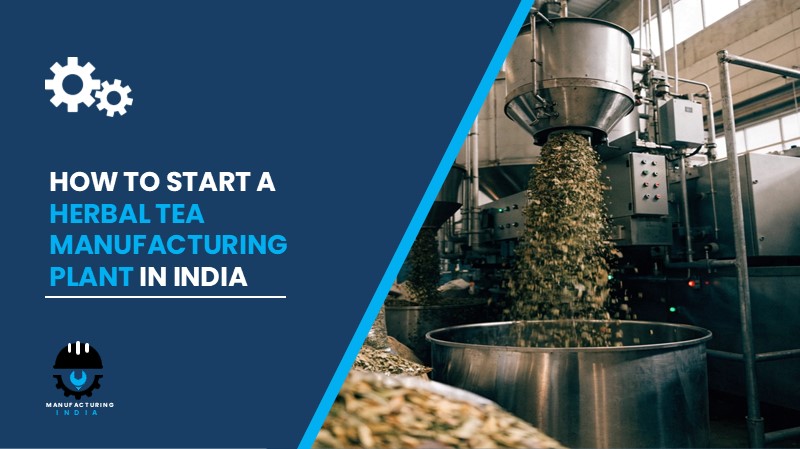
Setting up a herbal tea manufacturing plant in India presents a compelling investment case rooted in growing consumer demand across the food and beverage, health and wellness, organic food retail, hospitality, and e-commerce sectors. As consumers across India increasingly shift away from caffeinated beverages toward natural alternatives, herbal tea has emerged as one of the fastest-growing categories in the beverage industry. The product’s application diversity — spanning functional beverages, ready-to-drink (RTD) formats, herbal tea supplements, and catering services — creates multiple revenue streams for a well-positioned production unit.
India’s structural advantages reinforce this investment thesis at every level. The country’s growing middle class, deepening urbanisation, rising health consciousness, and well-established agricultural base for botanicals align naturally with the herbal tea value chain. The Make in India initiative and government support for agro-processing industries provide meaningful policy tailwinds for domestic producers. Key manufacturing states such as Gujarat, Maharashtra, Himachal Pradesh, and Uttarakhand — home to established herb cultivation zones, developed industrial infrastructure, and well-connected logistics networks — offer cost-effective locations for plant development. For investors seeking competitive production economics, strong margin potential, and access to a large domestic consumer market with growing export prospects, India offers a strategically sound and operationally viable foundation for entry.
Establishing a herbal tea manufacturing facility in India combines strong policy support with cost-competitive land and labour, sustained demand from food and beverage, health, and wellness sectors, and gross profit margins of 40–50%, making this a financially robust and high-return investment with a clear break-even trajectory.
What is Herbal Tea?
Herbal tea is a beverage made by infusing herbs, fruits, flowers, or spices in hot water. Unlike traditional teas derived from the Camellia sinensis plant — including black, green, or oolong tea — herbal teas are caffeine-free and can be produced from a wide range of plant materials. Popular varieties include chamomile, peppermint, ginger, and hibiscus, each offering distinct flavors and therapeutic benefits including relaxation, digestive support, and immune system boosting.
The market includes both ready-to-brew loose-leaf options and tea bags, with rising demand for organic herbal tea products that are sustainably sourced and free from synthetic additives. The production process involves raw material sourcing, sorting and cleaning of materials, drying, blending of herbs and flavors, and packaging. End-use industries served include food and beverage, health and wellness, organic food retailers, hospitality, and e-commerce.
Cost of Setting Up a Herbal Tea Manufacturing Plant in India
The investment required for this type of production facility depends on plant capacity, technology selection, geographic location, level of automation, and regulatory compliance requirements. Understanding each cost component is essential to building a credible financial plan and securing project funding.
1. Capital Expenditure (CapEx)
Capital investment is structured around four primary cost heads. Land and site development — covering land registration, boundary development, and enabling utility infrastructure — forms a substantial portion of initial outlay. Investors may benefit from locating the facility within a Special Economic Zone (SEZ) or designated industrial estate to access land subsidies, utility benefits, and streamlined regulatory approvals. Civil works and construction cover the production shed, raw material storage facility, quality control laboratory, finished goods warehouse, and administrative block, sized according to the plant’s annual production target.
Key machinery required includes:
- Cutting and grinding equipment
- Tea bagging machines
- Mixing and blending equipment
- Drying equipment
- Filling and sealing machines
Additional capital costs include the effluent treatment plant (ETP), pre-operative and commissioning expenses, and import duties on specialised processing equipment where applicable.
Request a Sample Report for In-Depth Market Insights: https://www.imarcgroup.com/herbal-tea-manufacturing-plant-project-report/requestsample
2. Operational Expenditure (OpEx)
Raw material cost is the dominant expense driver for this type of manufacturing unit. The three core inputs — dried herbs, tea leaves, and natural flavors — collectively account for 60–70% of total OpEx. Securing long-term supplier contracts for these materials is essential to managing price volatility and ensuring production continuity. Utility costs for electricity, water, and steam represent a further 10–15% of OpEx. Remaining costs include transportation, packaging, salaries and wages, maintenance, depreciation, and taxes. By the fifth year of operations, total expenditure is projected to increase substantially due to inflation, market fluctuations, potential cost increases in key raw materials, and evolving supply chain conditions.
3. Plant Capacity
The proposed facility is designed with an annual production capacity of 500 to 2,000 MT, enabling meaningful economies of scale while maintaining operational flexibility. Capacity can be customised to align with the investor’s specific market targets and available capital. Profitability improves meaningfully with higher capacity utilisation, as fixed overheads are distributed across a greater volume of finished output.
4. Profit Margins and Financial Projections
The project demonstrates strong profitability potential under normal operating conditions. Gross profit margins typically range between 40–50%, supported by stable multi-sector demand and the premium value commanded by functional herbal tea products. Net profit margins range between 20–28% on an average basis. Full financial projections — including NPV, IRR, payback period, and sensitivity analysis — are detailed in IMARC Group’s comprehensive feasibility report, developed on realistic assumptions around capital investment, operating costs, capacity utilisation, and prevailing pricing trends.
Why Set Up a Herbal Tea Plant in India?
Health Consciousness and Wellness Trends. The demand for herbal teas is rising steadily, driven by consumer preference for caffeine-free, functional beverages. In developing countries, 80% of the population relies on medicinal plants and herbal remedies, creating a large, culturally receptive market for these products. This existing cultural affinity for herbal remedies gives India an inherent domestic consumer base already predisposed to herbal tea adoption.
Increasing Demand for Functional Beverages. Herbal teas that promote digestive health, stress relief, and immunity support are gaining strong traction in India’s evolving beverage market. The growing popularity of functional beverages in urban centres and Tier-2 cities provides a broadening domestic demand base for producers, with consumers increasingly seeking natural and holistic wellness solutions as part of their daily routines.
Convenience and Variety. The availability of RTD herbal teas and easy-to-brew tea bags caters to the growing demand for convenient, on-the-go beverage options. This format diversity enables India-based manufacturers to serve both traditional brewing channels and modern RTD distribution networks simultaneously, widening addressable market reach.
Cost-Competitive Manufacturing. India offers meaningful advantages in land acquisition, labour availability, and supply chain development relative to comparable production destinations. The country’s established agricultural base for herbs and botanicals supports competitive raw material procurement, while industrial zones in Gujarat and Maharashtra provide established infrastructure for immediate operational deployment.
Active Industry Investment. In August 2025, Bigelow Tea introduced Golden Turmeric Honey Herbal Tea with Adaptogens to its Signature Line, designed to help consumers relieve everyday stress. In the same month, NutraTea announced the expansion of its functional tea lineup with two herbal blends incorporating ashwagandha, yerba mate, and gotu kola, responding to rising consumer demand — signalling sustained global investment and innovation momentum in this category.
Local Supply Chain Preference. Food and beverage companies, health and wellness brands, and hospitality players are increasingly prioritising locally manufactured herbal tea products to reduce procurement lead times, logistics costs, and import dependency — a trend that directly benefits India-based producers with strong domestic supply chains.
Manufacturing Process Step by Step
The herbal tea manufacturing process uses raw material sourcing, sorting and cleaning of materials, drying, blending of herbs and flavors, and packaging as the primary method of production. Each stage of the herbal tea manufacturing process incorporates quality checkpoints to ensure product consistency, safety, and regulatory compliance. The key steps are:
- Raw Material Sourcing: Procurement of dried herbs, tea leaves, and natural flavors from vetted suppliers, supported by long-term contracts to ensure price stability and supply security.
- Sorting and Cleaning: Raw materials are inspected, sorted, and cleaned to remove impurities and ensure consistent quality inputs for production.
- Drying: Plant materials are processed through drying equipment to achieve the required moisture content and extend product shelf life.
- Blending: Dried herbs and natural flavors are combined in precise formulations using mixing and blending equipment to achieve the desired taste profile and functional benefit.
- Cutting and Grinding: Blended materials are reduced to the required particle size using cutting and grinding equipment to ensure product uniformity.
- Filling, Bagging, and Sealing: The product is portioned and packed using tea bagging machines and filling and sealing machines into loose-leaf, tea bag, or RTD formats.
- Quality Control and Testing: Finished products undergo technical testing and quality assurance verification against established product specifications.
- Packaging and Dispatch: Final products are packaged and dispatched to food and beverage companies, health and wellness retailers, organic food retailers, hospitality establishments, and e-commerce platforms.
Key Applications
Herbal tea serves a broad range of industries, from everyday consumer beverages to specialised functional wellness products.
- Food and Beverage: A natural, caffeine-free alternative to traditional tea or coffee, gaining significant share across the beverage industry.
- Health and Wellness: Functional beverages offering improved digestion, immunity support, sleep enhancement, and stress reduction for health-conscious consumers.
- Organic Food Retailers: Organic and sustainably sourced varieties gaining strong placement in premium retail channels, catering to health-conscious consumers.
- Hospitality: Hotels, cafes, and restaurants incorporating herbal tea options into menus as part of broader wellness-focused beverage programmes.
- E-commerce: Online platforms enabling wide distribution of niche and artisanal herbal tea varieties to a global consumer base.
Leading Manufacturers
The global herbal tea industry is served by several major companies with extensive production capacities and diverse product portfolios across all key end-use sectors. Key players include:
- Tata Consumer Product Limited
- Unilever
- Associated British Foods plc
- Celestial Seasonings
- The Bombay Burmah Trading Corporation, Limited
- Stash Tea
- Bigelow Tea
- Shangri La Tea Company Inc.
Timeline to Start the Plant
- Feasibility study and project report preparation
- Land acquisition and site development
- Regulatory approvals and environmental clearances
- Factory licence and fire safety compliance
- Machinery procurement and installation
- Raw material supplier agreements and supply chain setup
- Trial production and quality testing
- Commercial production launch
Licences and Regulatory Requirements
Starting a herbal tea manufacturing unit in India requires several approvals:
- Business registration (Proprietorship, LLP, or Pvt Ltd)
- Factory Licence under the Factories Act
- Environmental Clearance from State Pollution Control Board
- GST Registration
- Fire Safety NOC
- Effluent Treatment Plant (ETP) operational clearance
- Occupational Health and Safety compliance
Key Challenges to Consider
High Capital Requirements. Establishing a herbal tea manufacturing plant demands significant upfront investment in land, civil works, and specialised equipment including cutting and grinding equipment, tea bagging machines, and drying equipment, making access to structured financing an important prerequisite.
Raw Material Price Volatility. Dried herbs, tea leaves, and natural flavors — which collectively account for 60–70% of OpEx — are subject to price fluctuations from seasonal supply cycles, climatic conditions, and supply chain disruptions. Supplier diversification and long-term procurement contracts are essential risk mitigation measures.
Regulatory Compliance. Environmental clearances, ETP installation and certification requirements, and factory licensing create a meaningful compliance burden that requires dedicated legal and technical resources throughout the operational lifecycle.
Technology and Innovation Pressure. Rapid product innovation — as demonstrated by Bigelow Tea’s August 2025 adaptogen tea launch and NutraTea’s new ashwagandha and yerba mate blends — requires producers to continuously update formulations and processing capabilities to remain competitive in a fast-moving market.
Competition. The market includes well-capitalised global players such as Tata Consumer Product Limited, Unilever, Associated British Foods plc, and Bigelow Tea, creating sustained competitive pressure on pricing, brand equity, and distribution access for new entrants.
Skilled Manpower. Operating blending, bagging, and quality control systems requires trained food technicians, process engineers, and quality assurance specialists, which can be a constraint outside established food manufacturing clusters in India.
Frequently Asked Questions
1. How much does it cost to set up a herbal tea manufacturing plant in India?
The cost of setting up a herbal tea manufacturing plant in India depends on several factors such as the scale of operations, level of automation, type of machinery, and location. A small-scale unit can be established with relatively lower investment, while a large-scale, fully automated plant requires significantly higher capital for equipment, infrastructure, and working capital.
2. Is herbal tea manufacturing profitable in India in 2026?
Herbal tea manufacturing is considered a promising and profitable business in India due to the growing demand for health-oriented and natural beverages. Increasing consumer preference for wellness products, coupled with rising awareness about herbal ingredients, supports steady market growth and offers good profit potential for manufacturers.
3. What machinery is required for a herbal tea plant in India?
A herbal tea manufacturing plant requires machinery for cleaning, drying, grinding, blending, and packaging. This typically includes equipment for sorting raw herbs, drying them to the required moisture level, pulverizing or cutting, mixing different ingredients, and packing the final product into tea bags or loose packaging formats.
4. What licences and approvals are required to start a herbal tea plant in India?
To start a herbal tea manufacturing plant in India, businesses need to obtain several licences and approvals to ensure compliance with regulatory standards. These generally include food safety registration, business registration, factory and trade licences, and approvals from environmental authorities. Additional certifications may be required depending on the nature of the product and target market.
5. What raw materials are needed for herbal tea manufacturing?
Herbal tea manufacturing primarily requires a variety of dried herbs, spices, and natural flavoring ingredients. Depending on the product formulation, manufacturers may also use a tea base such as green or black tea. Packaging materials such as tea bags, filter paper, cartons, and labels are also essential components of the production process.
6. What are the environmental compliance requirements for a herbal tea plant in India?
Environmental compliance for a herbal tea plant involves adhering to guidelines related to waste management, emissions control, water usage, and noise levels. Manufacturers must follow the norms set by relevant environmental authorities to ensure that their operations do not negatively impact the surroundings.
7. What is the best location to set up a herbal tea plant in India?
The ideal location for setting up a herbal tea plant is one that offers easy access to raw materials, efficient transportation, and reliable infrastructure. Proximity to herb cultivation areas and good connectivity to distribution networks can help reduce costs and improve operational efficiency.
8. What is the break-even period for this type of plant in India?
The break-even period for a herbal tea manufacturing plant depends on factors such as initial investment, production capacity, operating efficiency, and market demand. Businesses that establish strong distribution channels and maintain consistent product quality are more likely to achieve faster returns on investment.
9. What government incentives are available for manufacturers in India?
The government of India offers various incentives to support manufacturing businesses, particularly in the food processing and MSME sectors. These may include financial assistance, subsidies, tax benefits, and support programs aimed at promoting entrepreneurship, technology adoption, and rural development.
Key Takeaways for Investors
A herbal tea manufacturing plant represents a high-potential investment opportunity anchored by growing demand across food and beverage, health and wellness, organic food retail, hospitality, and e-commerce sectors. This type of production facility demonstrates strong financial viability across a range of capacities, with gross profit margins of 40–50% and net profit margins of 20–28%, supported by a diversified customer base and stable end-use demand. The global herbal tea market, valued at USD 4.12 billion in 2025, is projected to reach USD 6.77 billion by 2034 at a CAGR of 5.7%, providing a long runway of demand growth for India-based producers. With 80% of developing-country populations relying on medicinal plants and herbal remedies, demand sustainability for this category is structurally underpinned and expected to support consistent capacity utilisation throughout the plant’s operational lifecycle.
About the Author