Setting up a tea processing plant in India presents a compelling investment case backed by one of the world’s most enduring beverage markets. The beverage industry, foodservice and HoReCa sector, retail and packaged food industry, and household consumption all drive consistent demand for processed tea at scale. As urbanisation accelerates and consumers migrate toward branded, packaged tea formats offering reliable quality and convenience, the case for domestic tea processing capacity has never been stronger. India is not merely a producer of raw leaf it is increasingly a value-addition destination where processing, blending, and packaging unlock significant margin uplift over raw material sales.
India’s strategic advantages for this production type are well established. The country’s vast agricultural base supplies green tea leaves from iconic growing regions, while the Make in India initiative and a growing organised retail ecosystem offer policy and distribution tailwinds for new manufacturers. States with developed food-processing infrastructure including Assam, West Bengal, and Tamil Nadu provide proximity to both raw material sources and key consumption centres. With a labour-cost advantage, an expanding domestic consumer class, and rising export interest in premium origin-specific varieties, India is strategically sound for investors looking to commission a tea processing unit at any capacity tier.
Commissioning a tea processing facility in India offers a defensible, high-margin investment anchored in stable global demand. With gross profit margins of 25-35% and net margins of 10-18%, the economics are compelling across capacity sizes. Government policy support, cost-competitive manufacturing, and diversified end-use demand across beverage, retail, and foodservice sectors make the payback window achievable within a realistic planning horizon.
What is Tea?
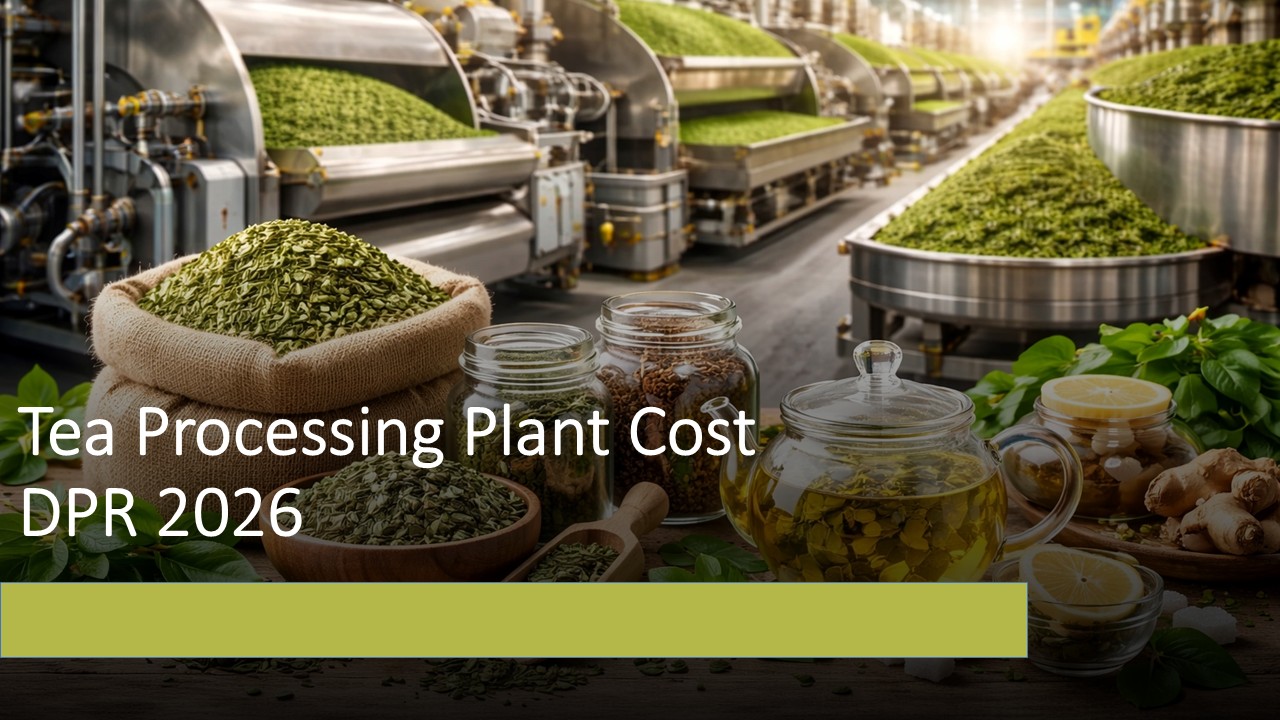
Tea is a widely consumed beverage prepared from the processed leaves of the Camellia sinensis plant. Its classification into black tea, green tea, white tea, oolong tea, and specialty varieties depends on the specific processing methods applied, including withering and rolling, oxidation or fermentation, and drying. The beverage is valued for its refreshing taste, aromatic properties, and health-supporting characteristics notably antioxidants, polyphenols, and natural caffeine. Modern tea production methods deliver reliable product quality, specific flavour profiles, and hygienic standards that satisfy both domestic and export market requirements.
Packaged tea reaches consumers in multiple formats: loose leaf, tea bags, instant tea powders, and flavoured blends. The production process used at a tea processing plant is a multi-step operation combining withering, rolling or maceration, oxidation or fermentation, drying, sorting and grading, blending, quality inspection, and final packaging. End-use industries served include the beverage industry, foodservice and HoReCa sector, retail and packaged food industry, and household consumption.
Cost of Setting Up a Tea Processing Manufacturing Plant in India
The total cost of establishing this facility depends on plant capacity, technology selection, geographic location, automation level, and regulatory compliance requirements. Investors should model both capital expenditure and operational expenditure carefully before committing to a project.
1. Capital Expenditure (CapEx)
Land and site development forms a substantial portion of total capital investment, covering land registration, boundary development, and related preparatory expenses. For greenfield investors, industrial estates and SEZ-designated zones in tea-producing states can reduce land acquisition costs while offering infrastructure readiness and potential duty exemptions. Civil works costs cover the processing shed, quality control laboratory, raw material storage, finished goods warehouse, and administrative block.
Machinery and equipment represent the largest single component of CapEx at a tea processing plant. Key machinery required includes:
- Withering troughs
- Rolling machines
- Fermentation or oxidation units
- Drying machines (fluid bed or conventional dryers)
- Sorting and grading machines
- Blending systems
- Packaging equipment
- Boilers and steam generation units
- Conveyors and material handling systems
- Quality testing and analytical instruments
Other capital costs include effluent treatment plant (ETP) installation, pre-operative expenses, commissioning charges, and import duties on specialised equipment where applicable.
Request a Sample Report for In-Depth Market Insights: https://www.imarcgroup.com/tea-processing-plant-project-report/requestsample
2. Operational Expenditure (OpEx)
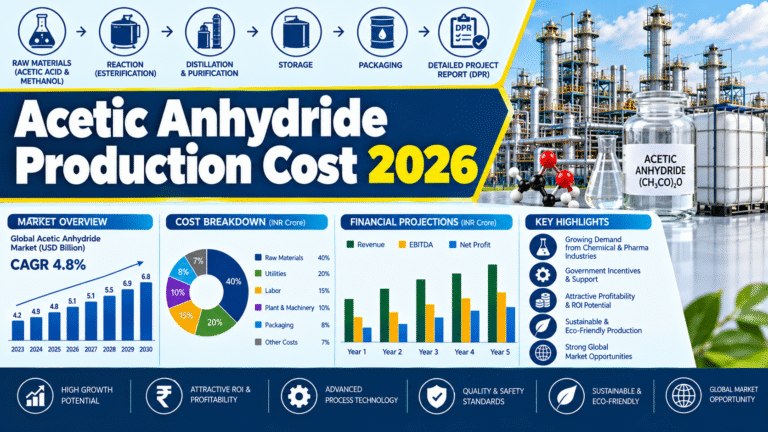
Raw material cost is the dominant OpEx driver, with green tea leaves accounting for approximately 65-75% of total operating expenses. Securing long-term supply contracts with tea garden partners in Assam, Darjeeling, or Nilgiris is advisable to stabilise input costs and ensure volume reliability. Utility costs covering electricity, water, and steam represent a further 10-15% of OpEx and must be planned carefully given the energy intensity of drying and withering operations.
Additional operating costs include transportation and distribution, packaging materials, salaries and wages, equipment maintenance, depreciation, and applicable taxes. By the fifth year of operations, total operational costs are projected to increase substantially due to inflation, market fluctuations, supply chain pressures, and rising raw material costs making cost control systems and supplier diversification important from day one.
3. Plant Capacity
The proposed processing facility design cited in the feasibility report is structured around an annual production capacity of 1,000 Metric Tons, enabling economies of scale while retaining operational flexibility. In practice, plant capacity can be customised based on investor requirements, target market size, and available capital. Profitability improves meaningfully with higher capacity utilisation rates, making it important to secure offtake agreements or distribution tie-ups in advance of commissioning.
4. Profit Margins and Financial Projections
The tea processing plant project demonstrates healthy profitability potential under normal operating conditions. Gross profit margins typically range between 25-35%, supported by stable demand and value-added product applications. Net profit margins range between 10-18%. Full financial projections covering NPV, IRR, payback period, profit and loss account, liquidity analysis, and sensitivity analysis are detailed in the project report. Break-even in a tea processing business typically ranges from 2 to 5 years depending on production scale, market access, operating efficiency, and demand growth.
Why Set Up a Tea Processing Plant in India?
Consistent Global Demand. Tea is one of the most widely consumed beverages worldwide, ensuring stable demand across developed and emerging markets. Global tea consumption reached roughly 6,957 million kg in 2024, with India alone contributing nearly 18% of total demand a figure that underscores the beverage’s deep cultural and daily relevance to the domestic market.
Strong Value-Addition Potential. Processing activities, including blending and packaging, increase product value significantly beyond what raw leaf sales return to producers. Manufacturers who invest in sorting, grading, and branded packaging can access premium price points in both domestic retail and export channels.
Product Diversification Opportunities. Manufacturers can create specialty tea products including organic, flavoured, and wellness-oriented variations to satisfy evolving consumer tastes. The growing interest in functional and health-forward beverages is opening new product categories for processors willing to invest in product development.
Policy and Regulatory Tailwinds. The Make in India initiative provides a broad enabling environment for food and beverage manufacturers, including capital subsidy access, export incentives, and streamlined approvals in designated food processing zones. Government schemes at both central and state levels support investment in agri-processing infrastructure.
Active Industry Investment. In September 2025, the Tea Research Association (Tocklai) launched a decaffeinated green tea powder developed from Assam clones TV 9, 11, and 12 a product delivering 75% lower caffeine and high antioxidants positioned to rival Japanese matcha. In May 2025, Lipton completed its most significant brand transformation in over a decade, introducing a refreshed logo, new English Breakfast and Earl Grey variants, and secured nationwide availability signalling continued investment in the tea category.
Scalable and Cost-Competitive Manufacturing. Tea processing plants operate efficiently at moderate capital expenditure levels and can scale across different production tiers. India’s lower land, labour, and construction costs relative to developed markets give domestic investors a structural cost advantage in both domestic supply and export competitiveness.
Tea Processing Manufacturing Process – Step by Step
The tea processing manufacturing process uses withering, rolling or maceration, oxidation, and drying as its primary production methods. The full sequence is as follows:
- Plucking: Fresh green tea leaves are harvested from Camellia sinensis plants and transported to the processing facility for immediate handling.
- Withering: Leaves are spread on withering troughs to reduce moisture content, making them pliable for rolling.
- Rolling or Maceration: Rolling machines break down the leaf cell structure to initiate oxidation and develop flavour compounds.
- Fermentation or Oxidation: Fermentation or oxidation units facilitate controlled oxidation, determining whether the output becomes black, oolong, or other tea types.
- Drying: Drying machines fluid bed or conventional dryers halt oxidation and reduce moisture to safe storage levels.
- Sorting and Grading: Sorting and grading machines separate processed tea by particle size, grade, and quality specification.
- Blending: Blending systems combine grades or origin-specific batches to achieve consistent flavour and aroma profiles.
- Quality Inspection: Analytical instruments monitor concentration, purity, and stability against specification benchmarks.
- Packaging and Dispatch: Packaging equipment fills loose leaf, tea bag, or instant formats for dispatch to beverage industry clients, foodservice operators, and retail customers.
Key Applications
The tea processing plant serves a broad range of end-use industries with distinct application requirements.
- Beverage Industry: Processed tea serves as the primary input for packaged tea brands, ready-to-drink beverages, and specialty tea formulations requiring consistent flavour and aroma profiles.
- Foodservice and HoReCa Sector: Hotels, cafes, and restaurants use standardised tea blends to ensure consistent taste and efficient drink preparation and service delivery.
- Retail and Packaged Tea Segment: Branded loose tea and tea bags enable consumers to access high-quality products from retail stores with easy handling and long-lasting freshness.
- Household Consumption: Processed tea enables consumers to enjoy high-quality brews with reliable taste, aroma, and infusion characteristics across daily consumption occasions.
Leading Manufacturers
The global tea industry is served by several multinational companies with extensive production capacities and diverse application portfolios. Key players in this market include:
- Associated British Foods PLC
- Barry’s Tea
- Bigelow Tea
- Caraway Tea
- Dabur Ltd
- LIPTON Teas and Infusions B.V.
- TAETEA Group Co., Ltd
- Dilmah Ceylon Tea Company PLC
- Tata Consumer Products Limited (Tata Group)
Timeline to Start the Plant
- Feasibility study and project report preparation
- Land acquisition and site development
- Regulatory approvals and environmental clearances
- Factory licence and fire safety compliance
- Machinery procurement and installation
- Raw material supplier agreements and supply chain setup
- Trial production and quality testing
- Commercial production launch
Licences and Regulatory Requirements
Starting a tea processing manufacturing unit in India requires several approvals:
- Business registration (Proprietorship, LLP, or Pvt Ltd)
- Factory Licence under the Factories Act
- Environmental Clearance from State Pollution Control Board
- GST Registration
- Fire Safety NOC
- Effluent Treatment Plant (ETP) operational clearance
- Occupational Health and Safety compliance
- FSSAI licence (food safety compliance for processed food and beverage manufacturers)
Key Challenges to Consider
High Capital Requirements. Establishing a tea processing facility involves significant upfront investment in land, civil construction, and machinery particularly withering troughs, drying machines, and packaging equipment which may require term loan financing or equity partnerships.
Raw Material Price Volatility. Green tea leaves, which account for 65-75% of total OpEx, are subject to price fluctuations driven by seasonal crop yields, weather patterns, and supply chain disruptions. Long-term supplier contracts are essential to protect margins.
Regulatory Compliance. Meeting environmental clearance, ETP operational, and food safety requirements demands dedicated compliance resources and ongoing monitoring systems throughout operations.
Technology and Innovation Pressure. As the September 2025 Tocklai decaffeinated green tea powder launch illustrates, innovation in product formulation is accelerating. Processors must invest in R&D or technology licensing to remain competitive.
Competition from Established Players. The presence of large global operators including Tata Consumer Products, Dabur Ltd, and LIPTON Teas and Infusions B.V. creates pricing and distribution competition that new entrants must navigate with differentiated positioning.
Skilled Manpower. Operating specialised tea processing equipment and maintaining quality standards requires trained production staff, quality control technicians, and experienced blending professionals a resource that must be planned for during project commissioning.
Frequently Asked Questions
- How much does it cost to set up a tea processing manufacturing plant in India? The total cost varies with capacity, technology, and location, covering land, civil works, machinery including withering troughs and dryers, utilities, and pre-operative expenses. A detailed breakdown is available in the project feasibility report.
- Is tea processing manufacturing profitable in India in 2026? Yes. Gross profit margins of 25-35% and net margins of 10-18% indicate healthy profitability, particularly at higher capacity utilisation rates and with value-added product lines.
- What machinery is required for a tea processing plant in India? Key machinery includes withering troughs, rolling machines, fermentation units, drying machines, sorting and grading machines, blending systems, packaging equipment, boilers, conveyors, and quality testing instruments.
- What licences and approvals are required to start a tea processing plant in India? Requirements include business registration, Factory Licence, Environmental Clearance from the State Pollution Control Board, GST Registration, Fire Safety NOC, FSSAI licence, and ETP operational clearance.
- What raw materials are needed for tea processing manufacturing? Green tea leaves are the primary raw material, accounting for 65-75% of operating costs. Additional materials include packaging inputs such as paper or foil, and natural flavours or additives depending on the product variant.
- What are the environmental compliance requirements for a tea processing plant in India? An operational Effluent Treatment Plant, State Pollution Control Board clearance, and adherence to emission and effluent discharge standards are mandatory for this facility type.
- What is the best location to set up a tea processing plant in India? Locations with proximity to tea-growing regions including Assam, West Bengal, and Tamil Nadu — offer raw material access advantages. Industrial estates and food processing zones in these states also provide infrastructure and regulatory benefits.
- What is the break-even period for this type of plant in India? Break-even typically ranges from 2 to 5 years, depending on plant scale, market access, capacity utilisation, and operating efficiency. Premium product lines may take longer but offer higher margins.
- What government incentives are available for manufacturers in India? Incentives may include capital subsidies, tax exemptions, reduced utility tariffs, export benefits, and interest subsidies under national and state industrial promotion policies, including schemes aligned with the Make in India initiative.
Key Takeaways for Investors
Investment in a tea processing manufacturing plant in India is underpinned by durable demand across the beverage industry, HoReCa sector, retail, and household consumption, all of which require consistent, high-quality processed tea at scale. The financial profile is viable across plant capacities, with gross margins of 25-5% and net margins of 10-18% indicating strong return potential at normal operating conditions. The global tea market, valued at USD 26.7 billion in 2025 and projected to reach USD 39.40 billion by 2034 at a CAGR of 4.4%, provides a robust long-term demand backdrop for new production capacity. With India contributing nearly 18% of global tea consumption and organised retail, urban foodservice, and export demand all growing, the investment thesis for domestic processing capacity carries strong forward-looking sustainability.
About the Author