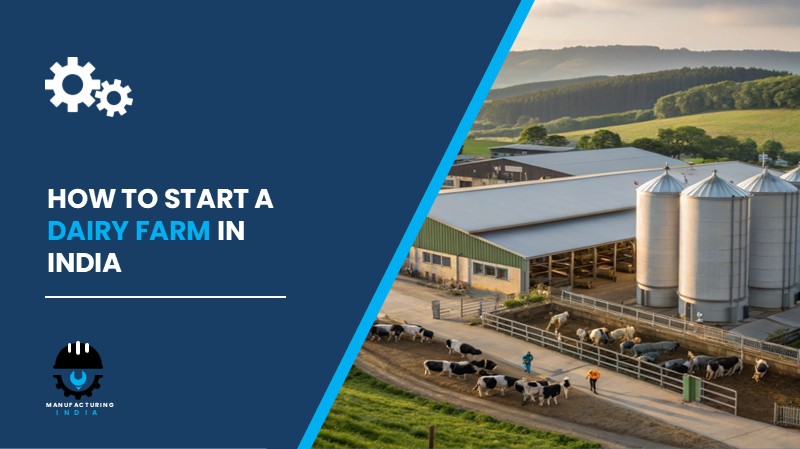
Setting up a dairy farm in India presents a compelling investment case, powered by consistent demand from the dairy processing, food and beverage, and nutrition and health industries. Modern dairy farms — agricultural facilities that breed milk-producing animals like cows and buffaloes through scientific methods for feeding, housing, and milking — have transformed from traditional operations into technology-driven agribusinesses supplying organised processors, cooperatives, and retail distribution networks. As India’s organised dairy supply chain deepens across urban and semi-urban markets, investment in a commercially scaled dairy farm has never been more strategically timely.
India’s position as a dominant global milk producer makes it uniquely advantageous for this investment. According to the Press Information Bureau (PIB), India’s milk output expanded from 146.30 million tonnes in 2014–15 to 239.30 million tonnes in 2023–24 — a growth of 63.56%, translating to an average annual growth rate of approximately 5.7% over the past decade. Asia-Pacific accounts for over 35% of the global dairy share, with India and its vast livestock base at the centre of that growth. Agricultural states such as Uttar Pradesh, Rajasthan, Punjab, Haryana, and Gujarat offer established cattle supply chains, favourable climatic conditions, government support through dairy cooperatives and livestock insurance programmes, and proximity to major dairy processing hubs — reinforcing India as a strategically sound location for building commercial dairy capacity.
Establishing a commercial dairy farming operation in India is supported by strong institutional and policy tailwinds, cost-competitive land and labour, and expanding demand across dairy processing, nutrition, and food service sectors. With gross profit margins between 35–45% and net margins of 10–20%, this investment offers compelling returns and long-term demand sustainability in one of the world’s largest and fastest-growing dairy economies.
What is a Dairy Farm?
A dairy farm operates as an agricultural facility that breeds milk-producing animals like cows and buffaloes to produce raw milk for commercial sale. Modern dairy farms use scientific methods for breeding, feeding, housing, and milking to achieve reliable milk production while maintaining animal health. The facility produces milk which serves as the primary ingredient for pasteurized milk, butter, cheese, curd, yogurt, ghee, and milk powders. As genetics, nutrition science, mechanized milking, and cold-chain infrastructure have advanced, dairy farms have evolved into modern agribusinesses supplying milk to organised processors and cooperatives at scale.
The primary methods used in the dairy farming process are animal rearing, feeding and nutrition management, mechanized milking, and milk chilling and storage. Applications span liquid milk supply for pasteurization and retail, input sourcing for butter, cheese, yogurt, paneer, and milk powder production, infant formula and protein supplement manufacturing, and milk supply to food service channels including hotels, restaurants, bakeries, and cafes. End-use industries served include dairy processing, food and beverage, and nutrition and health.
Cost of Setting Up a Dairy Farm in India
The cost of establishing this type of farm depends on herd size, technology selection, land location, automation level, and regulatory compliance requirements. A clear understanding of both capital and operational expenditure is essential before committing to an investment of this scale.
1. Capital Expenditure (CapEx)
The total capital investment covers several distinct cost heads. Land and site development — including land registration, boundary fencing, and site levelling — form a substantial part of the overall investment. Investors can consider agricultural land in dairy-prominent states such as Uttar Pradesh, Rajasthan, Punjab, or Haryana, or explore agri-industrial zone options that offer infrastructure and logistics advantages.
Civil works and construction costs cover cattle sheds, the milking parlour, feed storage, milk chilling room, veterinary inspection area, staff quarters, and the administrative block — all designed to ensure animal welfare, operational efficiency, and food safety compliance. Machinery and equipment represent the single largest CapEx component in a dairy farm setup. Key machinery required includes:
- Milking machines
- Bulk milk coolers
- Fodder choppers
- Feeding systems
- Water troughs
- Manure handling units
Other capital costs include effluent treatment plant (ETP) setup, pre-operative expenses such as initial cattle procurement and veterinary inspection, commissioning charges, and breeding stock acquisition.
Request a Sample Report for In-Depth Market Insights: https://www.imarcgroup.com/dairy-farm-project-report/requestsample
2. Operational Expenditure (OpEx)
The operating cost structure of a dairy farming unit is primarily driven by raw material consumption. Cattle feed — comprising fodder and concentrate — accounts for approximately 60–70% of total OpEx, making feed cost management the single most critical lever for profitability. Medicines and veterinary supplies, and breeding stock replacement, constitute the remaining key raw material inputs. Securing long-term contracts with reliable feed suppliers and exploring on-farm fodder cultivation are recommended strategies to manage price volatility and reduce input dependency. Utility costs covering electricity, water, and associated operational services account for 15–20% of OpEx. Other operating costs include transportation, packaging, salaries and wages, maintenance, depreciation, and taxes. By the fifth year, total operational costs are expected to rise substantially due to inflation, market fluctuations, and potential increases in feed and veterinary input prices.
3. Farm Capacity
The proposed facility is designed with an annual capacity ranging between 100 and 1,000 milking cows, enabling economies of scale while maintaining operational flexibility. Capacity can be customised based on investor requirements, available land size, and target market. Profitability improves meaningfully with higher herd productivity and capacity utilisation, making breeding quality and structured feeding management critical to financial performance.
4. Profit Margins and Financial Projections
The project demonstrates healthy profitability potential under normal operating conditions. Gross profit margins typically range between 35–45%, with net profit margins in the 10–20% range, supported by stable demand and value-added applications across end-use sectors. Financial projections covering NPV, IRR, payback period, and sensitivity analysis are based on realistic assumptions relating to capital investment, operating costs, herd productivity, milk pricing trends, and demand outlook. Break-even viability and long-term ROI depend on scale, feed cost discipline, and milk yield per animal.
Why Set Up a Dairy Farm in India?
Surging Milk Production and Domestic Demand. India’s milk output grew from 146.30 million tonnes in 2014–15 to 239.30 million tonnes in 2023–24 — a 63.56% expansion representing a sustained average annual growth rate of approximately 5.7%, as reported by the PIB. This trajectory reflects deepening domestic consumption across all demographic groups, driven by population growth, nutritional awareness, and the rapid expansion of the organised dairy supply chain.
Rising Shift to Organised Dairy Supply. Rising disposable incomes across India are accelerating the transition from loose milk consumption to organised, quality-controlled dairy supply chains. Dairy processing companies, FMCG majors, and cooperatives are actively seeking reliable raw milk suppliers with cold-chain infrastructure — creating consistent offtake opportunities for well-run commercial dairy operations.
Alignment with Nutrition and Health Trends. The global market for milk and dairy products maintains steady growth as consumers recognise the importance of protein consumption, calcium-rich diets, and functional food products. India’s expanding nutrition and health sector — spanning infant formula, protein supplements, and fortified dairy items — is a key structural demand driver for quality raw milk.
Strong Policy and Institutional Support. India’s dairy sector benefits from government support through dairy cooperative strengthening, livestock insurance programmes, cattle procurement subsidies, and cold-chain development initiatives. Dairy farming is positioned as a key pillar of rural livelihoods and national food security, attracting continued institutional and policy backing aligned with the Make in India framework.
Active Industry Investment. In January 2026, Dutch dairy producer Farm Dairy and packaging partner Elopak unveiled two new Shikoku filling machines at the Lelystad facility, supporting growth in fresh dairy, plant-based, and hybrid protein products. In October 2025, Preston Farms in Michigan partnered with Michigan State University to grow high-oleic soybeans for cattle feed, cutting feed costs by approximately 20% while improving milk fat and protein levels — illustrating the transformative potential of research-driven farm operations.
Value Addition and Income Stability. Dairy farms generate multiple revenue streams including raw milk sales, manure production, biogas creation, and fodder cultivation through backward farming operations. This diversification of income sources provides operational resilience and strengthens the overall financial viability for Indian investors.
Dairy Farming Process – Step by Step
The dairy farming process uses animal rearing, feeding and nutrition management, mechanized milking, and milk chilling and storage as the primary production methods.
- Cattle Procurement and Housing: High-yielding cows or buffaloes are sourced from reliable breeding stock suppliers and housed in well-ventilated cattle sheds with adequate space, bedding, and water supply via water troughs.
- Feeding and Nutrition Management: Animals are fed structured rations comprising fodder and concentrate using feeding systems and fodder choppers, with diets calibrated for maximum milk yield and animal health.
- Veterinary Care and Health Monitoring: Regular veterinary inspections, vaccinations, and health monitoring are conducted using medicines and medical supplies to maintain herd productivity and welfare standards.
- Mechanized Milking: Milking machines are deployed for hygienic, efficient milk extraction — reducing contamination risk, improving yields, and minimising labour dependency versus manual milking.
- Milk Collection and Primary Quality Testing: Freshly collected milk undergoes initial quality tests for fat content, SNF (solids not fat), adulteration, and microbial standards before acceptance into chilled storage.
- Milk Chilling and Cold Storage: Milk is transferred immediately into bulk milk coolers to reduce temperature rapidly, preserving quality and extending shelf life ahead of dispatch.
- Manure and Waste Management: Manure handling units process cattle waste for composting, biogas generation, or organic fertiliser production, supporting environmental compliance and additional revenue streams.
- Dispatch to Processors and Cooperatives: Chilled raw milk is collected by dairy processors, cooperatives, or direct distribution channels for onward pasteurization and dairy product manufacturing.
Key Applications
Dairy farm output serves a wide range of industries, making this investment relevant across multiple demand verticals:
- Liquid Milk Supply: Raw milk for pasteurization and retail distribution across urban and semi-urban markets
- Dairy Processing: Input for butter, cheese, yogurt, paneer, and milk powder manufacturing
- Nutritional Products: Milk utilised in infant formula, protein supplements, and fortified dairy items
- Food Services: Milk supplied to hotels, restaurants, bakeries, and cafes
Leading Dairy Farms
The global dairy farming industry is served by several large multinational companies with extensive production capacities and diverse application portfolios. Key players include:
- Arla Foods amba
- Dairy Farmers of America
- FrieslandCampina
- Fonterra Co-operative Group
- Royal A-ware
- Glanbia plc
- Darigold
- Organic Valley
- Aurora Organic Dairy
- Maple Hill Creamery
- Straus Family Creamery
- Emmi Group
- Savencia SA
- Lactalis Group
Timeline to Start the Farm
- Feasibility study and project report preparation
- Land acquisition and site development
- Regulatory approvals and environmental clearances
- Factory licence and fire safety compliance
- Machinery procurement and installation
- Raw material supplier agreements and supply chain setup
- Trial production and quality testing
- Commercial production launch
Licences and Regulatory Requirements
Starting a dairy farm in India requires several approvals:
- Business registration (Proprietorship, LLP, or Pvt Ltd)
- Factory Licence under the Factories Act
- Environmental Clearance from State Pollution Control Board
- GST Registration
- Fire Safety NOC
- Effluent Treatment Plant (ETP) operational clearance
- Occupational Health and Safety compliance
Key Challenges to Consider
- High Capital Requirements: Establishing a commercial dairy operation of this scale involves substantial upfront investment in land, cattle shed construction, milking parlour infrastructure, bulk milk coolers, and breeding stock procurement. Securing adequate funding through term loans, government-backed livestock schemes, or private equity is a critical pre-launch priority.
- Raw Material Price Volatility: Cattle feed — comprising fodder and concentrate — accounts for 60–70% of total OpEx. Fluctuations in fodder prices, especially during drought or seasonal scarcity, can significantly compress margins if sourcing contracts are not structured in advance.
- Regulatory Compliance: Dairy farming operations are subject to animal welfare standards, environmental effluent norms, food safety requirements, and quality compliance frameworks, all demanding consistent management attention.
- Technology and Innovation Pressure: Advancements in automated milking systems, herd management software, and improved cattle genetics are raising global productivity benchmarks. Farms that do not invest in upgrading operations risk falling behind on yield efficiency and milk quality standards.
- Competition: The global industry includes well-capitalised players such as Arla Foods amba, Dairy Farmers of America, FrieslandCampina, Fonterra Co-operative Group, and Lactalis Group. Indian operators must compete on milk quality, cold-chain reliability, and cost efficiency to secure cooperative and processor contracts.
- Skilled Manpower: Operating mechanized milking systems, maintaining herd health records, and managing structured feed nutrition programmes requires trained farm managers, veterinary staff, and dairy technicians — a skilled workforce that remains in short supply across many Indian rural districts.
Frequently Asked Questions
1. How much does it cost to set up a dairy farm in India?
Capital requirements include land acquisition, cattle shed and milking parlour construction, machinery (milking machines, bulk milk coolers, fodder choppers, feeding systems, water troughs, manure handling units), breeding stock procurement, pre-operative expenses, and initial working capital. Total investment varies with herd size, technology level, and location.
2. Is dairy farm profitable in India in 2026?
Yes. With gross profit margins of 35–45% and net profit margins of 10–20%, and stable demand from dairy processing, food and beverage, and nutrition sectors, dairy farming delivers scalable and defensible profitability in the Indian market.
3. What machinery is required for a dairy farm in India?
Key equipment includes milking machines, bulk milk coolers, fodder choppers, feeding systems, water troughs, and manure handling units.
4. What licences and approvals are required to start a dairy farm in India?
Requirements include business registration, Factory Licence, Environmental Clearance from the State Pollution Control Board, GST Registration, Fire Safety NOC, ETP clearance, and Occupational Health and Safety compliance.
5. What raw materials are needed for dairy farming?
The primary raw materials are cattle feed comprising fodder and concentrate — accounting for 60–70% of OpEx — along with medicines and veterinary supplies, and breeding stock.
6. What are the environmental compliance requirements for a dairy farm in India?
Operators must obtain Environmental Clearance from the State Pollution Control Board, maintain a functional Effluent Treatment Plant to manage cattle effluent and wastewater, and comply with waste management and emission standards applicable to livestock operations.
7. What is the best location to set up a dairy farm in India?
Agricultural zones in Uttar Pradesh, Rajasthan, Punjab, Haryana, and Gujarat are well-suited, offering access to established cattle supply chains, fodder production areas, developed transportation networks, and proximity to major dairy processing facilities.
8. What is the break-even period for this type of farm in India?
Break-even timeline depends on herd size, milk yield per animal, feed cost management, and market pricing for raw milk. Detailed financial analysis covering payback period and NPV is available in the full feasibility report.
9. What government incentives are available for dairy farmers in India?
Available incentives include livestock insurance subsidies, cattle procurement grants, cold-chain infrastructure support, dairy cooperative strengthening programmes, and interest subsidies under Make in India and national animal husbandry promotion schemes.
Key Takeaways for Investors
This investment represents a compelling opportunity anchored by durable demand from the dairy processing, food and beverage, and nutrition and health sectors. Financial viability is demonstrated across a range of herd capacities — with gross margins of 35–45% and net margins of 10–20% — making this a scalable proposition for new entrants and expanding operators alike. India’s milk output has grown at a sustained average annual rate of approximately 5.7% over the past decade, reaching 239.30 million tonnes in 2023–24 per PIB data, underpinning deep and structural demand. With Asia-Pacific accounting for over 35% of global dairy share and India positioned as the world’s leading milk producer with rising organised-sector penetration, demand sustainability for well-positioned Indian dairy farm operators appears robustly intact through the next decade.
About the Author