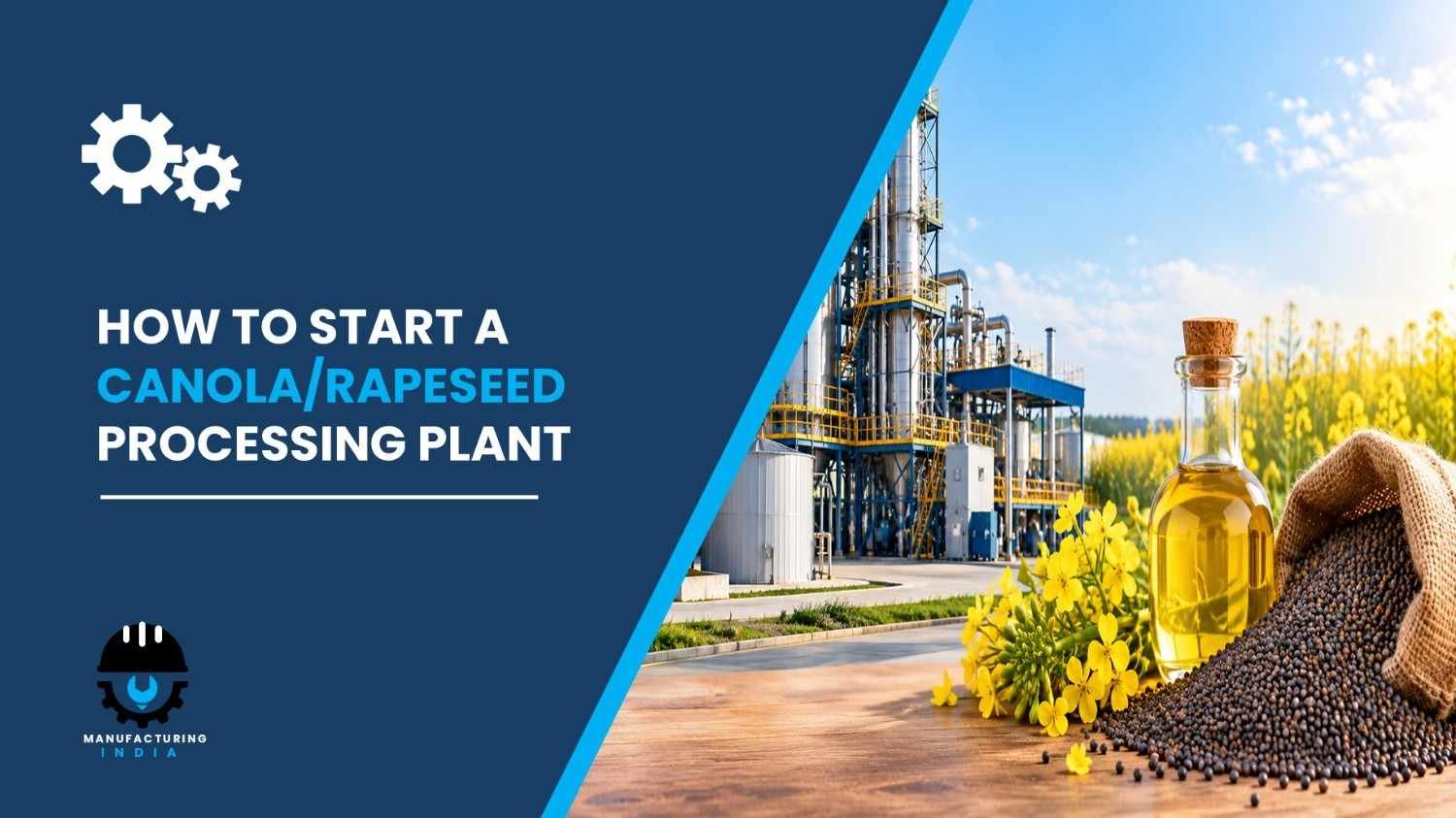
A canola/rapeseed processing plant setup in India presents a compelling investment case for investors serving food & beverage, biofuels, animal feed, oleochemicals/industrial, and retail and foodservice demand. Edible oils are staple inputs across households and food manufacturing, which gives the sector consistent baseline demand. Renewable diesel and biodiesel growth adds further pull for vegetable-oil feedstocks, while the protein-rich meal left after crushing supports compound feed production. These products are critical to India’s food, feed, and energy value chains.
India offers urbanisation, expanding infrastructure, the Make in India initiative, and established industrial belts in states such as Gujarat and Maharashtra, all of which favour domestic oilseed crushing and refining close to seed supply and target markets. A dual revenue stream from oil and meal further strengthens project economics, and proximity to buyers helps minimise distribution costs. Together these factors make India strategically sound for this production.
Supportive biofuel policy, cost-competitive operations, a dual oil-and-meal revenue model, and diversified demand sectors make this a strong proposition. Gross margins of 30-40% and net margins of 15-22% keep break-even viable, provided sourcing is disciplined and capacity utilisation stays steady.
What is Canola/Rapeseed?
Canola/rapeseed refers to oilseed crops from Brassica species processed mainly into vegetable oil and high-protein meal. “Canola” typically denotes low-erucic, low-glucosinolate rapeseed varieties preferred for edible use. The seed is valued for its high oil content and yields a refined oil with a neutral sensory profile, suitable for cooking, frying, and food manufacturing. Processing also produces canola/rapeseed meal, a protein-rich co-product used in compound feed. Depending on end use, the oil is supplied as crude, degummed, or fully refined, and it also serves as a lipid feedstock in biofuel value chains. The canola/rapeseed processing procedure runs from seed reception through mechanical pressing and solvent extraction to refining and packaging. End-use industries include food & beverage, biofuels, animal feed, oleochemicals/industrial, and retail and foodservice supply.
Cost of Setting Up a Canola/Rapeseed Processing Plant in India
The cost of establishing a canola/rapeseed processing plant depends on capacity, technology, location, automation, and regulatory compliance. A detailed feasibility study should cover location analysis, plant layout, project economics, and financial projections before capital is committed.
1. Capital Expenditure (CapEx)
Machinery costs account for the largest portion of total capital expenditure for the canola/rapeseed processing plant. Land and site development, including land registration and boundary development, forms a substantial part of the investment, and investors can compare SEZ and industrial estate options for infrastructure access. Site selection should prioritise easy access to seeds and solvents, reliable transport, utilities, and waste management. Civil works cover the processing shed, laboratory, storage, and administrative block, while the layout should separate raw material storage, production, quality control, and finished goods, with room for future expansion. Other capital costs include effluent treatment, pre-operative expenses, commissioning, and import duties where equipment is imported. Machinery must be corrosion-resistant and compliant with industry standards for safety, efficiency, and reliability.
Key machinery required includes:
- Seed receiving systems
- Cleaning units
- Dryers
- Flakers/roller mills and cookers
- Presses
- Oil clarification/filtration equipment
- Refining plant
- Filling/packaging lines
Request a Sample Report for In-Depth Market Insights: https://www.imarcgroup.com/canola-rapeseed-processing-plant-project-report/requestsample
2. Operational Expenditure (OpEx)
Raw material cost accounts for approximately 70-80% of total operating expenditure, driven by canola/rapeseed and solvents, so long-term contracts with reliable nearby suppliers help stabilise pricing and secure steady supply. Utility cost, covering electricity, water, and steam, represents about 15-20% of OpEx. Other operating costs include transportation, packaging, salaries and wages, repairs and maintenance, depreciation, and taxes. In the first year these costs are significant for the canola/rapeseed processing plant, and by the fifth year total operating cost is expected to increase substantially because of inflation, market fluctuations, and rising key material costs.
3. Plant Capacity
The proposed canola/rapeseed processing plant is designed for an annual capacity of 50,000-200,000 MT, enabling economies of scale while retaining operational flexibility. Capacity can be customized to investor requirements, and profitability improves with higher capacity utilisation.
4. Profit Margins and Financial Projections
Financial projections cover NPV, IRR, payback period, gross margin, and net margin, built on assumptions about capital investment, operating costs, capacity utilisation, pricing trends, and demand outlook. Gross profit margins typically range between 30-40%, while net profit margins range between 15-22%, supported by stable demand and value-added applications. These ROI indicators should be tested through sensitivity analysis before final investment.
Why Set Up a Canola/Rapeseed Plant in India?
Dual Revenue Stream (Oil and Meal): Processing produces refined oil and protein meal, supporting diversified earnings and improving overall economics. Demand for high-protein meal in poultry, dairy, and swine feed strengthens this model further.
Biofuel-Driven Demand: Renewable diesel and biodiesel growth increases demand for lipid feedstocks, improving crush margins and encouraging investment. The oil can also be converted into fatty acids and derivatives for lubricants, surfactants, and specialty chemicals.
Policy and Regulatory Tailwinds: Policy mandates and decarbonisation targets support vegetable-oil-based blending in biofuels, which underpins steady feedstock demand for a canola/rapeseed processing plant.
Cost-Competitive Manufacturing: A site with easy access to seeds and solvents, dependable transport, utilities, and waste management keeps logistics and operating costs in check, while proximity to target markets minimises distribution costs.
Active Industry Investment: Global oilseed crushing capacity and strategic investments in processing infrastructure are increasing. Canada accounts for around 23% of global rapeseed production, with about 22 million metric tons estimated for the 2025/2026 marketing year, and U.S. harvested canola acreage exceeded 2.7 million acres in 2024, up 15% from 2023. In September 2025, Burcon NutraScience Corporation announced the first commercial sales of Puratein C, a canola protein isolate containing over 90% protein, made from the meal left after oil extraction.
Local Supply Chain Preference: Supermarkets, private labels, restaurants, and institutional kitchens drive high-volume everyday consumption, and feed compounders need steady protein supply. Domestic processors can serve these buyers through shorter supply chains.
Canola/Rapeseed Processing – Step by Step
The canola/rapeseed processing procedure uses mechanical pressing followed by solvent extraction as the primary production method.
- Seed Reception: seed receiving systems take in the incoming seed.
- Cleaning: the seed passes through cleaning units.
- Drying & Conditioning: dryers prepare the seed for further processing.
- Flaking/Size Reduction: flakers/roller mills reduce the seed.
- Cooking/Conditioning: cookers condition the flaked seed.
- Mechanical Pressing: presses extract oil from the conditioned seed.
- Solvent Extraction: solvents recover the remaining oil.
- Desolventizing/Toasting: produces desolventized-toasted meal that suits compound feed production.
- Oil Clarification/Filtration: clarification and filtration equipment clean the oil.
- Refining: the refining plant produces crude, degummed, or fully refined oil.
- Packaging and Dispatch: filling/packaging lines pack oil and meal for dispatch to end-use industries.
Key Applications
Canola/rapeseed products serve five major industries:
- Food & Beverage: household cooking, frying, and processed foods needing a neutral, stable oil.
- Biofuels: lipid feedstock for biodiesel and renewable diesel.
- Animal Feed: protein source in poultry, dairy, and swine feed.
- Oleochemicals/Industrial: fatty acids and derivatives used in lubricants, surfactants, and specialty chemicals.
- Retail & Foodservice: supply to supermarkets, private labels, restaurants, and institutional kitchens.
Leading Manufacturers
Several multinational companies with extensive production capacities lead the global canola/rapeseed industry:
- Louis Dreyfus Company
- Cargill Incorporated
- Associated British Foods
- Archer Daniels Midland Company
- Wilmar International Ltd.
- Bunge Limited
- Jivo Wellness Pvt. Ltd.
- American Vegetable Oils
Timeline to Start the Plant
- Feasibility study and project report preparation
- Land acquisition and site development
- Regulatory approvals and environmental clearances
- Factory licence and fire safety compliance
- Machinery procurement and installation
- Raw material supplier agreements and supply chain setup
- Trial production and quality testing
- Commercial production launch
Licences and Regulatory Requirements
Starting a canola/rapeseed processing unit in India requires several approvals:
- Business registration (Proprietorship, LLP, or Pvt Ltd)
- Factory Licence under the Factories Act
- Environmental Clearance from State Pollution Control Board
- GST Registration
- Fire Safety NOC
- Hazardous/chemical compliance for solvent handling
- Effluent Treatment Plant (ETP) operational clearance
- Occupational Health and Safety compliance
Key Challenges to Consider
- High Capital Requirements: machinery takes the largest share of CapEx, alongside land and site development, so funding must be planned carefully for a canola/rapeseed processing plant.
- Raw Material Price Volatility: seeds and solvents make up 70-80% of OpEx, so price swings directly affect margins unless supply contracts are negotiated.
- Regulatory Compliance: effluent treatment, emission standards, and local zoning rules must be met throughout operations.
- Technology Pressure: corrosion-resistant, standards-compliant equipment and advanced monitoring systems that detect leaks or process deviations are essential.
- Competition: global players such as Cargill Incorporated, Bunge Limited, and Wilmar International Ltd. operate at scale.
- Skilled Manpower: trained staff are needed to control operating costs and run quality assurance systems, SOPs, and audits.
Frequently Asked Questions
How much does it cost to set up a canola/rapeseed processing plant in India?
The cost depends on capacity (50,000-200,000 MT), technology, location, and automation, with machinery taking the largest CapEx share.
Is canola/rapeseed processing profitable in India in 2026?
Gross margins typically range from 30-40% and net margins from 15-22% under normal operating conditions.
What machinery is required for a canola/rapeseed plant in India?
Seed receiving systems, cleaning units, dryers, flakers/roller mills and cookers, presses, oil clarification/filtration equipment, a refining plant, and filling/packaging lines.
What licences and approvals are required to start a canola/rapeseed plant in India?
Business registration, Factory Licence, State Pollution Control Board clearance, GST registration, Fire Safety NOC, and ETP clearance.
What raw materials are needed for canola/rapeseed processing?
Seeds and solvents, which together drive about 70-80% of OpEx.
What are the environmental compliance requirements for a canola/rapeseed plant in India?
Effluent treatment systems, monitoring for leaks or deviations, and compliance with emission standards and local zoning laws.
What is the best location to set up a canola/rapeseed plant in India?
One with easy access to seeds and solvents, proximity to markets, and strong transport, utilities, and waste management. Gujarat and Maharashtra merit evaluation.
What is the break-even period for this type of plant in India?
It depends on capacity, utilisation, and pricing, and the report covers payback period and NPV in detail.
What government incentives are available for manufacturers in India?
Policy mandates support biofuel demand, and financial assistance is covered in the report, so investors should check applicable central and state schemes.
Key Takeaways for Investors
The canola/rapeseed processing plant offers an attractive opportunity, backed by food & beverage, biofuel, animal feed, oleochemicals/industrial, and retail and foodservice demand. Across capacities of 50,000-200,000 MT, gross margins of 30-40% and net margins of 15-22% point to sound financial viability. Canada alone is estimated at about 22 million metric tons in the 2025/2026 marketing year, which shows the scale of the global market. With edible oil, feed protein, and renewable fuel demand all expanding, long-term demand for canola/rapeseed looks sustainable.
About the Author