
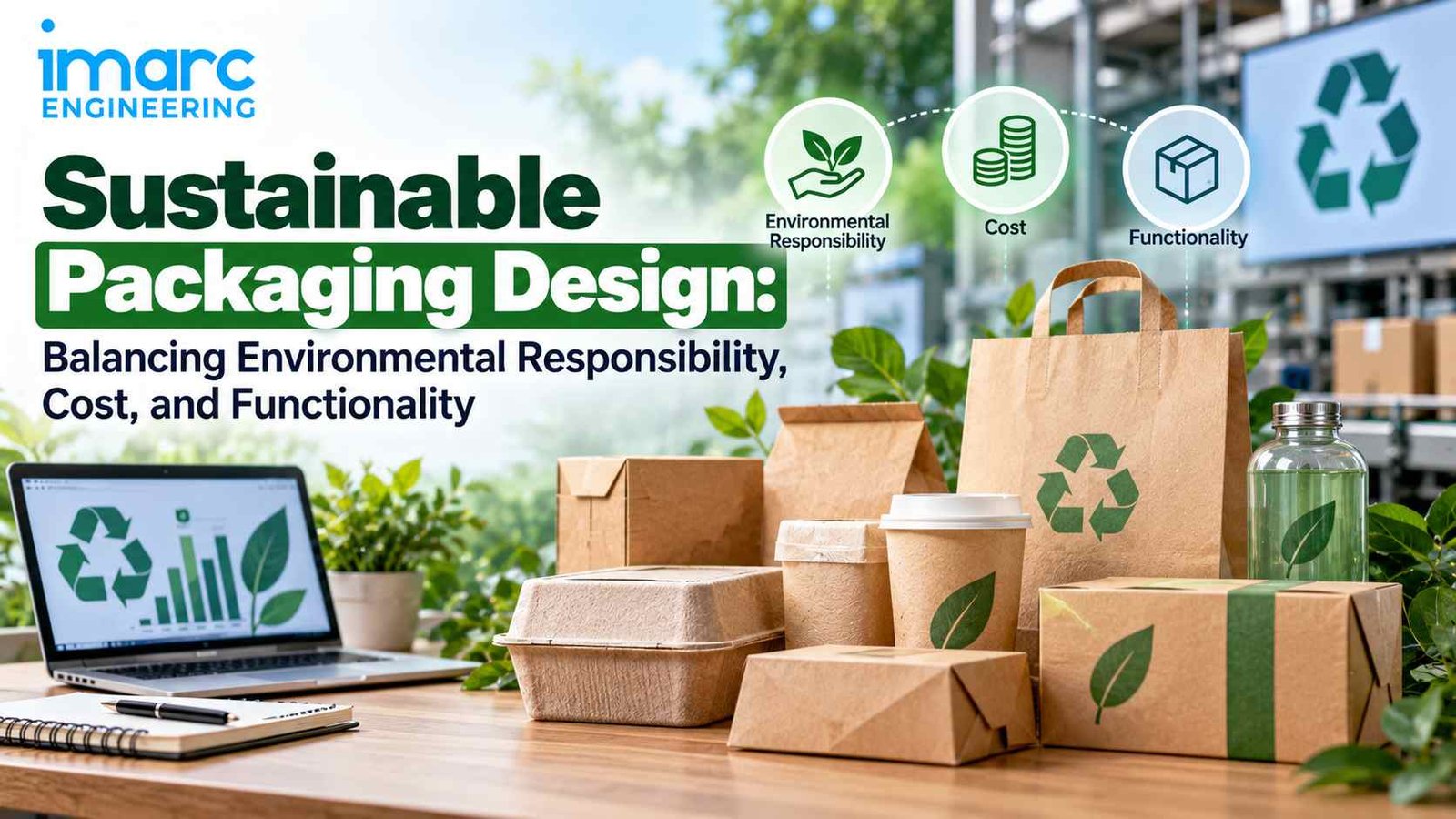
Sustainable packaging design is the practice of choosing materials, structures and labels that reduce environmental impact without raising cost or weakening product protection. In India the stakes are rising. IMARC Group values the India sustainable packaging market at USD 10.23 billion in 2025, heading to USD 17.73 billion by 2034 at a 6.31% CAGR, with paper and paperboard holding 38.6% of the 2025 market.
jin88bet.oneSeparately, industry research from January 2026 puts the broader paper and paperboard packaging market at USD 14.57 billion in 2026, up from USD 13.72 billion in 2025. The hard part is not picking a “green” material. It is making that material survive transport, protect shelf life, clear regulatory checks and still meet the unit-cost target.
This is why many manufacturers involve packaging design consulting services at concept stage rather than after the product is finalised. The sections below show how to weigh the three variables using real numbers, timelines and decision rules.
ak168app.babyWhat Does Sustainable Packaging Design Balance?
Every packaging decision trades off three variables, and each needs a measurable target.
ak168app.club- Environmental responsibility: recyclability, recycled content, material reduction and readiness for Extended Producer Responsibility (EPR)
- Cost: material price, tooling, design and testing spend, compliance effort and logistics efficiency
- Functionality: transit protection, shelf life, food-contact safety, shelf appeal and space for mandatory label disclosures
A design that wins on one variable and fails another usually returns as a redesign, so all three should carry a number before material selection begins.
ks168app.siteEnvironmental Responsibility: What the Numbers Say
- Multilayer plastics: they make up nearly 60% of India’s packaging output and are difficult to recycle
- Low-value recovery: more than 30% of collected flexible waste is diverted to low-value applications
- EPR categories: Category I (rigid), Category II (flexible below 50 microns), Category III (flexible above 50 microns) and Category IV (multilayered plastic)
- Mono-material shift: recyclable polyethylene and polypropylene pouches are replacing laminates, though they need high-barrier technology to protect shelf life
Design for recyclability follows a few repeatable rules.
- Use mono-material construction wherever barrier needs allow
- Specify removable labels and closures
- Choose colours compatible with optical sorting
- Select adhesives compatible with recycling processes
- Apply plastics identification marking under IS 14535
Exporters must also track the EU Packaging and Packaging Waste Regulation 2025, which covers recycled content, recyclability and EPR harmonisation. Environmental claims should be backed by Life Cycle Assessment under ISO 14040 and 14044, and by Advertising Standards Council of India guidelines, to avoid greenwashing risk.
ic88The Three-Way Balance in One View

Cost: Where the Money Actually Goes
- Basic label design: INR 25,000-3 lakh
- Comprehensive packaging design programme: INR 5-50 lakh
- Structural design with testing: INR 3-25 lakh
- Regulatory compliance advisory: INR 5-30 lakh
- Full brand identity plus packaging programme: INR 25 lakh-2 crore
- Development timeline: 18-38 weeks from product brief to launch
Material cost adds pressure. Industry research notes that the shift to recyclable mono-material structures and recycled content is raising R&D spend and material costs for converters, while fibre packaging faces chronic containerboard energy-cost inflation. Assessing recyclability during structural design materially outperforms modifying a pack after launch, because a post-launch change triggers new tooling, artwork and approvals.
Functionality: Protection Cannot Be Traded Away
- Transit protection: drop testing per International Safe Transit Association (ISTA) protocols and transport simulation
- Shelf life: validation for sensitive products before production commitment
- Food contact: FSSAI Packaging Regulations 2018 specify migration limits, recycled plastic in direct food contact is restricted, and BIS IS 9845 supports overall migration compliance
- Label space: Legal Metrology and FSSAI require net quantity, MRP, dates, ingredients and licence details at prescribed prominence, so minimal designs must still reserve room
- Right-sizing: reducing void space cuts material use and shipping volume without weakening protection
Packaging Development Roadmap With Sustainability and Cost Checkpoints
Embedding checks at each stage keeps the balance visible. The roadmap below uses standard development durations.
ic88
How to Balance All Three: A Practical Approach
- Set targets first: fix the recyclability class, EPR category and unit-cost ceiling in the brief
- Shortlist 2-3 materials: compare weight, barrier performance and landed price side by side
- Prototype early: test the leading option against transit and shelf-life conditions before tooling
- Validate claims: document recyclability and recycled content before printing any environmental message
- Plan for scale: check export rules such as the EU regulation before locking the design
Read our detailed analysis here: https://www.imarcengineering.com/blog/how-to-set-up-sustainable-packaging-manufacturing-plant-in-india
ic88How IMARC Engineering’s Expertise Can Help in Sustainable Packaging Design
- Regulatory scan: Legal Metrology, FSSAI, CDSCO, BIS and plastic EPR requirements mapped before design begins
- Structural and material selection: trade-off analysis across protection, recyclability and cost
- Artwork and labelling: compliant layouts with multilingual panels and barcode integration
- Prototyping coordination: drop testing, shelf-life validation and consumer feedback before launch
- Export readiness: compliance planning for EU, US, UK and Middle East destinations
Consult With Our Experts: https://www.imarcengineering.com/contact?service=packaging-design-labelling
ic88Conclusion
Sustainable packaging succeeds when environmental targets, cost ceilings and functional requirements are set together at the brief stage. With the market heading from USD 10.23 billion to USD 17.73 billion by 2034, manufacturers that test materials early, validate claims and plan for EPR and export rules avoid expensive redesigns. The best pack is the one that protects the product, meets regulation and stays within budget.
lr88Frequently Asked Questions
lr88What is sustainable packaging design?
It is the design of packaging that lowers environmental impact through recyclability, recycled content and material reduction while keeping cost and product protection within target.
lr88How much does sustainable packaging design cost in India?
A comprehensive packaging design programme typically costs INR 5-50 lakh. Structural design with testing costs INR 3-25 lakh, and regulatory advisory costs INR 5-30 lakh.
lr88How long does packaging development take?
op88Development typically takes 18-38 weeks from product brief to launch, with prototyping and testing taking 4-8 weeks.
Which packaging material is most sustainable?
si88No single material fits every product. Paper and paperboard hold 38.6% of India’s sustainable packaging market, while mono-material plastics suit applications needing high barrier performance.
88vContact Us:
SEXXXXX-VNIMARC Engineering
Phone: +91-120-433-0800
Email: sales@imarcengineering.com
India: C-130, Sector 2, Noida, Uttar Pradesh 201301
LinkedIn: https://www.linkedin.com/showcase/imarc-engineering/
About the Author