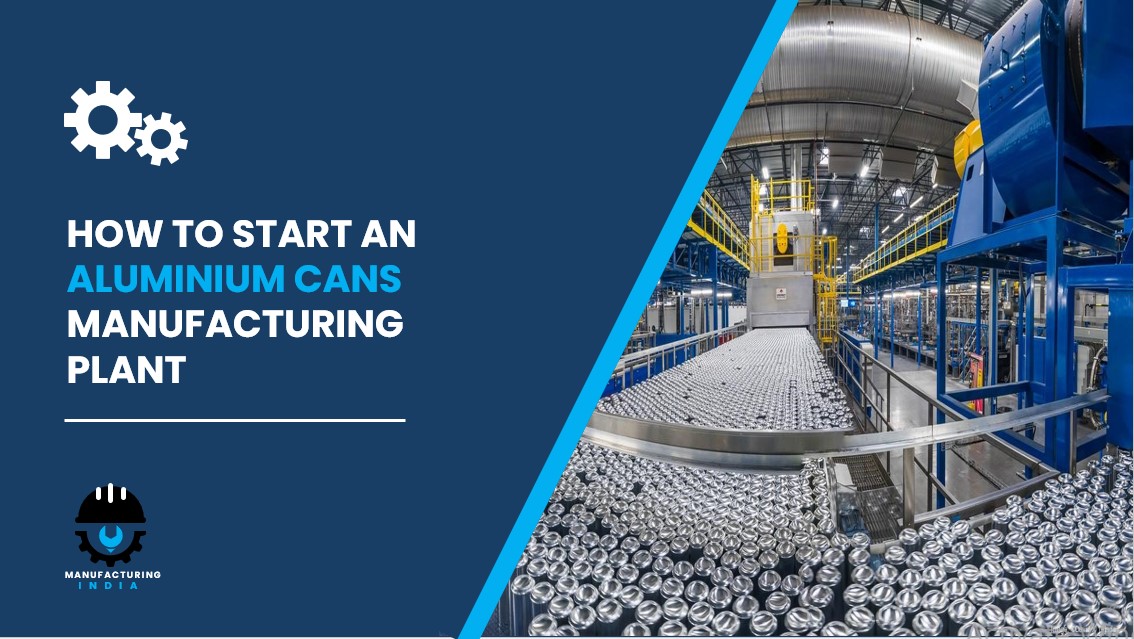
Aluminium cans manufacturing plant cost in India has become a central concern for investors and entrepreneurs as the country’s beverage, food, and FMCG sectors continue to grow at an accelerated pace. India’s 1.4 billion consumers, rising urbanization, and strong demand for sustainable packaging from the pharmaceutical, energy drink, and ready-to-drink (RTD) beverage industries are creating an unprecedented market opportunity for aluminium can manufacturers operating within the country.
The Government of India’s Make in India initiative, combined with a growing domestic preference for recyclable packaging and a shift away from single-use plastics, is creating a highly supportive policy environment. India’s pharmaceutical sector is projected to reach USD 130 billion by 2030 (FICCI), while the FMCG sector continues to drive massive demand for aluminium-based packaging across beverage, food, and personal care categories. With a well-established aluminium raw material supply chain and competitive manufacturing costs, India stands out as one of the most attractive investment destinations for setting up an aluminium cans production facility in Asia.
“With over 1.4 billion consumers, a rapidly urbanizing population, Make in India policy support, and a booming beverage and FMCG sector, India offers one of the most financially attractive environments for aluminium cans manufacturing — with gross margins of 25–35% and strong long-term investment viability.”
What is an Aluminium Can?
Aluminium cans are lightweight, durable, and easily recyclable containers widely used for packaging beverages, food, and other liquid products. Manufactured from aluminium sheets or coils, these containers offer excellent product protection, preserving flavour, carbonation, and freshness while providing a long shelf life. They are prized across the beverage, pharmaceutical, and food packaging industries for their superior barrier properties, corrosion resistance, and 100% recyclability without any loss in material quality.
The production process for aluminium cans involves body forming, necking, flanging, lid attachment, coating, printing, and stringent quality inspection to ensure performance and safety. They are globally recognized as a premium packaging format and are increasingly preferred by FMCG and beverage brands in India as part of a broader shift toward sustainable and eco-conscious packaging.
Request a Sample Report: https://www.imarcgroup.com/aluminium-cans-manufacturing-plant-project-report/requestsample
Cost of Setting Up an Aluminium Cans Manufacturing Plant in India
The Aluminium Cans Manufacturing Plant Cost in India varies based on production capacity, technology type, level of automation, plant location, and regulatory compliance requirements. Below is a structured breakdown of all major cost components that investors must account for during project planning.
1. Capital Expenditure (CapEx)
The total capital investment in an aluminium cans manufacturing plant covers the following key components:
Land and Site Development — This includes land acquisition, boundary development, land registration charges, and basic site preparation. Costs vary significantly depending on whether the plant is located in an industrial estate, Special Economic Zone (SEZ), or a privately acquired plot.
Civil Works and Construction — Building costs include the main manufacturing shed, utility area, raw material warehouse, quality control laboratory, administrative block, and worker amenity facilities.
Machinery and Equipment — Machinery costs account for the largest portion of total capital expenditure. Key equipment required for an aluminium cans plant includes:
• Aluminium Coil Handling and Uncoiling Equipment
• Cupping Presses
• Body Makers (Ironing Machines)
• Trimming Machines
• Washers and Decorators
• Necking and Flanging Machines
• Lid Manufacturing and Seaming Equipment
• Leak Testers and Quality Inspection Systems
• Palletizing Systems and Conveyors
Other Capital Costs — These include pre-operative expenses, commissioning charges, import duties (if machinery is sourced internationally), utilities installation, fire safety systems, and Effluent Treatment Plant (ETP) setup.
2. Operational Expenditure (OpEx)
Once the plant is commissioned, the ongoing cost structure is dominated by the following components:
- Raw Material Cost (Aluminium Coils): 70–80% of Total OpEx — Aluminium coils are the primary raw material and account for approximately 70–80% of total operating expenses. Additional materials may include lacquers, inks, coatings, and lid stock depending on the product specifications.
- Utility Costs — Utilities including electricity (consumed heavily by body makers, presses, and compressors), water (used in washing and cooling), and compressed air represent a significant ongoing operational expense.
- Other Operating Costs — The remaining budget covers transportation, secondary packaging, salaries and wages, maintenance, depreciation, taxes, and miscellaneous overhead expenses.
3. Plant Capacity
The proposed manufacturing facility is designed with an annual production capacity ranging between 500 million to 1 billion cans. This capacity range enables economies of scale while maintaining operational flexibility to serve multiple end-use segments, including beverages, pharmaceuticals, food packaging, and personal care products. Smaller pilot setups may start at a lower capacity, but profitability significantly improves with higher capacity utilization.
4. Profit Margins and Financial Projections
Gross Profit Margin: 25–35%
Net Profit Margin: 10–15%
Financial projections for the proposed project have been developed based on realistic assumptions related to capital investment, operating costs, production capacity utilization, pricing trends, and demand outlook. These projections provide a comprehensive view of the project’s financial viability, ROI, profitability, and long-term sustainability. A thorough analysis covering Net Present Value (NPV), Internal Rate of Return (IRR), payback period, sensitivity analysis, and income and expenditure projections is recommended before finalizing the investment.
Ask Analyst for Customized Report: https://www.imarcgroup.com/request?type=report&id=7279&flag=C
Why Set Up an Aluminium Cans Manufacturing Plant in India?
India presents a uniquely favorable environment for establishing an aluminium cans manufacturing plant:
- Surging Domestic Demand — India’s packaged beverages, pharmaceutical, and personal care industries are growing rapidly, driving massive demand for aluminium-based packaging. Rising consumption of ready-to-drink beverages, energy drinks, and carbonated soft drinks is directly fuelling can demand across urban and semi-urban markets.
- Policy and Regulatory Tailwinds — The Government of India’s Make in India initiative, emphasis on circular economy principles, and push for sustainable packaging over single-use plastics are creating a policy-friendly environment for efficient aluminium can manufacturers.
- Cost-Competitive Manufacturing — India offers competitive land costs, a large pool of trained labor, and a well-established aluminium raw material supply chain, making it one of the most cost-effective manufacturing locations in Asia for aluminium cans production.
- Sustainability and Recyclability Advantage — Aluminium is 100% recyclable without any degradation in quality. India’s growing push for eco-conscious packaging and circular economy adoption is accelerating the shift toward aluminium cans across multiple sectors.
- Export Opportunities — India-based manufacturers can tap into growing export demand from Southeast Asia, the Middle East, and Africa, where local aluminium packaging capacity remains limited.
- Local Supply Chain Preference — FMCG, beverage, and pharmaceutical companies increasingly prefer sourcing packaging locally to reduce logistics costs, improve responsiveness, and maintain better quality control — a direct opportunity for domestic aluminium can manufacturers.
Manufacturing Process — Step by Step
The aluminium cans manufacturing process follows a well-defined sequence of operations from raw material intake to final dispatch:
- Raw Material Sourcing and Coil Handling — Aluminium coils are received, inspected, and stored in temperature-controlled warehouses before entering the production line.
- Uncoiling and Lubrication — Aluminium coils are uncoiled, lubricated with process oil, and fed into the cupping press.
- Cupping — Circular discs are stamped from aluminium sheets using a high-speed press and converted into shallow cups.
- Body Making (Ironing) — The cups are drawn and ironed through a series of dies in a body maker to achieve the required wall thickness and height.
- Trimming — The top of each can body is trimmed to ensure uniform height and remove excess material. Trimmed scrap aluminium is collected and recycled.
- Washing and Cleaning — Can bodies are cleaned and degreased to remove lubricants and surface contaminants, preparing them for coating and printing.
- Decorating and Printing — External graphics and branding are applied using high-speed multi-colour printing machines.
- Internal Coating — The inside of each can is coated with a food-grade lacquer to prevent contact between the product and aluminium metal.
- Necking and Flanging — The top of the can is necked inward and flanged outward to accept the lid.
- Lid Manufacturing and Seaming — Lids are separately manufactured from aluminium sheet, coated, dried, and an easy-open tab is formed. Lids are then seamed onto filled cans.
- Quality Inspection — Each can undergoes leak testing, dimensional checks, and print quality inspection before final packaging.
- Palletizing and Dispatch — Finished cans are palletized, shrink-wrapped, and prepared for dispatch to customers.
Key Applications of Aluminium Cans
Aluminium cans manufactured in India serve a wide variety of end-use industries and product categories:
- Beverage Packaging: Carbonated soft drinks, energy drinks, beer, sparkling water, fruit juices, and ready-to-drink (RTD) beverages
- Food Packaging: Condensed milk, soups, sauces, and specialty food products requiring long shelf life and airtight protection
- Pharmaceutical Packaging: Aerosol-based medicines, topical sprays, and liquid pharmaceutical formulations
- Personal Care and Household: Deodorants, body sprays, dry shampoos, air fresheners, and surface cleaners in aerosol or pressurized formats
Global Market Outlook
The global aluminium cans market was valued at USD 56.95 billion in 2025 and is projected to reach USD 73.02 billion by 2034, exhibiting a CAGR of 2.8% from 2026 to 2034. This sustained growth is driven by urbanization, rising consumption of packaged beverages, increasing demand for sustainable and recyclable packaging formats, and the rapid growth of energy drink, beer, and ready-to-drink sectors globally. India, as a high-growth emerging market, is positioned to contribute significantly to this global demand trajectory.
Timeline to Start the Plant
Setting up an aluminium cans manufacturing plant from ideation to commissioning typically requires 12 to 18 months. This covers the following phases:
• Feasibility study and detailed project report preparation
• Land acquisition and site development
• Regulatory approvals and environmental clearances
• Factory license and fire safety compliance
• Machinery procurement and installation
• Trial production and quality testing
• Commercial production launch
Licenses and Regulatory Requirements
Starting an aluminium cans manufacturing unit in India requires several approvals and certifications, including:
• Business registration (Proprietorship, LLP, or Private Limited Company)
• Factory License under the Factories Act
• Environmental Clearance from the State Pollution Control Board
• GST Registration
• Fire Safety NOC
• BIS Certification (for specific food-grade or beverage applications)
• FSSAI Approval (for cans used in food and beverage packaging)
• Import-Export Code (IEC) — for machinery imports or product exports
Key Challenges to Consider
Before investing, entrepreneurs should be aware of the common challenges in this business:
- High Capital Requirements: Initial CapEx for precision machinery and infrastructure is significant, especially for mid to large-scale plants targeting production of 500 million to 1 billion cans annually.
- Raw Material Price Volatility: Aluminium coil prices are linked to global commodity markets and can fluctuate, directly impacting margins and cost predictability.
- Regulatory Compliance: Meeting food-grade, pharmaceutical, and environmental standards requires continuous investment in quality systems and compliance processes.
- Competition: The market includes both organized large players and regional manufacturers, requiring a clear differentiation strategy on quality, pricing, or sustainability.
- Skilled Manpower: Operating high-speed body makers, printing lines, and necking equipment requires trained and certified technical staff.
- Energy Consumption: Aluminium can manufacturing is energy-intensive. Managing electricity costs effectively through process optimization or renewable energy sourcing is critical to maintaining profitability.
Frequently Asked Questions
The following questions are answered in the report:
- How much does it cost to set up an aluminium cans manufacturing plant in India?
- What is the annual production capacity of a standard aluminium cans plant in India?
- What machinery is required for aluminium cans manufacturing in India?
- What are the raw material requirements for setting up an aluminium cans plant?
- What licences and approvals are required to start an aluminium cans manufacturing unit in India?
- What is the break-even period for an aluminium cans manufacturing plant in India?
- Is aluminium cans manufacturing profitable in India in 2026?
- What government incentives are available for aluminium packaging manufacturers in India?
- What is the step-by-step manufacturing process for aluminium cans?
Key Takeaways for Investors
The aluminium cans manufacturing industry in India represents a high-growth, scalable investment opportunity backed by surging domestic demand for sustainable packaging and strong government policy support. With gross profit margins of 25–35%, an annual production capacity of 500 million to 1 billion cans, and a global market valued at USD 56.95 billion in 2025 projected to reach USD 73.02 billion by 2034 at a CAGR of 2.8%, a well-planned Aluminium Cans Manufacturing Plant Cost in India remains competitive and financially viable across production scales.
About the Author