Setting up an electric vehicle battery manufacturing plant in India presents a compelling investment case anchored by the global transition towards sustainable mobility solutions, supported by rising environmental awareness, government incentives, and surging demand for electric vehicles across the automotive and transportation sectors. EV batteries are the foundational component of the electric vehicle ecosystem — enabling zero-emission mobility, contributing to national sustainability goals, and reducing India’s deep dependence on fossil fuel imports. As India accelerates the electrification of personal, commercial, and public transport, the demand for domestically produced, high-capacity lithium-ion battery packs is entering a period of structural, sustained growth.
India’s combination of expanding EV adoption, policy-driven infrastructure investment, and the Make in India initiative creates a strategically compelling environment for establishing a domestic electric vehicle battery manufacturing unit. States such as Gujarat, Maharashtra, and Telangana offer established automotive manufacturing corridors, large industrial zones with reliable power infrastructure, and proximity to both component suppliers and vehicle OEM customers. With global EV battery demand expected to grow at a CAGR of 22.2% through 2034, India-based producers are positioned to capture a significant share of this growth while benefiting from cost-competitive land, labour, and supply chain advantages that export-oriented markets cannot match.
An electric vehicle battery manufacturing plant in India combines strong policy tailwinds — including government subsidies for EVs and battery production facilities — with a fast-expanding domestic demand base in automotive and energy storage. Gross margins of 20–30% and net margins of 5–10% confirm financial viability across the 1–5 GWh annual capacity range, and the alignment of this investment with India’s clean energy and electric mobility megatrends makes break-even well within reach for well-capitalised operators.
What is an Electric Vehicle Battery?
Electric vehicle (EV) batteries are defined as high-capacity batteries that serve as the primary energy source for electric vehicles. These batteries are constructed from lithium-ion materials, which confer the high energy specificity and long cycle life that EV applications demand. The lithium-ion chemistry enables fast charging, high energy density, and long operational lifespan — all critical to the performance expectations of modern electric vehicle users. EV batteries exist in modular structures, with individual cells assembled into modules and packs, enabling the performance of electric vehicles to be continuously monitored and optimised in relation to energy efficiency. The fundamental function of an EV battery is to store energy drawn from the electrical grid during charging and discharge it through electric motors to propel the vehicle, providing a clean and efficient alternative to internal combustion engines.
The primary production method used in an electric vehicle battery manufacturing plant is lithium-ion battery cell manufacturing, combined with assembly and testing processes. End-use industries served include automotive, renewable energy, and transportation — three of the highest-growth sectors within India’s industrial economy. Beyond vehicle propulsion, EV batteries also serve energy storage systems and grid storage applications, extending the commercial addressable market well beyond the vehicle OEM base.
Cost of Setting Up an Electric Vehicle Battery Manufacturing Plant in India
The cost of establishing an electric vehicle battery manufacturing plant in India depends on production capacity, technology selection, geographic location, degree of automation, and the full scope of regulatory compliance required.
1. Capital Expenditure (CapEx)
The capital expenditure for this type of facility spans several major cost categories. Land and site development encompasses land acquisition charges, registration fees, boundary development, site grading, and supporting civil infrastructure — and investors who locate within a Special Economic Zone (SEZ) or notified industrial estate can benefit from concessional land rates, tax exemptions, and expedited approval processes. Civil works cover the construction of the manufacturing shed, dry-room and cleanroom enclosures essential for battery cell production, raw material and finished goods storage, quality control laboratory, and an administrative block.
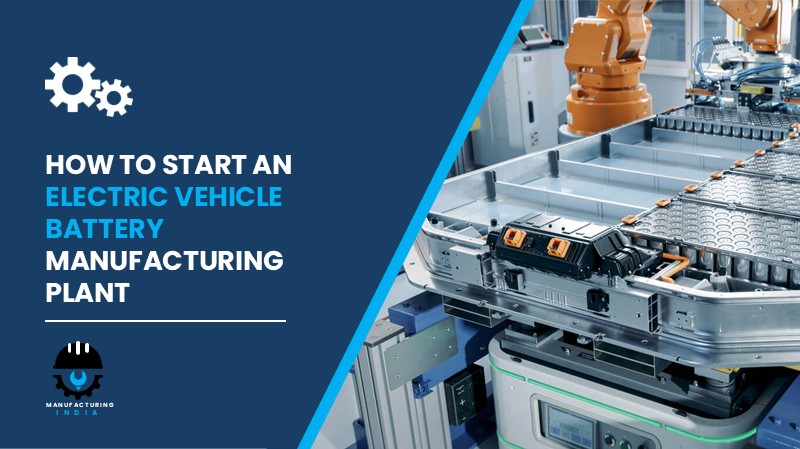
Machinery and equipment represent the single largest portion of the total capital expenditure for this facility. Key machinery required includes:
- Electrode coating machines
- Calendering presses
- Slitting units
- Vacuum drying ovens
- Cell assembly lines
- Electrolyte filling systems
- Formation and testing cyclers
- Module and pack integration stations
Other capital costs include effluent treatment plant (ETP) installation, safety and monitoring systems, pre-operative expenses, and import duties applicable to specialised equipment not currently manufactured at scale domestically.
Request a Sample Report for In-Depth Market Insights: https://www.imarcgroup.com/electric-vehicle-battery-manufacturing-plant-project-report/requestsample
2. Operational Expenditure (OpEx)
The operating cost structure of an electric vehicle battery manufacturing plant is dominated by raw material consumption. Raw materials — specifically Cathode Active Material (CAM) such as Lithium Nickel Manganese Cobalt Oxide (NMC) or Lithium Iron Phosphate (LFP) powder; Anode Active Material (AAM) such as graphite (natural or synthetic) or silicon composites; along with electrolyte (LiPF₆ in organic solvents), separator (polyolefin film), copper foil (anode current collector), and aluminium foil (cathode current collector) — collectively account for approximately 70–80% of total operating expenses. This high raw material intensity makes long-term supplier contracting and procurement hedging essential components of the operational strategy.
Utility costs, covering electricity, water, and steam, account for approximately 10–15% of total OpEx. Battery cell manufacturing involves energy-intensive drying, formation cycling, and testing processes, making access to stable and cost-competitive power a key criterion in site selection. Other operating costs include transportation and logistics, packaging, salaries and wages, routine maintenance, depreciation provisions, and taxation. By the fifth year of operations, total operational costs are projected to increase substantially due to inflation, market fluctuations, potential rises in raw material costs, supply chain disruptions, rising consumer demand, and shifts in the global economy.
3. Plant Capacity
The proposed manufacturing facility is designed with an annual production capacity ranging between 1 and 5 GWh, enabling economies of scale while maintaining operational flexibility across multiple market segments. Capacity can be customised to align with the specific investment parameters and market access strategy of each investor. Profitability improves with higher capacity utilisation, and the broad capacity band accommodates both initial-scale entrants seeking to establish market position and large-scale industrial investors targeting OEM supply agreements.
4. Profit Margins and Financial Projections
The financial profile of an electric vehicle battery manufacturing plant reflects both the capital intensity of the sector and the strong pricing power that comes from serving structurally growing end markets. Gross profit margins typically range between 20–30%, supported by stable demand across automotive and energy storage applications. Net profit margins range between 5–10% under normal operating conditions. A comprehensive financial analysis covering net present value (NPV), internal rate of return (IRR), payback period, liquidity ratios, profit and loss projections, and sensitivity analysis is essential for investor decision-making and for securing project financing from banks and financial institutions.
Why Set Up an Electric Vehicle Battery Plant in India?
Surging Electric Vehicle Adoption: EV batteries are the heart of the electric vehicle industry and the single most critical enabler of zero-emission mobility. Global sales of electric cars are approaching 20 million units in 2025 and account for over a quarter of all cars sold worldwide, according to the International Energy Agency’s Global EV Outlook. India’s rapidly expanding EV ecosystem — covering two-wheelers, three-wheelers, passenger cars, and commercial vehicles — is generating an accelerating domestic demand base for locally manufactured battery packs.
Renewable Energy and Grid Storage Demand: Beyond vehicle applications, EV batteries serve a rapidly growing role in energy storage systems and grid storage — sectors that are expanding alongside India’s ambitious renewable energy capacity targets. The global shift to a low-carbon economy is directly driving sustained demand for high-capacity battery systems, and India’s grid-scale storage ambitions represent a second major revenue stream for domestic battery manufacturers.
Government Support and Infrastructure Development: Policies including subsidies for electric vehicles, grants for battery production facilities, and large-scale investment in EV charging infrastructure are directly promoting demand for high-quality, cost-efficient EV batteries. The alignment of government policy with the market opportunity makes the regulatory environment in India particularly favourable for establishing this type of manufacturing unit.
Cost-Competitive Manufacturing Base: India offers competitive industrial land costs within notified estates and SEZs, a large and trainable engineering workforce at globally competitive wage levels, and a growing domestic supplier base for packaging, logistics, and ancillary components. These structural advantages reduce both CapEx and OpEx relative to manufacturing in Europe or North America, where battery plant establishment costs are significantly higher.
Active Global Industry Investment: The global EV battery sector is witnessing large-scale capacity and technology investment by leading players. In September 2025, SK On entered the US battery energy storage market, striking a deal to supply up to 7.2 GWh of battery storage to Flatiron across the US and Northeast region through 2030. In July 2025, Panasonic Energy Co., Ltd. announced the opening of its new cylindrical lithium-ion battery factory for electric vehicles in De Soto, near Kansas City — one of the largest automotive battery plants in North America. These developments confirm global confidence in the long-term commercial viability of scaled battery manufacturing.
Strategic Location for Supply Chain Efficiency: Establishing an EV battery manufacturing unit in proximity to India’s key automotive manufacturers and growing EV charging infrastructure significantly reduces transportation costs and enhances supply chain responsiveness. Automotive and transport companies increasingly prefer locally sourced battery systems to manage lead times, currency risk, and local content compliance requirements.
Manufacturing Process – Step by Step
The electric vehicle battery manufacturing process uses lithium-ion battery cell manufacturing, assembly, and testing as the primary production methods. The process involves multiple precision-controlled unit operations as follows:
- Raw Material Receipt and Handling: Cathode Active Material (LFP or NMC powder), anode active material (graphite or silicon composites), electrolyte, separator film, copper foil, and aluminium foil are received and stored under controlled humidity and temperature conditions.
- Electrode Coating: Cathode and anode slurries are prepared and applied to aluminium and copper foil substrates respectively using electrode coating machines to form uniform active material layers.
- Calendering: Coated electrode sheets are compressed using calendering presses to achieve the required electrode density and thickness uniformity.
- Slitting: Calendered electrode rolls are cut to precise widths using slitting units, producing electrode strips ready for cell assembly.
- Vacuum Drying: Slit electrodes and separator films are dried in vacuum drying ovens to remove residual moisture that could compromise cell electrochemistry and safety.
- Cell Assembly — Stacking or Winding: Cathode, separator, and anode layers are stacked or wound into cell jelly rolls using cell assembly lines, and the assembled cells are sealed into their housings.
- Electrolyte Filling and Sealing: Cells are filled with electrolyte (LiPF₆ in organic solvents) using electrolyte filling systems under controlled atmospheric conditions, then hermetically sealed.
- Formation and Aging: Assembled cells undergo initial charge-discharge cycling in formation and testing cyclers to activate the electrochemical interface and stabilise cell performance, followed by an aging period.
- Module and Pack Integration: Tested cells are assembled into modules and battery packs using module and pack integration stations, incorporating cell interconnects, busbars, thermal management components, and battery management systems.
- Quality Control Testing and Dispatch: Finished battery packs are subjected to comprehensive electrical, safety, and dimensional testing before packaging and dispatch to automotive OEMs, energy storage system integrators, and grid storage customers.
Key Applications
Electric vehicle batteries serve critical functions across the automotive, renewable energy, and transportation sectors, with applications spanning both mobility and stationary energy storage:
- Battery Pack Assembly: Cell interconnects, busbars, flexible battery cables, and module-level grounding systems for EV drivetrains.
- Power Distribution Systems: High-current connections between cells, modules, battery management systems, and power electronics for vehicle and industrial applications.
- Thermal and Safety Systems: Bonding straps and grounding components for cooling plates, enclosures, and safety circuits within battery packs.
- Charging and High-Voltage Interfaces: High-frequency and high-voltage cables for fast charging systems, DC links, and inverter connections in electric vehicles and energy storage installations.
Leading Manufacturers
The global electric vehicle battery industry is served by a concentrated group of multinational producers with extensive production capacities and diversified application portfolios across automotive, renewable energy, and transportation. Key players in the global market include:
- CATL
- LG Chem
- Panasonic
- Samsung SDI
- Tesla
Timeline to Start the Plant
- Feasibility study and project report preparation
- Land acquisition and site development
- Regulatory approvals and environmental clearances
- Factory licence and fire safety compliance
- Machinery procurement and installation
- Raw material supplier agreements and supply chain setup
- Trial production and quality testing
- Commercial production launch
Licences and Regulatory Requirements
Starting an electric vehicle battery manufacturing unit in India requires several approvals:
- Business registration (Proprietorship, LLP, or Private Limited Company)
- Factory Licence under the Factories Act
- Environmental Clearance from the State Pollution Control Board
- GST Registration
- Fire Safety NOC
- Hazardous and Chemical Material compliance (applicable given the use of electrolyte solvents, lithium compounds, and flammable materials)
- Effluent Treatment Plant (ETP) operational clearance
- Occupational Health and Safety compliance
Key Challenges to Consider
High Capital Requirements: Establishing an EV battery manufacturing plant demands substantial upfront investment in specialised equipment including electrode coating machines, formation and testing cyclers, vacuum drying ovens, and cleanroom-grade assembly lines. The entry into this sector requires significant capital for technology, R&D capability, and high-standard manufacturing processes.
Raw Material Price Volatility: The primary raw materials — LFP powder, NMC cathode material, graphite, electrolyte solvents, copper foil, and aluminium foil — account for approximately 70–80% of total OpEx, making the cost structure highly sensitive to commodity price movements. Long-term procurement contracts and strategic supplier relationships are essential to protect margins.
Regulatory Compliance: Manufacturing with lithium compounds, flammable electrolyte solvents, and high-voltage systems requires rigorous hazardous material handling protocols, fire safety systems, effluent treatment infrastructure, and ongoing environmental compliance management.
Technology and Innovation Pressure: The global EV battery industry is evolving rapidly, with leading players including CATL, LG Chem, and Panasonic investing heavily in R&D to improve energy density, cycle life, and cost per kilowatt-hour. Indian manufacturers must invest in technical capabilities and quality systems to remain competitive against established international suppliers.
Competition from Global Players: The industry is dominated by large multinationals — including CATL, LG Chem, Panasonic, Samsung SDI, and Tesla — all of which benefit from massive economies of scale, deep OEM relationships, and proprietary cell chemistries that create formidable competitive barriers for new entrants.
Skilled Manpower: Operating electrode coating, formation cycling, and module integration equipment requires engineers and technicians with electrochemistry, battery manufacturing, and quality systems expertise that is not yet abundantly available in India’s talent market, necessitating dedicated investment in training and workforce development.
Frequently Asked Questions
How much does it cost to set up an electric vehicle battery manufacturing plant in India?
The total investment depends on annual capacity (1–5 GWh), technology type, site location, automation level, and regulatory compliance scope. A detailed CapEx and OpEx breakdown covering land, machinery, raw materials, and utilities is available in the full project report.
Is electric vehicle battery manufacturing profitable in India in 2026?
Yes. Gross profit margins range between 20–30% and net profit margins between 5–10% under normal operating conditions, reflecting the value-added nature of battery pack production and stable demand from automotive and energy storage customers.
What machinery is required for an electric vehicle battery plant in India?
Key equipment includes electrode coating machines, calendering presses, slitting units, vacuum drying ovens, cell assembly lines, electrolyte filling systems, formation and testing cyclers, and module and pack integration stations.
What licences and approvals are required to start an electric vehicle battery plant in India?
Required approvals include business registration, Factory Licence, Environmental Clearance, GST registration, Fire Safety NOC, hazardous and chemical material compliance, ETP operational clearance, and Occupational Health and Safety compliance.
What raw materials are needed for electric vehicle battery manufacturing?
Key raw materials include Cathode Active Material (LFP or NMC powder), Anode Active Material (graphite or silicon composites), electrolyte (LiPF₆ in organic solvents), separator (polyolefin film), copper foil, and aluminium foil – which together constitute 70–80% of total operating costs.
What are the environmental compliance requirements for an electric vehicle battery plant in India?
The facility must obtain Environmental Clearance from the State Pollution Control Board, operate a certified Effluent Treatment Plant, implement hazardous chemical handling and storage protocols, and install advanced process monitoring systems to ensure compliance with emission and waste management standards.
What is the best location to set up an electric vehicle battery plant in India?
Optimal locations offer proximity to automotive OEM clusters, reliable and cost-competitive power infrastructure, established logistics networks, and access to technical talent. Industrial corridors in Gujarat, Maharashtra, and Telangana are particularly well suited given their strong automotive manufacturing ecosystems.
What is the break-even period for this type of plant in India?
The break-even period is determined by capacity utilisation, product pricing, and operating cost management. A detailed payback period, NPV, and IRR analysis based on realistic financial assumptions is included in the full project report.
What government incentives are available for manufacturers in India?
Government incentives include subsidies for electric vehicle purchases, grants for battery production facility establishment, and investment in EV charging infrastructure — all of which support demand for domestically manufactured EV batteries. The Make in India initiative and state-level industrial incentives provide additional financial and regulatory support to eligible manufacturers.
Key Takeaways for Investors
An electric vehicle battery manufacturing plant in India represents one of the most strategically aligned investment opportunities available in the country’s industrial landscape, directly serving the automotive, renewable energy, and transportation sectors that are at the centre of India’s economic transformation. The financial profile — gross margins of 20–30% and net margins of 5–10% — confirms commercial viability across the 1–5 GWh annual capacity range, for both early-stage and large-scale industrial entrants. The global EV battery market was valued at USD 74.92 billion in 2025 and is projected to reach USD 455.24 billion by 2034 at a CAGR of 22.2% — one of the fastest growth trajectories in the global manufacturing sector. With government policy firmly aligned behind electric mobility, infrastructure investment accelerating, and global manufacturers committing billions to new capacity, demand sustainability for domestically produced EV batteries in India is structurally guaranteed for the decade ahead.
About the Author