Setting up a banana fiber manufacturing plant in India presents a compelling investment case driven by the rapid growth of sustainable textiles, eco-friendly packaging, and biodegradable composites across domestic and global markets. The textile and apparel industry, paper and packaging industry, automotive and composites sector, handicrafts and home décor industry, and agricultural and horticultural sectors are all actively seeking plant-based alternatives to synthetic materials. As regulatory pressure against plastics and synthetic fibers intensifies, banana fiber has emerged as one of the most commercially viable natural fiber solutions, placing India in a strategically advantageous position to become a major production hub for this material.
India’s unique combination of abundant banana cultivation, a vast agricultural waste stream, and a well-established textile manufacturing base makes it ideally suited for banana fiber production at scale. Urbanisation, infrastructure growth, and the Make in India initiative have together created a policy and industrial environment that actively supports value-added agro-processing ventures. States such as Gujarat, Maharashtra, Tamil Nadu, and Andhra Pradesh all significant banana-growing regions offer ready access to raw materials, industrial estates, and logistics networks that reduce the cost of setting up and operating this type of plant. With government schemes increasingly supporting rural industrialisation and circular economy models, this investment is both timely and financially sound.
India’s banana fiber manufacturing sector stands at the intersection of agricultural surplus and industrial demand. Backed by policy support, cost-competitive raw material access, and growing domestic and export markets in textiles, packaging, and composites, a well-planned facility can achieve gross margins of 45–60%, with a viable break-even trajectory supported by scalable production and multi-industry demand.
What is Banana Fiber?
Banana fiber consists of natural lignocellulosic fibers extracted from the pseudo stem of banana plants after fruit harvesting. These fibers are processed through mechanical and chemical treatments to obtain strong, lightweight, and biodegradable fibers suitable for industrial and commercial use. Banana fiber offers good tensile strength, moisture absorbency, and thermal resistance, making it suitable for diverse applications across industries that demand performance-grade natural materials.
Various grades of banana fiber are available in the market, including raw fiber, refined fiber, blended fiber, yarn-grade fiber, and specialty treated fibers for technical uses. The fiber has a relatively long shelf life when properly dried and stored and is compatible with both manual and mechanized processing systems. Its consistent physical properties support uniform quality in large-scale industrial manufacturing as well as in small-scale artisanal and rural production setups.
The production follows a process of banana pseudo stem collection, fiber extraction and decortication, washing and drying, combing and grading, and baling or packaging. End-use industries served include the textile and apparel industry, paper and packaging industry, automotive and composites sector, handicrafts and home décor industry, and agricultural and horticultural applications.
Cost of Setting Up a Banana Fiber Manufacturing Plant in India
The cost of establishing a banana fiber manufacturing plant in India depends on plant capacity, technology selection, location, level of automation, and regulatory compliance obligations. A detailed cost assessment covering both capital and operational expenditure is essential for accurate financial planning.
1. Capital Expenditure (CapEx)
The total capital investment for a banana fiber manufacturing plant covers several major cost heads. Land and site development expenses include land registration charges, boundary development, and site preparation. Investors may benefit from locating within an SEZ or government-designated industrial estate to avail land subsidies and infrastructure support. Civil works costs cover the construction of the manufacturing shed, quality control laboratory, raw material and finished goods storage facilities, and the administrative block.
Machinery and equipment represent the largest share of total capital expenditure. Key machinery required includes:
- Banana fiber extraction and decortication machines
- Washing and drying units
- Combing and grading equipment
- Fiber cutting and baling machines
- Quality inspection systems
Other capital costs include effluent treatment plant (ETP) installation, pre-operative expenses such as feasibility study and project report fees, commissioning charges, and applicable import duties on specialized equipment.
Request a Sample Report for In-Depth Market Insights: https://www.imarcgroup.com/banana-fiber-manufacturing-plant-project-report/requestsample
2. Operational Expenditure (OpEx)
The operating cost structure of a banana fiber manufacturing plant is primarily driven by raw material consumption. The principal raw material is banana pseudo stems, which are agricultural waste generated during banana cultivation. This raw material accounts for approximately 15–25% of total operating expenses. Securing long-term supplier contracts with banana farmers and agro-processing cooperatives in proximity to the plant is a sound strategy for controlling input price volatility.
Utility costs, covering electricity, water, and steam used in washing, drying, and processing operations, account for 20–25% of total OpEx. Other ongoing operating costs include transportation and logistics, packaging materials, salaries and wages for production and quality control staff, routine maintenance, depreciation on machinery, and applicable taxes. By the fifth year of operations, total operational costs are expected to increase substantially due to inflation, market fluctuations, potential rises in raw material prices, supply chain disruptions, and shifts in global demand patterns.
3. Plant Capacity
The proposed manufacturing facility is designed with an annual processing capacity of approximately 150 Metric Tons, enabling economies of scale while maintaining operational flexibility. This capacity figure can be customized to match specific investor requirements, whether the objective is a small decentralised rural unit or a larger integrated production facility. Profitability improves progressively with higher capacity utilisation, as fixed costs are spread over a greater volume of output, improving gross and net margin performance.
4. Profit Margins and Financial Projections
The banana fiber manufacturing plant project demonstrates healthy profitability potential under normal operating conditions. Gross profit margins typically range between 45–60%, supported by stable demand across multiple end-use sectors and the value-added nature of processed fiber products. Net profit margins range between 20–35%, which is strong for an agro-processing venture at this scale. Financial projections developed for the project cover NPV (net present value), IRR (internal rate of return), payback period analysis, income and expenditure projections, and a full profit and loss account. Break-even is typically achievable within 3 to 6 years depending on capacity utilisation, raw material pricing, and market demand conditions.
Why Set Up a Banana Fiber Plant in India?
Rising Demand for Sustainable Materials. Increasing environmental awareness and regulatory support for biodegradable products are driving demand for banana fiber across industries. Increasing restrictions on synthetic materials and plastics are encouraging manufacturers to shift toward biodegradable alternatives, directly strengthening demand for banana fiber products in both domestic and export markets.
Abundant Raw Material Availability. Banana cultivation generates large quantities of agricultural waste, ensuring a steady and low-cost raw material supply for fiber production. India’s extensive banana farming base across southern and eastern states creates a natural supply chain advantage, reducing input procurement costs for a facility located near growing regions.
Versatility and Customization Across Grades. Banana fiber can be processed into different grades, lengths, and blends to meet varied industrial and commercial requirements. This flexibility in product offering allows a single plant to serve multiple market segments simultaneously, from textile yarn manufacturers to automotive composite producers.
Policy and Regulatory Tailwinds. The Make in India initiative and government schemes such as the PM-DevINE programme under which NECTAR inaugurated a Common Facility Centre for banana fibre extraction in Kukidolong, Nagaland in June 2025 signal strong policy support for this sector. Governments may offer incentives such as capital subsidies, tax exemptions, reduced utility tariffs, export benefits, or interest subsidies to promote manufacturing.
Active Industry Investment. In March 2025, Chankorb Pvt. Ltd. launched a range of innovative eco-friendly products made from banana fiber at its first product launch event in Imphal, targeting sustainability and regional economic growth. These developments confirm that organized investment in banana fiber production is gaining momentum in India.
Scalability and Rural Employment Generation. Banana fiber manufacturing can be scaled efficiently while promoting rural livelihoods and decentralised production models. The low environmental impact of the production process, which utilises agricultural waste and generates minimal pollution, also supports compliance with circular economy principles increasingly required by institutional buyers and export markets.
Manufacturing Process Step by Step
The banana fiber manufacturing process uses banana pseudo stem collection, fiber extraction and decortication, washing and drying, combing and grading, and baling or packaging as the primary production method. Each stage involves specific unit operations and quality checks to ensure consistent fiber quality at commercial scale.
- Banana Pseudostem Collection: Banana pseudostems are harvested from banana plants after fruit collection and transported to the processing facility as the primary raw material input.
- Fiber Extraction and Decortication: Banana fiber extraction and decortication machines strip the outer layers of the pseudostem and mechanically separate the fiber bundles from the pulpy matrix.
- Washing: The extracted fibers are washed using water or an alkaline solution to remove impurities, starch, and residual plant matter, improving fiber cleanliness and processability.
- Drying: Washed fibers pass through drying units to remove moisture content to the required level, preserving fiber integrity and extending shelf life.
- Combing and Grading: Combing and grading equipment aligns fiber strands, removes short fibers and residual debris, and separates output into quality grades suitable for different end-use applications.
- Fiber Cutting: Fiber cutting machines trim fibers to specified lengths depending on buyer requirements for yarn production, composite manufacturing, or handicraft use.
- Quality Inspection: Quality inspection systems verify fiber length, strength, moisture content, and grade consistency against established specifications.
- Baling and Packaging: Finished fiber is baled or packaged using fiber cutting and baling machines and dispatched to buyers across the textile and apparel industry, paper and packaging industry, automotive and composites sector, handicrafts and home décor industry, and agricultural and horticultural applications.
Key Applications
Banana fiber serves a broad spectrum of industries, each leveraging distinct properties of the fiber for commercial and industrial use.
- Textile and Apparel Sector: Used in producing yarns, blended fabrics, and sustainable garments due to its strength, breathability, and natural appearance.
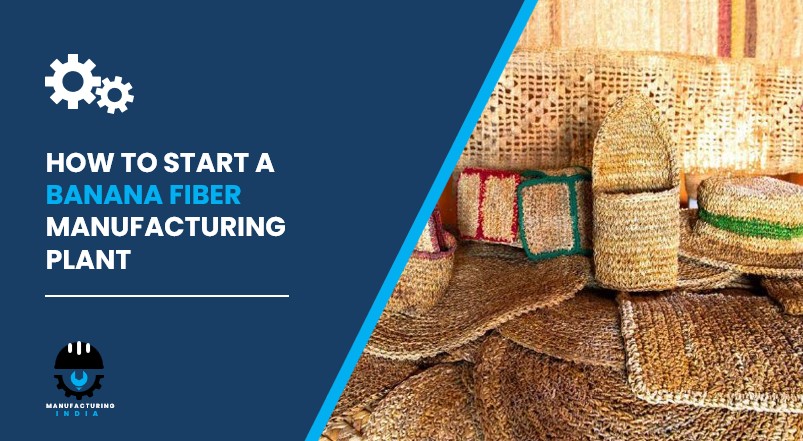
- Handicrafts and Home Décor: Artisans use banana fiber for producing baskets, mats, carpets, curtains, and decorative items with natural aesthetics.
- Paper and Packaging Industry: Utilized for making specialty papers, packaging boards, and molded pulp products as a sustainable alternative to wood pulp.
- Automotive and Industrial Composites: Acts as reinforcement material in lightweight composite components for interior panels and insulation applications.
- Agricultural Applications: Banana fiber-based products are used for mulching mats, ropes, and erosion control materials due to their biodegradability.
Leading Manufacturers
The global banana fiber industry includes several manufacturers with diversified production capacities and application portfolios serving end-use sectors from textiles to automotive composites. Key players include:
- Essence Fibers
- Anandi Texstyles Pvt Ltd.
- Champs Agro Unit
- Dindayal Ropes India
- Gagana Enterprises
Timeline to Start the Plant
- Feasibility study and project report preparation
- Land acquisition and site development
- Regulatory approvals and environmental clearances
- Factory licence and fire safety compliance
- Machinery procurement and installation
- Raw material supplier agreements and supply chain setup
- Trial production and quality testing
- Commercial production launch
Licences and Regulatory Requirements
Starting a banana fiber manufacturing unit in India requires several approvals:
- Business registration (Proprietorship, LLP, or Pvt Ltd)
- Factory Licence under the Factories Act
- Environmental Clearance from State Pollution Control Board
- GST Registration
- Fire Safety NOC
- Effluent Treatment Plant (ETP) operational clearance
- Occupational Health and Safety compliance
Key Challenges to Consider
High Capital Requirements. Land acquisition, civil construction, and specialized machinery for fiber extraction and decortication represent a substantial upfront investment that requires careful financial structuring and access to term loans or government-backed schemes.
Raw Material Price Volatility. The primary input banana pseudostems is an agricultural by-product whose availability and cost can vary seasonally. Securing long-term supply agreements with banana farmers or cooperatives is essential to protect operational margins.
Regulatory Compliance. Obtaining environmental clearances, ETP approvals, factory licences, and fire safety certifications involve multiple regulatory bodies and can extend the pre-production timeline if not planned in advance.
Technology and Innovation Pressure. Improved processing technologies and product innovations, including blended and treated fibers, are continuously enhancing fiber performance and application scope. Staying current with decortication and grading equipment upgrades is necessary to maintain product competitiveness.
Competition. Key players including Essence Fibers, Anandi Texstyles Pvt Ltd., Champs Agro Unit, Dindayal Ropes India, and Gagana Enterprises are already active in the market, and new entrants must differentiate through quality, pricing, or product specialization.
Skilled Manpower. Operating fiber extraction, decortication, and quality inspection systems requires trained technical staff. Availability of skilled manpower in rural banana-growing regions may require investment in operator training programmes.
Frequently Asked Questions
- How much does it cost to set up a banana fiber manufacturing plant in India? Total setup cost varies with capacity, technology, and location, covering land, civil works, machinery including extraction and decortication machines, ETP, and working capital. A detailed feasibility report provides project-specific cost estimates.
- Is banana fiber manufacturing profitable in India in 2026? Yes. Gross profit margins of 45–60% and net margins of 20–35% indicate strong profitability potential, supported by growing demand across textiles, packaging, and composites.
- What machinery is required for a banana fiber plant in India? Key equipment includes banana fiber extraction and decortication machines, washing and drying units, combing and grading equipment, fiber cutting and baling machines, and quality inspection systems.
- What licences and approvals are required to start a banana fiber plant in India? Requirements include business registration, Factory Licence, Environmental Clearance, GST Registration, Fire Safety NOC, ETP clearance, and Occupational Health and Safety compliance.
- What raw materials are needed for banana fiber manufacturing? The primary raw material is banana pseudostems, which are agricultural waste from banana cultivation. Alkaline solutions may also be used in certain processing methods.
- What are the environmental compliance requirements for a banana fiber plant in India? Plants must obtain Environmental Clearance from the State Pollution Control Board, install and operate an effluent treatment plant, and comply with emission and waste disposal standards.
- What is the best location to set up a banana fiber plant in India? Locations with proximity to banana-growing regions such as Tamil Nadu, Andhra Pradesh, Maharashtra, or the North East offer raw material access, while states with established industrial estates provide infrastructure support and potential policy incentives.
- What is the break-even period for this type of plant in India? Break-even typically ranges from 3 to 6 years, depending on scale, raw material pricing, capacity utilisation rates, and market demand conditions.
- What government incentives are available for manufacturers in India? Governments may offer capital subsidies, tax exemptions, reduced utility tariffs, export benefits, and interest subsidies under national and regional industrial policies, including schemes under the Make in India and PM-DevINE programmes.
Key Takeaways for Investors
A banana fiber manufacturing plant in India offers a well-rounded investment opportunity anchored by demand from the textile and apparel industry, paper and packaging industry, automotive and composites sector, handicrafts and home décor industry, and agricultural and horticultural applications. The financial model is viable across a range of plant capacities, with gross margins of 45–60% and net margins of 20–35% supporting strong returns on capital deployed. The global banana fiber market, valued at USD 104.49 billion in 2025, is projected to reach USD 173.56 billion by 2034 at a CAGR of 5.8%, reflecting sustained long-term demand growth that underpins the viability of new manufacturing capacity. With regulatory support for biodegradable materials accelerating, export opportunities expanding, and domestic consumption of sustainable fiber products rising, the demand outlook for banana fiber production in India remains structurally sound for years ahead.
About the Author