
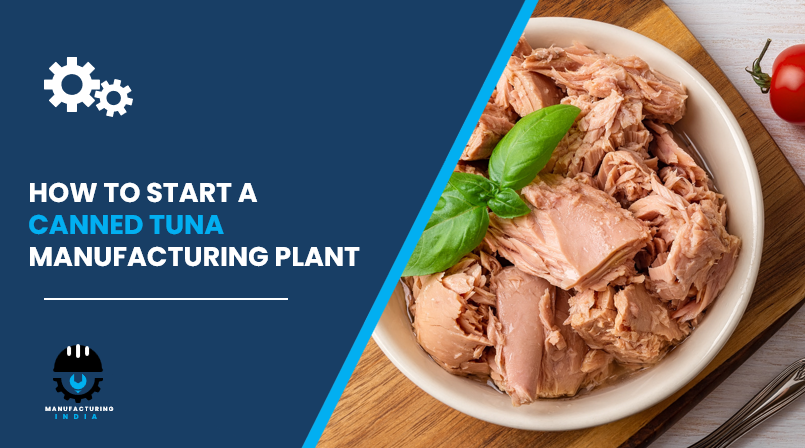
Setting up a canned tuna manufacturing plant in India presents a compelling investment case driven by the country’s rising seafood consumption, expanding organised retail and food service channels, and growing awareness among urban consumers of the nutritional benefits of high-protein, omega-3-rich food products. Canned tuna — a processed fish product made by cleaning, precooking, portioning, filling, and sterilising tuna fish within airtight metal cans or retort packaging — has become a staple item in modern food consumption at both the household and commercial level. Its shelf stability, affordability, and high protein content make it equally relevant across retail grocery shelves, food service kitchens, institutional catering programmes, emergency preparedness stockpiles, and pet food manufacturing supply chains. As India’s middle class expands and busy urban lifestyles drive demand for convenient, ready-to-eat protein sources, the domestic market for shelf-stable seafood products is firmly on an upward trajectory.
India’s strategic advantages as a production location for this sector are well established. The country has a long coastline providing proximity to marine fish landings, including tuna species such as skipjack and yellowfin that are critical feedstocks for canned production. Coastal states such as Kerala, Tamil Nadu, Andhra Pradesh, and Gujarat support established cold-chain and fisheries processing infrastructure that reduces inbound logistics costs for raw tuna. The Make in India initiative and government seafood export promotion schemes provide policy tailwinds for value-added fish processing investment, while the global aquaculture and capture fisheries sector — which reached an unprecedented 130.9 million tonnes of total production according to the Food and Agriculture Organization — supplies abundant raw material for a facility with the right sourcing relationships in place.
India’s canned tuna manufacturing investment is aligned with megatrends in convenient high-protein food, supported by government food processing and export promotion policies, and commercially underpinned by gross margins of 25–35% and net margins of 10–15%. With canned tuna holding 70.9% of the tuna market by segment, the demand foundation for this facility type is both deep and durable.
What is Canned Tuna?
Canned tuna is a processed fish product made by cleaning, precooking, slicing, filling, packaging, and sterilising tuna fish within airtight packaging materials such as metal cans and retort packaging. Tuna fish species used for canned tuna production include skipjack, yellowfin, albacore, and bigeye — each offering different flavour profiles, texture characteristics, and market positioning. The finished product is preserved in water, brine, or vegetable oil solutions and is valued for its high protein content, omega-3 fatty acids, long shelf life, and storage stability without refrigeration.
The production method follows a structured multi-stage sequence: precooking, cleaning, portioning, and canning. End-use industries served include retail grocery, food service, catering, emergency preparedness stockpiling, and pet food manufacturing. Product applications span shelf-stable protein products, salad ingredients, sandwich fillings, casserole components, disaster relief supplies, and companion animal nutrition — making this one of the most versatile processed seafood products in global food supply chains. According to industry data, canned tuna represents the leading market segment, holding 70.9% of total tuna market shares in 2024.
Cost of Setting Up a Canned Tuna Manufacturing Plant in India
The total cost of establishing a canned tuna manufacturing plant in India depends on processing capacity, technology selection, geographic location, degree of automation, and food safety regulatory compliance requirements. Investors must plan comprehensively across both capital expenditure (CapEx) and operational expenditure (OpEx) to develop a reliable financial model for this production unit.
1. Capital Expenditure (CapEx)
Land and site development costs form a substantial part of the overall investment, covering land registration, boundary development, drainage, effluent management infrastructure, and cold storage facility construction. Positioning the facility near a coastal industrial estate or a designated seafood processing zone — particularly in states such as Kerala, Tamil Nadu, or Andhra Pradesh — can reduce raw material logistics costs and provide access to established fish landing infrastructure. Civil works and construction costs cover the main processing hall, raw fish receiving and cold storage area, precooking and sterilisation zones, can filling and sealing room, quality control laboratory, finished goods warehouse, and administrative block.
Machinery and equipment represent the single largest component of capital expenditure for this production unit. Key machinery required includes
- Thawing systems
- Butchering and cleaning stations
- Steam cookers
- Canning lines
- Sealing machines
- Sterilisation retorts
- Cooling tunnels
- Labelling systems
- Case-packing machines
Other capital costs include effluent treatment plant (ETP) setup for fish processing wastewater, cold chain equipment, pre-operative and project development expenses, commissioning charges, and import duties applicable to specialised retort and canning line equipment procured from international suppliers.
Request a Sample Report for In-Depth Market Insights: https://www.imarcgroup.com/canned-tuna-manufacturing-plant-project-report/requestsample
2. Operational Expenditure (OpEx)
Raw material cost is the dominant driver of operational expenditure for this production unit. Tuna fish — the primary feedstock in species including skipjack, yellowfin, albacore, and bigeye — along with brine and vegetable oil, accounts for approximately 70–80% of total OpEx. Securing long-term supply agreements with licensed fishing fleets, fish auction centres, and certified cold-chain aggregators is essential for maintaining consistent raw material availability and managing price volatility across fishing seasons. Utility costs, covering electricity for refrigeration, steam for precooking and sterilisation retorts, and water for processing and cleaning operations, account for a further 10–15% of OpEx.
Other ongoing operational costs include transportation and cold-chain logistics for inbound raw tuna and outbound finished canned product, packaging materials including metal cans, retort pouches, labels, and corrugated cases, salaries and wages for fish processing workers and quality assurance technicians, routine maintenance of canning and retort equipment, depreciation on civil and mechanical assets, and applicable taxes. By the fifth year of operations, total operational cost is expected to increase substantially due to inflation, market fluctuations, rising raw fish costs, supply chain disruptions, and shifts in the global economy.
3. Plant Capacity
The proposed manufacturing facility as described on the source page is designed with an annual processing capacity ranging between 10,000 and 20,000 metric tonnes (MT), enabling economies of scale while maintaining operational flexibility. Capacity can be customised per investor requirements depending on available capital, target market segments — retail, food service, or export — and the strength of raw tuna sourcing relationships in the chosen location. Profitability improves meaningfully with higher capacity utilisation, as fixed infrastructure and retort equipment costs are distributed across a greater volume of finished canned product.
4. Profit Margins and Financial Projections
The canned tuna manufacturing plant demonstrates healthy profitability under normal operating conditions. Gross profit margins typically range between 25–35%, supported by stable demand across retail, food service, and institutional buyer segments. Net profit margins average 10–15% over a five-year projection horizon. A comprehensive financial model for this unit should incorporate NPV (Net Present Value), IRR (Internal Rate of Return), payback period analysis, gross and net margin tracking by operating year, and sensitivity analysis around tuna raw material pricing cycles and vegetable oil cost movements. This financial depth is essential for securing bank term loans, export credit, or institutional equity participation in the facility.
Why Set Up a Canned Tuna Manufacturing Plant in India?
Rising Global Seafood Consumption and Convenient Protein Demand. The canned tuna market is driven by increasing global seafood consumption, urbanisation, and demand for convenient, ready-to-eat protein sources. India’s own urbanising middle class — increasingly time-pressed and nutrition-conscious — represents a natural domestic demand base for shelf-stable, affordable, high-protein seafood products. Rising awareness of the cardiovascular benefits of omega-3 fatty acids further supports consumption growth at the household level.
Dominance of Canned Segment Within the Tuna Market. Canned tuna is not simply a product category — it is the leading segment of the entire tuna market, holding 70.9% of tuna market shares in 2024. This structural dominance means that any investor establishing tuna processing capacity in India is entering a segment with proven, sustained consumer preference across both developed and emerging markets, reducing demand risk compared to other processed seafood formats.
Megatrend Alignment With Health-Conscious Urban Consumers. Rising demand for convenient, high-protein, and affordable food products, coupled with urbanisation and busy lifestyles, is driving steady global growth in canned seafood consumption. Food service distributors, institutional feeding programmes, and organised retail chains are all actively expanding their shelf-stable protein offerings — creating a reliable bulk demand stream for domestic canned tuna producers able to meet food safety and quality standards.
Policy and Food Security Support for Food Processing Investment. Government emphasis on food processing, export promotion, fisheries development, and value addition — including seafood processing incentives, cold-chain infrastructure schemes, and export subsidies — indirectly supports demand for canned tuna manufacturing investment in India. The Make in India initiative and schemes under the Ministry of Food Processing Industries further strengthen the investment case for building domestic canned seafood processing capacity.
Advancements in Processing Technology Improving Margins. Advancements in retort technology, automated canning lines, and cold-chain logistics have improved processing efficiency and product safety across the industry. Investors who adopt modern sterilisation retorts and automated filling lines can achieve higher throughput, lower per-unit labour costs, and more consistent product quality — all of which directly support the 25–35% gross margin range achievable in this sector.
Sustainability Certifications Opening Premium Export Markets. Sustainability certifications and traceability initiatives are increasingly influencing purchasing decisions, especially in developed markets, encouraging manufacturers to adopt responsible fishing and processing practices. A May 2025 University of Tasmania report commissioned by the Marine Stewardship Council (MSC) evaluated canned tuna brands against environmental claims standards — signalling that sustainability credentials are becoming a purchasing prerequisite for major retail buyers in Europe and North America. Indian producers who invest in certified sourcing and traceability systems can access these premium export channels.
Manufacturing Process – Step by Step
The canned tuna manufacturing process uses precooking, cleaning, portioning, and canning as the primary production method, executed through a sequential series of unit operations with integrated quality and food safety controls at each stage.
- Receiving and Cold Storage: Incoming tuna — in species including skipjack, yellowfin, albacore, or bigeye — is received, weighed, inspected for freshness, and held in cold storage to maintain raw material quality ahead of processing.
- Thawing: Frozen tuna is transferred to thawing systems where controlled water or air thawing restores the fish to the temperature required for safe and efficient butchering.
- Butchering and Cleaning: Fish are head-cut, eviscerated, and cleaned at butchering and cleaning stations. Fins, scales, and internal organs are removed, and the fish are rinsed before precooking.
- Steam Cooking (Precooking): Cleaned tuna is placed on racks and cooked in steam cookers at controlled temperatures and times to firm the flesh, facilitate meat separation, and reduce moisture content to specification.
- Cleaning and Portioning: Precooked fish are manually cleaned to remove skin, bones, and dark meat. The cleaned light and dark meat is then portioned into can-sized pieces or flaked to the required fill specification.
- Canning and Filling: Portioned tuna meat is loaded into cans on canning lines. Brine or vegetable oil is added to the specified fill level before lids are applied and cans are sealed using sealing machines.
- Sterilisation: Sealed cans are processed in sterilisation retorts at precise temperature and pressure profiles to achieve commercial sterility, eliminating pathogenic microorganisms and ensuring the product’s long shelf life without refrigeration.
- Cooling: Sterilised cans pass through cooling tunnels to rapidly reduce temperature, preventing overcooking of the product and preparing cans for labelling and packing.
- Labelling and Case Packing: Cooled cans are labelled with brand, nutritional, and regulatory information using labelling systems, then packed into corrugated cases by case-packing machines for warehouse storage and dispatch.
- Packaging and Distribution: Finished cases are palletised and dispatched to retail grocery distributors, food service buyers, institutional catering customers, emergency preparedness stockpilers, and pet food manufacturers.
Key Applications
A canned tuna manufacturing plant serves a diverse range of end-use sectors requiring shelf-stable, protein-rich food products. Key applications include:
- Retail Grocery: Shelf-stable canned tuna sold directly to household consumers through supermarkets, hypermarkets, and online grocery channels.
- Food Service and Catering: Bulk canned tuna supplied to restaurants, hotels, canteens, and catering businesses as a ready-to-use protein ingredient for salads, sandwiches, and hot dishes.
- Emergency Preparedness: Long shelf life and nutritional density make canned tuna a key item in government and institutional emergency food stockpiles and disaster relief supplies.
- Institutional Feeding Programmes: Schools, hospitals, defence establishments, and welfare programmes sourcing high-protein, affordable shelf-stable food at bulk scale.
- Pet Food Manufacturing: Tuna meat and processing by-products channelled into companion animal nutrition products, including cat and dog food formulations.
Leading Manufacturers
The global canned tuna industry is served by several multinational manufacturers with extensive production capacities and broad end-market portfolios. Key players in the sector include:
- Thai Union Group
- Dongwon Industries
- Bolton Group
- Grupo Calvo
- Bumble Bee Foods
Timeline to Start the Plant
- Feasibility study and project report preparation
- Land acquisition and site development
- Regulatory approvals and environmental clearances
- Factory licence and fire safety compliance
- Machinery procurement and installation
- Raw material supplier agreements and supply chain setup
- Trial production and quality testing
- Commercial production launch
Licences and Regulatory Requirements
Starting a canned tuna manufacturing unit in India requires several approvals:
- Business registration (Proprietorship, LLP, or Pvt Ltd)
- Factory Licence under the Factories Act
- FSSAI (Food Safety and Standards Authority of India) Central Licence for food manufacturing and processing
- Environmental Clearance from the State Pollution Control Board
- GST Registration
- Fire Safety NOC
- Hazardous and chemical compliance applicable to fish processing effluents and cleaning chemicals
- Effluent Treatment Plant (ETP) operational clearance for fish processing wastewater
- Occupational Health and Safety compliance
- Export registration with the Marine Products Export Development Authority (MPEDA) if targeting international markets
Key Challenges to Consider
High Capital Requirements. Establishing a canned tuna manufacturing unit with cold storage, steam precooking systems, sterilisation retorts, automated canning lines, and effluent treatment infrastructure demands significant upfront capital investment — particularly for a facility targeting export-grade food safety standards. Investors without access to institutional term loans or government-backed food processing credit schemes may face financing barriers during the project development phase.
Raw Material Price Volatility. Tuna fish — accounting for 70–80% of OpEx — is subject to fluctuations driven by fishing season variability, ocean conditions, fishing quota regulations, and global commodity demand for skipjack and yellowfin species. Managing this price risk through diversified sourcing relationships, long-term supply agreements, and cold storage buffering capacity is critical to maintaining profitability across seasonal supply cycles.
Strict Food Safety Regulatory Compliance. Canned tuna manufacturing requires rigorous compliance with HACCP (Hazard Analysis Critical Control Points), FSSAI regulations, and international food safety norms relevant to export markets including EU and FDA standards. Obtaining and maintaining these certifications demands investment in quality systems, laboratory testing, documentation, and regular third-party audits — creating an ongoing compliance cost and operational discipline requirement.
Sustainability and Traceability Expectations. As highlighted by the May 2025 Marine Stewardship Council–commissioned University of Tasmania report, canned tuna brands are increasingly being evaluated against environmental claims standards. Meeting sustainability and traceability expectations from major retail buyers — particularly in developed export markets — requires investment in certified supply chains, catch documentation systems, and transparent processing practices.
Competition from Established Global Players. The presence of large integrated processors including Thai Union Group, Dongwon Industries, Bolton Group, Grupo Calvo, and Bumble Bee Foods means that new entrants must compete on product quality, food safety certification, pricing, and reliability of supply to win and retain major retail and food service buyer relationships.
Skilled Manpower for Food-Grade Processing. Operating precooking, retort sterilisation, and canning lines to food safety standards requires trained fish processing technicians, quality assurance managers, and regulatory compliance personnel — a specialised workforce that must be actively recruited and retained in coastal processing locations.
Frequently Asked Questions
1. How much does it cost to set up a canned tuna manufacturing plant in India?
The total setup cost depends on processing capacity, technology selection, location, and automation level. Capital investment covers land acquisition, cold storage construction, processing shed, machinery including thawing systems, steam cookers, retorts, canning and sealing lines, labelling and case-packing machines, ETP setup, pre-operative expenses, and initial working capital. The IMARC project report provides a detailed CapEx breakdown for a facility processing 10,000–20,000 MT per year.
2. Is canned tuna manufacturing profitable in India in 2026?
Yes. Gross profit margins of 25–35% and net margins of 10–15% confirm strong profitability for well-structured facilities. India’s rising urban protein consumption, expanding organised retail, and government export promotion support for seafood processing underpin sustained revenue generation.
3. What machinery is required for a canned tuna manufacturing plant in India?
Key equipment includes thawing systems, butchering and cleaning stations, steam cookers, canning lines, sealing machines, sterilisation retorts, cooling tunnels, labelling systems, and case-packing machines.
4. What licences and approvals are required to start a canned tuna manufacturing plant in India?
Required approvals include business registration, a Factory Licence, FSSAI Central Licence, Environmental Clearance from the State Pollution Control Board, GST Registration, Fire Safety NOC, ETP operational clearance, and MPEDA export registration for facilities targeting international markets.
5. What raw materials are needed for canned tuna manufacturing?
The primary raw materials are tuna fish — in species including skipjack, yellowfin, albacore, and bigeye — along with brine and vegetable oil used as the packing medium within the sealed metal can or retort pouch.
6. What are the environmental compliance requirements for a canned tuna manufacturing plant in India?
The facility must obtain Environmental Clearance from the State Pollution Control Board, operate a certified Effluent Treatment Plant for fish processing wastewater containing blood, oils, and organic solids, comply with odour and wastewater discharge standards, and maintain solid waste management systems for fish offal and processing by-products.
7. What is the best location to set up a canned tuna manufacturing plant in India?
Coastal states including Kerala, Tamil Nadu, Andhra Pradesh, and Gujarat offer strong advantages including proximity to marine fish landings and tuna supply chains, established cold-chain and fish processing infrastructure, access to skilled processing labour, and proximity to seaports for raw material import and finished product export. State seafood processing zones and industrial estates with utility connections are preferred site options.
8. What is the break-even period for this type of plant in India?
The break-even period depends on installed capacity, utilisation rates, product pricing across retail and export channels, and the operating cost structure — particularly raw tuna procurement costs. A detailed payback period and NPV analysis, as included in the IMARC project report, provides project-specific projections based on realistic demand ramp-up and feedstock cost assumptions.
9. What government incentives are available for manufacturers in India?
India’s Make in India initiative, PLI (Production Linked Incentive) schemes for food processing, Ministry of Food Processing Industries (MoFPI) grants and capital subsidy schemes, MPEDA export promotion support for seafood processors, and state-level industrial investment incentives are among the policy frameworks available to canned tuna manufacturers. Specific incentive structures should be confirmed with state food processing departments and MPEDA regional offices.
Key Takeaways for Investors
The canned tuna manufacturing plant investment opportunity in India is anchored in deep structural demand from retail grocery, food service, institutional catering, emergency preparedness, and pet food manufacturing sectors — all requiring consistent, food-safe, shelf-stable protein at growing scale. The facility demonstrates financial viability across its target capacity of 10,000 to 20,000 MT per year, with gross profit margins of 25–35% and net margins of 10–15% confirming a commercially sound return profile across the investment horizon. Canned tuna’s commanding 70.9% share of the total tuna market in 2024 — combined with global aquaculture and fisheries production reaching 130.9 million tonnes — confirms that raw material availability and consumer demand are both structurally supportive of new processing capacity. Investors who establish a well-certified, sustainability-aligned production unit in India’s coastal processing corridors now are positioned to serve both a growing domestic market and premium international buyers who are actively seeking reliable, traceable, and responsibly processed canned tuna supply partners.
About the Author