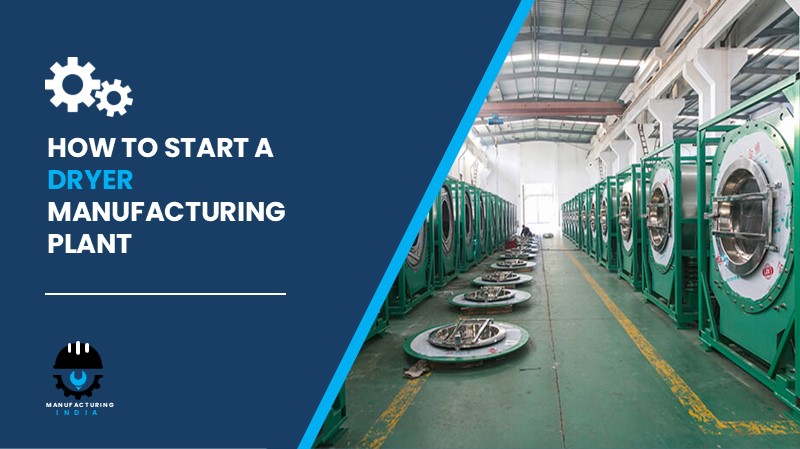
Setting up a dryer manufacturing plant in India presents a compelling investment case driven by the country’s rapidly urbanising population, rising disposable incomes, expanding dual-income households, growing awareness of hygiene and fabric care, and accelerating demand for automated laundry solutions across residential, hospitality, and healthcare sectors. Dryers – appliances that generate heat and create airflow while rotating clothes to dry laundry faster and more cleanly than natural air drying – are transitioning in India from luxury purchase to aspirational urban household essential, following the adoption trajectory seen across East and Southeast Asian markets where the Asia-Pacific region now holds over 40% of the global dryer market share. The convergence of smaller urban living spaces, weather-independent fabric care requirements, and the rapid growth of smart home ecosystems is placing dryers alongside washing machines as standard household appliances for India’s expanding upper-middle and premium consumer segments.
India’s manufacturing advantages make it a strategically sound location for establishing a dryer manufacturing plant at this stage of the market’s development. The government’s PLI scheme for white goods and large appliances, Make in India policy support for consumer electronics and home appliance manufacturing, and established electronics and metal fabrication industrial clusters in Rajasthan, Haryana, Maharashtra, and Tamil Nadu collectively provide investors with competitive land costs, a growing domestic component supply base, engineering talent access, and favourable policy conditions for building export-competitive home appliance production. The rapid expansion of organised retail and e-commerce platforms is further improving dryer product accessibility across urban and Tier 2 markets, creating the distribution infrastructure required to convert manufacturing capacity into consumer revenue at scale.
A dryer manufacturing plant in India is aligned with the megatrends of urbanisation, smart home adoption, energy efficiency regulation, and rising commercial laundry demand. With gross profit margins of 30–40%, net margins of 12–20%, and a production capacity range of 100,000 to 500,000 units per annum supported by PLI scheme incentives and a rapidly growing Asia-Pacific market, this investment delivers strong consumer electronics manufacturing returns in one of India’s most dynamically expanding appliance categories.
What is a Dryer?
A dryer functions as an appliance used in both homes and businesses to dry laundry items that have been washed, through its capability to generate heat and create airflow while rotating clothes. The system uses electric heating elements, gas burners, or heat pump technology to remove moisture from clothing items while preserving their original fabric structure. Modern dryers use moisture sensors, programmable drying cycles, anti-wrinkle features, and energy-saving mechanisms to improve performance while consuming less electricity. The products provide three installation configurations — vented systems, condenser systems, and heat pump systems — to accommodate various domestic and commercial installation needs. Dryers provide better operational efficiency, drying clothes faster while delivering cleaner results than natural air drying methods, particularly in urban apartment environments with limited outdoor drying space.
The primary production method involves sheet metal fabrication, component assembly, wiring integration, drum installation, testing, and quality inspection. End-use industries served include residential households, hospitality, healthcare, and commercial laundromats. Key applications span the drying of garments, linens, uniforms, towels, and industrial fabrics in homes, hotels, hospitals, and laundry facilities – across the full range of vented, condenser, and heat pump dryer configurations suited to different consumer and commercial requirements.
Cost of Setting Up a Dryer Manufacturing Plant in India
The total investment required to establish a dryer manufacturing plant in India depends on plant capacity, product complexity and technology tier, geographic location, level of automation, and compliance with electrical safety and energy efficiency regulatory standards. Investors must account comprehensively for both one-time capital expenditure and recurring operational costs when preparing a feasibility study or detailed project report (DPR).
1. Capital Expenditure (CapEx)
Land and Site Development constitutes a substantial foundational investment. Costs for land registration, boundary construction, internal road layout, drainage infrastructure, and site levelling vary based on whether the facility is within a government-notified consumer electronics manufacturing zone, a PLI-designated white goods production hub, or on privately acquired industrial land. Electronics and appliance manufacturing clusters in Haryana, Rajasthan, and Tamil Nadu offer infrastructure-ready sites with proximity to component supply chains and access to domestic retail and export distribution networks.
Civil Works and Construction encompasses the main sheet metal fabrication hall, component assembly area with production line conveyors, powder coating and surface treatment facility, electrical testing laboratory, quality control inspection area, finished goods warehouse, and administrative block. High-bay construction to accommodate press brakes, CNC cutting systems, and automated assembly line equipment, combined with electrical safety standards for high-voltage testing operations, adds to civil construction requirements relative to lighter assembly operations.
Machinery and Equipment represent the single largest component of capital expenditure. Key machinery required includes:
- CNC sheet cutting machines
- Bending machines
- Welding systems
- Powder coating lines
- Assembly conveyors
- Motor testing benches
- Electrical testing equipment
Other Capital Costs include the effluent treatment plant (ETP) for managing powder coating and surface treatment chemical waste, pre-operative expenses covering regulatory filings and feasibility study preparation, plant commissioning charges, utility connection fees, and import duties applicable to specialised CNC fabrication equipment or automated powder coating lines sourced internationally.
Request a Sample Report for In-Depth Market Insights: https://www.imarcgroup.com/dryer-manufacturing-plant-project-report/requestsample
2. Operational Expenditure (OpEx)
Raw Material Cost is the dominant driver of operating expenditure, accounting for approximately 65–75% of total OpEx. The primary inputs are the drum, heating element, motor, control panel, and housing. The stainless steel or painted steel drum – the core mechanical component around which the dryer is designed – represents the largest individual raw material cost within this category. Additional key inputs include electric heating elements or heat pump compressors, drive motors, electronic control panels with programmable logic, sheet metal for the outer housing and internal components, wiring harnesses, insulation, and packaging materials. Investors are advised to establish long-term supply contracts with steel drum fabricators, motor manufacturers, and electronics component suppliers – prioritising domestically sourced components to benefit from PLI localisation incentives and to reduce import dependency and lead time risk.
Utility Costs – covering electricity for CNC cutting machines, welding systems, powder coating lines, and testing equipment – account for approximately 5–10% of total OpEx, reflecting the relatively moderate energy intensity of sheet metal fabrication and appliance assembly operations. Powder coating ovens represent the most energy-intensive process step within the production flow, and access to competitive industrial electricity tariffs meaningfully improves this cost component over the plant’s operational life.
Other Operating Costs include outbound transportation to organised retail chains, e-commerce distribution centres, hospitality sector distributors, and healthcare and commercial laundry equipment dealers; packaging materials for consumer retail cartons and commercial bulk packing; employee salaries and wages for fabrication operators, assembly line technicians, quality inspection personnel, and electrical engineers; equipment maintenance; quality assurance testing for BEE energy rating compliance and BIS electrical safety standards; depreciation on civil and machinery assets; and applicable taxes including GST. By the fifth year of operations, total operational costs are expected to increase substantially due to inflation, market fluctuations, and potential rises in steel, copper, and electronics component prices, compounded by supply chain disruptions and rising consumer demand.
3. Plant Capacity
The proposed dryer manufacturing facility is designed with an annual production capacity ranging between 100,000 and 500,000 units, enabling significant economies of scale while maintaining operational flexibility across different dryer types, capacity ratings, and technology tiers. This production range supports both domestic retail market volumes and export order fulfilment for regional buyers across Asia-Pacific, the Middle East, and other emerging markets. Capacity can be customised based on investor requirements, target market mix, and product portfolio strategy. Profitability improves substantially with higher capacity utilisation, and dryer manufacturing plants support phased capacity expansion through additional production line stations and conveyors with contained incremental investment.
4. Profit Margins and Financial Projections
The dryer manufacturing plant demonstrates strong profitability potential under normal operating conditions. Gross profit margins typically range between 30–40%, supported by stable and growing consumer demand, the value-added nature of feature-rich, energy-efficient dryer models, and brand-differentiated positioning. Net profit margins range between 12–20%, reflecting the moderate raw material intensity and relatively low utility costs of the assembly-led production model. A comprehensive financial analysis should include income projections, expenditure forecasts, gross and net margin tracking across Years 1 through 5, net present value (NPV), internal rate of return (IRR), payback period, and a full profit and loss account. Sensitivity analysis covering steel and electronics component price movements and domestic retail demand volume variability is recommended for investment-grade planning.
Why Set Up a Dryer Manufacturing Plant in India?
Rising Urbanisation, Dual-Income Households, and Smart Home Adoption. The global dryer market is experiencing continuous growth due to increasing urban areas, dual-income families, small living spaces, and rising interest in smart home technologies — all of which are accelerating at a particularly rapid pace in India’s Tier 1 and Tier 2 cities. As apartment-dwelling urban households replace traditional outdoor drying with convenient, year-round automated laundry solutions, the penetration of dryers is following the same adoption curve previously seen across East Asia and Southeast Asia, where the Asia-Pacific region now accounts for over 40% of global dryer market share.
AI and Smart Technology Integration Driving Premium Segment Growth. In September 2025, Samsung introduced its Bespoke AI Washer Dryer for modern Indian homes, priced from INR 63,990, featuring AI Wash, AI Energy, AI Ecobubble, Air Wash, and SmartThings connectivity – demonstrating active investment in the Indian premium dryer market at a specific price point that signals growing consumer willingness to pay for feature-rich, connected laundry appliances. In August 2025, LG Electronics presented its latest AI-powered, energy-saving laundry appliances at IFA 2025, including the HeatPump WasherDryer with Energy Class A rating, AI-enhanced fabric care, and microplastic reduction technology – signalling the global trend toward heat pump and AI-integrated dryers that Indian manufacturers must be positioned to produce competitively.
Energy Efficiency Regulations Creating Technology Upgrade Demand. Government requirements for energy-saving appliances and reduced carbon emissions are increasing demand for advanced dryers using heat pump technology and sensor systems over conventional vented models. The Bureau of Energy Efficiency (BEE) star labelling requirements for home appliances in India are progressively raising the minimum energy performance standards that new dryer models must meet – creating both a compliance-driven product upgrade cycle among existing appliance owners and a competitive differentiation opportunity for manufacturers investing in heat pump and inverter technology integration.
Growing Commercial Demand from Hospitality, Healthcare, and Laundromats. Rising investments in hospitality infrastructure and commercial laundry services are contributing to steady demand growth for industrial-size dryers that operate at high capacity across hotels, hospitals, and commercial textile service providers. India’s rapidly expanding organised hospitality sector – including branded hotels, serviced apartments, and resort developments – requires reliable, high-capacity dryer systems for daily linen and uniform processing, providing manufacturers with a B2B commercial demand channel that runs parallel to and independent of consumer retail sales.
PLI Scheme and Make in India Policy Support. India’s PLI scheme for white goods and large home appliances provides financial incentives for domestic manufacturers achieving defined production and export targets – reducing effective capital costs and improving long-term return on investment for qualifying dryer manufacturing investments. This policy support, combined with Make in India’s broader import substitution objectives, actively encourages the development of domestic white goods manufacturing capacity in a category currently dominated by imports.
Expanding Organised Retail and E-Commerce Distribution. The expansion of organised retail channels and e-commerce platforms is significantly improving dryer product accessibility across urban and emerging-market consumers, reducing the distribution barrier for new domestic brands seeking to compete with established imports. The combination of growing online consumer appliance purchasing and the expansion of large-format retail stores in Tier 2 cities provides manufacturers with multiple channel access points for converting production capacity into retail revenue at scale.
Manufacturing Process – Step by Step
The dryer manufacturing process uses sheet metal fabrication, component assembly, wiring integration, drum installation, testing, and quality inspection as the primary production method. Below are the main stages involved in the dryer manufacturing process flow:
- Raw Material Receipt and Inspection: Drums, heating elements, motors, control panels, housing sheet metal, wiring harnesses, and packaging materials are received, inspected against dimensional and specification requirements, and cleared for production line entry following quality verification.
- Sheet Metal Fabrication – Cutting: CNC sheet cutting machines precisely cut flat steel sheet into the component blanks for the dryer outer housing panels, internal baffles, back panel, and structural framework components according to the product design specifications.
- Sheet Metal Fabrication – Bending and Forming: Bending machines form the cut sheet metal blanks into three-dimensional housing components – including side panels, top cover, front door frame, and back panel – at specified bend radii and angles to achieve the correct assembly geometry.
- Welding and Structural Assembly: Welding systems join housing panels, structural brackets, and drum support framework components into the main dryer body structure, with weld quality and dimensional accuracy verified against assembly jig specifications.
- Surface Treatment – Powder Coating: Powder coating lines apply electrostatically charged polymer powder to the fabricated steel housing components, followed by oven curing to produce a durable, scratch-resistant, and aesthetically consistent surface finish in the specified colour and texture for each product variant.
- Drum Installation: The stainless steel or painted steel rotating drum is installed into the dryer body structure, with drum shaft, bearings, and drive belt or direct drive motor connection assembled and aligned to specification to ensure smooth, vibration-free rotation.
- Heating Element or Heat Pump Installation: Depending on the dryer technology type, electric heating elements, gas burner assemblies, or heat pump compressor and heat exchanger systems are installed and connected to the thermal management circuit within the dryer body.
- Wiring Integration and Control Panel Assembly: Wiring harnesses connect the heating system, drive motor, moisture sensors, control electronics, and user interface panel into a complete integrated electrical system, with control panel programming and firmware loading completed for the designated product model.
- Motor Testing: Motor testing benches verify drive motor electrical parameters, speed, torque output, and thermal performance against specification before final assembly sign-off.
- Electrical Testing and Safety Verification: Electrical testing equipment subjects each assembled dryer to comprehensive safety and performance tests – including insulation resistance, earth continuity, leakage current, thermal cut-out operation, and functional cycle testing – ensuring compliance with BIS electrical safety standards and BEE energy efficiency specifications before product release.
- Quality Inspection and Final Check: Quality inspection systems verify external finish quality, door alignment, control panel functionality, drum rotation smoothness, and label and packaging compliance, with each unit receiving a final visual and functional sign-off before packaging.
- Packaging and Dispatch: Finished dryers are packed in protective retail cartons with polystyrene corner inserts and polyethylene film, with unit serial numbers, energy rating labels, and instruction manuals included, before dispatch to organised retail chains, e-commerce distribution centres, hospitality sector dealers, and export freight forwarders.
Key Applications
Dryers produced at this type of facility serve four primary end-use sectors across residential and commercial laundry applications:
- Residential: Used in drying everyday clothing, bed linens, and household fabrics in apartments and homes where outdoor drying space is limited or weather conditions are unreliable.
- Hospitality: Utilised in processing hotel linens, towels, and guest laundry at scale in hotels, resorts, and serviced apartment facilities requiring reliable, high-capacity, and energy-efficient drying systems for daily operations.
- Healthcare: Employed in the sanitary drying of hospital sheets, patient gowns, medical textiles, and staff uniforms, where hygiene compliance and consistent drying performance are mandatory requirements for infection control protocols.
- Commercial Laundry: Used in high-volume drying operations in laundromats and textile service providers serving residential and commercial laundry customers who require efficient, continuous-cycle drying capacity.
Leading Dryer Manufacturers
The global dryer industry is served by a number of large-scale manufacturers with diversified product portfolios and strong multi-channel market presence. Key players include:
- Haier Electronics Group Co. Ltd.
- LG Electronics Inc.
- Samsung Electronics Co. Ltd.
- Robert Bosch GmbH
- Whirlpool Corporation
- Panasonic Corporation
- Electrolux AB
- Miele & Cie. KG
- Smeg S.p.A.
- Gorenje Group
- Amana Corporation
- Frigidaire
- GE Appliances
- Toshiba Corporation
Timeline to Start the Plant
Investors planning to establish a dryer manufacturing plant in India should anticipate the following project development phases:
- Feasibility study and project report preparation
- Land acquisition and site development
- Regulatory approvals and environmental clearances
- Factory licence and fire safety compliance
- Machinery procurement and installation
- Raw material supplier agreements and supply chain setup
- Trial production and quality testing
- Commercial production launch
Licences and Regulatory Requirements
Starting a dryer manufacturing unit in India requires several approvals:
- Business registration (Proprietorship, LLP, or Private Limited Company)
- Factory Licence under the Factories Act
- Bureau of Indian Standards (BIS) certification under IS/IEC 60335-2-11 for household tumble dryers and applicable electrical appliance safety standards
- Bureau of Energy Efficiency (BEE) registration and star labelling compliance for energy efficiency rating
- Environmental Clearance from the State Pollution Control Board — including ETP clearance for powder coating chemical waste management
- GST Registration
- Fire Safety NOC
- Effluent Treatment Plant (ETP) operational clearance for surface treatment and powder coating wastewater
- Occupational Health and Safety compliance covering sheet metal fabrication, welding, and electrical testing operations
- PLI scheme registration under the white goods and large home appliances programme for eligible investment incentive access
Key Challenges to Consider
Raw Material Price Volatility – Steel and Electronics Components. The drum and housing sheet metal together represent the dominant physical component of the product, making steel price movements a direct influence on gross margin outcomes. Electronic control panels, heat pump compressors, and drive motors add further commodity exposure to copper and rare earth materials. Long-term supply contracts and domestic component sourcing under PLI localisation incentives are the primary risk mitigation strategies.
Technology Innovation Pressure from AI and Heat Pump Integration. The global dryer market is rapidly evolving toward AI-enabled, heat pump-based systems with energy ratings and smart connectivity features — as demonstrated by Samsung’s September 2025 Bespoke AI Washer Dryer launch for India and LG’s August 2025 HeatPump WasherDryer presentation at IFA 2025. Indian manufacturers must invest in R&D or technology licensing to keep product specifications current against advancing global energy efficiency and smart feature benchmarks.
Competition from Established Global Brands. The Indian dryer market is served by globally recognised brands including Samsung, LG, Bosch, and Whirlpool with established retail presence, consumer trust, and significant marketing investment. New domestic manufacturers must differentiate through competitive pricing, energy efficiency positioning, localised product features — such as fabric types and climate conditions specific to Indian households — or through focused commercial segment targeting to build market share.
BIS and BEE Certification Requirements. All dryers sold in India must carry BIS certification under applicable electrical safety standards and comply with BEE star labelling requirements, which are progressively tightening. Obtaining and maintaining these certifications requires dedicated testing infrastructure, documentation management, and ongoing product re-testing as energy efficiency standards are periodically upgraded by BEE.
Skilled Manpower for Sheet Metal Fabrication and Electronics Assembly. Operating CNC sheet cutting machines, bending presses, welding systems, powder coating lines, and electrical testing equipment requires technicians trained in precision metal fabrication, surface treatment chemistry, electrical appliance assembly, and appliance safety testing protocols. Sourcing and retaining qualified personnel with this combination of skills presents a challenge in locations outside established appliance manufacturing clusters.
Powder Coating Environmental Compliance. Powder coating operations generate chemical waste, VOC emissions, and wastewater requiring treatment under State Pollution Control Board standards. Maintaining continuous environmental compliance for this process step — including ETP operation, emissions monitoring, and waste disposal documentation — adds to ongoing operational overhead.
Frequently Asked Questions
1. How much does it cost to set up a dryer manufacturing plant in India?
The total cost depends on plant capacity (100,000–500,000 units per annum), product technology tier, location, and automation level. CapEx covers land, industrial-grade civil construction, and machinery including CNC sheet cutting machines, bending machines, welding systems, powder coating lines, assembly conveyors, motor testing benches, and electrical testing equipment, along with pre-operative and regulatory costs.
2. Is dryer manufacturing profitable in India in 2026?
Yes. With gross margins of 30–40% and net margins of 12–20%, supported by rising urbanisation, growing smart appliance adoption, expanding hospitality and healthcare commercial demand, and PLI scheme incentives for white goods manufacturing, the investment presents a strong profitability case in a rapidly expanding appliance category.
3. What machinery is required for a dryer manufacturing plant in India?
Key equipment includes CNC sheet cutting machines, bending machines, welding systems, powder coating lines, assembly conveyors, motor testing benches, and electrical testing equipment.
4. What licences and approvals are required to start a dryer manufacturing plant in India?
Required approvals include business registration, Factory Licence, BIS certification under applicable electrical appliance safety standards, BEE star labelling compliance, Environmental Clearance, GST Registration, Fire Safety NOC, ETP operational clearance, Occupational Health and Safety compliance, and PLI scheme registration for eligible investment incentives.
5. What raw materials are needed for dryer manufacturing?
The primary raw materials are the drum, heating element, motor, control panel, and housing sheet metal. Additional inputs include wiring harnesses, insulation materials, bearings, fasteners, heat pump compressors for heat pump dryer variants, control electronics, and retail packaging materials.
6. What are the environmental compliance requirements for a dryer manufacturing plant in India?
An operational effluent treatment plant is mandatory for managing powder coating and surface treatment chemical waste streams, along with Environmental Clearance from the State Pollution Control Board, compliance with VOC emission standards for powder coating operations, and adherence to chemical waste disposal regulations applicable to consumer electronics manufacturing facilities.
7. What is the best location to set up a dryer manufacturing plant in India?
States with established consumer electronics and white goods manufacturing ecosystems, access to sheet metal and electronics component supply chains, and PLI-designated appliance production zones – such as Rajasthan, Haryana, Maharashtra, and Tamil Nadu – offer the best combination of raw material access, manufacturing infrastructure, skilled workforce availability, and policy incentive support for dryer manufacturing investment.
8. What is the break-even period for this type of plant in India?
The break-even period depends on plant scale, capacity utilisation, product mix between consumer and commercial segments, and retail channel development timelines. A full NPV and IRR analysis incorporating sensitivity testing for steel price movements and domestic demand volume variability is recommended for investment-grade financial planning.
9. What government incentives are available for dryer manufacturers in India?
The PLI scheme for white goods and large home appliances provides production-linked financial incentives for qualifying domestic manufacturers. Make in India policy support, state-level industrial incentive schemes in Rajasthan and Haryana, BEE energy efficiency programme support for compliant manufacturers, and export promotion support through engineering and electronics export councils provide additional meaningful financial and market access support for dryer manufacturing investments.
Key Takeaways for Investors
A dryer manufacturing plant in India represents a well-timed investment opportunity in one of the country’s fastest-growing home appliance categories, supported by urbanisation-driven household penetration growth, expanding smart home and AI appliance adoption, growing commercial demand across hospitality and healthcare sectors, and active government support through the PLI scheme for white goods manufacturing. Financial viability is demonstrated across a production capacity range of 100,000 to 500,000 units per annum, with gross margins of 30–40% and net margins of 12–20% achievable under efficient raw material procurement and scale production conditions – among the strongest profitability profiles in India’s consumer appliance manufacturing landscape. The Asia-Pacific region’s dominant 40%+ share of the global dryer market, combined with landmark product launches by Samsung and LG in India through 2025 validating the domestic market’s premium appliance growth trajectory, comprehensively supports the long-term demand sustainability for Indian dryer manufacturers entering the market in 2026 and building toward the decade ahead.
About the Author