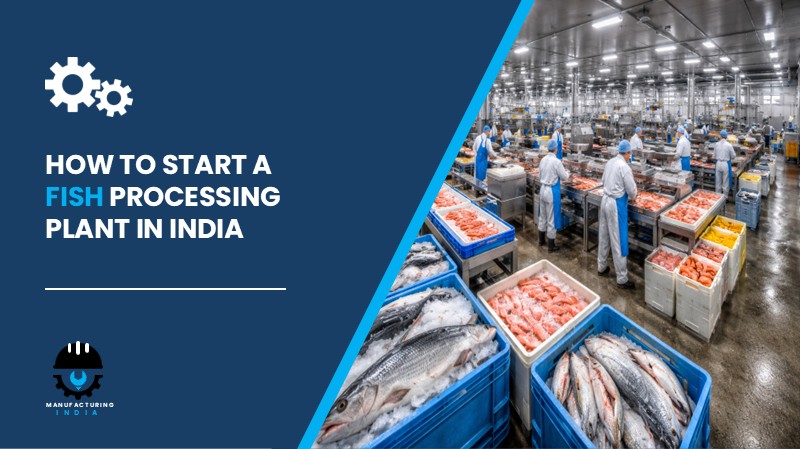
Setting up a fish processing plant in India presents a compelling investment case as the country rapidly emerges as one of the most cost-competitive and high-demand destinations for seafood processing and aquaculture-linked manufacturing. Driven by booming demand from the food, retail, hotel, and export sectors, processed fish products have become an indispensable part of India’s food economy.
“With over billion consumers, a rapidly urbanizing population, rising seafood consumption, and a booming aquaculture and FMCG sector, India offers one of the most financially attractive environments for fish processing with gross margins of 25–35% and a break-even window of 3–5 years.”
Fish Processing Plant Project Report (DPR) Summary:
IMARC Group’s comprehensive DPR report, titled ‘Fish Processing Plant Project Report 2026: Industry Trends, Plant Setup, Machinery, Raw Materials, Investment Opportunities, Cost and Revenue,’ provides a complete roadmap for setting up a fish processing unit. The fish market is driven by the rising global seafood consumption, increasing demand for value-added and ready-to-cook products, expansion of cold chain infrastructure, and growth in international seafood trade.
What is Fish Processing?
Fishes are aquatic animals that have a cold blood system and come under the group of vertebrates. Fishes live in freshwater or saltwater bodies. They mostly survive on the oxygen they absorb from the water with the help of gills. Fishes have a streamlined shape so that they can swim easily. They have fins for support while swimming. Scales help protect their bodies from the outside environment. Fishes come in a large number of species, and they help maintain the balance of life in the aquatic system, while also providing significant economic benefits. They contain a large amount of proteins and vitamins.
Fish processing involves a series of operations — cleaning, cutting, filleting, deboning, freezing, and packaging — carried out to convert raw fish into marketable, shelf-stable products for domestic and international consumption.
Request for a Sample Report: https://www.imarcgroup.com/fish-processing-plant-project-report/requestsample
Key Investment Highlights
Process Used: Cutting, filleting, deboning, and automated sorting.
End-use Industries: Seafood processing plants, aquaculture facilities, cold storage and logistics, food packaging, ready-to-eat seafood manufacturers.
Applications: Used for filleting and portioning fish, sorting and grading, conveyor handling, washdown and sanitation systems, vacuum packing, and cold-chain storage.
Cost of Setting Up a Fish Processing Plant in India
The fish processing plant cost in India depends on several parameters including production capacity, technology used, plant location, level of automation, cold-chain infrastructure, and regulatory compliance. Here is a structured breakdown of all major cost components:
- Capital Expenditure (CapEx)
The total capital investment in a fish processing plant typically covers the following:
Land and Site Development
This includes land acquisition, boundary development, land registration charges, and basic site preparation. Cost varies significantly depending on whether the land is in a coastal industrial zone, Special Economic Zone (SEZ), export processing zone, or a privately purchased plot near fishing harbours.
Civil Works and Construction
Building costs cover the main processing shed, cold storage rooms, blast-freezing chambers, utility area, raw material receiving bay, quality control laboratory, administrative block, and worker amenities. Construction must meet FSSAI food safety norms and cold-chain standards.
Machinery and Equipment
This is the single largest component of CapEx. Key machinery required for a fish processing plant includes:
- Grading Scales and Automated Sorting Systems
- Gutting and Filleting Machines
- Skinning and Pin-Boning Systems
- Industrial Washers and Sanitization Units
- Blast Freezers and IQF (Individual Quick Freezing) Tunnels
- Ice Machines and Cold Storage Units
- Vacuum Packaging Sealers
- Conveyor Belts and Material Handling Systems
Machinery costs represent the largest share of overall capital expenditure, reflecting the high degree of food-grade precision engineering and refrigeration technology involved in fish processing.
Other Capital Costs
These include pre-operative expenses, commissioning charges, import duties (if machinery is sourced internationally), cold chain utilities installation, effluent treatment plant (ETP) setup, and wastewater management systems.
Capital Expenditure Breakdown:
| Particulars | Cost (in US$) |
| Land and Site Development Costs | XX |
| Civil Works Costs | XX |
| Machinery Costs | XX |
| Other Capital Costs | XX |
- Operational Expenditure (OpEx)
Once the plant is commissioned, the ongoing cost structure is dominated by the following key components:
Raw Material Cost (Fresh/Frozen Fish): 60–70% of Total OpEx
Fresh and frozen fish is the primary raw material and accounts for the majority of operating expenses. Additional materials include salt, spices (for value-added products), ice, packaging materials, and food-grade preservatives depending on the product range.
Utility Cost: 15–20% of Total OpEx
Utilities include electricity (heavily consumed by blast freezers, cold storage systems, IQF tunnels, and processing equipment), water (used in washing, cleaning, and sanitation), and refrigerant supply for cold-chain maintenance.
Other Operating Costs
The remaining budget covers transportation, secondary and retail packaging, salaries and wages, maintenance, depreciation, taxes, quality testing, and miscellaneous overhead.
Operational Expenditure Breakdown:
| Particulars | In % |
| Raw Material Cost | 60–70% |
| Utility Cost | 15–20% |
| Transportation Cost | XX |
| Packaging Cost | XX |
| Salaries and Wages | XX |
| Depreciation | XX |
| Taxes | XX |
| Other Expenses | XX |
- Plant Capacity
The proposed processing facility is designed with an annual production capacity ranging between 10,000 to 20,000 MT of processed fish. This range allows the plant to achieve economies of scale while maintaining flexibility to serve multiple end-use segments including fresh fillet exports, frozen processed fish, ready-to-cook products, and canned seafood.
Smaller pilot setups with limited automation may start at a lower capacity, but profitability significantly improves with higher capacity utilization.
- Profit Margins and Financial Projections
- Gross Profit Margin: 25–35%
- Net Profit Margin: 10–15%
- Break-Even Period: 3 to 5 years, depending on production scale, market demand, raw material cost management, and sales efficiency.
Financial projections must account for capital investment, operating costs, capacity utilization rates, pricing trends, and demand outlook. A thorough analysis should also include sensitivity analysis, Net Present Value (NPV), Internal Rate of Return (IRR), and Payback Period.
Profitability Analysis:
| Particulars | Unit | Year 1 | Year 2 | Year 3 | Year 4 & 5 | Average |
| Total Income | US$ | XX | XX | XX | XX | XX |
| Total Expenditure | US$ | XX | XX | XX | XX | XX |
| Gross Profit | US$ | XX | XX | XX | XX | XX |
| Gross Margin | % | XX | XX | XX | XX | 25–35% |
| Net Profit | US$ | XX | XX | XX | XX | XX |
| Net Margin | % | XX | XX | XX | XX | 10–15% |
Why Set Up a Fish Processing Plant in India?
India presents a uniquely favorable environment for establishing a fish processing plant:
✓ Crucial Operational Infrastructure: Stainless steel, food-grade plastics, and specialized equipment serve as fundamental elements for conveyors, filleting machines, washdown systems, and refrigeration units — positioning them as essential for operational efficiency, hygiene, and industrial reliability in fish processing facilities.
✓ Surging Domestic and Export Demand: India’s packaged seafood, ready-to-cook, and frozen fish segments are growing rapidly. India is one of the world’s largest fish exporters, with annual seafood exports exceeding USD 7 billion.
✓ Megatrend Alignment: Rising global demand for seafood, increased automation in processing lines, cold chain expansion, and sustainability-driven practices are driving steady demand for flexible, corrosion-resistant, and high-efficiency processing equipment.
✓ Policy and Infrastructure Push: Government investment in food safety regulations, cold-chain logistics, seafood export initiatives, and domestic processing incentives under the Pradhan Mantri Matsya Sampada Yojana (PMMSY) indirectly supports the industry.
✓ Cost-Competitive Manufacturing: India offers competitive land and labour costs, a massive domestic fish catch, and a well-developed coastal supply chain, making it one of the most cost-effective locations for seafood processing in Asia.
✓ Localization and Supply Chain Dependability: Processors are favouring local, dependable equipment and material suppliers to shorten lead times, control cost volatility, and ensure uninterrupted operations — opening doors for regional producers.
Fish Processing Plant — Manufacturing Process Overview
The fish processing operation is a multi-step process involving several unit operations, material handling, and quality checks. The main stages are:
- Raw Fish Receiving and Inspection — grading, quality assessment, chilling
- Washing and Pre-Processing — cleaning, ice treatment, sanitation
- Cutting, Gutting, and Filleting — mechanical and/or manual operations
- Skinning and Pin-Boning — using skinning and de-boning machines
- Portion Cutting and Sorting — automated sorting by size/weight
- Marinating or Seasoning (for value-added products)
- Blast Freezing / IQF Freezing — rapid freezing to preserve freshness
- Vacuum Packaging and Labelling
- Cold Storage and Dispatch
How to Set Up a Fish Processing Plant?
Setting up a fish processing plant requires evaluating several key factors, including technological requirements and quality assurance. Some of the critical considerations include:
Site Selection: The location must offer easy access to key raw materials such as fresh/frozen fish, salt, spices (for value-added products), ice, and packaging. Proximity to fishing harbours, ports, and target export markets will help minimize distribution costs. The site must have robust cold-chain infrastructure, reliable transportation, utilities, and waste management systems. Compliance with local zoning laws and environmental regulations must also be ensured.
Plant Layout Optimization: The layout should be optimized to enhance workflow efficiency, safety, and minimize cross-contamination risks. Separate areas for raw material storage, production, quality control, cold storage, and finished goods storage must be designated. Space for future expansion should be incorporated to accommodate business growth.
Equipment Selection: High-quality, corrosion-resistant, food-grade machinery tailored for fish processing must be selected. Essential equipment includes grading scales, gutting and filleting machines, skinning and pin-boning systems, industrial washers, blast freezers, IQF tunnels, ice machines, vacuum packaging sealers, and cold storage units.
Raw Material Sourcing: Reliable suppliers must be secured for raw materials like fresh/frozen fish, salt, spices, ice, and packaging materials to ensure consistent production quality. Sustainability and supply chain risks must be assessed, and long-term contracts should be negotiated to stabilize pricing.
Safety and Environmental Compliance: Safety protocols must be implemented throughout the fish processing plant. Advanced monitoring systems should be installed for temperature deviation and contamination detection. Effluent treatment systems are necessary to manage fish waste, minimize environmental impact, and ensure compliance with emission and discharge standards.
Quality Assurance Systems: A comprehensive quality control system should be established throughout production. Instruments must be used to monitor freshness indices, product temperature, moisture content, and microbial levels. Documentation for traceability and regulatory compliance must be maintained as per FSSAI and HACCP standards.
Major Applications of Fish Processing Equipment
- Processing Equipment — conveyor belts, filleting machines, and automated sorting systems
- Refrigeration and Freezing — cooling coils, evaporator fans, blast freezers, and IQF tunnels
- Sanitation and Cleaning — washdown systems, water pumps, and flexible hoses
- Packaging and Storage — vacuum sealers, ice machines, and storage conveyors
- Value-Added Production — marinating units, breading lines, and ready-to-cook packaging
Global Fish Market Outlook
The global fish market was valued at USD 1.09 Trillion in 2025 and is projected to reach USD 1.40 Trillion by 2034, growing at a CAGR of 2.8% from 2026 to 2034. This sustained growth is driven by rising global seafood consumption, population growth, heightened awareness of fish as a healthy protein source, advances in freezing and packaging technologies, and trade liberalization that has expanded international seafood demand.
According to the Food and Agriculture Organization (FAO), global aquaculture production reached an unprecedented 130.9 million tonnes, of which 94.4 million tonnes are aquatic animals — representing 51% of total aquatic animal production. This trend directly supports processing capacity expansion, particularly in Asia-Pacific and Latin America.
Leading global players in this industry include:
- Thai Union Group
- Mowi ASA
- Maruha Nichiro Corporation
- Nippon Suisan Kaisha (Nissui)
- Trident Seafoods
Fish Processing Industry Outlook 2026
The fish processing market is supported by increasing global seafood consumption, population growth, and heightened awareness of fish as a healthy protein source. Advances in freezing, cold storage, and packaging technologies have enabled longer shelf life and wider market access. Trade liberalization and international seafood demand further support processing capacity expansion, particularly in Asia-Pacific and Latin America. Additionally, stricter food safety regulations are encouraging investment in modern processing facilities to ensure hygiene, traceability, and export compliance.
Latest Industry Development:
April 2024: Silver Bay Seafoods acquired Trident Seafoods’ Ketchikan processing facility. This acquisition increases Silver Bay’s capacity to support salmon fisheries in the Southeast region, underscoring the continued consolidation and expansion trend in global fish processing
Timeline to Start a Fish Processing Plant
Setting up a fish processing plant from ideation to commissioning typically requires 12 to 18 months. This covers:
- Feasibility study and project report preparation
- Land acquisition and site development near fishing harbours or coastal zones
- Regulatory approvals and environmental clearances
- Factory license and FSSAI/HACCP certification
- Cold-chain infrastructure setup (blast freezers, cold rooms, IQF tunnels)
- Machinery procurement and installation
- Trial production and quality testing
- Commercial production and export certification
Licenses and Regulatory Requirements
Starting a fish processing unit in India requires several approvals, including:
- Business registration (Proprietorship, LLP, or Private Limited Company)
- Factory License under the Factories Act
- FSSAI License (mandatory for all food processing operations)
- HACCP / ISO 22000 Certification for export-quality facilities
- Environmental Clearance from the State Pollution Control Board
- GST Registration
- Marine Products Export Development Authority (MPEDA) Registration (for seafood exporters)
- Export Import Code (IEC) from DGFT
Project Economics
Establishing and operating a fish processing plant involves various cost components, including:
Capital Investment: The total capital investment depends on plant capacity, technology, and location. This investment covers land acquisition, site preparation, cold-chain infrastructure, and necessary regulatory compliance.
Equipment Costs: Equipment costs, such as those for grading scales, gutting and filleting machines, skinning and pin-boning systems, industrial washers, blast freezers, ice machines, vacuum packaging sealers, and cold storage units, represent a significant portion of capital expenditure.
Raw Material Expenses: Raw materials, including fresh/frozen fish, salt, spices, ice, and packaging, are a major part of operating costs. Long-term contracts with reliable fishing communities and aggregators will help mitigate supply volatility.
Infrastructure and Utilities: Costs associated with land acquisition, cold storage construction, and utilities (electricity, water, refrigerants) must be considered in the financial plan.
Operational Costs: Ongoing expenses for labor, maintenance, quality control, HACCP audits, and environmental compliance must be accounted for.
Financial Planning: A detailed financial analysis, including income projections, expenditures, and break-even points, must be conducted. This analysis aids in securing funding and formulating a clear financial strategy.
Key Challenges to Consider
Before investing, entrepreneurs should be aware of the common challenges in this business:
- High Capital Requirements: Initial CapEx for cold-chain machinery and food-grade infrastructure is significant, especially for export-oriented mid to large-scale plants.
- Raw Material Price Volatility: Fresh fish prices are linked to seasonal catches and can fluctuate significantly, directly impacting margins.
- Cold Chain Dependency: Maintaining uninterrupted cold chain from raw material receipt to finished product dispatch is critical and operationally demanding.
- Regulatory Compliance: Meeting FSSAI, HACCP, MPEDA, and international food safety standards requires continuous investment in quality systems.
- Competition: The market has both organized large exporters and unorganized local processors, requiring a clear differentiation strategy.
- Skilled Manpower: Operating filleting machines, IQF lines, and maintaining HACCP documentation requires trained technical and quality assurance staff.
Frequently Asked Questions
The following questions are answered in the IMARC report:
- How much does it cost to set up a fish processing plant in India?
- Is fish processing profitable in India in 2026?
- What machinery is required for a fish processing plant in India?
- What licences and approvals are required to start a fish processing plant in India?
- How long does it take to commission a fish processing plant in India?
- What is the best state or coastal location to set up a fish processing plant in India?
- What government incentives are available for fish processing manufacturers in India under PMMSY?
- What is the break-even period for a fish processing plant in India?
- What are the FSSAI, HACCP, and MPEDA compliance requirements for fish processing in India?
Report Coverage
IMARC Group’s Fish Processing Plant Project Report 2026 (Report ID: SR112026A8567) covers:
- Detailed Process Flow: Unit Operations Involved, Quality Assurance Criteria, Technical Tests, Mass Balance, and Raw Material Requirements
- Land, Location and Site Development: Selection Criteria, Location Analysis, Project Planning, Environmental Impact, Land Requirement and Costs
- Plant Layout: Importance and Essentials, Layout Design, Factors Influencing Layout
- Plant Machinery: Requirements, Costs, and Supplier Details
- Raw Materials: Requirements, Procurement, Costs, and Supplier Details
- Packaging: Requirements, Material Details, Costs, and Supplier Details
- Other Requirements: Transportation, Utility, Energy, Water, and Human Resource Costs
- Project Economics: Capital Costs, Techno-Economic Parameters, Income and Expenditure Projections, Taxation, Depreciation
- Financial Analysis: Liquidity, Profitability, Payback Period, NPV, IRR, P&L Account, Sensitivity Analysis
- Other Analysis: Market Trends, Segmentation, Regional Breakup, Competitive Landscape, Regulatory Landscape, Strategic Recommendations
Key Takeaways for Investors
The fish processing industry in India represents a strong and scalable investment opportunity backed by growing domestic demand, rising global seafood consumption, and supportive government policy under PMMSY and seafood export promotion schemes. With gross margins of 25–35% and a break-even window of 3–5 years, a well-planned fish processing plant cost in India remains competitive and financially viable across plant capacities.
How IMARC Can Help?
IMARC Group is a global management consulting firm that helps the world’s most ambitious changemakers to create a lasting impact. The company provides a comprehensive suite of market entry and expansion services. IMARC offerings include thorough market assessment, feasibility studies, company incorporation assistance, factory setup support, regulatory approvals and licensing navigation, branding, marketing and sales strategies, competitive landscape and benchmarking analyses, pricing and cost research, and procurement research.
Contact Us
IMARC Group
134 N 4th St. Brooklyn, NY 11249, USA
Email: sales@imarcgroup.com
Tel No: (D) +91 120 433 0800
United States: (+1-201-971-6302)
About the Author