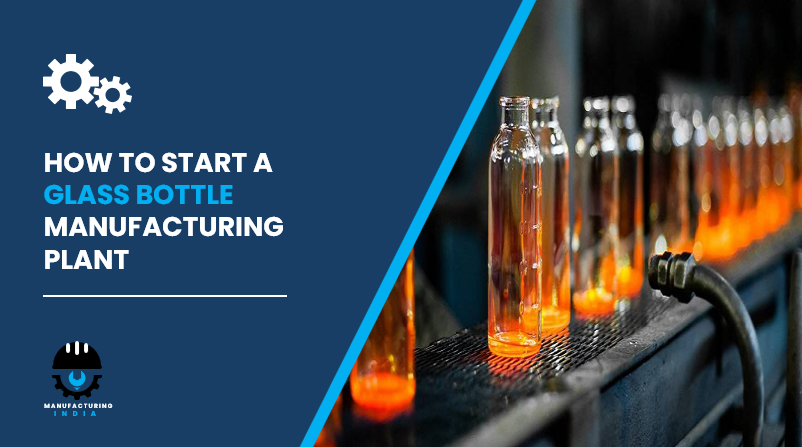
Setting up a glass bottle manufacturing plant in India presents a highly compelling investment opportunity as global demand for sustainable, chemically inert, and premium packaging containers continues to surge across food and beverages, pharmaceuticals, cosmetics and person al care, and specialty chemicals industries. Glass bottles have become indispensable in modern packaging due to their exceptional barrier properties, complete chemical inertness, recyclability, aesthetic versatility, and the growing consumer and regulatory preference for sustainable alternatives to single-use plastic packaging.
“With a rapidly expanding global market projected to grow at a CAGR of 3.6% through 2034, increasing adoption driven by eco-friendly packaging mandates, premium beverage growth, and pharmaceutical production expansion, and gross margins of 25–35%, glass bottle manufacturing offers one of the most financially attractive opportunities in the sustainable packaging sector — with a break-even window of 3–6 years.”
What is a Glass Bottle?
A glass bottle is a rigid packaging structure made from molten glass that has been precisely molded and formed to safely contain liquids, semi-liquids, and flowable products across a wide range of commercial and industrial applications. Glass bottles are manufactured from a carefully controlled blend of natural raw materials — primarily silica sand, soda ash, limestone, and cullet (recycled broken glass) — melted together at high temperatures and shaped through precision forming processes into bottles, jars, vials, and other container formats.
Glass provides an unmatched combination of chemical resistance and complete inertness, ensuring that it does not interact with, leach into, or contaminate the product it contains — whether food, beverage, pharmaceutical, or cosmetic. This makes glass the gold standard for preserving taste, fragrance, potency, and product integrity without any risk of chemical migration. Glass bottles are available in a diverse range of formats including clear flint glass, amber glass, green glass, and specialty colored glass, each tailored to specific product protection requirements — particularly ultraviolet light filtering for light-sensitive pharmaceutical and beverage products.
Glass bottles are inherently non-perishable, infinitely recyclable, and can be returned, refilled, and reused multiple times without quality degradation — making them one of the most sustainable packaging formats available. Modern glass bottles are engineered for compatibility with high-speed automatic filling, sealing, labeling, and secondary packaging lines, delivering consistent dimensional accuracy and quality performance across both mass production and small-to-medium-scale packaging operations.
Cost of Setting Up a Glass Bottle Manufacturing Plant in India
The glass bottle manufacturing plant cost depends on several parameters including production capacity, technology configuration, plant location, level of automation, raw material sourcing strategy, and regulatory compliance requirements. Here is a structured breakdown of all major cost components:
1. Capital Expenditure (CapEx)
The total capital investment in a glass bottle manufacturing plant typically covers the following:
Land and Site Development
This includes land acquisition, boundary development, land registration charges, and basic site preparation. Cost varies significantly depending on whether the land is in a designated industrial zone, packaging manufacturing park, Special Economic Zone (SEZ), or a privately purchased plot. Proximity to silica sand deposits and soda ash supply chains — along with established transportation corridors connecting to beverage, pharmaceutical, and FMCG manufacturing hubs — is a critical factor in site selection to optimize raw material procurement and distribution logistics costs.
Request a Sample Report for In-Depth Market Insights: https://www.imarcgroup.com/glass-bottle-manufacturing-plant-project-report/requestsample
Civil Works and Construction
Building costs cover the main production facility, raw material batch house and storage, glass melting furnace hall, forming and annealing areas, quality control laboratory, cullet processing and storage area, administrative block, utility area, and worker amenities. Construction must comply with high-temperature glass plant safety norms including fire resistance, heat insulation, structural reinforcement for furnace loads, emission management infrastructure, and environmental management standards for industrial glass manufacturing operations.
Machinery and Equipment
This is the single largest component of CapEx. Key machinery required for a glass bottle manufacturing plant includes:
- Batch Mixing and Handling Systems
- High-Temperature Glass Melting Furnaces (Regenerative or Electric Boost)
- Forehearths and Distribution Systems
- Individual Section (IS) Forming Machines
- Moulds and Mould Cooling Systems
- Annealing Lehrs
- Hot-End Coating Systems
- Cold-End Coating and Surface Treatment Lines
- Automated Visual Inspection and Dimensional Control Systems
- Leak and Pressure Testing Equipment
- Palletising and Packaging Lines
- Cullet Recycling and Processing Systems
- Process Control and Automation Systems (DCS/SCADA)
Machinery costs represent the largest share of overall capital expenditure, reflecting the high-temperature engineering requirements, precision mold fabrication, automated quality inspection sophistication, and process control infrastructure involved in continuous glass bottle production.
Other Capital Costs
These include pre-operative expenses, commissioning charges, import duties (if specialized IS machines or furnace components are sourced internationally), utilities installation, NOx and particulate emission control systems, waste heat recovery infrastructure, cullet processing facilities, Effluent Treatment Plant (ETP) setup, and environmental management systems for compliance with industrial glass manufacturing regulations.
2. Operational Expenditure (OpEx)
Once the plant is commissioned, the ongoing cost structure is characterized by a balanced distribution between raw material and utility costs — a defining feature of glass manufacturing economics:
Raw Material Cost (Silica Sand, Soda Ash, Limestone, and Cullet): 40–50% of Total OpEx
Silica sand is the primary raw material, forming approximately 70–75% of the glass batch by weight. Soda ash acts as a flux to lower the melting temperature, while limestone serves as a stabilizer and dolomite as an additional stabilizer. Cullet — recycled broken glass — is a critical batch component that reduces energy consumption, extends furnace life, and improves glass quality. Each 10% increase in cullet usage reduces melting energy consumption by approximately 2–3%, making cullet procurement strategy a key lever for operating cost optimization.
Utility Cost: 35–40% of Total OpEx
Glass melting is one of the most energy-intensive manufacturing processes, with furnace temperatures reaching 1,450–1,550°C to achieve complete batch fusion and homogeneous glass quality. Natural gas and electricity represent the primary utility expenses, accounting for a notably higher proportion of operating costs compared to most other manufacturing sectors. Investment in waste heat recovery systems, oxygen-fuel combustion technology, electric boost melting, and improved furnace insulation are the principal strategies for managing utility costs and improving long-term plant competitiveness.
Other Operating Costs
The remaining budget covers transportation and distribution logistics, mold maintenance and replacement costs (a significant recurring expense), salaries and wages, maintenance and refractory repair, depreciation, insurance, environmental compliance costs including NOx and particulate emission controls, ISO and customer quality certification expenses, taxes, and miscellaneous overhead.
3. Plant Capacity
The proposed manufacturing facility can be designed across a range of production scales:
- Small-Scale Operations: 10,000–30,000 metric tons annually — suitable for specialty pharmaceutical glass, premium spirits and wine bottles, artisanal beverage packaging, and regional food and sauce producers with single-furnace batch production and flexible mold changeover capability.
- Mid-Scale Plants: 30,000–50,000 metric tons annually — designed for national food and beverage, pharmaceutical, and personal care markets with one to two continuous furnace lines, moderate automation, and a diversified product portfolio across container types, colors, and neck finishes.
- Large-Scale Plants: 50,000–100,000 metric tons annually — built for national and export markets with multiple continuous glass melting furnaces, IS forming machine banks, highly automated inspection and palletising lines, and comprehensive product portfolios spanning beverages, pharmaceuticals, cosmetics, and specialty containers.
Profitability significantly improves with higher capacity utilization and furnace load factors. Larger plants benefit from economies of scale in raw material procurement, energy efficiency, furnace depreciation amortization, and distribution logistics. Maximizing cullet usage and securing long-term supply agreements with anchor customers are key strategies for optimizing financial performance.
4. Profit Margins and Financial Projections
- Gross Profit Margin: 25–35%
- Net Profit Margin: 10–15%
- Break-Even Period: 3 to 6 years, depending on production scale, furnace utilization, market positioning, raw material cost management, product mix, and customer concentration.
Financial projections must account for capital investment, operating costs, capacity utilization rates, pricing trends, and demand outlook. A thorough analysis should also include sensitivity analysis, Net Present Value (NPV), Internal Rate of Return (IRR), and Payback Period. Product mix optimization toward premium segments — including pharmaceutical-grade glass vials, amber UV-protective bottles, and specialty spirits containers — can meaningfully enhance blended average selling prices and improve overall financial returns.
Why Set Up a Glass Bottle Manufacturing Plant in India?
The global market environment presents a uniquely favorable opportunity for establishing a glass bottle manufacturing facility:
Surging Demand for Sustainable and Eco-Friendly Packaging
Global consumer awareness and regulatory momentum around plastic pollution and single-use plastic bans is accelerating the shift toward glass as a premium, infinitely recyclable packaging alternative. Glass bottles are increasingly positioned as the sustainable packaging choice across food, beverage, pharmaceutical, and cosmetic categories, supported by Extended Producer Responsibility (EPR) regulations and brand-led sustainability commitments from leading FMCG and beverage companies worldwide.
India’s Rapidly Growing Pharmaceutical Industry
India’s pharmaceutical industry ranks third globally in pharmaceutical production by volume and 14th by value, supported by a well-established domestic sector comprising approximately 3,000 drug companies and over 10,000 custom manufacturing units. The pharmaceutical sector is one of the strongest and most reliable demand drivers for glass bottles — particularly amber pharmaceutical bottles, vials, and injectable containers — providing a high-value, quality-sensitive, and consistently growing customer base for domestic glass manufacturers.
Beverages, Spirits, and Premium Food Packaging Growth
The expanding food and beverage sector — including alcoholic beverages, premium juices, flavored water, edible oils, sauces, condiments, and dairy products — represents the largest and most diversified application segment for glass bottles. Rising disposable incomes, premiumization of consumer products, and the hospitality and organized retail expansion across India’s urban and tier-2 markets are supporting sustained volume and value growth in glass packaging demand.
Cosmetics and Personal Care Sector Premiumization
The cosmetics and personal care sector is experiencing rapid premiumization, with brands across fragrances, skincare, hair care, and essential oils increasingly adopting glass packaging to communicate product quality, brand positioning, and sustainability credentials. Glass bottles offer unmatched design flexibility in shape, color, and finish customization, enabling differentiated premium packaging solutions that command higher selling prices and stronger brand loyalty.
Urbanization, Retail Expansion, and Export Opportunities
Rapid urbanization, rising household incomes, organized retail expansion, and India’s growing role as a global pharmaceutical and specialty food export hub are creating a broad and scalable demand environment for glass bottles. Indian glass manufacturers also benefit from cost-competitive manufacturing economics relative to European and North American producers, creating significant export opportunities for pharmaceutical, spirits, and specialty food glass containers.
Manufacturing Process Overview
The glass bottle manufacturing process is a continuous, highly automated operation involving several precisely controlled stages from raw material batching through to finished container inspection and dispatch:
- Raw Material Preparation and Batching — Silica sand, soda ash, limestone, dolomite, and cullet are weighed and blended in precise proportions using automated batch mixing systems to achieve the target glass composition, ensuring consistent melt quality and product performance.
- Glass Melting and Refining — The batch mixture is continuously fed into high-temperature regenerative furnaces operating at 1,450–1,550°C. The batch melts and homogenizes, and molten glass is refined to remove seeds, bubbles, and streaks before conditioning to the precise viscosity required for forming.
- Forehearth Conditioning — Molten glass flows from the furnace through temperature-controlled forehearths to gob feeders, where the glass is conditioned to a precise, uniform forming temperature and cut into individual gobs of controlled weight and shape.
- Forming and Moulding — Individual glass gobs are delivered to IS (Individual Section) forming machines, where they are shaped into bottle preforms (parisons) using the press-and-blow or blow-and-blow process, then transferred to blow moulds where final bottle shape, neck finish, and dimensional specifications are formed.
- Hot-End Coating — Freshly formed bottles receive a hot-end coating of tin oxide or titanium tetrachloride to strengthen the glass surface and improve resistance to abrasion and micro-cracking during downstream handling and filling operations.
- Annealing — Formed bottles pass through annealing lehrs — temperature-controlled tunnels — where residual internal stresses introduced during forming are relieved through a controlled cooling cycle, ensuring the dimensional stability and mechanical strength of the finished container.
- Cold-End Coating and Surface Treatment — Annealed bottles receive cold-end coatings of polyethylene wax or oleic acid to reduce surface friction, improve lubricity on filling lines, and protect against surface damage during transportation and handling.
- Automated Inspection and Quality Testing — Every bottle passes through automated optical inspection systems checking for dimensional accuracy, wall thickness, neck finish, base integrity, and the presence of defects including stones, blisters, seeds, cord, and surface cracks. Leak testing and pressure testing are applied for relevant product categories.
- Packaging and Dispatch — Approved bottles are palletised using automated palletisers with interlayer paper or corrugated separators, stretch-wrapped, and labeled for dispatch to filling plant customers.
Key Applications of Glass Bottles
Glass bottles serve a wide variety of end-use industries and packaging applications:
- Food and Beverage Industry: Beer, wine, spirits, carbonated soft drinks, mineral water, premium juices, flavored beverages, edible oils, vinegar, sauces, and condiments in formats ranging from standard commercial containers to premium artisanal designs.
- Pharmaceutical Industry: Pharmaceutical syrups, oral liquids, injectable vials, ophthalmic drops, blood collection tubes, reagent bottles, and laboratory containers requiring chemical inertness, sterilizability, and strict dimensional precision.
- Cosmetics and Personal Care: Perfumes, colognes, skincare serums, facial oils, hair treatments, nail polish, and luxury cosmetic products where glass packaging communicates premium brand positioning and product safety.
- Chemical and Household Products: Household cleaning products, industrial chemicals, agrochemical formulations, and laboratory reagents requiring chemical resistance and compatibility with reactive or sensitive contents.
- Specialty Food and Organic Products: Specialty food products including premium honey, artisanal jams, baby food, organic spreads, and high-value condiments where glass packaging supports clean-label and premium positioning.
- Returnable and Refillable Systems: Returnable and refillable glass bottle systems for beverages and dairy products in markets where deposit-return and refillable packaging systems are established or growing.
Global Market Outlook
The global glass bottle market size was valued at USD 75.73 Billion in 2025. According to IMARC Group estimates, the market is expected to reach USD 104.12 Billion by 2034, exhibiting a CAGR of 3.6% from 2026 to 2034. This sustained growth is driven by expanding food and beverage sector volumes, pharmaceutical production growth, rising consumer preference for sustainable packaging, premiumization trends in cosmetics and spirits, and increasing regulatory pressure on single-use plastics across major consumer markets.
Asia Pacific dominates the global glass bottle market, led by China, India, Japan, and Southeast Asian nations, driven by strong food and beverage manufacturing bases, rapidly growing pharmaceutical industries, and expanding organized retail sectors. India’s organized retail penetration, pharmaceutical export leadership, and growing premium beverage consumption position it as one of the most dynamic growth markets for glass bottle manufacturers.
Leading global players in this industry include:
- O-I Glass, Inc.
- Ardagh Group S.A.
- Gerresheimer AG
- Vidrala S.A.
- Verallia S.A.
Timeline to Start a Glass Bottle Manufacturing Plant
Setting up a glass bottle manufacturing plant from ideation to commissioning typically requires 18 to 30 months. This covers:
- Feasibility study and detailed project report (DPR) preparation
- Land acquisition and site development
- Environmental impact assessment and regulatory approvals
- Plant design and engineering
- Furnace design, refractory construction, and machinery procurement
- Utility setup and infrastructure commissioning
- Furnace heat-up, glass conditioning, and trial production
- Quality certification and customer approval processes
- Commercial production launch
Licenses and Regulatory Requirements
Starting a glass bottle manufacturing unit requires several approvals, which may vary by country and jurisdiction, including:
- Business registration and incorporation
- Factory License under applicable labor and manufacturing laws
- Environmental Clearance from relevant pollution control authorities
- Air Emission Consent (for NOx, SOx, and particulate emission management)
- Hazardous Waste Management Authorization
- Fire Safety and High-Temperature Plant Safety Certification (NOC)
- BIS Certification (Bureau of Indian Standards) for pharmaceutical glass containers
- REACH Compliance (for EU export markets)
- ISO 9001 Quality Management Certification
- ISO 15378 Certification (for pharmaceutical primary packaging materials)
- ISO 14001 Environmental Management Certification
- Occupational Health and Safety Certifications
Key Challenges to Consider
Before investing, entrepreneurs and investors should be aware of the common challenges in this business:
High Capital and Energy Requirements: Glass melting furnaces represent the single largest capital expenditure and require substantial energy inputs throughout their operational life. Initial CapEx is significant, particularly for mid to large-scale continuous melting operations, and energy costs at 35–40% of total OpEx make the business highly sensitive to natural gas and electricity price movements.
Furnace Lifecycle Management: Glass melting furnaces have a defined operational life of typically 8–12 years before major rebuilds are required, representing a significant capital expenditure cycle. Planning for furnace rebuilds and managing the cold repair process without extended production downtime is a critical long-term operational and financial planning challenge.
Regulatory Compliance on Emissions: Glass manufacturing furnaces generate NOx, SOx, and particulate emissions requiring significant investment in pollution control technology and ongoing compliance monitoring. Meeting increasingly stringent air quality standards — particularly in urban and peri-urban industrial zones — requires continuous investment in emission abatement infrastructure and environmental management systems.
Competition from Plastic and Alternative Packaging: Despite growing sustainability preferences, glass faces competition from PET, HDPE, and aluminum packaging formats in cost-sensitive consumer categories. New entrants must develop clear positioning in high-value, quality-sensitive, or sustainability-driven customer segments — such as pharmaceuticals, premium spirits, or organic food — to command pricing that supports glass’s higher per-unit production cost.
Technical Expertise and Workforce Requirements: Operating continuous glass melting furnaces, managing IS forming machine operations, conducting hot-end processes, and maintaining automated inspection system performance requires highly trained glass technologists, furnace engineers, and experienced forming machine operators — a specialized talent pool that must be actively recruited and developed.
Frequently Asked Questions
The following questions are answered in the report:
- How much does it cost to set up a glass bottle manufacturing plant?
- Is glass bottle manufacturing a profitable business in 2026?
- What machinery and equipment are required for a glass bottle plant?
- What licenses and approvals are required to start a glass bottle manufacturing facility?
- How long does it take to commission a glass bottle manufacturing plant?
- What is the best location to set up a glass bottle manufacturing plant?
- What government incentives are available for glass bottle manufacturers in India?
- What is the break-even period for a glass bottle manufacturing plant?
- What are the BIS and ISO 15378 compliance requirements for pharmaceutical glass containers?
- What are the key raw materials and their sourcing strategies for glass bottle manufacturing?
Key Takeaways for Investors
The glass bottle manufacturing industry represents a strong and scalable investment opportunity backed by growing global demand across multiple high-value end-use sectors and powerful sustainability tailwinds reshaping packaging procurement decisions worldwide. With gross margins of 25–35% and a break-even window of 3–6 years, a well-planned glass bottle manufacturing plant cost remains competitive and financially viable across plant capacities. The convergence of anti-plastic regulatory momentum, pharmaceutical sector growth, premium food and beverage packaging demand, cosmetics premiumization, and India’s expanding organized retail and export capabilities creates a robust and diversified revenue base for glass bottle manufacturers entering or expanding in this market. Strategic differentiation through pharmaceutical-grade certifications, specialty color and design capabilities, high cullet utilization, and anchor customer supply agreements will be the key levers for maximizing long-term financial returns in this capital-intensive but sustainably positioned industry.
About the Author