
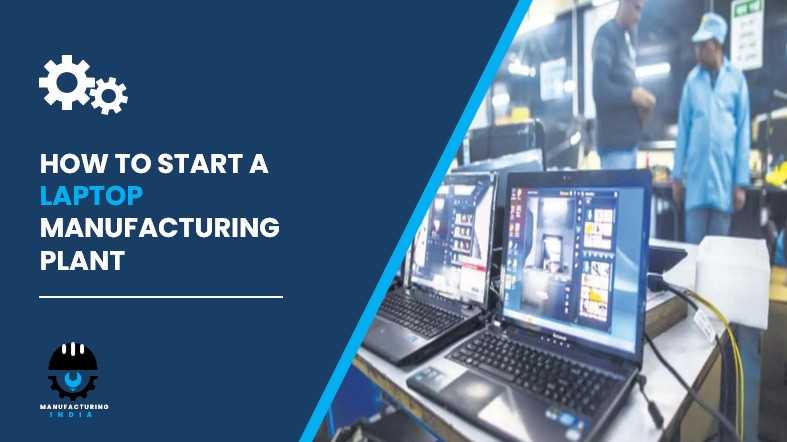
Setting up a laptop manufacturing plant in India presents a highly compelling investment opportunity as global demand for portable computing devices continues to surge across consumer, enterprise, education, and government sectors. Laptops have become indispensable in modern life due to their portability, processing power, connectivity capabilities, and versatility for both personal and professional applications.
“With a rapidly expanding global market projected to grow at a CAGR of 3.07% through 2034, increasing adoption driven by remote work, digital education, AI-powered computing, and enterprise mobility, and gross margins of 15–25%, laptop manufacturing offers one of the most financially attractive opportunities in the electronics manufacturing sector — with a break-even window of 3–6 years.”
What is a Laptop?
A laptop is a portable, compact personal computer featuring an integrated screen, keyboard, and touchpad, designed for mobile use with a rechargeable battery. Housed in a clamshell form factor that folds shut for convenient transport, it combines essential components — processor, memory, storage, display, and connectivity ports — into a single, self-contained unit capable of performing tasks ranging from browsing and word processing to professional content creation, software development, and high-performance gaming.
Laptops are available in various form factors including traditional notebooks, ultrabooks, 2-in-1 convertibles, gaming laptops, and mobile workstations, each tailored for specific user requirements and applications. They are widely valued for their ability to deliver desktop-class computing performance in a lightweight, portable package, making them essential tools for students, professionals, gamers, and general consumers across the globe.
Globally, the laptop industry is governed by stringent quality, safety, and environmental standards. The increasing push for AI-powered computing, ultra-thin designs, longer battery life, and sustainable manufacturing practices is further accelerating laptop demand across consumer and commercial markets worldwide.
Cost of Setting Up a Laptop Manufacturing Plant in India:
The laptop manufacturing plant cost depends on several parameters including production capacity, technology configuration, plant location, level of automation, raw material and component sourcing strategy, and regulatory compliance requirements. Here is a structured breakdown of all major cost components:
1. Capital Expenditure (CapEx):
The total capital investment in a laptop manufacturing plant typically covers the following:
Land and Site Development:
This includes land acquisition, boundary development, land registration charges, and basic site preparation. Cost varies significantly depending on whether the land is in a designated industrial zone, electronics manufacturing cluster, Special Economic Zone (SEZ), or a privately purchased plot. Proximity to component suppliers, skilled labour pools, and key transportation routes is a critical factor in site selection.
Request a Sample Report for In-Depth Market Insights: https://www.imarcgroup.com/laptop-manufacturing-plant-project-report/requestsample
Civil Works and Construction:
Building costs cover the main production facility, component storage areas, raw material warehousing, quality control and testing laboratories, administrative block, utility area, cleanroom environments, and worker amenities. Construction must comply with electronics manufacturing safety norms including ESD (Electrostatic Discharge) protection systems, climate-controlled assembly areas, dust-free environments, and fire safety standards.
Machinery and Equipment:
This is the single largest component of CapEx. Key machinery required for a laptop manufacturing plant includes:
- Surface-Mount Technology (SMT) Lines for PCB Assembly
- Automated Pick-and-Place Machines
- Reflow Soldering Ovens and Wave Soldering Systems
- Automated Optical Inspection (AOI) Systems
- X-Ray Inspection Equipment for BGA and Hidden Solder Joints
- Automated Assembly Robots for Chassis and Component Integration
- Precision Testing Stations (Functional, Electrical, and Thermal)
- Software Flashing and BIOS Programming Bays
- Burn-In Racks for Reliability and Stress Testing
- Quality Control Laboratories and Environmental Testing Chambers
- Packaging and Labelling Systems
- ESD Protection and Cleanroom Infrastructure
Machinery costs represent the largest share of overall capital expenditure, reflecting the high degree of precision engineering, automation requirements, and quality control systems involved in laptop manufacturing.
Other Capital Cost:
These include pre-operative expenses, commissioning charges, import duties (if machinery is sourced internationally), utilities installation, fire safety systems, Effluent Treatment Plant (ETP) setup, environmental management infrastructure, and ESD protection installations across the facility.
2. Operational Expenditure (OpEx):
Once the plant is commissioned, the ongoing cost structure is dominated by a few key components:
Raw Material and Component Cost (PCBs, Processors, Displays, Memory): 80–85% of Total OpEx
Printed circuit boards (PCBs), processors (CPUs/GPUs), display panels, memory modules (RAM), storage drives (SSD/HDD), batteries, keyboards, touchpads, chassis materials, and connectors are the primary components and account for many operating expenses. Additional materials include thermal interface materials, cables, screws, adhesives, and packaging materials depending on the product configuration and end-use segment.
Utility Cost: 5–10% of Total OpEx:
Utilities include electricity (heavily consumed by SMT lines, testing equipment, climate control systems, and cleanroom operations), water (used in cooling systems and facility maintenance), compressed air supply, and HVAC systems for maintaining controlled manufacturing environments. Energy-efficient equipment and smart facility management systems can significantly reduce utility costs over time.
Other Operating Cost:
The remaining budget covers transportation, packaging (retail boxes, protective inserts, accessory packaging), salaries and wages, maintenance, depreciation, insurance, environmental compliance costs, software licensing fees, taxes, and miscellaneous overhead.
3. Plant Capacity:
The proposed manufacturing facility can be designed across a range of production scales:
- Small-Scale Operations: 100,000–500,000 units annually — suitable for niche markets, specialized configurations, regional distribution, and contract manufacturing for smaller brands with flexible batch production.
- Mid-Scale Plants: 500,000–2,000,000 units annually — designed for national markets with semi-continuous production, moderate automation, and diversified product portfolio spanning consumer, education, and enterprise segments.
- Large-Scale Plants: 2,000,000–5,000,000+ units annually — built for national or global markets with continuous production processes, high automation, multiple parallel assembly lines, and comprehensive product portfolio spanning consumer, gaming, enterprise, and workstation categories.
Profitability significantly improves with higher capacity utilization. Larger plants benefit from economies of scale in component procurement, energy efficiency, and distribution logistics.
4. Profit Margins and Financial Projections:
- Gross Profit Margin: 15–25%
- Net Profit Margin: 5–10%
- Break-Even Period: 3 to 6 years, depending on production scale, market positioning, component cost management, product mix, and sales efficiency.
Financial projections must account for capital investment, operating costs, capacity utilization rates, pricing trends, and demand outlook. A thorough analysis should also include sensitivity analysis, Net Present Value (NPV), Internal Rate of Return (IRR), and Payback Period.
Why Set Up a Laptop Manufacturing Plant in India?
The global market environment presents a uniquely favourable opportunity for establishing a laptop manufacturing facility:
Surging Consumer and Enterprise Demand:
Laptops are experiencing accelerating demand from consumer electronics, corporate IT, education, government, and gaming sectors. The global shift towards hybrid work models, digital education, and cloud-based computing is driving sustained demand growth. More than 78% of digital workflows now depend on portable computing devices, with enterprise laptop procurement increasing significantly across professional sectors.
Remote Work and Digital Education Revolution:
The widespread adoption of remote and hybrid work arrangements across corporate and educational institutions has fundamentally transformed computing device requirements. The need for video conferencing-ready, multitasking-capable laptops with longer battery life and enhanced connectivity continues to create sustained long-term demand.
AI-Powered Computing and Technological Advancements:
The rapid integration of AI capabilities into laptops, with dedicated Neural Processing Units (NPUs) delivering 40+ TOPS performance, is reshaping the market. AI-enabled laptops for on-device intelligence, real-time content creation, and productivity automation represent the fastest-growing market segment, driving both consumer upgrades and enterprise refresh cycles.
Gaming and Content Creation Boom:
The expanding gaming industry is driving demand for high-performance laptops featuring advanced GPUs, high-refresh-rate displays (144Hz+), and efficient cooling systems. Content creators, freelancers, and digital professionals increasingly prefer powerful laptops over desktop setups for their portability and performance capabilities.
Government Policy and Manufacturing Incentives:
Government initiatives promoting electronics manufacturing, digital inclusion, and domestic assembly are accelerating local laptop production and ecosystem development. India’s Production-Linked Incentive (PLI) scheme for IT hardware, with an allocation of ₹17,000 crore, offers incentives of 4–6% on incremental sales, encouraging companies to expand domestic manufacturing operations.
Manufacturing Process Overview:
The laptop manufacturing process is a multi-stage operation involving several precision engineering steps, material handling procedures, and quality control checkpoints. The production is divided into the following main areas:
- PCB Assembly (SMT Process) — Solder paste is printed onto bare PCBs, followed by automated pick-and-place mounting of surface-mount components (processors, memory, controllers, capacitors, resistors), reflow soldering, and automated optical inspection to ensure precise component placement and reliable solder joints.
- Sub-Assembly and Integration — Assembled PCBs (motherboards) are integrated with display panels, keyboards, touchpads, batteries, storage drives, wireless modules, speakers, cameras, and cooling systems into the laptop chassis.
- Software Loading and Configuration — Operating system installation, BIOS programming, firmware flashing, driver installation, and device-specific software configuration are performed at dedicated flashing stations.
- Testing and Quality Assurance — Comprehensive functional testing, electrical testing, thermal stress testing, burn-in reliability testing, display calibration, keyboard and touchpad verification, and connectivity testing are conducted to ensure product quality and reliability.
- Final Assembly and Packaging — Cosmetic inspection, labelling, serial number assignment, accessory packaging (charger, documentation), retail box packaging, and palletization for dispatch.
Key Applications of Laptops:
Laptops serve a wide variety of end-use industries and applications:
- Consumer Electronics: Personal computing, web browsing, entertainment, social media, and everyday productivity tasks for home users.
- Enterprise and Corporate: Business applications, enterprise resource planning (ERP), customer relationship management (CRM), video conferencing, and remote collaboration tools.
- Education: E-learning platforms, digital classrooms, student computing, research, and educational content creation for schools, colleges, and universities.
- Gaming and Entertainment: High-performance gaming, streaming, content creation, video editing, 3D rendering, and immersive entertainment experiences.
- Government and Public Sector: Digital governance, public services, defense applications, healthcare IT systems, and government procurement programs.
- Creative and Professional: Graphic design, CAD/CAM, software development, data science, AI/ML development, and mobile workstation applications.
Global Market Outlook:
The global laptop market size was valued at USD 155.74 Billion in 2025. According to IMARC Group estimates, the market is expected to reach USD 204.45 Billion by 2034, exhibiting a CAGR of 3.07% from 2026 to 2034. This sustained growth is driven by expanding remote work and hybrid work adoption, digital education transformation, AI-powered computing advancements, gaming and content creation demand, enterprise mobility initiatives, and increasing penetration in emerging markets.
Asia Pacific is the largest and fastest-growing regional market, driven by strong manufacturing bases in China, India, Japan, South Korea, and Taiwan, coupled with rising consumer demand and supportive government policies promoting electronics manufacturing and digital inclusion.
Leading global players in this industry include:
- Dell Technologies
- Hewlett Packard (HP)
- Apple Inc.
- Lenovo Group
- Acer Inc.
Timeline to Start a Laptop Manufacturing Plant:
Setting up a laptop manufacturing plant from ideation to commissioning typically requires 18 to 30 months. This covers:
- Feasibility study and detailed project report (DPR) preparation
- Land acquisition and site development
- Environmental impact assessment and regulatory approvals
- Plant design and engineering
- Machinery procurement and installation (SMT lines, assembly systems, testing stations)
- Cleanroom and ESD infrastructure setup
- Utility setup and infrastructure commissioning
- Trial production, quality testing, and OEM qualification
- BIS certification, FCC/CE compliance, and product certification
- Commercial production launch
Licenses and Regulatory Requirements:
Starting a laptop manufacturing unit requires several approvals, which may vary by country and jurisdiction, including:
- Business registration and incorporation
- Factory License under applicable labor and manufacturing laws
- Environmental Clearance from relevant pollution control authorities
- Bureau of Indian Standards (BIS) Certification for IT hardware products
- Fire Safety Certification (NOC from Fire Department)
- E-Waste Management Authorization under applicable regulations
- FCC Certification (for US markets) and CE Marking (for EU markets)
- RoHS and WEEE Compliance for hazardous substance restrictions
- ISO 9001 Quality Management Certification
- ISO 14001 Environmental Management Certification
- Occupational Health and Safety Certifications (ISO 45001)
- PLI Scheme Registration (for applicable government incentive programs)
Key Challenges to Consider:
Before investing, entrepreneurs and investors should be aware of the common challenges in this business:
High Capital Requirements: Initial CapEx for precision assembly equipment, SMT lines, testing infrastructure, cleanroom facilities, and ESD protection systems is significant, especially for mid to large-scale plants. The need for imported machinery and specialized testing equipment adds to the capital burden.
Component Supply Chain Complexity: Laptops require sourcing hundreds of components from global supply chains, including processors, memory, displays, batteries, and storage drives. Supply chain disruptions, geopolitical tensions, and semiconductor shortages can directly impact production continuity and cost structures.
Rapid Technological Obsolescence: The laptop industry is characterized by frequent product refresh cycles, rapid technological advancements, and evolving consumer expectations. Manufacturers must continuously invest in new production capabilities, retooling, and R&D to stay competitive with the latest processor architectures, display technologies, and form factors.
Regulatory Compliance: Meeting product safety, electromagnetic compatibility (EMC), environmental, and occupational health standards (including BIS, FCC, CE, RoHS, and WEEE regulations) requires continuous investment in quality systems, testing equipment, and trained personnel.
Competition: The market features established global OEMs and ODMs with significant production capacities, deep supply chain relationships, and strong brand recognition. New entrants must develop a clear differentiation strategy, whether through cost competitiveness, specialized configurations, regional focus, or value-added services.
Technical Expertise: Operating high-speed SMT lines, managing precision assembly processes, maintaining product quality consistency across thousands of components per unit, and handling firmware/software integration require highly trained engineers and technicians.
Frequently Asked Questions:
The following questions are answered in the report:
- How much does it cost to set up a laptop manufacturing plant?
- Is laptop manufacturing a profitable business in 2026?
- What machinery and equipment are required for a laptop manufacturing plant?
- What licenses and approvals are required to start a laptop manufacturing facility?
- How long does it take to commission a laptop manufacturing plant?
- What is the best location to set up a laptop manufacturing plant?
- What government incentives are available for laptop manufacturers?
- What is the break-even period for a laptop manufacturing plant?
- What are the BIS and FCC/CE compliance requirements for laptop manufacturing?
- What are the key components and their sourcing strategies for laptop manufacturing?
Key Takeaways for Investors:
The laptop manufacturing industry represents a strong and scalable investment opportunity backed by growing global demand across multiple high-value sectors and supportive industrial policy environments. With gross margins of 15–25% and a break-even window of 3–6 years, a well-planned laptop manufacturing plant cost remains competitive and financially viable across plant capacities. The convergence of remote work adoption, digital education expansion, AI-powered computing growth, gaming industry momentum, and government manufacturing incentives creates a robust and diversified revenue base for laptop manufacturers entering or expanding in this market.
About the Author