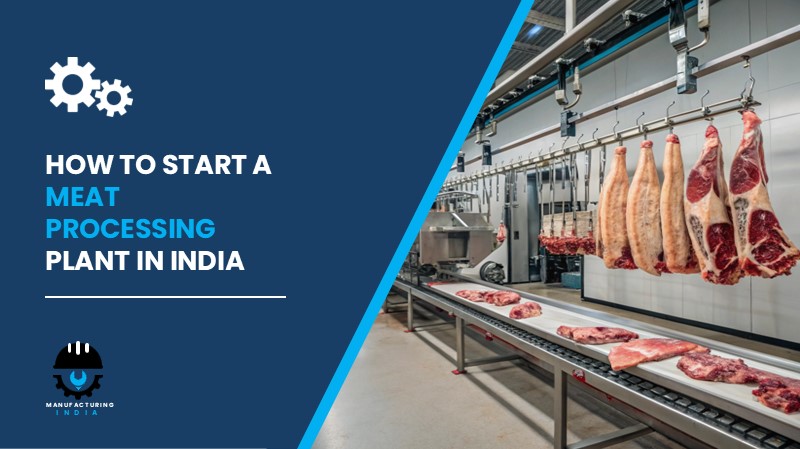
Setting up a meat processing plant in India presents a compelling investment case as the country rapidly emerges as one of the most cost-competitive and high-demand destinations for protein food processing and value-added meat product manufacturing. Driven by rising global and domestic consumption of protein-rich foods, increasing demand for processed and ready-to-cook meat products, expansion of quick-service restaurants and foodservice chains, and growing consumer preference for hygienically processed and packaged meat, the sector represents a significant and scalable opportunity within India’s rapidly expanding food processing economy.
“With over 1.4 billion consumers, a rapidly urbanising population, Make in India policy support for food processing, and a booming foodservice and quick-service restaurant sector, India offers one of the most financially attractive environments for meat processing — with gross margins of 20–30% and a break-even window of 3–5 years.”
What is Meat?
Meat is the edible flesh of animals and is primarily derived from animals raised for slaughter such as cattle, sheep, goats, pigs, and chickens, along with game animals. Meat is composed mainly of muscle tissue and fat, connective tissue, and sometimes internal organs, and it is consumed cooked or processed in different ways across diverse culinary traditions. Meat is a major source of first-class protein and also contains essential amino acids, B-vitamins including B12, and minerals such as iron and zinc, making it nutritionally significant across global dietary patterns. Meat can be categorised as red meat, white meat, or processed meat depending on the type of animal and the methods of preparation. Beyond nutrition, meat production is inextricably linked to agriculture, trade, cultural practices, and global food systems, making it one of the world’s most important and widely consumed food categories.
Cost of Setting Up a Meat Processing Plant in India
The meat processing plant cost in India depends on several parameters including processing capacity, technology used, plant location, product mix (fresh, frozen, ready-to-cook, processed), cold chain infrastructure, and regulatory compliance requirements. Here is a structured breakdown of all major cost components:
1. Capital Expenditure (CapEx)
The total capital investment in a meat processing plant typically covers the following:
Land and Site Development
This includes land acquisition, boundary development, land registration charges, and basic site preparation. Cost varies significantly depending on whether the facility is located in a food processing industrial zone, Special Economic Zone (SEZ), or a privately purchased plot. Proximity to livestock supply regions — including cattle belts in Uttar Pradesh, Andhra Pradesh, and Telangana, and poultry clusters in Andhra Pradesh, Telangana, and Tamil Nadu — reduces live animal procurement and transport costs. Access to cold chain logistics infrastructure, refrigerated transport corridors, and proximity to urban consumer markets and export ports are also critical site selection factors.
Civil Works and Construction
Building costs cover the main slaughtering and primary processing hall, carcass chilling rooms, deboning and cutting areas, secondary processing and value-addition zone, freezing and cold storage facilities, quality control and microbiological testing laboratory, packaging and dispatch area, effluent treatment plant, administrative block, and worker amenities. Construction must comply with FSSAI food safety infrastructure norms, Prevention of Cruelty to Animals (Slaughter House) Rules, and State Pollution Control Board requirements for meat processing facility design.
Machinery and Equipment
This is the single largest component of CapEx. Key machinery required for a meat processing plant includes:
- Livestock Stunning Equipment
- Slaughtering Lines and Bleeding Systems
- Scalding and Dehairing Machines (for pork and poultry)
- Carcass Splitting Saws
- Carcass Washing Systems
- Carcass Chilling Tunnels and Blast Chillers
- Deboning and Cutting Tables and Machinery
- Meat Grinders and Mincers
- Mixers and Tumblers (for marination and seasoning)
- Emulsifiers and Bowl Cutters (for processed meat)
- Thermal Processing Units (cooking, smoking, pasteurisation)
- Individual Quick Freezing (IQF) Tunnels
- Plate and Spiral Freezers
- Vacuum Packaging Machines
- Modified Atmosphere Packaging (MAP) Systems
- Automated Weighing and Labelling Systems
- Cold Storage Rooms and Refrigeration Systems
- Effluent Treatment Plant and Blood Collection Systems
Machinery costs represent the largest share of overall capital expenditure, reflecting the comprehensive cold chain infrastructure, food safety engineering, and multi-stage processing technology required in a modern, FSSAI-compliant meat processing facility.
Other Capital Costs
These include pre-operative expenses, commissioning charges, import duties on specialised slaughtering line and IQF freezing equipment, utilities installation including high-capacity refrigeration and ammonia-based cold chain systems, fire safety infrastructure, and effluent treatment plant setup for blood, fat, and wastewater management from slaughtering and processing operations.
2. Operational Expenditure (OpEx)
Once the plant is commissioned, the ongoing cost structure is dominated by a few key components:
Raw Material Cost (Livestock): 75–85% of Total OpEx
Livestock — including cattle, goat, sheep, chicken, and other species as applicable — is the primary raw material and accounts for the dominant share of operating expenses. Live animal procurement costs are influenced by seasonal supply cycles, regional livestock market prices, feed cost trends, and animal availability. Securing long-term supply partnerships with livestock farmers, contract farming arrangements, and integration with poultry or livestock rearing operations can help manage procurement cost stability and ensure consistent raw material supply for uninterrupted production.
Utility Cost: 5–10% of Total OpEx
Utilities include electricity (heavily consumed by refrigeration compressors, blast chillers, IQF tunnels, and cold storage systems), process water (used extensively in carcass washing, cleaning, and sanitation), steam for thermal processing, and compressed air. Refrigeration energy is the dominant utility cost driver in a meat processing facility. Investment in energy-efficient ammonia refrigeration systems, heat recovery from chillers, and solar power for non-refrigeration loads can materially reduce utility costs.
Other Operating Costs
The remaining budget covers transportation and cold chain logistics, hygiene packaging materials including vacuum pouches, MAP trays, and frozen product cartons, salaries and wages for food safety and HACCP-trained production staff, maintenance of refrigeration and processing equipment, veterinary and ante-mortem inspection fees, FSSAI compliance audits, effluent treatment operation, depreciation, taxes, and miscellaneous overhead.
3. Plant Capacity
The proposed processing facility is designed with an annual production capacity ranging between 50,000 to 100,000 MT. This range allows the plant to achieve economies of scale while maintaining flexibility to serve multiple end-use segments including the foodservice and HoReCa sector, quick-service restaurants, retail and modern trade, institutional catering for hospitals and airlines, and export markets across the Middle East, Southeast Asia, and beyond. Smaller setups may start at lower capacity focused on fresh or frozen retail formats, with profitability improving as product range is diversified into value-added ready-to-cook and processed meat categories.
4. Profit Margins and Financial Projections
- Gross Profit Margin: 20–30%, supported by stable protein consumption demand and growing preference for hygienically processed and packaged meat formats
- Net Profit Margin: 8–12%, improving with higher value-added product mix including marinated, frozen, and ready-to-cook formats and direct institutional and export supply relationships
- Break-Even Period: 3 to 5 years, depending on processing scale, product mix, livestock procurement efficiency, cold chain infrastructure investment, and depth of foodservice and retail customer relationships
Financial projections must account for capital investment, operating costs, capacity utilisation rates, livestock price trends, and demand outlook. A thorough analysis should also include sensitivity analysis, Net Present Value (NPV), Internal Rate of Return (IRR), and Payback Period, with particular attention to livestock commodity price scenarios.
Request a Sample Report for In-Depth Market Insights: https://www.imarcgroup.com/meat-processing-plant-project-report/requestsample
Why Set Up a Meat Processing Plant in India?
India presents a uniquely favourable environment for establishing a meat processing plant:
Surging Domestic Demand from Urbanisation and Protein Awareness
As per the United Nations’ World Urbanization Prospects 2025 report, most of the global population currently resides in urban regions, with 45% living in cities and 36% in towns. In India, rapid urbanisation is increasing reliance on convenient, protein-rich, and hygienically packaged food products. Rising disposable incomes, expanding foodservice chains, and growing awareness of balanced protein diets are driving strong and sustained demand for processed and ready-to-cook meat products across urban and semi-urban India.
Policy and Regulatory Tailwinds
The Government of India’s PLI scheme for food processing, FSSAI’s modernisation of meat processing hygiene standards, the National Livestock Mission, and the Agricultural and Processed Food Products Export Development Authority (APEDA)’s export promotion for processed meat create a policy-supportive environment for organised, FSSAI-compliant meat processors. The shift from unorganised wet markets toward licensed and regulated processing facilities is a structural long-term demand driver for the organised sector.
Cost-Competitive Manufacturing
India offers competitive land costs, a large livestock population providing proximity to raw material supply, a large pool of trained food processing workers, and lower overall operating costs compared to developed market processors. India’s poultry sector, in particular, is one of the world’s fastest-growing, with Andhra Pradesh and Telangana being major production hubs that offer integrated supply chain advantages for poultry processing facilities.
Export Opportunities
India is a significant exporter of buffalo meat (carabeef) and processed poultry products, with strong demand from the Middle East, Southeast Asia, and Vietnam. Organised, FSSAI and APEDA-registered processors with internationally recognised food safety certifications such as HALAL and ISO 22000 can access premium export markets and command better pricing compared to domestic commodity sales, significantly improving overall plant economics.
Growing Foodservice and QSR Sector
The rapid expansion of quick-service restaurant chains, organised food delivery platforms, cloud kitchens, and institutional catering across India’s urban centres is creating large-scale, consistent, and recurring demand for standardised, hygienically processed meat products. This organised foodservice demand channel increasingly prefers supply from FSSAI-compliant, temperature-controlled processing facilities over traditional unorganised sources, creating a direct and growing opportunity for modern meat processors.
Manufacturing Process Overview
The meat processing procedure involves slaughtering and dressing, carcass chilling, deboning and cutting, washing and trimming, grinding or marination, thermal processing or freezing, quality inspection, and hygienic packaging. The complete process flow involves:
- Livestock Receiving and Ante-Mortem Inspection — veterinary inspection of live animals for health and fitness before slaughter
- Stunning — humane stunning of animals prior to slaughter in compliance with animal welfare and HALAL/non-HALAL requirements
- Slaughtering and Bleeding — controlled slaughter and complete blood drainage
- Scalding, Dehairing, and Singeing (poultry/pork) — feather or hair removal using scalding tanks and dehairing machines
- Evisceration — removal of internal organs under veterinary post-mortem inspection
- Carcass Washing — thorough washing of dressed carcasses with potable water
- Carcass Chilling — rapid chilling of carcasses to below 4°C in blast chillers and chill rooms to halt microbial growth
- Deboning and Primal Cutting — separation of muscle groups into primal and sub-primal cuts on deboning lines
- Trimming and Portion Cutting — precision trimming and portioning to customer specifications
- Grinding and Mincing — size reduction of trimmings and selected cuts for ground and minced meat products
- Mixing, Marination, and Tumbling — blending with spices, seasonings, and marinades using mixers and tumblers
- Thermal Processing (for processed meat) — cooking, smoking, or pasteurisation of value-added products in thermal processing units
- Freezing — IQF or plate freezing of portions, pieces, and processed products for frozen retail and export
- Vacuum / MAP Packaging — hygienic sealing in vacuum pouches or modified atmosphere trays to extend shelf life
- Quality Inspection and Microbiological Testing — finished product testing for microbiological safety, temperature compliance, and FSSAI specification adherence
- Labelling, Cold Storage, and Dispatch — regulatory labelling, temperature-controlled storage, and refrigerated dispatch to customers
Key Applications of Processed Meat
Processed meat products from India serve a wide variety of end-use industries and applications:
- Foodservice and HoReCa Sector: Standardised portioned and processed meat for hotels, restaurants, airline catering, and institutional foodservice operators requiring consistent quality, hygiene, and supply reliability
- Quick-Service Restaurants: Frozen and ready-to-cook chicken, beef, mutton, and processed meat products supporting standardised menus, faster preparation, and consistent portion control for QSR chains
- Retail and Modern Trade: Packaged fresh, chilled, and frozen meat products for urban household purchase through supermarkets, hypermarkets, and online grocery platforms
- Institutional Catering: Bulk chilled and frozen meat supply for hospitals, corporate cafeterias, airlines, defence establishments, and large-scale institutional kitchens
- Export Markets: Buffalo meat (carabeef), processed poultry, and value-added meat products for export to the Middle East, Southeast Asia, Vietnam, and other international markets under APEDA and HALAL certification
Global Market Outlook
The global meat market was valued at USD 1.46 Trillion in 2025 and is projected to reach USD 1.73 Trillion by 2034, growing at a CAGR of 1.9% from 2026 to 2034. This sustained growth is driven by rising global protein consumption, urbanisation and lifestyle changes increasing reliance on convenient protein-rich foods, expansion of foodservice chains and quick-service restaurants, growing consumer acceptance of hygienically packaged meat products, and rising disposable incomes across emerging economies.
Leading global players in the meat processing industry include:
- JBS S.A.
- Tyson Foods, Inc.
- Cargill, Incorporated
- BRF Global
- Hormel Foods Corporation
- Conagra Brands Inc.
- OSI Group
- WH Group Limited
- Vion Group
- NH Foods Ltd.
- Minerva Foods SA
- Clemens Food Group
- Sysco Corporation
Timeline to Start a Meat Processing Plant
Setting up a meat processing plant from ideation to commissioning typically requires 12 to 18 months. This covers:
- Feasibility study and detailed project report (DPR) preparation
- Land acquisition and site development
- Regulatory approvals, environmental clearances, and slaughterhouse licensing
- Factory licence and fire safety compliance
- Machinery procurement, installation, and cold chain system commissioning
- FSSAI Central Licence application and food safety infrastructure certification
- Trial production, microbiological quality testing, and HACCP system validation
- Commercial production launch and foodservice, retail, and export customer supply commencement
Licenses and Regulatory Requirements
Starting a meat processing unit in India requires several approvals, including:
- Business registration (Proprietorship, LLP, or Private Limited Company)
- Factory Licence under the Factories Act
- FSSAI Central Licence (mandatory for all meat processing and slaughtering units operating at scale)
- Slaughterhouse Licence under the Prevention of Cruelty to Animals (Slaughter House) Rules, 2001
- Environmental Clearance from the State Pollution Control Board (mandatory for slaughterhouses and meat processing units)
- GST Registration
- Fire Safety NOC
- APEDA Registration (for export-oriented meat processing units)
- HALAL Certification (mandatory for meat exports to Middle East and Muslim-majority markets)
- Udyam Registration (for MSME benefits and PLI food processing scheme eligibility)
Key Challenges to Consider
Before investing, entrepreneurs should be aware of the common challenges in this business:
- High Capital Requirements: Initial CapEx for slaughtering lines, blast chillers, IQF tunnels, cold storage infrastructure, and effluent treatment systems is significant, particularly for large-scale facilities targeting export and institutional supply markets.
- Complex Regulatory Environment: Meat processing in India requires simultaneous compliance with FSSAI food safety standards, Prevention of Cruelty to Animals Act, State Pollution Control Board requirements, and local municipal slaughterhouse licensing — a multi-authority compliance process that requires careful navigation and expert regulatory support.
- Cold Chain Infrastructure Dependency: Maintaining product safety and quality throughout the supply chain requires end-to-end refrigerated transport, cold storage at distribution points, and retail cold chain — significant additional infrastructure investment beyond the plant itself.
- Livestock Price Volatility: Live animal procurement costs are subject to seasonal supply cycles, festival demand spikes, and regional price variations that directly impact processing margins. Integrated livestock supply chain arrangements help mitigate this risk.
- Skilled Manpower: Meat processing requires trained HACCP-qualified food safety personnel, skilled deboners, veterinary-inspected slaughter line operators, and cold chain management expertise — a specialised workforce that requires targeted recruitment and ongoing food safety training investment.
- Socio-Cultural and Political Sensitivities: Meat processing in India is subject to varying state-level regulations, periodic policy changes regarding animal slaughter, and socio-cultural sensitivities that can affect operations in certain states. Careful selection of plant location and species mix is essential for operational continuity.
Frequently Asked Questions
The following questions are answered in the report:
- How much does it cost to set up a meat processing plant in India?
- Is meat processing profitable in India in 2026?
- What machinery is required for a meat processing plant in India?
- What raw materials are required for meat processing?
- What licences and approvals are required to start a meat processing plant in India?
- How long does it take to commission a meat processing plant in India?
- What is the best state or location to set up a meat processing plant in India?
- What government incentives are available for meat processors in India?
- What is the break-even period for a meat processing plant in India?
- What are the FSSAI, APEDA, and HALAL certification requirements for meat processing in India?
Key Takeaways for Investors
The meat processing industry in India represents a strong and scalable investment opportunity backed by India’s rapidly urbanising consumer base, growing protein consumption, expanding foodservice and QSR sector, and supportive government food processing policies. With gross margins of 20–30%, a well-planned meat processing plant cost in India remains competitive and financially viable across processing capacities. Investors who combine FSSAI-compliant food safety systems, efficient livestock supply chain integration, a differentiated product mix across fresh, frozen, and value-added categories, and strong relationships with QSR chains, modern trade retailers, and export customers stand to benefit significantly from one of India’s most essential and fastest-growing segments of the food processing industry.
About the Author