Setting up a monk fruit powder manufacturing plant in India presents a compelling investment case driven by the country’s rapidly expanding market for natural, low-calorie sweeteners, the surging prevalence of diabetes and metabolic disorders among India’s population, and the accelerating adoption of clean-label, sugar-free, and plant-based ingredients across food and beverage, healthcare, and pharmaceutical manufacturing sectors. As Indian consumers, food companies, and health product manufacturers shift decisively away from synthetic sweeteners and refined sugar toward natural, non-glycemic alternatives, monk fruit powder – a hundred times sweeter than sucrose yet completely calorie-free – has emerged as one of the most premium and fastest-growing functional food ingredients in the global natural sweetener landscape. India’s large and health-aware middle class, combined with the world’s highest projected growth in diabetes prevalence, creates a structurally compelling domestic demand environment for this plant-derived ingredient.
India’s strategic advantages further strengthen the investment case for establishing a monk fruit powder manufacturing facility. The country’s established food ingredient processing infrastructure, particularly in Gujarat, Maharashtra, Tamil Nadu, and Himachal Pradesh, provides access to pharmaceutical-grade processing equipment, chemical engineering talent, and FSSAI-compliant food manufacturing environments. The growing integration of Indian food and supplement manufacturers into global clean-label supply chains means domestic production of monk fruit powder can serve both the expanding Indian market and international buyers in the food and beverage, healthcare, and personal care sectors across Asia-Pacific – a region that accounts for approximately 43.6% of the global monk fruit powder market. With gross profit margins of 40–50% and net margins of 15–25%, this investment offers one of the most attractive profitability profiles across all natural ingredient manufacturing categories.
A monk fruit powder manufacturing plant in India is positioned at the convergence of a global diabetes crisis – with total adult diabetics projected to reach 853 million by 2050 per the International Diabetes Federation – a booming clean-label and natural sweetener market, and Asia-Pacific’s dominant 43.6% global market share. With gross profit margins of 40–50%, net margins of 15–25%, and strong demand from food and beverage, healthcare, pharmaceutical, and personal care industries, this high-value ingredient manufacturing investment delivers both premium financial returns and long-term demand sustainability.
What is Monk Fruit Powder?
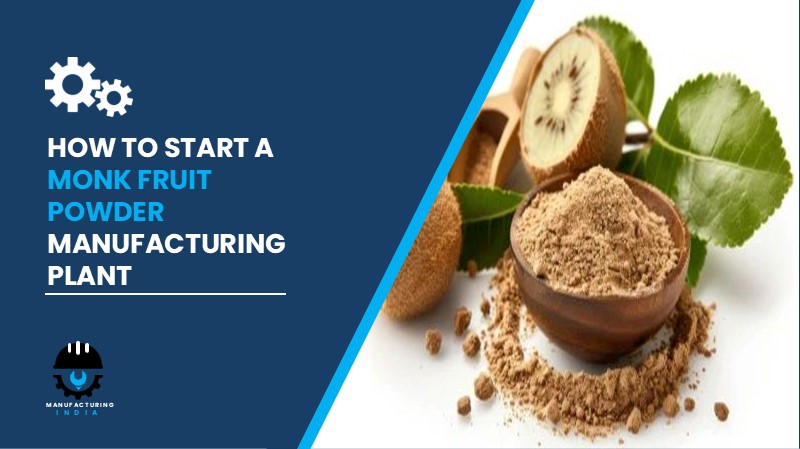
Monk fruit powder is a natural, low-calorie sweetener derived from the dried fruit of the monk fruit plant (Siraitia grosvenorii), native to Southeast Asia. It is approximately a hundred times sweeter than sucrose due to the presence of mogrosides – a class of triterpenoid glycoside compounds responsible for its intense sweetness without contributing calories or impacting blood glucose levels. Monk fruit powder is a zero-calorie alternative to sugar, making it a particularly popular choice for people seeking to reduce their sugar intake, including those following low-carb, keto, or diabetic-friendly diets. The powder is non-glycemic and free from artificial chemicals, making it a recognised clean-label ingredient suitable for use across health-conscious and premium consumer product categories.
The primary production method involves harvesting, drying, extracting mogrosides, powdering, and packaging – a multi-step process requiring specialised extraction and spray drying technology to concentrate and stabilise the active mogroside compounds. Key product inputs include fresh or dried monk fruit, solvents for extraction, and carriers such as maltodextrin for powder stabilisation. End-use industries served include food and beverage, healthcare, pharmaceuticals, and personal care and cosmetics – a uniquely broad multi-sector application base that differentiates monk fruit powder from most single-sector food ingredient investments.
Cost of Setting Up a Monk Fruit Powder Manufacturing Plant in India
The total investment required to establish a monk fruit powder manufacturing plant in India depends on plant capacity, extraction and drying technology selection, geographic location, level of automation, and compliance with FSSAI food ingredient and pharmaceutical-grade quality regulatory requirements. Investors must plan comprehensively for both one-time capital expenditure and recurring operational costs when preparing a feasibility study or detailed project report (DPR) for this facility.
1. Capital Expenditure (CapEx)
Land and Site Development constitutes a foundational investment component. Costs for land registration, boundary development, internal access road construction, drainage infrastructure, and site levelling vary based on whether the facility is established within a pharmaceutical or food ingredient Special Economic Zone (SEZ), a government-notified food processing cluster, or on privately acquired industrial land. Food and pharmaceutical ingredient manufacturing clusters in states such as Gujarat, Himachal Pradesh, and Maharashtra typically offer infrastructure-ready locations with access to technical talent and regulatory support networks.
Civil Works and Construction encompasses the production hall accommodating extraction and spray drying systems, raw material receiving and controlled-environment storage for dried monk fruit, solvent handling and recovery area, quality control laboratory with analytical instrument infrastructure, finished goods warehouse, and administrative block. Given that monk fruit powder production involves food-grade solvent handling and spray drying operations, civil design must incorporate chemical-resistant construction elements, ventilation systems, dust explosion prevention design for powder handling areas, and cleanroom-standard quality laboratory infrastructure.
Machinery and Equipment represent the single largest component of capital expenditure. Key machinery required includes:
- Drying equipment
- Extrusion machines
- Extracting and filtration equipment
- Spray drying machines
- Packaging machines
- Solvent recovery and recycling systems
- Quality control and analytical instruments
Other Capital Costs include the effluent treatment plant (ETP) for managing solvent and process wastewater, pre-operative expenses covering regulatory filings and feasibility study preparation, plant commissioning charges, utility connection fees, and import duties applicable to specialised spray drying or mogroside extraction equipment sourced internationally.
Request a Sample Report for In-Depth Market Insights: https://www.imarcgroup.com/monk-fruit-powder-manufacturing-plant-project-report/requestsample
2. Operational Expenditure (OpEx)
Raw Material Cost accounts for approximately 60–70% of total OpEx. The primary inputs are fresh or dried monk fruit, solvents used in mogroside extraction, and carriers such as maltodextrin for powder stabilisation and flow properties. Fresh and dried monk fruit are currently sourced predominantly from Southeast Asia – particularly from growing regions in southern China – which creates an import-dependent raw material supply chain for Indian manufacturers. Investors are advised to secure long-term procurement agreements with qualified overseas monk fruit suppliers or to evaluate potential contract farming arrangements as the crop’s cultivation expands into suitable agroclimatic zones in Northeast India. Carrier and solvent procurement can be largely domesticated through established Indian chemical and starch supply chains, reducing import exposure for these secondary inputs.
Utility Costs – covering electricity for spray drying systems, extraction equipment, drying ovens, and facility operations – account for approximately 10–15% of total OpEx. Spray drying is an energy-intensive unit operation that consumes significant thermal energy for evaporating moisture from the extract concentrate; investors in locations with competitive industrial electricity and steam supply are better positioned to manage this cost line. Solvent recovery systems, while adding CapEx, materially reduce solvent consumption costs and effluent treatment burden over the plant’s operational life.
Other Operating Costs include outbound transportation to food and beverage manufacturers, supplement producers, pharmaceutical companies, and personal care product formulators; packaging materials for food-grade bulk bags, retail consumer packs, and pharmaceutical-specification containers; employee salaries and wages for extraction technicians, spray drying operators, and quality assurance scientists; equipment maintenance; quality assurance testing for mogroside content, purity, and microbiological safety; depreciation on civil and machinery assets; and applicable GST and other taxes. By the fifth year of operations, total operational costs are expected to increase substantially due to inflation, market fluctuations, and potential rises in the cost of monk fruit raw material and specialty solvents, compounded by supply chain disruptions and growing global demand.
3. Plant Capacity
The proposed monk fruit powder manufacturing facility is designed with an annual production capacity ranging between 50 and 200 MT, enabling economies of scale while maintaining operational flexibility across different mogroside concentration grades, product specifications, and customer requirements. This capacity range is appropriate for serving bulk ingredient buyers in India’s food and beverage manufacturing sector, dietary supplement producers, pharmaceutical formulators, and export buyers in international natural ingredient markets. Capacity can be customised based on investor requirements, raw material procurement scale, and target market coverage. Profitability improves consistently with higher capacity utilisation, and modular spray drying system design allows phased capacity expansion with manageable incremental CapEx.
4. Profit Margins and Financial Projections
The monk fruit powder manufacturing plant offers one of the highest profitability profiles in the natural food ingredient manufacturing category. Gross profit margins typically range between 40–50%, supported by the premium pricing of natural, clean-label sweetener ingredients relative to synthetic alternatives and the high sweetness intensity-to-volume ratio that makes small quantities of monk fruit powder highly valuable to buyer formulations. Net profit margins range between 15–25%, reflecting the specialised extraction and spray drying technology costs and quality compliance overheads of this manufacturing category. A comprehensive financial analysis should include income projections, expenditure forecasts, gross and net margin tracking across Years 1 through 5, net present value (NPV), internal rate of return (IRR), payback period, and a full profit and loss account. Sensitivity analysis covering monk fruit raw material import price variability and mogroside yield fluctuations is recommended for investment-grade planning.
Why Set Up a Monk Fruit Powder Manufacturing Plant in India?
Surging Diabetes and Metabolic Health Crisis Creating Structural Demand. According to the International Diabetes Federation, the total number of adults with diabetes globally is expected to reach 853 million by 2050. India bears one of the heaviest diabetes burdens of any country in the world, creating a massive and growing population actively seeking sugar-free, non-glycemic dietary alternatives. Monk fruit powder – which is non-caloric, non-glycemic, and derived entirely from a natural plant source – is ideally positioned to serve this population across the food, beverage, supplement, and pharmaceutical product categories they consume.
Clinical Evidence Reinforcing Health Positioning. A PRISMA-guided systematic review published in MDPI in April 2025 found that monk fruit extract can reduce insulin responses by 12–22% and lower postprandial glucose by 10–18%, highlighting its potential benefits for metabolic health and sustainable dietary strategies. This peer-reviewed clinical evidence significantly strengthens the health claims that food and pharmaceutical buyers can make about products containing monk fruit powder, increasing its commercial value and accelerating adoption in regulated health product categories.
Clean-Label and Natural Sweetener Megatrend Driving Food Industry Adoption. The global consumer shift toward clean-label, natural, and plant-based ingredients is driving food and beverage manufacturers to replace synthetic sweeteners such as aspartame and saccharin with natural alternatives. Monk fruit powder – free from artificial chemicals, zero-calorie, and GRAS-recognised – perfectly aligns with this megatrend, creating sustained demand from beverage companies, snack manufacturers, dairy producers, bakery businesses, and functional food brands seeking to reformulate with cleaner ingredient declarations.
Ketogenic and Weight Management Diet Adoption Expanding Consumer Base. The rising popularity of ketogenic, low-carb, and weight management diets among India’s urban and health-conscious consumers is expanding the retail consumer market for monk fruit powder as a household sugar substitute. Its zero-calorie profile and 100x sweetness intensity – meaning only tiny quantities are required – make it highly compatible with these dietary frameworks, driving growing retail demand alongside industrial ingredient sales.
Asia-Pacific’s Market Leadership Providing Regional Export Opportunity. Asia-Pacific holds approximately 43.6% of the global monk fruit powder market, reflecting both the region’s largest production base and its most rapidly growing consumer adoption. An India-based processing facility can leverage this regional market leadership to serve international buyers in the Asia-Pacific food, supplement, and pharmaceutical sectors, complementing domestic sales with export-oriented revenue streams to markets where demand for natural sweetener ingredients is expanding most quickly.
Sustainable Sourcing Certification Strengthening Market Access. In December 2025, Layn Natural Ingredients’ monk fruit ingredient received gold-level certification under the Sustainable Agriculture Initiative’s (SAI) Farm Sustainability Assessment (FSA) programme, recognising its commitment to responsible sourcing, sustainable farming practices, and supply chain transparency. This global sustainability certification trend reflects the growing importance of responsible sourcing credentials for institutional food and beverage buyers – an advantage that Indian manufacturers investing in certified sustainable procurement chains can leverage in premium export and domestic markets.
Manufacturing Process – Step by Step
The monk fruit powder manufacturing process uses harvesting, drying, extracting mogrosides, powdering, and packaging as the primary production method. Below are the main stages involved in the monk fruit powder manufacturing process flow:
- Raw Material Receipt and Inspection: Fresh or dried monk fruit is received from procurement sources, inspected for fruit integrity, mogroside content, moisture level, and absence of contamination, and cleared for processing only upon passing quality verification against supplier specification certificates.
- Drying: Drying equipment subjects fresh monk fruit to controlled temperature drying to reduce moisture content to the level required for stable long-term storage and efficient downstream extraction. Dried monk fruit provides a stable, concentrated source of mogrosides for the extraction stage.
- Extraction of Mogrosides: Extracting and filtration equipment conducts aqueous or solvent-assisted extraction to dissolve and concentrate the mogroside compounds from the dried monk fruit flesh. This stage is the critical value-creation step in the process, determining the mogroside yield and concentration in the extract.
- Filtration and Clarification: The mogroside-rich extract is passed through filtration systems to remove particulate matter, fruit residue, and impurities, producing a clarified liquid extract with a defined mogroside concentration and clean flavour profile.
- Concentration: Extrusion machines and concentration equipment further reduce the water content of the filtered extract, increasing mogroside concentration before the spray drying stage and reducing the energy load on the dryer.
- Spray Drying: Spray drying machines convert the concentrated liquid mogroside extract – combined with carrier agents such as maltodextrin where required – into a fine, free-flowing powder through controlled high-temperature atomisation and rapid moisture evaporation. This is the final conversion step producing the finished monk fruit powder with defined particle size, moisture content, and mogroside potency.
- Quality Inspection: Analytical instruments verify mogroside content, purity, moisture level, heavy metal absence, solvent residue compliance, microbial safety, and colour and flavour profile of finished powder against FSSAI food ingredient specifications and customer-specific quality acceptance criteria.
- Packaging: Packaging machines fill and seal monk fruit powder into food-grade bulk bags, retail consumer packs, or pharmaceutical-specification containers with appropriate labelling including ingredient declaration, mogroside concentration, FSSAI compliance markings, and batch codes for supply chain traceability.
- Dispatch to End-Use Industries: Finished monk fruit powder is dispatched to food and beverage manufacturers, dietary supplement producers, pharmaceutical formulators, and personal care product companies as a high-value natural sweetener ingredient.
Key Applications
Monk fruit powder produced at this type of facility serves a diverse range of industries and product application categories, each requiring specific mogroside concentration, particle size, and regulatory compliance specification:
- Food and Beverage Industry: Used as a natural low-calorie alternative to sugar in flavoured water, teas, soft drinks, snacks, candies, ice creams, and baked goods where zero-calorie natural sweetening with clean-label positioning is required.
- Healthcare and Supplements: Gaining strong popularity in products aimed at managing blood sugar levels, supporting weight loss, and promoting overall metabolic health. Used in dietary supplements, herbal formulations, and weight-loss products requiring natural, non-glycemic sweetening agents.
- Pharmaceuticals: Used in pharmaceutical formulations including syrups, oral care products, and chewable tablets where sweetening is required without impacting blood sugar levels – particularly valuable in paediatric formulations and diabetic patient medications.
- Personal Care and Cosmetics: Used in personal care products including toothpaste and mouthwashes due to its natural sweetness, non-cariogenic properties, and clean-label appeal, and as a flavouring agent in certain cosmetic formulations.
Leading Monk Fruit Powder Manufacturers
The global monk fruit powder industry is served by a concentrated group of established manufacturers with large-scale extraction and spray drying capabilities. Key players include:
- Guilin Layn Natural Ingredients Corp.
- Archer Daniels Midland Company (ADM)
- Tate & Lyle PLC
- Monk Fruit Corp.
- Cargill, Inc.
- GLG Life Tech Corp.
Timeline to Start the Plant
Investors planning to establish a monk fruit powder manufacturing plant in India should anticipate the following project development phases:
- Feasibility study and project report preparation
- Land acquisition and site development
- Regulatory approvals and environmental clearances
- Factory licence and fire safety compliance
- Machinery procurement and installation
- Raw material supplier agreements and supply chain setup
- Trial production and quality testing
- Commercial production launch
Licences and Regulatory Requirements
Starting a monk fruit powder manufacturing unit in India requires several approvals:
- Business registration (Proprietorship, LLP, or Private Limited Company)
- Factory Licence under the Factories Act
- FSSAI (Food Safety and Standards Authority of India) licence for food ingredient manufacturing – Central FSSAI licence required where the product enters national food supply chains
- Environmental Clearance from the State Pollution Control Board
- GST Registration
- Fire Safety NOC – including solvent handling and powder processing area compliance
- Effluent Treatment Plant (ETP) operational clearance for solvent and process wastewater management
- Occupational Health and Safety compliance covering solvent handling, spray drying, and powder dust management
- Import licence for fresh or dried monk fruit raw material under applicable plant quarantine and FSSAI import regulations
- Pharmaceutical manufacturing licence under Schedule M of the Drugs and Cosmetics Act where monk fruit powder is produced to pharmaceutical-grade specification
Key Challenges to Consider
Import-Dependent Raw Material Supply Chain. Monk fruit (Siraitia grosvenorii) is natively cultivated in Southeast Asia – primarily in southern China – with no established commercial cultivation base in India. This creates an import-dependent raw material supply chain that exposes the plant to foreign exchange risk, import duty changes, international logistics disruptions, and quality variability across shipping seasons. Securing multi-supplier procurement contracts and exploring contract farming feasibility in India’s Northeast are essential risk mitigation steps.
Specialised Extraction Technology and Process Know-How. Producing high-mogroside-content monk fruit powder requires specialised liquid-solid extraction expertise, spray drying process control, and analytical capability to verify mogroside concentration and purity across production batches. The technical complexity of consistent, pharmaceutical-grade extraction represents a meaningful barrier to entry that requires careful technology acquisition or licensing from established process technology providers.
Regulatory Classification and Approval Complexity. Monk fruit powder’s regulatory status as a novel food ingredient in India requires FSSAI approval under applicable novel food ingredient provisions before commercial marketing is permitted. The pharmaceutical application pathway requires additional Drug Controller General of India (DCGI) compliance considerations. Navigating these overlapping regulatory frameworks demands qualified regulatory affairs expertise and adds time and cost to market entry.
Competition from Established Global Producers. The market is dominated by large-scale Chinese manufacturers including Guilin Layn Natural Ingredients Corp. and GLG Life Tech Corp., which benefit from geographic proximity to monk fruit cultivation, large-scale processing infrastructure, and decades of production experience. Indian manufacturers must compete through product quality consistency, certified sustainable sourcing, responsive customer service, and competitive pricing in domestic and export markets.
Clean-Label and Sustainability Certification Requirements. Premium food and beverage buyers increasingly require suppliers to demonstrate sustainable sourcing credentials – as reflected in Layn Natural Ingredients’ December 2025 achievement of SAI FSA gold-level certification. New Indian manufacturers must invest in procurement chain traceability, third-party sustainability audits, and organic or responsibly sourced certification to access premium market tiers and major FMCG buyer supply chains.
Skilled Manpower for Extraction and Spray Drying Operations. Operating mogroside extraction systems, spray drying equipment, and food-grade analytical quality laboratories requires chemical engineers and food scientists with expertise in natural product extraction and powder processing. Recruiting and retaining this specialised talent pool, particularly for facilities located outside established pharmaceutical or food technology industrial hubs, presents a persistent operational challenge.
Frequently Asked Questions
1. How much does it cost to set up a monk fruit powder manufacturing plant in India?
The total cost depends on plant capacity (50–200 MT per annum), extraction and spray drying technology selection, location, and automation level. CapEx covers land, food-grade civil construction, and machinery including drying equipment, extrusion machines, extracting and filtration equipment, spray drying machines, and packaging machines, along with import duty on raw material and pre-operative regulatory costs.
2. Is monk fruit powder manufacturing profitable in India in 2026?
Yes. With gross profit margins of 40–50% and net margins of 15–25%, supported by strong and diversifying demand across food and beverage, healthcare, pharmaceutical, and personal care sectors, and driven by Asia-Pacific’s dominant 43.6% global market share, this investment offers among the best profitability profiles in the natural food ingredient manufacturing category.
3. What machinery is required for a monk fruit powder manufacturing plant in India?
Key equipment includes drying equipment, extrusion machines, extracting and filtration equipment, spray drying machines, packaging machines, solvent recovery and recycling systems, and quality control and analytical instruments for mogroside content verification.
4. What licences and approvals are required to start a monk fruit powder manufacturing plant in India?
Required approvals include business registration, FSSAI Central licence for food ingredient manufacturing, Factory Licence, Environmental Clearance, GST Registration, Fire Safety NOC for solvent and powder handling compliance, ETP operational clearance, Occupational Health and Safety compliance, plant quarantine import licence for monk fruit raw material, and pharmaceutical manufacturing licence where applicable.
5. What raw materials are needed for monk fruit powder manufacturing?
The primary raw materials are fresh or dried monk fruit (Siraitia grosvenorii), solvents for mogroside extraction, and carriers such as maltodextrin for powder stabilisation and flow properties.
6. What are the environmental compliance requirements for a monk fruit powder manufacturing plant in India?
An operational effluent treatment plant is mandatory for managing solvent and extraction process wastewater, along with Environmental Clearance from the State Pollution Control Board, solvent recovery and containment systems to minimise VOC emissions, and compliance with hazardous material handling and waste disposal regulations applicable to food-grade solvent processing facilities.
7. What is the best location to set up a monk fruit powder manufacturing plant in India?
States with established food ingredient and pharmaceutical processing infrastructure, access to technical talent, and proximity to international import ports for monk fruit raw material — such as Gujarat, Maharashtra, Himachal Pradesh, and Tamil Nadu — offer the best combination of processing capability, regulatory familiarity, logistics connectivity, and state-level food processing investment incentives.
8. What is the break-even period for this type of plant in India?
The break-even period depends on plant capacity utilisation, mogroside yield from raw material, product pricing strategy, and export market development speed. A full NPV and IRR analysis incorporating sensitivity testing for monk fruit import price movements and buyer contract ramp-up timelines is recommended for investment-grade financial planning.
9. What government incentives are available for monk fruit powder manufacturers in India?
The PLI scheme for food processing, MoFPI capital subsidy schemes for natural ingredient processing, state-level food and pharmaceutical manufacturing incentives in Gujarat and Himachal Pradesh, and APEDA export development support for speciality food ingredients all provide meaningful financial and market access support for qualifying monk fruit powder manufacturing investments in India.
Key Takeaways for Investors
A monk fruit powder manufacturing plant in India represents a high-margin, future-facing investment opportunity at the intersection of the global natural sweetener megatrend, a diabetes and metabolic health crisis driving unprecedented demand for non-glycemic sugar substitutes, and Asia-Pacific’s dominant 43.6% share of the global monk fruit market. Financial viability is strongly demonstrated across a production capacity range of 50 to 200 MT per annum, with gross margins of 40–50% and net margins of 15–25% – among the most attractive profitability profiles in the natural food ingredient sector. Clinical evidence published in April 2025 confirming that monk fruit extract can reduce insulin responses by 12–22% and lower postprandial glucose by 10–18% provides a durable scientific foundation for sustained health claim-driven demand growth across food, pharmaceutical, and supplement buyer categories. With the International Diabetes Federation projecting 853 million adults with diabetes globally by 2050, and with sustainable sourcing credentials – as exemplified by Layn Natural Ingredients’ SAI FSA gold certification in December 2025 – becoming a buyer prerequisite in premium markets, long-term demand sustainability and commercial differentiation opportunities for India-based monk fruit powder manufacturing investors are structurally well-supported through the decade ahead.
About the Author