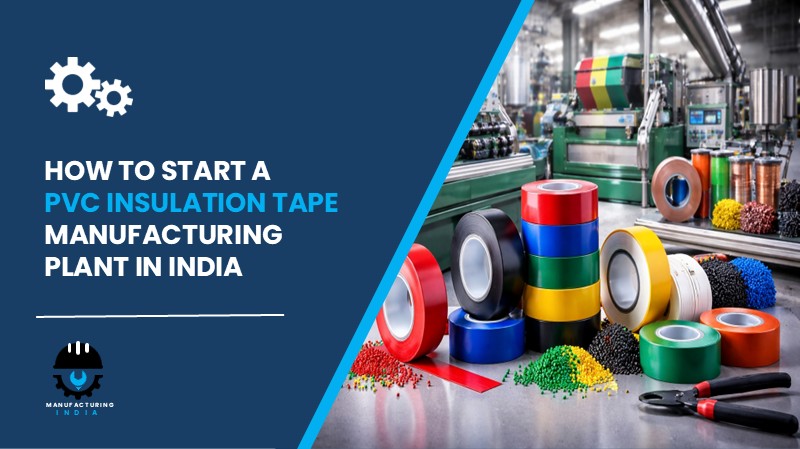
Setting up a PVC insulation tape manufacturing plant in India presents a compelling investment case, driven by surging demand from the electrical, construction, automotive, and telecommunications industries. As India accelerates its power infrastructure build-out and urban electrification programmes, PVC insulation tape a critical electrical safety component used for wire bundling, cable protection, and color-coding in electrical systems has become an indispensable input across these high-growth sectors. The global PVC insulation tape market was valued at USD 1.59 Billion in 2025 and is projected to reach USD 2.64 Billion by 2034, expanding at a CAGR of 5.8% from 2026 to 2034, with the Asia-Pacific region identified as the fastest-growing market, fuelled by industrialization, urbanisation, and infrastructure investment in countries like India.
India’s structural advantages make it a strategically sound location for this investment. Rapid urbanisation, government-backed electrical grid upgrades, the growth of electric vehicles, and the Make in India initiative are collectively amplifying domestic demand for insulation materials. Manufacturing states such as Gujarat and Maharashtra offer well-developed industrial estates, access to raw material supply chains, reliable utility infrastructure, and proximity to large end-use markets. With moderate barriers to entry relative to other specialty chemical products, and a cost-competitive operating environment in terms of land and labour, India positions itself as a highly viable production hub for PVC insulation tape targeting both domestic consumption and export markets.
Establishing a PVC insulation tape manufacturing plant in India offers investors a rare combination of policy support, cost-competitive manufacturing, and strong structural demand from the electrical, automotive, and construction sectors. With gross profit margins of 25-35% and break-even periods ranging from 3 to 6 years, this is a financially viable and strategically timed opportunity for entrepreneurs and industrial investors.
What is PVC Insulation Tape?
PVC insulation tape is a type of adhesive tape manufactured from polyvinyl chloride (PVC) material, primarily engineered for electrical insulation purposes. It offers excellent resistance to moisture, abrasion, and temperature, making it ideally suited for electrical wiring applications across demanding environments. The tape is typically coated with an adhesive on one side, providing a secure bond to wires and cables while delivering a flexible and durable protective layer.
The product is valued across industries for its versatility and cost-effectiveness. Key properties include high dielectric strength, chemical resistance, UV tolerance, and mechanical flexibility, enabling it to perform reliably in both low-voltage and high-traffic wiring scenarios. The primary production method involves extrusion, lamination, coating, and winding a multi-step process that converts raw PVC compound into a finished, ready-to-use tape product.
End-use industries served include electrical, construction, automotive, and telecommunications each with distinct application requirements ranging from wire harness wrapping and insulation of electrical connections to cable management and maintenance support on infrastructure projects.
Cost of Setting Up a PVC Insulation Tape Manufacturing Plant in India
The total cost of establishing this type of plant depends on capacity, technology selection, geographic location, level of automation, and regulatory compliance requirements. Below is a structured breakdown of the key cost components investors should evaluate.
1. Capital Expenditure (CapEx)
Capital investment covers the full scope of pre-operational spending required to make the facility operational. Land and site development represent a substantial portion of total CapEx, encompassing land registration charges, boundary development, site grading, and utility connections. Investors may consider locating the facility within a Special Economic Zone (SEZ) or a notified industrial estate to benefit from fiscal incentives and pre-built infrastructure.
Civil works and construction include the main production shed, raw material storage warehouse, finished goods storage, quality control laboratory, utility room, effluent treatment plant (ETP) area, and administrative block. These structures must be purpose-built to accommodate the machinery layout and comply with fire safety norms.
Machinery costs account for the largest single component of CapEx. Key machinery required for a PVC insulation tape manufacturing plant includes:
- Coating plant (comprising an unwinder, drying tunnel, and coater)
- Slitting machine for cutting tape to specified widths
- Winding machine for rolling finished tape products
- Grinding machine for adhesive mass preparation
- Attritor or emulsifier for adhesive processing
- Mixing and calendering lines
- Adhesive coating machines
- Ovens for curing
- Slitting and rewinding systems
- Precision cutting machinery
- Automated packaging units
- Laboratory equipment for quality testing
Other capital costs include the Effluent Treatment Plant (ETP), pre-operative expenses such as project report preparation and regulatory fees, trial production costs, import duties on specialised equipment if sourced internationally, and commissioning charges.
Request a Sample Report for In-Depth Market Insights: https://www.imarcgroup.com/pvc-insulation-tape-manufacturing-plant-project-report/requestsample
2. Operational Expenditure (OpEx)
Raw material cost is the dominant driver of the operational cost structure at a PVC insulation tape manufacturing plant, accounting for approximately 65-75% of total OpEx. The primary raw materials required are plasticized polyvinyl chloride (PVC) film and rubber-based pressure-sensitive adhesive. Additional materials include stabilizers, solvents, and potentially reinforcing materials such as glass fibres or fabric. Investors are advised to establish long-term procurement contracts with regional suppliers to stabilise input pricing and mitigate supply chain disruptions.
Utility cost covering electricity, water, and steam represents approximately 10-15% of OpEx and varies with plant location and load factors. Other recurring operating costs include transportation and logistics, packaging materials, salaries and wages for skilled and unskilled labour, routine maintenance, depreciation on machinery and civil assets, and applicable taxes. By the fifth year of operations, total operational costs are expected to increase substantially due to inflation, rising raw material prices, and broader macroeconomic factors, underscoring the importance of building cost escalation provisions into the financial model.
3. Plant Capacity
The proposed production scale for this type of facility is designed with an annual output ranging around 50 million meters, enabling economies of scale while retaining operational flexibility. Capacity can be customised based on the investor’s market scope, capital availability, and target distribution geography. Profitability improves progressively with higher capacity utilisation rates, as fixed costs are spread across a larger production volume, improving per-unit margins.
4. Profit Margins and Financial Projections
The financial projections for a PVC insulation tape manufacturing plant demonstrate healthy profitability under normal operating conditions. Gross profit margins typically range between 25-35%, supported by stable demand and value-added applications. Net profit margins range between 12-20%, reflecting the operational leverage available at higher production scales. A comprehensive financial analysis including Net Present Value (NPV), Internal Rate of Return (IRR), payback period analysis, profit and loss projections, and sensitivity analysis is essential before committing capital. Break-even is typically achieved within 3 to 6 years, depending on capacity utilisation, raw material pricing, and market conditions.
Why Set Up a PVC Insulation Tape Plant in India?
Growing Electrification and Power Infrastructure Demand. India’s ongoing investments in electrical grid upgrades and rural electrification are generating consistent baseline demand for insulation materials. PVC insulation tape is a fundamental input in power transmission systems, and the scale of India’s infrastructure build-out provides a long-term demand runway that insulates investors from short-term market cycles.
Rise of Electric Vehicles and Automotive Sector Growth. The rapid uptake of electric vehicles is a significant structural demand driver for this product. Global EV sales are approaching 20 million units in 2025 and account for over a quarter of all cars sold worldwide, according to the International Energy Agency’s Global EV Outlook. Wire harness wrapping, insulation of electrical connections, and color-coding for automotive maintenance are established applications that grow in direct proportion to vehicle production volumes.
Construction and Telecommunications Expansion. India’s construction sector continues to scale, generating demand for cable management, electrical insulation, and safety identification solutions on job sites. Simultaneously, expansion of telecommunications networks particularly in Tier 2 and Tier 3 cities drives demand for insulation of low-voltage cables and wire identification applications.
Policy and Regulatory Tailwinds. Government support for electric vehicles, renewable energy, and smart infrastructure under national policy frameworks is directly promoting the need for reliable insulation solutions. These policy-driven investments create forward demand visibility that strengthens the investment case for domestic manufacturing.
Cost-Competitive Manufacturing Environment. India offers meaningful cost advantages in land acquisition, construction labour, and operational manpower relative to Western markets. Proximity to raw material suppliers in the petrochemicals corridor reduces inbound logistics costs, and proximity to large end-use markets in the construction, electrical, and automotive sectors lowers distribution costs.
Active Industry Investment in India. In November 2024, Tesa an international manufacturer of adhesive tapes announced the opening of new offices in Mumbai and Bengaluru, reflecting its commitment to expanding its presence in India’s manufacturing sector as part of its Asia-Pacific growth strategy. This signals growing confidence among global players in India as a strategic market, reinforcing the opportunity for domestic producers to build scale ahead of intensifying competition.
Manufacturing Process Step by Step
The PVC insulation tape manufacturing process uses extrusion, lamination, coating, and winding as the primary production method, involving several unit operations, material handling stages, and quality checkpoints.
- Raw Material Preparation: PVC resin is blended with plasticizers, stabilizers, and other additives in precise ratios using a mixing system to form a uniform PVC compound.
- Heating and Blending: The compound is heated and processed through a mixing and calendering line to achieve a homogeneous melt with consistent material properties.
- Extrusion and Film Formation: The PVC compound is extruded into thin, continuous film sheets of the required tape thickness using high-precision extrusion machinery.
- Cooling and Trimming: Extruded film is cooled and trimmed to the specified tape width and thickness to meet dimensional quality standards.
- Adhesive Preparation: Rubber-based pressure-sensitive adhesive is processed using a grinding machine and attritor/emulsifier to achieve the required viscosity and bonding characteristics.
- Adhesive Coating: Adhesive is applied uniformly to one side of the PVC film using an adhesive coating machine equipped with a drying tunnel and curing oven.
- Curing: The coated film passes through an oven for curing to ensure adhesive bond strength and thermal stability.
- Slitting and Rewinding: The cured tape is precisely cut to commercial widths using a slitting machine and rewound into finished rolls on a winding machine.
- Quality Testing: Finished rolls undergo laboratory testing for dielectric strength, adhesion, elongation, and temperature resistance to confirm compliance with product specifications.
- Packaging and Dispatch: Finished rolls are labeled, packed in automated packaging units, and dispatched to end-use industries including electrical, construction, automotive, and telecommunications customers.
Key Applications
PVC insulation tape serves a broad and diverse range of industries, each with well-defined technical requirements for insulation, protection, and identification.
- Automotive: Wire harness wrapping, insulation and protection of electrical connections, and color-coding for maintenance and repair.
- Electronics: Insulation of wires and cables, bundling of components, and temporary protection during assembly processes.
- Construction: Electrical insulation, cable management, and marking and safety identification on construction job sites.
- Telecommunication: Insulation and protection of low-voltage cables, wire identification, and maintenance support across network infrastructure.
Leading Manufacturers
The global PVC insulation tape market is served by several established multinational manufacturers with extensive production capacities and diversified application portfolios. Key players in the industry include:
- 3M Company
- Avery Dennison Corporation
- Tesa SE
- Nitto Denko Corporation
- Henkel AG
Timeline to Start the Plant
Setting up a PVC insulation tape manufacturing unit typically requires 12 to 24 months from project initiation to commercial production, depending on site conditions and regulatory timelines.
- Feasibility study and project report preparation
- Land acquisition and site development
- Regulatory approvals and environmental clearances
- Factory licence and fire safety compliance
- Machinery procurement and installation
- Raw material supplier agreements and supply chain setup
- Trial production and quality testing
- Commercial production launch
Licences and Regulatory Requirements
Starting a PVC insulation tape manufacturing unit in India requires several approvals to ensure legal compliance and operational readiness:
- Business registration (Proprietorship, LLP, or Pvt Ltd)
- Factory Licence under the Factories Act
- Environmental Clearance from the State Pollution Control Board
- GST Registration
- Fire Safety NOC
- Chemical and solvent handling compliance (relevant given adhesive and solvent use in the process)
- Effluent Treatment Plant (ETP) operational clearance
- Occupational Health and Safety compliance
Key Challenges to Consider
High Capital Requirements. Establishing a plant with adequate scale to achieve competitive margins requires significant upfront investment in land, civil works, and specialised machinery including coating plants, calendering lines, and automated packaging units.
Raw Material Price Volatility. PVC resin and rubber-based pressure-sensitive adhesive are petroleum-derived inputs subject to global commodity price fluctuations. Since raw materials represent 65–75% of total OpEx, even moderate price increases can compress margins meaningfully without forward-purchase or long-term supplier contracts in place.
Regulatory Compliance. Environmental clearances, ETP commissioning, fire safety certifications, and chemical handling permits involve multi-agency coordination and can extend pre-production timelines if not managed proactively from the project outset.
Technology and Process Precision. While barriers to entry are moderate relative to other specialty materials, achieving consistent product quality requires precision-controlled extrusion, coating, and curing processes. Substandard product performance in electrical applications carries significant liability and reputational risk.
Competition from Established Players. The market is served by multinational players including 3M Company, Avery Dennison Corporation, Tesa SE, Nitto Denko Corporation, and Henkel AG, all of which have scale, brand equity, and distribution advantages. Domestic players must differentiate on price, service, or application-specific product offerings.
Skilled Manpower. Operating extrusion, adhesive coating, and quality testing equipment requires trained technical personnel. Attracting and retaining qualified operators and quality control staff in manufacturing locations outside major industrial clusters can be a persistent challenge.
Frequently Asked Questions
1. How much does it cost to set up a PVC insulation tape manufacturing plant in India? Total capital investment varies with plant capacity, technology choice, automation level, and location. It covers land acquisition, civil construction, machinery procurement, utilities, ETP setup, and pre-operative expenses. A detailed project report provides capacity-specific cost estimates.
2. Is PVC insulation tape manufacturing profitable in India in 2026? Yes. Gross profit margins typically range between 25-35% and net margins between 12-20%, supported by stable demand from electrical, automotive, and construction sectors. Profitability scales with capacity utilisation.
3. What machinery is required for a PVC insulation tape plant in India? Essential equipment includes a coating plant with unwinder, drying tunnel and coater, slitting machine, winding machine, grinding machine, attritor/emulsifier, mixing and calendering lines, adhesive coating machines, curing ovens, precision cutting machinery, and automated packaging units.
4. What licences and approvals are required to start a PVC insulation tape plant in India? Key requirements include business registration, Factory Licence, Environmental Clearance from the State Pollution Control Board, GST Registration, Fire Safety NOC, ETP operational clearance, chemical compliance certification, and Occupational Health and Safety compliance.
5. What raw materials are needed for PVC insulation tape manufacturing? The core raw materials are plasticized polyvinyl chloride (PVC) film and rubber-based pressure-sensitive adhesive. Supporting materials include stabilizers, solvents, and reinforcing materials such as glass fibres or fabric.
6. What are the environmental compliance requirements for a PVC insulation tape plant in India? The facility must obtain Environmental Clearance from the State Pollution Control Board, operate a functional Effluent Treatment Plant, comply with chemical and solvent handling regulations, and meet emission standards applicable to adhesive coating and curing processes.
7. What is the best location to set up a PVC insulation tape plant in India? Locations with proximity to PVC resin and adhesive suppliers, reliable power supply, good road and logistics connectivity, and access to end-use markets in construction, automotive, and electrical sectors are preferred. Industrial estates in Gujarat and Maharashtra offer strong foundational infrastructure.
8. What is the break-even period for this type of plant in India? Break-even typically ranges from 3 to 6 years, depending on production scale, capacity utilisation, raw material costs, and prevailing market pricing. Efficient manufacturing practices and export opportunities can help accelerate returns.
9. What government incentives are available for manufacturers in India? Governments may offer capital subsidies, tax exemptions, reduced utility tariffs, export benefits, and interest subsidies under national and state-level industrial promotion policies. Investors should evaluate applicable schemes at the time of plant registration.
Key Takeaways for Investors
The PVC insulation tape manufacturing plant opportunity in India is anchored by deep, structural demand from the electrical, construction, automotive, and telecommunications sectors industries that are collectively benefiting from India’s infrastructure expansion, EV transition, and urbanisation trajectory. Financial viability is demonstrated across a range of plant capacities, with gross margins of 25-35% and net margins of 12-20% achievable under normal operating conditions, and break-even periods of 3 to 6 years providing a realistic return horizon for investors. The global market, valued at USD 1.59 Billion in 2025 and forecast to reach USD 2.64 Billion by 2034 at a CAGR of 5.8%, underscores the long-term demand sustainability of this investment. With the Asia-Pacific region identified as the fastest-growing market and active industry expansion including Tesa’s November 2024 office openings in Mumbai and Bengaluru the domestic production window is open and strategically compelling for well-prepared investors.
About the Author