Setting up a rapid diagnostic test kit manufacturing plant in India presents a compelling investment case driven by the country’s expanding healthcare infrastructure, rising emphasis on early disease detection, growing demand for point-of-care testing solutions, and a public health system actively investing in decentralised diagnostics across hospitals, clinics, and community health programmes. India’s large and diverse disease burden – spanning infectious diseases, metabolic disorders, and pregnancy-related conditions – combined with surging health awareness among urban and rural populations is creating a large, recurring, and structurally growing domestic market for rapid diagnostic test kits produced at home. The shift away from centralised laboratory-dependent diagnostics toward faster, user-friendly, and field-deployable testing formats is accelerating across all tiers of India’s healthcare delivery system, from tertiary hospitals and diagnostic chains to primary health centres and retail pharmacy shelves.
India’s strategic advantages further reinforce the investment case. The country’s established pharmaceutical and medical device manufacturing base – particularly in Gujarat, Maharashtra, Telangana, Karnataka, and Himachal Pradesh – provides access to skilled biochemical and biomedical engineering talent, experienced regulatory affairs professionals, and a growing domestic supply chain for plastics, reagents, and packaging materials. Government initiatives including the Production-Linked Incentive (PLI) scheme for medical devices, the National Health Mission’s diagnostic expansion mandate, and active participation in WHO-aligned pandemic preparedness frameworks collectively position India as a priority market for rapid diagnostic test kit investment. The global rapid medical diagnostic kits market was valued at USD 20.47 billion in 2025 and is projected to reach USD 32.86 billion by 2034 at a CAGR of 5.4%, making this one of the most stable and high-margin opportunities within India’s broader healthcare manufacturing landscape.
A rapid diagnostic test kit manufacturing plant in India is supported by a global market growing at 5.4% CAGR toward USD 32.86 billion by 2034, a large domestic healthcare consumption base across hospitals, clinics, public health agencies, and home testing channels, and exceptional gross profit margins of 40–50%. With PLI scheme support for medical device manufacturing, a skilled biomedical talent base, and WHO-driven technology transfer agreements expanding production access in low- and middle-income country markets, this investment delivers both strong financial returns and long-term demand sustainability.
What is a Rapid Diagnostic Test Kit?
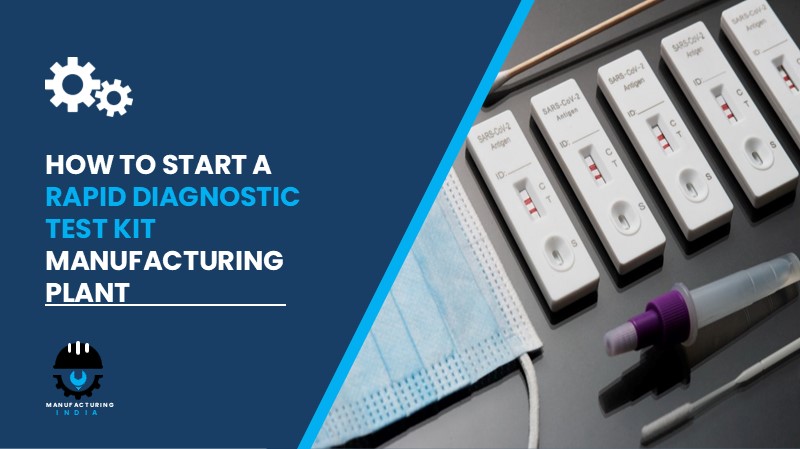
Rapid diagnostic test kits are medical diagnostic devices designed to detect specific antigens, antibodies, or biomarkers associated with diseases within a short time frame – typically 10 to 30 minutes. They operate based on either immunoassay or molecular techniques and are widely used in the diagnosis of infectious diseases, metabolic disorders, and pregnancy-related conditions. One of the defining advantages of rapid diagnostic test kits is that they are user-friendly, require very little specialised equipment, and are easily adopted in clinical, laboratory, and field settings.
These kits are most commonly found in the formats of lateral flow assays, dipsticks, cassettes, and cartridges. Their portability and rapid turnaround time enable timely clinical decision-making, particularly in emergency care settings, remote locations, and mass screening programmes. The primary production method involves raw material preparation, reagent formulation, membrane coating, drying and curing, cutting and assembly, quality inspection, and packaging and labelling — a multi-step, cleanroom-standard manufacturing process requiring precise biochemical controls at each stage. End-use industries served include hospitals and diagnostic laboratories, clinics and point-of-care centres, public health agencies, home testing and retail diagnostics, and emergency medical services.
Cost of Setting Up a Rapid Diagnostic Test Kit Manufacturing Plant in India
The total investment required to establish a rapid diagnostic test kit manufacturing plant in India depends on plant capacity, technology selection, geographic location, level of automation, and compliance with medical device regulatory and quality management frameworks. Investors must account comprehensively for both one-time capital expenditure and recurring operational costs when preparing a feasibility study or detailed project report (DPR) for this facility.
1. Capital Expenditure (CapEx)
Land and Site Development constitutes a substantial foundational investment. Costs for land registration, boundary development, internal road layout, drainage infrastructure, and site levelling vary based on whether the facility is within a government-notified medical devices manufacturing cluster, a pharmaceutical Special Economic Zone (SEZ), a dedicated biomedical industrial estate, or on privately acquired land. Medical device manufacturing parks in states such as Andhra Pradesh, Telangana, Gujarat, and Himachal Pradesh typically offer plug-and-play infrastructure at competitive costs with proximity to regulatory and logistics networks.
Civil Works and Construction encompasses the cleanroom production suites required for membrane coating, reagent formulation, and assembly – all of which must meet ISO 13485-compliant environmental control standards – along with the raw material storage area, quality control laboratory, finished goods warehouse, and administrative block. Cleanroom construction costs are significantly higher per square metre than standard industrial construction, reflecting the controlled-environment requirements for temperature, humidity, particulate contamination, and microbial levels mandated throughout the production process.
Machinery and Equipment represent the single largest component of capital expenditure. Key machinery required includes:
- Membrane coating machines
- Drying ovens
- Cutting and assembly systems
- Sealing and packaging machines
- Quality inspection tools
- Reagent formulation and dispensing equipment
- Cleanroom air handling and HVAC systems
- Automated lateral flow strip assembly lines
- Analytical and testing instruments for quality verification
Other Capital Costs include the effluent treatment plant (ETP) for managing biological and chemical waste, pre-operative expenses covering regulatory submissions and feasibility study preparation, plant commissioning charges, utility connection fees, and import duties applicable to specialised membrane coating or automated assembly equipment sourced internationally.
Request a Sample Report for In-Depth Market Insights: https://www.imarcgroup.com/rapid-diagnostic-test-kit-manufacturing-plant-project-report/requestsample
2. Operational Expenditure (OpEx)
Raw Material Cost accounts for approximately 40–50% of total OpEx — a notably lower proportion than in many other manufacturing sectors, contributing directly to the exceptional gross margins achievable in this business. The primary inputs are nitrocellulose membranes, antibodies and antigens, plastic cassettes, and reagents. Nitrocellulose membranes represent the single most significant raw material cost line. Given that antibodies and antigens are highly specialised biological inputs with a limited global supplier base, investors are advised to secure long-term supply contracts with qualified immunoreagent manufacturers and to assess supply chain redundancy carefully. Sourcing plastic cassette components domestically reduces import exposure and lead time risk.
Utility Costs – covering electricity for cleanroom HVAC systems, drying ovens, coating equipment, and quality testing instruments – account for approximately 10–15% of total OpEx. The continuous environmental control requirements of cleanroom production environments, including 24-hour temperature and humidity regulation, make utility cost management more demanding than in conventional light manufacturing facilities. Investors in locations with reliable industrial power and access to renewable energy sources are better positioned to manage this expense over time.
Other Operating Costs include outbound transportation to hospitals, diagnostic laboratory chains, pharmacy distributors, and government health procurement agencies; packaging materials for individual test kit units and bulk institutional packs; employee salaries and wages for biochemists, quality assurance scientists, production technicians, and regulatory affairs personnel; equipment maintenance; quality assurance and batch release testing; depreciation on civil and machinery assets; and applicable taxes including GST on medical device sales. By the fifth year of operations, total operational costs are expected to increase substantially due to inflation, market fluctuations, and potential rises in the cost of key biological raw materials, compounded by supply chain disruptions and rising global demand for diagnostic capacity.
3. Plant Capacity
The proposed rapid diagnostic test kit manufacturing facility is designed with an annual production capacity ranging between 50 million and 100 million test kits, enabling significant economies of scale while maintaining operational flexibility across different kit types, disease targets, and customer specifications. This capacity range is well-aligned with the procurement requirements of large hospital chains, national health programme tenders, diagnostic laboratory networks, and international NGO and public health supply chains. Capacity can be customised based on investor requirements and target market focus. Profitability improves consistently with higher capacity utilisation, and modular manufacturing line design allows phased capacity expansion with relatively contained incremental CapEx.
4. Profit Margins and Financial Projections
The rapid diagnostic test kit manufacturing plant demonstrates one of the strongest profitability profiles in the healthcare manufacturing investment category. Gross profit margins typically range between 40–50%, supported by the high value-added, specification-intensive, and recurring-consumption nature of medical diagnostic products. Net profit margins range between 15–25%, reflecting the quality assurance, regulatory compliance, and cleanroom operational costs that are unavoidable in this manufacturing category. A comprehensive financial analysis should include income projections, expenditure forecasts, gross and net margin tracking across Years 1 through 5, net present value (NPV), internal rate of return (IRR), payback period, and a full profit and loss account. Sensitivity analysis covering antibody and antigen price movements, regulatory approval timelines, and institutional procurement volume variability is recommended for investment-grade planning.
Why Set Up a Rapid Diagnostic Test Kit Manufacturing Plant in India?
Rising Healthcare Spending Driving Diagnostic Adoption. Healthcare spending globally is rising steadily, with average OECD health expenditure reaching approximately USD 6,000 per capita on a PPP-adjusted basis in 2024, and the United States leading at nearly USD 14,880 per capita — 2.5 times the OECD average. This sustained rise in healthcare investment is accelerating the adoption of rapid diagnostic test kit solutions by improving access, funding, and demand for faster clinical decision-making across hospital, outpatient, and community health settings globally and within India specifically.
Expansion of Point-of-Care Testing Reducing Centralised Lab Dependency. Healthcare facilities across India are increasingly adopting decentralised diagnostic systems to speed up patient flow, reduce diagnostic delays, and extend testing access beyond urban laboratory hubs. Rapid diagnostic test kits make testing possible on-site with minimal infrastructure, enabling clinics, primary health centres, and community health workers to diagnose conditions without sending samples to distant laboratories. This structural shift toward point-of-care testing is creating a large and growing institutional buyer base for domestically produced rapid test kits.
Home Testing and Retail Diagnostics Opening Mass-Market Channels. The trend toward home healthcare and self-testing has expanded the market significantly, particularly for pregnancy testing, glucose monitoring, and infectious disease screening. User-friendly formats allow individuals to perform reliable preliminary health assessments at home, creating a retail and pharmacy-channel demand stream that runs in parallel to institutional procurement. This dual-channel demand model — institutional and consumer retail — provides manufacturers with revenue diversification and reduces reliance on any single buyer category.
WHO-Led Technology Transfer and Access Initiatives. In May 2025, the WHO and the Medicines Patent Pool announced a sublicensing agreement to expand access to rapid diagnostic test technology for infectious diseases in low- and middle-income countries, allowing qualified manufacturers to produce and supply WHO-recommended rapid tests and aiming to boost local availability and pandemic preparedness through technology transfer and regional production. In October 2025, WHO convened a dedicated event on rapid diagnostic test accessibility to address barriers in production, distribution, and uptake globally. These international policy initiatives actively support new manufacturing entrants in countries such as India that can produce at scale and meet WHO pre-qualification standards.
Public Health Sector as a Stable High-Volume Buyer. Government and public health agencies are using rapid diagnostic kits increasingly for disease surveillance, outbreak management, and population-level health monitoring. National health programme procurement through government tender mechanisms provides manufacturers with large-volume, predictable orders that anchor production planning and support capacity utilisation targets, particularly important during ramp-up phases.
Cost-Competitive Manufacturing with Strong Skilled Talent Base. India offers competitive land, construction, utility, and labour costs relative to diagnostic kit manufacturing locations in the United States, Europe, or Japan. The country’s established pharmaceutical and biotech industry provides a skilled pool of biochemists, quality assurance professionals, and regulatory affairs specialists familiar with GMP standards and medical device regulatory requirements — reducing the talent acquisition challenge that often constrains healthcare manufacturing startups in other geographies.
Manufacturing Process – Step by Step
The rapid diagnostic test kit manufacturing process uses raw material preparation, reagent formulation, membrane coating, drying and curing, cutting and assembly, quality inspection, and packaging and labelling as the primary production method. Below are the main stages involved in the rapid diagnostic test kit manufacturing process flow:
- Raw Material Receipt and Inspection: Nitrocellulose membranes, antibodies and antigens, plastic cassettes, and reagents are received, inspected against certificate of analysis specifications, and released to the production area following quarantine and quality verification.
- Reagent Formulation: Antibodies, antigens, and conjugate reagents are formulated in controlled cleanroom conditions to precise concentration and stability specifications, with batch records maintained for full traceability and regulatory compliance.
- Membrane Coating: Membrane coating machines apply capture antibodies or antigens to nitrocellulose membranes at defined line positions using precision spraying or dispensing technology, followed by controlled drying to ensure reagent immobilisation and reproducible line intensity.
- Conjugate Pad Preparation: Detector antibodies conjugated to coloured or fluorescent labels are applied to conjugate pads at controlled concentrations and dried under specified conditions to maintain biological activity through the product shelf life.
- Drying and Curing: Drying ovens condition the coated membranes and prepared pads under controlled temperature and humidity to achieve the required moisture content, reagent stability, and performance consistency for the assembled test strip.
- Cutting and Assembly: Cutting and assembly systems precisely cut the coated membrane, conjugate pad, sample pad, and absorbent pad into defined dimensions and laminate all components onto a backing card in the correct positional arrangement to form the completed lateral flow strip.
- Cassette or Device Assembly: Individual lateral flow strips are inserted into plastic cassettes or cartridge housings, with sample wells and result windows aligned to specification, and device components sealed to prevent contamination and maintain structural integrity.
- Quality Inspection: Quality inspection tools subject assembled test kits to functional performance testing using positive and negative control samples, sensitivity and specificity verification, and visual inspection of line clarity and cassette integrity — with failed units quarantined and batch release conditional on passing all acceptance criteria.
- Packaging and Labelling: Sealing and packaging machines insert individual test kits into foil pouches with desiccant, seal packs to moisture-barrier specification, and assemble retail or institutional packaging with instruction leaflets, labelling compliant with CDSCO medical device labelling regulations, and batch coding for full supply chain traceability.
- Dispatch to End-Use Channels: Finished rapid diagnostic test kits are dispatched to hospitals and diagnostic laboratories, clinics and point-of-care centres, public health and screening programme procurement agencies, home testing retail and pharmacy channels, and emergency medical services operators.
Key Applications
Rapid diagnostic test kits produced at this type of facility serve a wide range of healthcare delivery settings and diagnostic application categories:
- Hospitals and Diagnostic Laboratories: Quick clinical decisions based on accurate and timely screening of diseases in both routine and emergency diagnostics, reducing turnaround time compared to centralised laboratory methods.
- Clinics and Point-of-Care Centres: On-site testing with minimal infrastructure, greatly reducing patient waiting time and diagnostic delay in outpatient and primary care environments.
- Public Health and Screening Programmes: Large-scale deployment for disease surveillance, outbreak management, and population-level health monitoring by national health agencies and international public health organisations.
- Home Testing and Retail Diagnostics: User-friendly formats enabling individuals to perform reliable preliminary health assessments for pregnancy, blood glucose monitoring, and infectious disease detection at home or in pharmacy settings.
- Emergency Medical Services: Rapid turnaround testing in emergency care, field settings, and mass screening scenarios where timely diagnosis directly impacts patient outcomes and public health response effectiveness.
Leading Rapid Diagnostic Test Kit Manufacturers
The global rapid diagnostic test kit industry is served by a number of established manufacturers with large-scale production capacities and diverse disease-area and channel portfolios. Key players include:
- ACON Laboratories, Inc.
- Abbott
- Artron Laboratories Inc.
- Alfa Scientific Designs, Inc.
- BD
Timeline to Start the Plant
Investors planning to establish a rapid diagnostic test kit manufacturing plant in India should anticipate the following project development phases:
- Feasibility study and project report preparation
- Land acquisition and site development
- Regulatory approvals and environmental clearances
- Factory licence and fire safety compliance
- Machinery procurement and installation
- Raw material supplier agreements and supply chain setup
- Trial production and quality testing
- Commercial production launch
Licences and Regulatory Requirements
Starting a rapid diagnostic test kit manufacturing unit in India requires several approvals:
- Business registration (Proprietorship, LLP, or Private Limited Company)
- Medical Device Manufacturing Licence under the Medical Devices Rules, 2017, issued by the Central Drugs Standard Control Organisation (CDSCO)
- ISO 13485 Quality Management System certification for medical device manufacturing
- Factory Licence under the Factories Act
- Environmental Clearance from the State Pollution Control Board
- GST Registration
- Fire Safety NOC
- Effluent Treatment Plant (ETP) operational clearance for biological and chemical waste management
- Occupational Health and Safety compliance covering cleanroom operations and biological material handling
- WHO Pre-Qualification certification where export to international public health procurement channels is targeted
Key Challenges to Consider
High Regulatory and Quality Compliance Burden. Rapid diagnostic test kit manufacturing in India is governed by CDSCO under the Medical Devices Rules, 2017, requiring a manufacturing licence, GMP compliance, ISO 13485 certification, and rigorous batch release testing. Meeting these standards demands dedicated quality systems, qualified personnel, and ongoing documentation discipline – adding to pre-commercial preparation time and ongoing operational overhead compared to less regulated manufacturing categories.
Raw Material Price Volatility and Supply Chain Concentration. Antibodies and antigens – critical biological inputs – are sourced from a limited number of specialised global suppliers. This concentration creates supply chain vulnerability and price volatility risk that cannot be easily mitigated through domestic substitution. Nitrocellulose membranes, the largest single raw material cost item at 40–50% of total OpEx, are also predominantly sourced internationally and subject to global commodity and logistics dynamics.
Cleanroom Construction and Operational Complexity. ISO 13485-compliant cleanroom facilities require significantly higher construction investment, ongoing environmental monitoring, HVAC maintenance, and contamination control protocols relative to standard manufacturing environments. Any breach of cleanroom conditions can result in batch rejection, regulatory non-compliance, or product quality failure – making operational discipline and facility maintenance particularly critical in this manufacturing category.
Technology and Innovation Pressure. Innovations in immunoassay accuracy, biomarker detection, and molecular rapid testing formats are continuously raising performance benchmarks for new products entering the market. Manufacturers must invest in R&D capability or in-licensing arrangements to keep their product portfolio current and competitive against players such as Abbott and BD, which deploy substantial global innovation resources in this segment.
Competition from Established Global Manufacturers. The market is served by well-capitalised multinationals including Abbott, BD, ACON Laboratories, and Artron Laboratories with established regulatory approvals, global supply chains, and long-standing procurement relationships with hospital networks and public health agencies. New Indian market entrants must differentiate through disease-specific focus, export market development, cost competitiveness under WHO procurement frameworks, or value-chain integration.
Skilled Manpower in Biochemistry and Regulatory Affairs. Operating membrane coating machines, reagent formulation equipment, and cleanroom assembly lines – while maintaining ISO 13485 quality management system documentation – requires biochemists, quality assurance scientists, and regulatory affairs specialists with medical device manufacturing experience. Recruiting and retaining this talent pool, particularly outside major pharmaceutical hubs such as Hyderabad, Ahmedabad, or Pune, presents a meaningful operational challenge.
Frequently Asked Questions
1. How much does it cost to set up a rapid diagnostic test kit manufacturing plant in India?
The total cost depends on plant capacity (50–100 million kits per annum), cleanroom specification, technology selection, and location. CapEx covers land, ISO 13485-compliant cleanroom civil construction, and machinery including membrane coating machines, drying ovens, cutting and assembly systems, sealing and packaging machines, and quality inspection tools, along with regulatory submission and pre-operative costs.
2. Is rapid diagnostic test kit manufacturing profitable in India in 2026?
Yes. With gross profit margins of 40–50% and net margins of 15–25%, supported by recurring institutional and retail demand across hospitals, clinics, public health agencies, and home testing channels, and a global market growing at 5.4% CAGR toward USD 32.86 billion by 2034, this investment offers one of the strongest margin profiles in healthcare manufacturing.
3. What machinery is required for a rapid diagnostic test kit manufacturing plant in India?
Key equipment includes membrane coating machines, drying ovens, cutting and assembly systems, sealing and packaging machines, quality inspection tools, reagent formulation and dispensing equipment, cleanroom HVAC and air handling systems, automated lateral flow strip assembly lines, and analytical testing instruments.
4. What licences and approvals are required to start a rapid diagnostic test kit manufacturing plant in India?
Required approvals include business registration, CDSCO Medical Device Manufacturing Licence under Medical Devices Rules 2017, ISO 13485 certification, Factory Licence, Environmental Clearance, GST Registration, Fire Safety NOC, ETP operational clearance, and Occupational Health and Safety compliance.
5. What raw materials are needed for rapid diagnostic test kit manufacturing?
The primary raw materials are nitrocellulose membranes, antibodies and antigens, plastic cassettes, and reagents. Additional inputs include conjugate pads, sample pads, absorbent pads, backing cards, foil pouches, desiccants, and packaging materials.
6. What are the environmental compliance requirements for a rapid diagnostic test kit manufacturing plant in India?
An operational effluent treatment plant is mandatory for managing biological and chemical manufacturing waste, along with Environmental Clearance from the State Pollution Control Board, biosafety protocols for handling biological materials, and compliance with medical waste management rules applicable to diagnostic material handling and disposal.
7. What is the best location to set up a rapid diagnostic test kit manufacturing plant in India?
States with established pharmaceutical and medical device manufacturing ecosystems, access to biomedical talent, and active PLI scheme incentives — such as Andhra Pradesh, Telangana, Gujarat, Maharashtra, and Himachal Pradesh — offer the best combination of regulatory support, skilled workforce availability, supply chain access, and state-level medical device manufacturing incentives.
8. What is the break-even period for this type of plant in India?
The break-even period depends on plant capacity, product mix, procurement contract values, and capacity utilisation rate. Full NPV and IRR analysis incorporating sensitivity testing for biological raw material pricing and regulatory approval timelines is recommended for investment-grade financial planning.
9. What government incentives are available for rapid diagnostic test kit manufacturers in India?
The PLI scheme for medical devices provides performance-linked financial incentives for domestic medical device manufacturers. National Health Mission procurement preferences for domestically manufactured diagnostic kits, state-level medical device park incentives in Andhra Pradesh and Gujarat, and access to WHO technology transfer agreements under the Medicines Patent Pool sublicensing framework all provide meaningful financial and market access support for qualifying manufacturers.
Key Takeaways for Investors
A rapid diagnostic test kit manufacturing plant in India represents a high-margin, structurally driven investment opportunity anchored by growing demand across hospitals and diagnostic laboratories, clinics and point-of-care centres, public health and screening programmes, and the rapidly expanding home testing and retail diagnostics market. Financial viability is strongly demonstrated across a production capacity range of 50 to 100 million kits per annum, with gross margins of 40–50% and net margins of 15–25% achievable — among the most attractive profitability profiles in India’s healthcare manufacturing sector. The global rapid medical diagnostic kits market, valued at USD 20.47 billion in 2025, is projected to reach USD 32.86 billion by 2034 at a CAGR of 5.4%, providing a sustained and growing international demand base. With WHO actively driving technology transfer agreements — including the May 2025 Medicines Patent Pool sublicensing deal — and international health bodies convening dedicated forums to expand rapid diagnostic test access in low- and middle-income countries, long-term demand sustainability and market access for India-based rapid diagnostic test kit manufacturers is structurally well-supported for the decade ahead.
About the Author