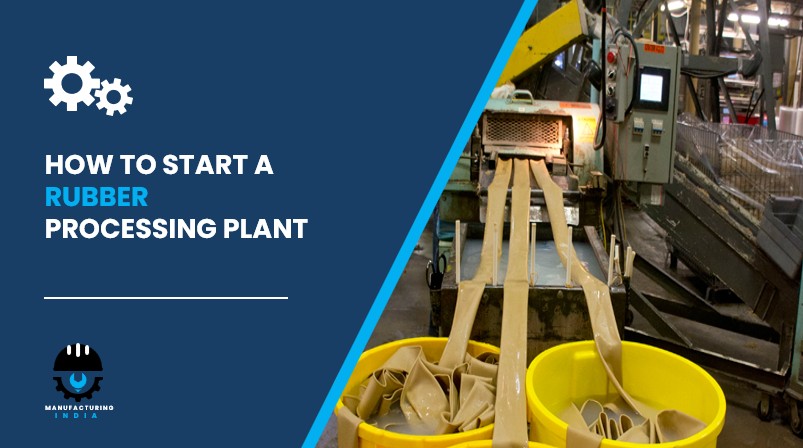
Setting up a rubber processing plant in India presents a compelling investment case, driven by surging demand from the automotive, footwear, and industrial machinery sectors. Rubber is a foundational material in the production of tires, seals, belts, gaskets, hoses, conveyor belts, and molded components — products that underpin India’s rapidly expanding manufacturing economy. As vehicle ownership climbs, infrastructure projects multiply, and consumer goods production scales up, the need for reliably processed rubber compounds continues to intensify across domestic and export markets.
India’s advantages as a manufacturing destination make the investment case even stronger. The country’s urbanisation trajectory, large-scale infrastructure commitments, and the Make in India initiative have collectively created a robust policy and demand environment for rubber processing. Industrial states such as Gujarat, Maharashtra, Tamil Nadu, and Kerala — the latter being home to significant natural rubber cultivation — offer both raw material proximity and logistics connectivity. According to the India Brand Equity Foundation (IBEF), India’s natural rubber production grew 2.1% year-on-year in FY24, while synthetic rubber output grew 16.9% YoY, reaching 333,436 tonnes from April–October 2024. These supply-side tailwinds, combined with strong downstream demand, make India a strategically sound location for establishing a rubber processing unit.
India’s rubber processing sector sits at the intersection of policy support, cost-competitive manufacturing, and multi-sector demand. With gross profit margins of 25–35% and net margins of 12–20%, a well-sited facility targeting automotive, footwear, and industrial customers can achieve viable break-even within a realistic investment horizon, making this one of the more resilient manufacturing opportunities in India’s materials sector.
What is Rubber?
Rubber is an elastic polymer material derived from natural latex and synthetic substances. It is characterised by extreme flexibility and resilience together with water-resistant capabilities, which allow it to meet a wide range of operational needs. The material displays outstanding tensile strength, abrasion resistance, and elastic properties, enabling it to withstand moving forces and mechanical stress in demanding environments.
These properties make rubber indispensable across multiple industries. The material is used in automotive applications such as tires, hoses, seals, gaskets, and vibration dampers; in footwear for soles, heel pads, and protective layers; and in industrial machinery for conveyor belts, rollers, and vibration isolators. The production of processed rubber involves a multi-stage manufacturing sequence that includes smoking, mastication, mixing, vulcanization, and sheet or crumb production.
End-use industries served by a rubber processing plant include the automotive sector, the footwear sector, and the industrial machinery sector — each representing large and growing segments of India’s economy.
Cost of Setting Up a Rubber Processing Plant in India
The total cost of establishing a rubber processing plant in India depends on several interdependent factors: plant capacity, technology selection, geographic location, level of automation, and the regulatory compliance obligations applicable to the chosen site.
1. Capital Expenditure (CapEx)
Land and Site Development constitute a foundational cost in any rubber processing project. Investors may consider locating the unit within a Special Economic Zone (SEZ) or a state industrial estate — such as those managed by GIDC in Gujarat or MIDC in Maharashtra — to benefit from land cost concessions, pre-built infrastructure, and streamlined regulatory approvals. Land registration, boundary development, and preparation work form a substantial part of the overall investment.
Civil Works and Construction encompass the processing shed, quality control laboratory, raw material storage warehouses, finished goods storage, an effluent treatment plant (ETP), and the administrative block. These structures must comply with local building codes and factory safety norms.
Machinery and Equipment represent the largest single component of capital expenditure. Key machinery required for a rubber processing plant includes:
- Mastication mills
- Mixing mills
- Vulcanizers
- Curing presses
- Shredders
- Packaging systems
Other Capital Costs include the effluent treatment plant, pre-operative expenditure, commissioning charges, and any applicable import duties on specialised equipment not available domestically.
Request a Sample Report for In-Depth Market Insights: https://www.imarcgroup.com/rubber-processing-plant-project-report/requestsample
2. Operational Expenditure (OpEx)
Raw Material Cost is the dominant operating expense for a rubber processing unit. Raw materials — namely natural rubber latex, acid, and smoking fuel — account for approximately 75–85% of total operating expenses. Given the price-sensitive nature of natural rubber latex, securing long-term supplier contracts with producers in Kerala, Tamil Nadu, or from Southeast Asian exporters is advisable to stabilise input costs and reduce exposure to commodity price swings.
Utility Cost — comprising electricity for the mills and vulcanizers, water for processing and effluent treatment, and steam for curing — typically accounts for 10–15% of operating expenditure. Locating the facility in an industrial zone with reliable grid connectivity and access to water infrastructure is therefore a meaningful cost decision.
Other Operating Costs include transportation of raw materials to the plant and dispatch of finished goods to customers, packaging materials, salaries and wages across all departments, routine machinery maintenance, depreciation, and applicable state and central taxes. By the fifth year of operations, total operational costs are expected to increase substantially due to inflation, market fluctuations, and potential rises in the cost of key materials — underscoring the importance of robust long-term financial modelling.
3. Plant Capacity
The proposed rubber processing facility is designed with an annual processing capacity ranging between 20,000 and 100,000 MT, enabling economies of scale while maintaining operational flexibility. Capacity can be customised based on investor requirements and target market size. Importantly, profitability improves meaningfully with higher capacity utilisation, as fixed costs are distributed across greater output volumes — making it financially prudent to plan for ramp-up from an early stage.
4. Profit Margins and Financial Projections
A rubber processing plant in India demonstrates healthy profitability potential under normal operating conditions. Gross profit margins typically range between 25–35%, supported by stable demand and value-added applications across automotive, footwear, and industrial segments. Net profit margins are projected in the range of 12–20% on an average basis.
Full financial projections — including NPV (Net Present Value), IRR (Internal Rate of Return), payback period, and year-on-year profitability analysis across a five-year horizon — are available in the detailed feasibility report. These projections are developed based on realistic assumptions related to capital investment, operating costs, production capacity utilisation, pricing trends, and demand outlook.
Why Set Up a Rubber Processing Plant in India?
Automotive Sector as Primary Demand Engine. The automotive industry is the largest single consumer of processed rubber, driving demand for tires, seals, gaskets, hoses, and vibration dampers. Emerging economies including India are experiencing rapid growth in vehicle production and tire replacement needs, and this structural trend is expected to sustain robust demand for processed rubber for the foreseeable future.
Industrial Expansion Driving Application Volumes. The manufacturing sector’s continued expansion drives ongoing growth of industrial applications including conveyor belts, gaskets, and molded components. As India’s infrastructure and manufacturing base deepens, the scale of industrial rubber consumption is set to increase materially.
Footwear and Consumer Products Demand. Sustainable and eco-friendly rubber products have grown in popularity among consumers purchasing footwear. Indian footwear manufacturers are scaling production and increasingly prefer domestically sourced rubber materials, creating a reliable B2B customer segment for domestic processors.
Policy and Regulatory Tailwinds. India Rubber Board initiatives including expanded tapped areas, rain guarding support, and the Rubber Production Incentive Scheme (RPIS) have directly contributed to growing natural rubber supply within the country. Combined with the Make in India initiative’s emphasis on domestic manufacturing, the policy environment strongly supports new investment in rubber processing capacity.
Cost-Competitive Manufacturing Base. India offers competitive land acquisition costs, particularly in industrial estates and SEZs, alongside a large and accessible labour pool in states with established rubber cultivation and processing traditions. Proximity to raw latex sources in Kerala and Tamil Nadu further reduces supply chain costs for investors siting facilities in southern India.
Active Industry Investment and Recent Developments. In January 2026, ChemCeed broadened its product range to include rubber accelerators and antioxidants through a strategic partnership with PMI, strengthening supply chains for industrial rubber goods including automotive parts, belts, and hoses. In March 2025, Olam Agri partnered with GIZ to introduce the Sustainable Natural Rubber Initiative targeting 2,000 smallholder farmers in Indonesia, promoting deforestation-free cultivation and digital traceability — a development that underlines the growing global emphasis on supply chain sustainability in rubber.
Manufacturing Process — Step by Step
The rubber manufacturing process uses smoking, mastication, mixing, vulcanization, and sheet or crumb production as the primary production method. The key stages are:
- Latex Collection and Reception: Raw natural rubber latex is received and assessed for quality before entering the production flow.
- Coagulation with Acid: Acid is applied to the latex to initiate coagulation, forming solid rubber sheets from the liquid material.
- Smoking (Sheet Drying): Coagulated sheets are passed through a smokehouse where smoking fuel is used to cure and dry the material, improving preservation and quality characteristics.
- Mastication (Milling): Dried rubber sheets are fed into mastication mills, where mechanical working softens the polymer chains and reduces viscosity, making the material processable.
- Mixing: The masticated rubber is fed into mixing mills where compounding ingredients are incorporated to achieve the desired performance properties.
- Vulcanization: Compounded rubber is subjected to heat and pressure in vulcanizers and curing presses, creating cross-linked polymer chains that deliver the final material’s strength, elasticity, and durability.
- Sheet or Crumb Production: Vulcanized rubber is formed into sheets or crumb rubber as required by end-use specification.
- Shredding and Packaging: Finished product is shredded to size where applicable, then packed and dispatched to automotive, footwear, and industrial machinery customers.
Key Applications
Processed rubber serves a wide range of industries and applications, each requiring specific performance characteristics:
- Automotive: Tires, seals, gaskets, hoses, and vibration dampers — the largest application segment for rubber globally and in India.
- Footwear: Soles, heel pads, and protective layers for both consumer and industrial footwear.
- Industrial Machinery: Conveyor belts, rollers, belts, and vibration isolators used across manufacturing and logistics infrastructure.
Leading Manufacturers
The global rubber processing industry is served by several multinational companies with extensive production capacities and diverse application portfolios. Key players in the market include:
- Sinopec
- DuPont
- The Dow Chemical Company
- Exxon Mobil Corporation
- Kumho Petrochemical Company Ltd.
- The Goodyear Tire and Rubber Company
- JSR Corporation
- Denka Company Ltd.
- Vietnam Rubber Group
- Southland Holding Lonza
- Asahi Kasei Corporation
Timeline to Start the Plant
Setting up a rubber processing plant in India typically follows a structured eight-phase development process:
- Feasibility study and project report preparation
- Land acquisition and site development
- Regulatory approvals and environmental clearances
- Factory licence and fire safety compliance
- Machinery procurement and installation
- Raw material supplier agreements and supply chain setup
- Trial production and quality testing
- Commercial production launch
Licences and Regulatory Requirements
Starting a rubber processing manufacturing unit in India requires several approvals:
- Business registration (Proprietorship, LLP, or Private Limited Company)
- Factory Licence under the Factories Act
- Environmental Clearance from the State Pollution Control Board
- GST Registration
- Fire Safety NOC
- Hazardous and chemical substance handling compliance (applicable to acid and processing chemicals used in coagulation)
- Effluent Treatment Plant (ETP) operational clearance
- Occupational Health and Safety compliance
Key Challenges to Consider
High Capital Requirements. The investment in land, civil works, and specialised machinery — including mastication mills, vulcanizers, curing presses, and shredders — demands substantial upfront capital, which may require a combination of equity and debt financing.
Raw Material Price Volatility. Natural rubber latex, acid, and smoking fuel together constitute many operating costs at 75–85% of OpEx. Global commodity price swings, particularly in natural rubber markets, can significantly compress margins if not hedged through long-term supply contracts.
Regulatory Compliance. Environmental clearances, ETP operational requirements, and chemical handling regulations add complexity and cost to plant establishment and ongoing operations, particularly for facilities located near ecologically sensitive zones.
Technology and Innovation Pressure. Growing demand for sustainable and eco-friendly rubber products means processors must invest in cleaner production technologies and traceability systems to remain competitive in global and domestic supply chains.
Competition from Established Players. The presence of large multinational producers — including Sinopec, Goodyear, Exxon Mobil, and others — means new entrants must compete on product quality, supply reliability, and cost efficiency to win and retain customers.
Skilled Manpower. Operating mastication mills, vulcanizers, curing presses, and associated quality control systems requires trained technical staff, and sourcing and retaining qualified personnel remains a recurring challenge in manufacturing-intensive states.
Frequently Asked Questions
1. How much does it cost to set up a rubber processing manufacturing plant in India?
The total investment depends on plant capacity (ranging between 20,000–100,000 MT annually), technology selection, location, and automation level. Full CapEx details covering land, civil works, machinery, and other capital costs are available in the detailed project report.
2. Is rubber processing manufacturing profitable in India in 2026?
Yes. The production facility demonstrates healthy profitability with gross margins of 25–35% and net margins of 12–20%, supported by stable multi-sector demand from automotive, footwear, and industrial end-users.
3. What machinery is required for a rubber processing plant in India?
Key equipment includes mastication mills, mixing mills, vulcanizers, curing presses, shredders, and packaging systems.
4. What licences and approvals are required to start a rubber processing plant in India?
Required approvals include business registration, Factory Licence, Environmental Clearance, GST Registration, Fire Safety NOC, chemical compliance certification, ETP clearance, and occupational health and safety compliance.
5. What raw materials are needed for rubber processing manufacturing?
The primary raw materials are natural rubber latex, acid (for coagulation), and smoking fuel (for sheet drying and curing).
6. What are the environmental compliance requirements for a rubber processing plant in India?
A functioning Effluent Treatment Plant (ETP) is mandatory, along with Environmental Clearance from the State Pollution Control Board, compliance with emission standards, and chemical substance handling protocols for the acid used in coagulation.
7. What is the best location to set up a rubber processing plant in India?
States with natural rubber cultivation (Kerala, Tamil Nadu) offer raw material proximity, while Gujarat and Maharashtra provide superior logistics infrastructure, industrial estate options, and access to automotive and industrial customers.
8. What is the break-even period for this type of plant in India?
The break-even period depends on capacity utilisation, financing structure, and market pricing. Full payback period analysis is included in the detailed feasibility report available from IMARC Group.
9. What government incentives are available for rubber manufacturers in India?
Investors can benefit from the Rubber Production Incentive Scheme (RPIS) administered by the India Rubber Board, Make in India incentives, and state-level industrial estate subsidies and capital investment support schemes available through bodies such as GIDC and MIDC.
Key Takeaways for Investors
A rubber processing plant in India represents a well-grounded industrial investment opportunity, anchored by durable demand from the automotive, footwear, and industrial machinery sectors. The facility demonstrates financial viability across a range of plant capacities — from 20,000 MT to 100,000 MT annually — with gross margins of 25–35% and net margins of 12–20% under normal operating conditions. The global rubber market was valued at USD 49.50 Billion in 2025 and is projected to reach USD 71.40 Billion by 2034 at a CAGR of 4.1%, and India’s position within this growth trajectory — supported by rising vehicle production, infrastructure investment, and expanding rubber output — ensures strong long-term demand sustainability for well-positioned domestic processors.
About the Author