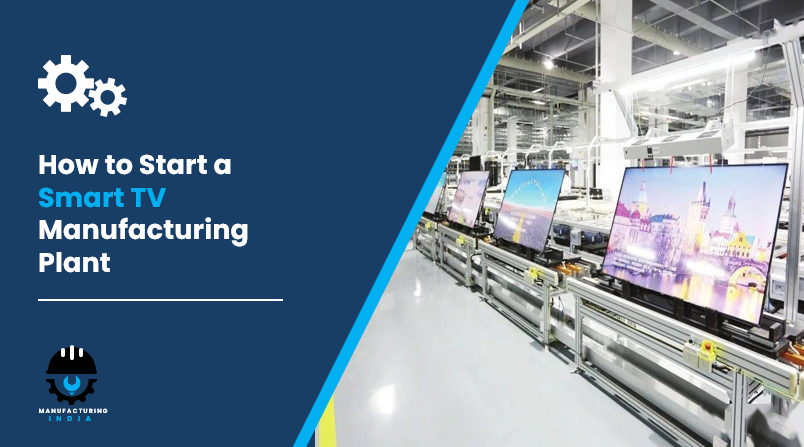
The consumer electronics industry is experiencing rapid growth, with Smart TVs becoming a household essential worldwide. These internet-enabled televisions offer streaming capabilities, app integration, and advanced features that traditional TVs cannot provide. Starting a Smart TV manufacturing plant presents a lucrative business opportunity for entrepreneurs looking to enter the booming electronics sector.
What is Smart TV Manufacturing?
Smart TV manufacturing involves the assembly and production of internet-connected televisions that combine display technology with computing capabilities. The process includes integrating display panels, circuit boards, processors, memory modules, operating systems, and connectivity features. Manufacturers source components globally or domestically, assemble them into finished products, conduct quality testing, and prepare units for market distribution.
Market Potential and Demand
The global demand for Smart TVs continues to surge as consumers increasingly prefer streaming services over traditional cable television. Emerging markets show particularly strong growth as internet penetration improves and prices become more accessible. Replacement cycles have shortened due to rapid technological advancement, creating sustained demand. Government initiatives promoting domestic manufacturing in many countries further enhance the business case for local production facilities.
Step-by-Step Process to Start a Smart TV Manufacturing Plant
Step 1: Conduct Market Research and Feasibility Study
Begin with comprehensive market research to understand consumer preferences, competitor analysis, pricing strategies, and target market segments. Identify whether to focus on budget, mid-range, or premium Smart TV categories. Analyze regional demand patterns, distribution channels, and retail partnerships. Conduct a detailed feasibility study examining technical requirements, financial projections, break-even analysis, and potential return on investment. Research supply chain options for critical components like display panels, processors, and circuit boards.
Step 2: Prepare a Detailed Business Plan
Develop a comprehensive business plan outlining your vision, mission, and business objectives. Include detailed financial projections covering capital requirements, operational costs, revenue forecasts, and profit margins. Define your product range, specifying screen sizes, resolution types, operating systems, and feature sets. Detail your manufacturing strategy, whether focusing on complete assembly or semi-knocked-down kits. Outline marketing and sales strategies, distribution networks, and after-sales service plans. Include organizational structure and human resource requirements.
Step 3: Legal Requirements and Company Registration
Register your business entity selecting an appropriate structure such as private limited company, partnership, or sole proprietorship. Obtain necessary licenses including manufacturing license, factory license, and environmental clearances. Secure GST registration for tax compliance. Apply for import-export licenses if planning to import components or export finished products. Obtain Bureau of Indian Standards certification for quality compliance. Register trademarks and brand names for intellectual property protection. Ensure compliance with labor laws and factory regulations.
Step 4: Arrange Financing and Capital
Calculate total capital requirements covering land, building construction, machinery procurement, working capital, and initial operational expenses. Explore financing options including bank loans, government schemes, venture capital, angel investors, or personal investment. Investigate government incentive programs and subsidies for electronics manufacturing. Prepare detailed financial documents, collateral requirements, and loan proposals. Consider equipment financing or leasing options for expensive machinery. Maintain sufficient working capital for smooth operations during initial phases.
Step 5: Select Suitable Location
Choose a location with good connectivity to transportation networks including highways, ports, and airports for component imports and product distribution. Ensure availability of reliable power supply with backup options, as manufacturing requires uninterrupted electricity. Access to skilled labor is crucial for assembly line operations. Consider proximity to component suppliers and target markets. Evaluate industrial zone benefits including tax incentives, infrastructure support, and regulatory facilitation. Assess land costs, water availability, and environmental factors. Factor in future expansion possibilities.
Step 6: Infrastructure and Building Setup
Design factory layout optimizing workflow from component receiving to finished product dispatch. Create separate areas for component storage, assembly lines, testing facilities, quality control, packaging, and warehouse. Install proper ventilation, temperature control, and humidity management systems essential for electronics manufacturing. Set up clean room environments for sensitive assembly processes. Establish separate areas for administrative offices, staff facilities, and visitor areas. Ensure compliance with fire safety regulations, emergency exits, and security systems. Plan for future scalability and production expansion.
Step 7: Procure Machinery and Equipment
Acquire essential machinery including automated assembly lines, SMT machines for circuit board assembly, testing equipment for quality control, and packaging machines. Source display panel mounting equipment, backlight integration systems, and chassis assembly tools. Invest in quality testing equipment including burn-in chambers, color calibration tools, and functional testing systems. Purchase material handling equipment, conveyor systems, and automated guided vehicles. Acquire software for production management, inventory control, and quality tracking. Ensure proper installation, commissioning, and operator training.
Step 8: Source Raw Materials and Components
Establish relationships with reliable suppliers for display panels, which represent the most significant component cost. Source processors, memory chips, main circuit boards, and power supply units from reputable manufacturers. Procure casings, stands, remote controls, cables, and packaging materials. Consider import versus domestic sourcing based on quality requirements and cost considerations. Develop multiple supplier relationships to ensure supply chain resilience. Negotiate favorable payment terms and bulk purchase agreements. Implement vendor quality management systems and regular audits.
Step 9: Hire and Train Workforce
Recruit skilled engineers for production management, quality assurance, and technical operations. Hire assembly line workers, technicians, quality inspectors, and support staff. Engage professionals for procurement, sales, marketing, finance, and human resources. Provide comprehensive training on assembly procedures, quality standards, safety protocols, and equipment operation. Develop continuous skill development programs keeping pace with technology evolution. Establish clear standard operating procedures for all manufacturing processes. Create a positive work environment encouraging productivity and innovation.
Step 10: Implement Quality Control Systems
Establish stringent quality control measures at every production stage from incoming component inspection to final product testing. Implement international quality standards ensuring products meet safety and performance specifications. Conduct regular testing including power consumption tests, display quality checks, connectivity verification, and durability testing. Maintain detailed quality records and traceability systems. Invest in automated testing equipment reducing human error. Establish protocols for handling defective units and continuous improvement processes. Pursue quality certifications enhancing brand credibility and market acceptance.
Step 11: Obtain Necessary Certifications
Secure mandatory certifications including Bureau of Indian Standards certification for product quality compliance. Obtain energy efficiency ratings and eco-friendly certifications appealing to environmentally conscious consumers. Acquire safety certifications ensuring products meet electrical safety standards. Get electromagnetic compatibility certification confirming products don’t interfere with other electronics. Pursue international certifications if planning exports. Maintain ongoing compliance through regular audits and documentation. Display certification marks prominently on products and marketing materials.
Step 12: Establish Supply Chain and Logistics
Develop efficient supply chain management ensuring timely component availability without excessive inventory. Implement just-in-time inventory systems reducing working capital requirements. Establish logistics partnerships for distribution to retailers, distributors, and e-commerce platforms. Set up warehousing facilities for finished products. Create efficient transportation networks minimizing product damage during transit. Implement inventory management software providing real-time visibility. Develop reverse logistics for product returns and warranty servicing.
Step 13: Marketing and Brand Building
Create a strong brand identity differentiating your products in the competitive Smart TV market. Develop comprehensive marketing strategies including digital marketing, traditional advertising, and retail partnerships. Establish relationships with major electronics retailers and e-commerce platforms. Participate in trade shows and industry exhibitions showcasing products. Implement promotional campaigns during festive seasons and special events. Invest in customer service and after-sales support building brand loyalty. Gather customer feedback for continuous product improvement.
Step 14: Launch Production and Scale Operations
Begin with pilot production testing all systems and processes. Gradually scale up production based on market response and demand patterns. Monitor production efficiency, quality metrics, and cost controls. Continuously optimize manufacturing processes reducing waste and improving productivity. Invest in automation and technology upgrades maintaining competitive advantage. Expand product range based on market trends and consumer preferences. Plan capacity expansion aligned with business growth projections.
About the Author