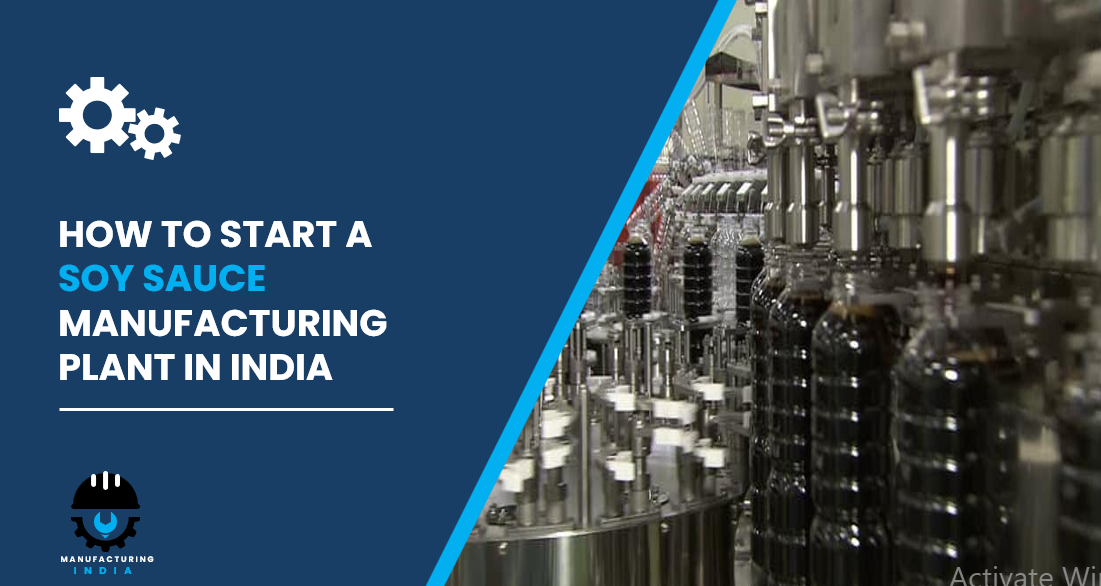
Setting up a soy sauce manufacturing plant in India presents a compelling investment case anchored in the country’s rapidly expanding food processing industry, surging hospitality sector, growing consumer appetite for Asian and fusion cuisine, and increasing availability of organised retail and e-commerce channels that are driving packaged condiment consumption at scale. Soy sauce – a dark, savory fermented liquid produced from soybeans, roasted wheat, salt, and water – delivers a rich umami flavour that has transcended its East Asian origins to become a globally ubiquitous condiment used in seasoning, marinating, dipping, stir-frying, and flavour enhancement across an enormous range of food applications. India’s food culture is evolving rapidly, with consumers at both the household and professional kitchen level increasingly incorporating soy sauce into everyday cooking, creating a domestic demand dynamic that is only in its early stages of maturation.
The strategic rationale for establishing a soy sauce manufacturing plant in India is further reinforced by the country’s booming food processing market – projected to rise from USD 866 billion in 2022 to USD 1,274 billion by 2027, as reported by IBEF – and a hotel industry anticipated to grow at a revenue rate of 7–9% in FY2025. Both sectors are major institutional buyers of soy sauce as a staple condiment. States such as Maharashtra, Uttar Pradesh, Gujarat, and Tamil Nadu offer strong food processing infrastructure, cost-competitive manufacturing environments, and access to both domestic soybean supply and established food-grade packaging supply chains. India’s Make in India initiative and food processing sector investment incentives create further policy momentum for investors seeking to localise production of premium and everyday condiment products.
A soy sauce manufacturing plant in India sits at the intersection of India’s food processing boom, surging HoReCa sector growth, and rapidly evolving consumer palates shifting toward Asian and fusion cuisine. With demand driven by both the USD 866 billion domestic food processing market and a hospitality industry growing at 7–9% annually, this investment offers a commercially sound and forward-looking opportunity for food and beverage manufacturers ready to capture India’s expanding condiment market.
What is Soy Sauce?
Soy sauce is a dark, savory liquid condiment produced by fermenting soybeans, roasted grains – usually wheat – water, and salt. Developed in East Asia, it is used extensively to add depth of flavour to foods through a rich umami profile. The traditional brewing method involves fermenting the ingredients with particular moulds and yeasts, including Aspergillus oryzae, for several months to develop the characteristic colour, aroma, and flavour complexity.
Soy sauce comes in several forms – including light, dark, low-sodium, and flavoured varieties – to meet diverse gastronomic requirements across retail, foodservice, and food processing applications. A soy sauce manufacturing plant is a facility designed to produce soy sauce through a controlled fermentation process, incorporating soaking tanks, steamers, koji fermentation rooms, brine fermentation tanks, pressing units, filtration systems, and pasteurisation equipment. The primary production method is the fermentation process. The product serves end-use industries including food and beverage, hospitality, food processing, retail, and catering services, with applications in seasoning, marinating, dipping, stir-frying, and enhancing flavour in soups, sauces, and processed foods.
Cost of Setting Up a Soy Sauce Manufacturing Plant in India
The total cost of establishing a soy sauce manufacturing plant in India depends on production capacity, fermentation technology and duration, plant location, degree of automation, and regulatory compliance requirements.
1. Capital Expenditure (CapEx)
The capital investment required to set up this facility covers several major cost heads. Land and site development – including land registration, boundary development, drainage, and related site infrastructure – forms a substantial portion of total CapEx. Investors should consider locating the unit within food processing zones or agro-industrial estates in Maharashtra (Pune, Nashik), Uttar Pradesh (Greater Noida), or Tamil Nadu, where access to established soybean and wheat supply networks, food-grade water sources, and proximity to HoReCa and food processing buyer clusters can reduce both input and logistics costs.
Civil works and construction costs cover the raw material receiving and storage area, soaking and steaming rooms, temperature-controlled koji fermentation rooms, large-capacity brine fermentation tanks, pressing and filtration hall, pasteurisation zone, bottling and packaging area, quality control laboratory, effluent treatment zone, and administrative block. The fermentation process requires precisely temperature- and humidity-controlled environments – a specific civil works requirement that adds to construction complexity and cost relative to non-fermentation food processing facilities.
Machinery and equipment represent the largest component of total capital expenditure for this soy sauce manufacturing plant. Key machinery required includes:
- Soaking tanks
- Steamers
- Koji fermenters
- Brine fermentation tanks
- Pressing machines
- Filtration systems
- Pasteurisers
- Bottling units
Other capital costs include effluent treatment plant (ETP) installation for high-salt, high-organic-load wastewater from the fermentation and pressing process, pre-operative and commissioning expenses, temperature and humidity control systems for fermentation rooms, and utility connection charges for electricity, water, and steam supply.
Request a Sample Report for In-Depth Market Insights: https://www.imarcgroup.com/soy-sauce-manufacturing-plant-project-report/requestsample
2. Operational Expenditure (OpEx)
The operating cost structure of a soy sauce manufacturing plant is primarily driven by raw material procurement. Raw material cost – covering soybeans, wheat, salt, water, and fermentation cultures including Aspergillus oryzae – constitutes the dominant share of total OpEx. Soybeans, as the primary protein and flavour substrate, are the most significant cost input. India’s established soybean cultivation base – particularly in Madhya Pradesh, Maharashtra, and Rajasthan – provides domestic sourcing options that can meaningfully reduce input costs relative to import-dependent procurement. Investors should negotiate long-term supply contracts with soybean and wheat suppliers to stabilise raw material costs and ensure production continuity across growing seasons.
Utility costs, covering electricity for fermentation room climate control and pasteurisation operations, water for soaking and processing, and steam for steaming and pasteurisation, represent a meaningful share of OpEx given the energy demands of controlled fermentation and thermal processing. Other operating costs include transportation and logistics for finished product dispatch to food processors, HoReCa buyers, retailers, and e-commerce channels, packaging materials (bottles, caps, labels), salaries and wages, maintenance and calibration of fermentation and bottling equipment, depreciation of fixed assets, and applicable taxes. By the fifth year of operations, total operational costs are projected to increase substantially due to inflation, raw material price escalation, market fluctuations, and growing consumer demand dynamics.
3. Plant Capacity
Plant capacity for a soy sauce manufacturing facility can be customised based on specific investor requirements, target market channels – from mass-market food processing supply to premium artisanal and HoReCa segments – and available capital. Profitability and unit economics improve with higher capacity utilisation, and the extended fermentation cycles inherent to traditionally brewed soy sauce require adequate fermentation tank capacity to maintain consistent production throughput.
4. Profit Margins and Financial Projections
The soy sauce manufacturing plant demonstrates healthy profitability potential under normal operating conditions. Financial projections for the proposed project are based on realistic assumptions related to capital investment, operating costs, production capacity utilisation, pricing trends, and demand outlook – providing a comprehensive view of the project’s financial viability, ROI, profitability, and long-term sustainability. Key financial indicators including NPV, IRR, payback period, liquidity analysis, and sensitivity analysis are covered comprehensively in the full project report, enabling investors to assess break-even timelines and long-term return profiles specific to their chosen capacity and market positioning.
Why Set Up a Soy Sauce Manufacturing Plant in India?
Expanding Food Processing Sector Creating Institutional Demand. The food processing industry in India is growing rapidly and is an important driver of soy sauce demand, as the condiment is heavily used in processed foods such as ready meals, snacks, marinades, and condiments. The Indian food processing market is projected to rise from USD 866 billion in 2022 to USD 1,274 billion by 2027, as reported by IBEF – representing a growing base of packaged and convenience food manufacturers who require consistent, quality soy sauce as a flavouring ingredient.
Growing Hospitality Industry Driving HoReCa Demand. The worldwide expansion of the hospitality industry plays a key role in soy sauce demand growth, as it is a staple condiment for hotel and restaurant kitchens – particularly those serving Asian and fusion cuisine. India’s hotel industry is anticipated to grow at a revenue rate of 7–9% in FY2025, as reported by IBEF, reflecting significant post-COVID recovery and the expansion of travel and tourism-related dining. As hotels and foodservice operators expand their menus to include specialty and Asian-inspired items, the use of versatile condiments like soy sauce continues to rise.
Rising Consumer Preference for Asian and Fusion Cuisine. The soy sauce market is influenced by increasing global awareness of Asian food culture and consumers’ growing preference for savory, umami flavours. In India, rapid urbanisation, changing food preferences, and growing exposure to Asian cuisine through streaming media, food delivery platforms, and dining out are creating a new generation of home cooks and food enthusiasts who actively seek out and use soy sauce.
Health-Conscious and Specialty Product Trends. Growth is further driven by health-minded consumers demanding low-sodium, organic, and gluten-free soy sauce varieties – a premium product segment that commands higher margins and brand differentiation. In January 2025, Kikkoman Foods Inc. launched nine new soy sauce products, including a vegan-certified “Umami Joy Sauce” alternative, targeting health-conscious and plant-based consumers and demonstrating the commercial viability of specialty soy sauce segments.
Active India-Specific Market Development. In March 2024, Kikkoman India Pvt. Ltd. introduced a new dark soy sauce suited to the Indian palate – one of the initial steps toward using localised products in India and positioning in the growing Indian soy sauce market. In October 2024, Indian brand Winn launched a line of premium, authentic Chinese soy sauce products specifically for the HoReCa segment, made with high-quality ingredients and free from artificial additives. These developments confirm that global and domestic brands are actively investing in India’s soy sauce market, validating domestic production as a commercially viable and strategically timely investment.
E-Commerce and Retail Channel Growth. Rapid urbanisation, changing food preferences, and the food and beverage e-commerce channel are creating steady demand growth for packaged soy sauce at the retail level – a channel that rewards domestic producers with faster replenishment cycles, lower logistics costs, and greater brand-building proximity to the end consumer than import-dependent supply chains can offer.
Manufacturing Process – Step by Step
The soy sauce manufacturing process uses the fermentation process as the primary production method. The process involves multiple unit operations, material handling stages, microbial management protocols, and quality verification checkpoints throughout.
- Raw Material Receipt and Inspection: Soybeans, wheat, salt, water, and fermentation cultures including Aspergillus oryzae are received, inspected for quality, and stored in designated food-grade storage areas.
- Soaking: Soybeans are soaked in water in soaking tanks to hydrate the beans and prepare them for steaming. Wheat is separately roasted and cracked to prepare it for koji culture development.
- Steaming: Hydrated soybeans are cooked under steam in steamers to denature proteins and sterilise the substrate, creating an optimal environment for the growth of beneficial koji moulds.
- Koji Fermentation: Cooked soybeans and roasted wheat are inoculated with Aspergillus oryzae cultures and incubated in temperature- and humidity-controlled koji fermentation rooms for two to three days. The koji mould produces proteolytic and amylolytic enzymes that will drive the subsequent fermentation.
- Brine Mixing and Moromi Fermentation: Koji is mixed with a salt brine solution in large brine fermentation tanks to form a mash called moromi. This mash is fermented for several months – or longer for premium grades — during which enzymes break down proteins and starches into amino acids, sugars, and flavour compounds that define the final soy sauce character.
- Pressing: After fermentation is complete, the moromi mash is pressed using pressing machines to separate raw soy sauce liquid from the solid soy residue (cake).
- Filtration: Pressed raw soy sauce is passed through filtration systems to remove fine particulates and clarify the liquid.
- Pasteurisation: Filtered soy sauce is heat-treated in pasteurisers to halt further microbial activity, stabilise flavour, adjust colour through Maillard reaction, and ensure microbiological safety and shelf stability.
- Quality Control and Testing: Finished soy sauce is tested for salt content, total nitrogen, amino acid nitrogen, colour, pH, and microbiological parameters against applicable FSSAI and product grade specifications.
- Bottling, Labelling, and Dispatch: Approved soy sauce is filled into glass or PET bottles using bottling units, labelled, and dispatched to food and beverage manufacturers, HoReCa distributors, retail chains, e-commerce platforms, and catering services.
Key Applications
The soy sauce manufacturing plant serves multiple end-use industries and application categories with consistent, high-volume demand for quality condiment products:
- Food and Beverage Industry: Primary savory flavouring and seasoning ingredient in soft drinks, sauces, processed foods, ready meals, and packaged snacks.
- Hospitality Sector: Staple condiment for hotel and restaurant kitchens, particularly those serving Asian, Chinese, Japanese, Korean, and fusion cuisine menus.
- Food Processing Industry: Ingredient in marinades, condiments, ready-to-eat meals, and snack seasonings produced by packaged food manufacturers.
- Retail: Packaged soy sauce in light, dark, low-sodium, and flavoured variants sold through supermarkets, grocery stores, and e-commerce platforms for household cooking use.
- Catering Services: High-volume institutional supply to catering companies, cloud kitchens, and quick service restaurant chains requiring consistent flavour and quality.
Leading Manufacturers
The global soy sauce industry is served by several major multinational food and condiment companies with extensive production capacities and diverse product portfolios. Key players include:
- Foshan Haitian Flavouring & Food Co. Ltd.
- Kikkoman Corporation
- Lee Kum Kee
- Masan Group
- BOURBON BARREL FOODS
- OTAFUKU SAUCE Co., Ltd.
Timeline to Start the Plant
- Feasibility study and project report preparation
- Land acquisition and site development
- Regulatory approvals and environmental clearances
- Factory licence and fire safety compliance
- Machinery procurement and installation
- Raw material supplier agreements and supply chain setup
- Trial production and quality testing
- Commercial production launch
Licences and Regulatory Requirements
Starting a soy sauce manufacturing unit in India requires several approvals:
- Business registration (Proprietorship, LLP, or Pvt Ltd)
- Factory Licence under the Factories Act
- Environmental Clearance from State Pollution Control Board
- GST Registration
- Fire Safety NOC
- FSSAI (Food Safety and Standards Authority of India) licence – mandatory for all food manufacturing and processing operations including fermented condiments
- Effluent Treatment Plant (ETP) operational clearance – critical given the high-salt, high-organic content of soy sauce processing wastewater
- Occupational Health and Safety compliance
Key Challenges to Consider
High Capital Requirements. Temperature- and humidity-controlled koji fermentation rooms, large-capacity brine fermentation tanks, pressing systems, and automated bottling lines represent significant CapEx commitments. The need for controlled fermentation infrastructure adds complexity and cost beyond standard food processing facility investment.
Raw Material Price Volatility. Soybeans and wheat – the primary fermentation substrates – are agricultural commodities subject to monsoon-dependent yield variability and global commodity price movements. Establishing long-term procurement contracts with domestic soybean and wheat suppliers in Madhya Pradesh, Maharashtra, and Rajasthan is essential to insulate production economics from input price swings.
Regulatory Compliance. Meeting FSSAI standards for fermented food products, managing high-salt effluent from the fermentation and pressing process in compliance with State Pollution Control Board norms, and maintaining consistent microbial quality throughout extended fermentation cycles require dedicated compliance investment and food safety system certification.
Technology and Innovation Pressure. Growing consumer demand for low-sodium, organic, gluten-free, and vegan soy sauce variants – as evidenced by Kikkoman’s January 2025 nine-product launch including a vegan-certified Umami Joy Sauce – requires producers to invest in product range diversification and adapt fermentation and formulation processes to meet evolving consumer health preferences.
Competition. Global players such as Kikkoman Corporation, Foshan Haitian Flavouring & Food Co. Ltd., and Lee Kum Kee have deep brand recognition and established supply chains in India and globally. Domestic producers must differentiate on product quality, localised flavour profiles, HoReCa-specific product lines, and price competitiveness to build market share against established import brands.
Skilled Manpower. Managing koji culture inoculation, controlled moromi fermentation, and consistent flavour development across multi-month fermentation cycles requires food technologists and fermentation specialists – a skilled workforce category that can be challenging to recruit and retain outside major food industry hubs.
Frequently Asked Questions
1. How much does it cost to set up a soy sauce manufacturing plant in India? Total investment depends on production capacity, fermentation technology, location, and automation level. Key cost components include land and site development, civil construction including temperature-controlled fermentation rooms, machinery (soaking tanks, steamers, koji fermenters, brine fermentation tanks, pressing machines, filtration systems, pasteurisers, and bottling units), utilities, ETP infrastructure, and working capital. A detailed project report provides capacity-specific CapEx and OpEx estimates.
2. Is soy sauce manufacturing profitable in India in 2026? Yes. The soy sauce manufacturing plant demonstrates healthy profitability potential supported by stable multi-sector demand from food processing, HoReCa, and retail channels. India’s food processing market projected to reach USD 1,274 billion by 2027 and hotel industry growth of 7–9% in FY2025 provide strong institutional demand underpinning. Financial projections including NPV, IRR, gross margin, and net margin are detailed in the full project report.
3. What machinery is required for a soy sauce manufacturing plant in India? Key equipment includes soaking tanks, steamers, koji fermenters, brine fermentation tanks, pressing machines, filtration systems, pasteurisers, and bottling units, along with temperature and humidity control systems for fermentation rooms.
4. What licences and approvals are required to start a soy sauce manufacturing plant in India? Required approvals include business registration, Factory Licence under the Factories Act, Environmental Clearance from the State Pollution Control Board, GST registration, FSSAI food safety licence for fermented condiment production, ETP operational clearance, Fire Safety NOC, and Occupational Health and Safety certification.
5. What raw materials are needed for soy sauce manufacturing? Key raw materials include soybeans as the primary protein substrate, roasted wheat, salt, water, and fermentation cultures including Aspergillus oryzae koji mould, which drives the enzymatic breakdown of proteins and starches into the amino acids and flavour compounds that define soy sauce’s characteristic umami profile.
6. What are the environmental compliance requirements for a soy sauce manufacturing plant in India? Operators must obtain Environmental Clearance, maintain an operational Effluent Treatment Plant to manage high-salt, high-organic-load wastewater from soaking, pressing, and cleaning operations, and comply with State Pollution Control Board guidelines on effluent quality before discharge. The high sodium content of soy sauce processing effluent requires specialised treatment to meet discharge norms.
7. What is the best location to set up a soy sauce manufacturing plant in India? Ideal locations offer proximity to soybean and wheat supply sources, reliable food-grade water infrastructure, established food processing industrial estates, and access to HoReCa and retail distribution networks. Maharashtra, Madhya Pradesh, and Uttar Pradesh are well-positioned given their strong soybean cultivation base, while Tamil Nadu and Gujarat offer strong food processing infrastructure and export connectivity.
8. What is the break-even period for this type of plant in India? Break-even depends on production scale, raw material procurement costs, fermentation technology efficiency, capacity utilisation, and prevailing market pricing for both standard and premium soy sauce grades. A detailed feasibility study provides project-specific break-even and payback period projections aligned to investor capacity and market strategy.
9. What government incentives are available for manufacturers in India? Soy sauce manufacturers in India can benefit from PLI scheme incentives for the food processing sector, capital subsidies under state-level agro-processing investment schemes, tax exemptions under state industrial promotion policies, reduced utility tariffs in food processing industrial estates, and export-linked benefits for premium and specialty soy sauce products targeting international markets. MSME development scheme funding may provide additional support for smaller-scale producers.
Key Takeaways for Investors
The soy sauce manufacturing plant opportunity in India is underpinned by powerful, converging demand drivers – a food processing market scaling toward USD 1,274 billion by 2027, a hospitality industry growing at 7–9% annually, rapidly evolving consumer palates embracing Asian and fusion cuisine, and growing health-conscious demand for low-sodium and vegan condiment variants. The plant serves a broad and deepening buyer base spanning food and beverage manufacturers, HoReCa operators, retail chains, e-commerce platforms, and catering services – each representing a distinct and growing revenue channel. Active market investment by global brands including Kikkoman India’s dark soy sauce localisation in March 2024 and the October 2024 launch of India-specific HoReCa-targeted products by domestic brand Winn confirms that the Indian soy sauce market is entering a phase of accelerated commercialisation. As India’s food culture globalises, its hospitality sector expands, and its food processing industry scales, domestically produced soy sauce is positioned for durable, long-cycle demand growth across every tier of the country’s food and beverage ecosystem.
About the Author