
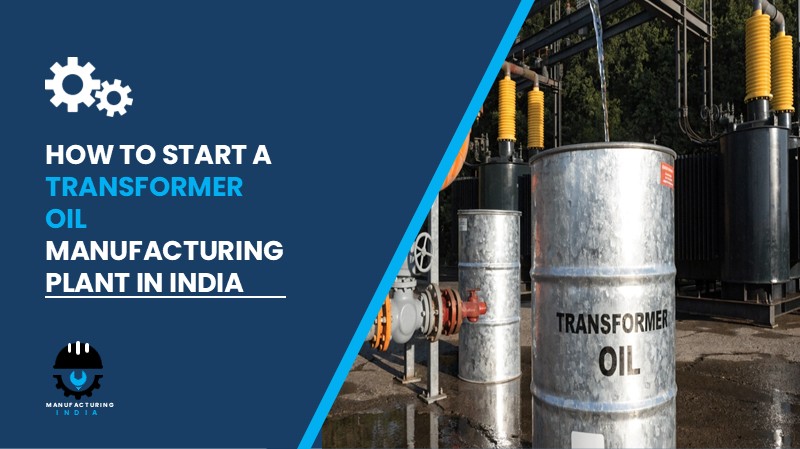
Setting up a transformer oil manufacturing plant in India presents a compelling investment case at a time when the country’s power transmission and distribution infrastructure is expanding at an unprecedented pace, renewable energy installations are scaling rapidly, grid modernisation programmes are under active deployment, and electricity demand continues to grow with urbanisation and industrial expansion. Transformer oil — an extremely pure insulating fluid used in power transformers and other high-voltage devices to provide electrical insulation, dissipate heat, and suppress arcs — is the primary consumable of every transformer in every substation, grid network, and industrial power system across the country. As India’s power sector expands to meet its ambitious clean energy targets and rural electrification commitments, the domestic requirement for high-quality transformer oil is entering a period of sustained, policy-driven growth that makes new production capacity both commercially necessary and financially sound.
India’s structural positioning for transformer oil production is well-established and improving. The country has a significant base of established transformer manufacturers and power utilities that collectively represent one of Asia’s largest transformer oil consumption markets, with demand directly correlated to transformer deployments in grid-connected renewable energy projects, substation expansions, and industrial infrastructure development. The Make in India initiative and government investments in national grid expansion, rural electrification, and smart grid infrastructure are all factors that directly increase demand for transformer oil from domestic producers. Industrial chemical estates in Gujarat, Maharashtra, Andhra Pradesh, and Tamil Nadu offer the petroleum refinery proximity, chemical handling infrastructure, logistics connectivity, and regulatory frameworks that a transformer oil production facility requires to source base oil competitively and supply power utilities reliably. Utilities increasingly prefer local, reliable suppliers for quality assurance, faster delivery, and reduced dependence on imports — a commercial preference that gives well-positioned domestic producers a durable competitive advantage.
Investing in a transformer oil manufacturing plant in India today aligns sustained infrastructure investment from power generation, transmission and distribution utilities, renewable energy, railways, and industrial sectors with the preference of utilities for local supply reliability, the long-term demand security of regular transformer oil replacement cycles, and the growing alignment of India’s energy transition with transformer deployment. With gross profit margins of 20–30% and net profit margins of 8–12%, the unit economics support commercially sound returns across annual production capacities of 30,000 to 60,000 MT.
What is Transformer Oil?
Transformer oil is an extremely pure insulating fluid, primarily used in power transformers and other high-voltage devices, which not only provides electrical insulation but also dissipates heat and suppresses arcs generated during transformer switching and fault conditions. It is normally obtained from mineral oils — specifically naphthenic and paraffinic base oil fractions — though the use of bio-based and synthetic oils is on the rise as environmental compliance and fire safety standards tighten.
Transformer oil possesses a specific array of performance properties that make it the ideal candidate for high-voltage insulation applications: high dielectric strength, excellent thermal conductivity, low viscosity, good oxidation stability, and minimal moisture affinity. These properties together facilitate the cooling of transformer cores and windings while preventing electrical breakdown across the insulation system. In addition, the oil provides internal parts with protection against the effects of oxidation, corrosion, and partial discharge, thereby lengthening the service life of the transformer and helping maintain the reliability of the grid across cycles of changing loads and temperatures.
The primary production process covers vacuum distillation, hydro-treatment, filtration, dehydration, and blending. End-use industries served include power generation, transmission and distribution utilities, renewable energy, railways, and industrial infrastructure. Applications are focused on use as an insulating and cooling medium in power transformers, distribution transformers, reactors, and high-voltage electrical equipment across all segments of the power sector value chain.
Cost of Setting Up a Transformer Oil Manufacturing Plant in India
The cost of establishing a transformer oil manufacturing plant in India depends on plant capacity, base oil processing technology — whether vacuum distillation, hydro-treatment, or blending-only configuration — raw material sourcing strategy, geographic location, and the quality compliance requirements applicable to transformer oil sold to power utility and industrial customers under IS, IEC, and ASTM standards.
1. Capital Expenditure (CapEx)
Land and Site Development forms a foundational component of total capital investment, covering land acquisition charges, site registration, bund wall construction for oil containment, drainage and effluent containment infrastructure, and site utilities. Investors may explore chemical and petroleum industry estates or Special Economic Zones (SEZs) in Gujarat, Maharashtra, and Tamil Nadu, where proximity to domestic oil refineries and petrochemical suppliers provides cost-competitive base oil access, and established chemical handling infrastructure reduces site preparation and regulatory approval timelines.
Civil Works and Construction cover the main production building housing distillation, hydro-treating, and blending units, bulk base oil storage tanks with bunding and containment, additive storage and metering systems, a quality control laboratory equipped for dielectric strength, viscosity, flash point, acidity, and moisture content testing, finished product storage tanks, packaging and drumming areas, an administrative block, and utilities infrastructure including steam generation, cooling water circuits, and nitrogen blanketing systems for oil product storage.
Machinery and Equipment represent the largest single component of total CapEx for a transformer oil manufacturing plant. Key machinery required includes:
- Vacuum distillation units
- Solvent extraction systems
- Hydro-treating reactors
- Oil filtration and dehydration units
- Laboratory testing and dielectric strength analysers
- Blending and additive dosing systems
- Packaging and drumming lines
Other Capital Costs include an effluent treatment plant (ETP) for managing oil-contaminated process water, fire suppression and oil spill containment infrastructure mandatory for petroleum product handling facilities, pre-operative expenses, commissioning and trial run charges, and import duties on specialised hydro-treating catalysts or precision analytical instruments not sourced domestically.
Request a Sample Report for In-Depth Market Insights: https://www.imarcgroup.com/transformer-oil-manufacturing-plant-project-report/requestsample
2. Operational Expenditure (OpEx)
Raw Material Cost is the overwhelmingly dominant operational expense, accounting for approximately 80–85% of total OpEx. The primary raw materials are base oil — both naphthenic and paraffinic grades depending on the transformer oil specification — along with antioxidants and passivators. Base oil is a petroleum-derived commodity whose pricing moves in correlation with crude oil markets and refinery output economics. Naphthenic base oils, preferred for their superior low-temperature properties and oxidation stability in transformer applications, are sourced from specific naphthenic crude oil processing routes. Long-term procurement contracts with reliable base oil suppliers — including Indian refineries and import-route suppliers — are essential for production cost stability and supply continuity.
Utility Cost is the second-largest OpEx component, representing only 5–10% of total operating expenses — one of the lowest utility proportions across all process industry categories — reflecting the relatively moderate energy consumption of blending, filtration, and dehydration operations compared to primary chemical manufacturing. Electricity for pumps, mixers, and laboratory equipment, steam for dehydration and processing, and nitrogen for product blanketing constitute the primary utility inputs.
Other Operating Costs include transportation and distribution to power utilities, transformer manufacturers, railway traction systems, and industrial infrastructure customers, packaging materials for drums and ISO tank containers, salaries and wages for process operators and quality control chemists, routine machinery maintenance including filter element replacement and vacuum pump servicing, depreciation on production equipment and storage tanks, and applicable taxes. By the fifth year of operations, total operational costs are projected to increase substantially due to inflation, market fluctuations, potential rises in base oil and crude oil-linked input prices, supply chain disruptions, rising consumer demand, and shifts in the global energy economy — variables requiring careful incorporation into the five-year financial planning model.
3. Plant Capacity
The proposed manufacturing facility for a transformer oil plant is designed with an annual production capacity ranging between 30,000 and 60,000 metric tonnes, enabling economies of scale while maintaining the operational flexibility to serve a diversified customer base across power utilities, transformer OEMs, railway traction operators, and industrial infrastructure buyers. Plant capacity can be customised per investor requirements and phased in line with secured utility supply contracts and market penetration timelines. Profitability improves meaningfully with higher capacity utilisation, making long-term supply agreements with state electricity distribution companies, central public sector power utilities, or large transformer manufacturers a strategic commercial priority from the pre-commissioning stage.
4. Profit Margins and Financial Projections
The financial projections for a transformer oil manufacturing plant demonstrate commercially sound profitability under normal operating conditions. Gross profit margins typically range between 20–30%, supported by the stable and recurring demand characteristic of a consumable product with mandatory replacement cycles in long-lived power infrastructure assets. Net profit margins are projected at 8–12%. A comprehensive financial analysis covering NPV (net present value), IRR (internal rate of return), payback period, gross margin progression, and net margin development across a five-year horizon is essential before committing capital. The project’s ROI profile and long-term sustainability are assessed against realistic assumptions on capital investment, production capacity utilisation, base oil pricing trends, and demand outlook from the power generation, transmission, distribution, renewable energy, railways, and industrial infrastructure end-use sectors.
Why Set Up a Transformer Oil Plant in India?
Essential Power Infrastructure Material with Mandatory Replacement Cycles. Transformer oil is an indispensable material for power infrastructure, with demand closely linked to electricity consumption growth and power infrastructure development. Owing to the requirement for oil replacement at regular intervals, the testing requirements, and the standard practice of maintaining transformers across utilities and industries, there is a continuous and predictable consumption that makes transformer oil one of the most demand-stable specialty petroleum products available to investors. Every operational transformer in India’s power grid — from distribution transformers in rural electrification networks to large power transformers in 765 kV substations — requires periodic oil testing and replenishment.
Rapid Expansion of Power Transmission and Distribution Networks. India’s sustained investment in power transmission and distribution infrastructure is a primary structural driver of transformer oil demand. National grid expansion projects, rural electrification programmes under the Saubhagya scheme, and smart grid modernisation initiatives are all factors that directly increase the number of transformers deployed across India’s power system, each of which requires transformer oil as an operational consumable throughout its service life.
Renewable Energy Infrastructure Driving New Transformer Deployments. The shift toward renewable energy sources such as wind and solar is accelerating transformer installations, particularly in grid-connected renewable energy projects. Every wind farm and utility-scale solar installation requires step-up transformers to connect to the transmission grid, and each grid-scale battery storage facility requires its own transformer oil-filled switching and protection equipment. As India pursues its renewable energy capacity targets, the associated transformer deployment volumes are creating incremental and sustained demand for transformer oil from domestic producers.
Energy Transition Alignment — EV Charging and Grid Upgrades. The ever-increasing renewable energy installations, EV charging networks, and grid upgrades are factors that contribute to the global and domestic rise in transformer deployments. As India’s EV charging infrastructure is built out across highways, urban areas, and commercial buildings, the associated distribution transformer requirements create an additional and growing demand layer for transformer oil on top of the established utility and industrial customer base.
Active Global Industry Investment Signalling Market Strength. In July 2025, Ergon inaugurated its first transformer oil technology centre in Asia at Merak, Indonesia, to support rising energy demands and provide reliable transformer oil solutions that enhance grid performance and long-term energy security — a clear signal of the investment momentum building around transformer oil in the Asia-Pacific region. In May 2025, Redox Ltd acquired 100% ownership of Molekulis Pty Ltd, a specialist in specialty and transformer oils, to broaden its customer base and strengthen its specialty oils portfolio — further evidence of consolidation and investment activity in the global transformer oil supply chain.
Localisation and Supply Security Preference Among Utilities. Quality, faster delivery, and reduced dependence on imports are the primary reasons why utilities prefer to rely on local, reliable transformer oil suppliers. Power utilities operating large transformer fleets require assured supply continuity and consistent oil quality to maintain grid reliability, creating strong commercial preference for established domestic producers with proven quality systems and supply track records over import-based procurement alternatives.
Manufacturing Process — Step by Step
The transformer oil manufacturing process uses vacuum distillation, hydro-treatment, filtration, dehydration, and blending as the primary production method. Each stage requires precisely controlled process parameters and quality verification to deliver transformer oil that meets the high dielectric strength, low moisture content, oxidation stability, and viscosity specifications required by power utility, transformer OEM, and industrial customers under IS, IEC, and ASTM product standards.
- Base Oil Receipt and Storage: Naphthenic or paraffinic base oil is received from refinery suppliers by tanker or pipeline, quality-tested for viscosity, colour, and aromatic content on receipt, and transferred to bulk storage tanks under nitrogen blanketing to prevent oxidation and moisture absorption during storage.
- Vacuum Distillation: Base oil fractions are processed through vacuum distillation units to separate the optimal viscosity fractions suitable for transformer oil applications, removing heavier or lighter fractions that fall outside the target viscosity range and achieving the required initial boiling point and viscosity profile.
- Solvent Extraction: Aromatic compounds and polar impurities are removed from the distilled base oil fraction using solvent extraction systems to improve oxidation stability, dielectric strength, and colour — all critical performance properties for high-voltage insulation applications.
- Hydro-Treatment: The extracted base oil is processed through hydro-treating reactors under hydrogen pressure and catalyst in controlled temperature conditions to saturate residual aromatic compounds, remove sulphur, and improve oxidation stability and long-term ageing performance of the finished transformer oil.
- Filtration: Treated oil is passed through oil filtration units to remove particulate matter, catalytic fines, and colloidal impurities to the cleanliness levels required by transformer manufacturers and power utility specifications.
- Dehydration: Filtered oil is processed through oil dehydration units — typically vacuum dehydrators — to reduce moisture content to the very low levels (typically below 10 parts per million) required by high-voltage transformer specifications, preventing moisture-induced reduction in dielectric strength.
- Additive Blending: Dehydrated, purified base oil is blended in precise proportions with antioxidants — such as 2,6-di-tert-butyl-para-cresol (DBPC) — and passivators using additive dosing and blending systems to achieve the specified oxidation stability, copper corrosion resistance, and service life performance required by the target product standard.
- Quality Testing and Dielectric Strength Analysis: Finished transformer oil is tested at laboratory testing and dielectric strength analyser stations covering dielectric breakdown voltage, viscosity, flash point, pour point, acidity, interfacial tension, colour, and moisture content against specification limits before release for packaging.
- Packaging and Dispatch: Specification-compliant transformer oil is filled into drums, ISO tank containers, or bulk tanker vehicles for dispatch to power generation utilities, transmission and distribution companies, transformer manufacturers, railway traction operators, and industrial infrastructure customers.
Key Applications
Transformer oil manufactured in India serves the entire power sector value chain and all major categories of high-voltage electrical infrastructure:
- Power Generation and Transmission: Utilised in power and distribution transformers for insulation of windings, heat dissipation, and prevention of electrical faults in substations and grid networks across India’s central and state transmission systems.
- Renewable Energy Infrastructure: Thermal management and insulation of wind and solar power transformers to deliver power steadily to the grid, ensuring reliable performance across the temperature cycling conditions characteristic of outdoor renewable energy installations.
- Industrial Manufacturing: Employed in industrial transformers and switchgear systems to maintain the safe operation of heavy equipment and provide uninterrupted power to manufacturing facilities, process plants, and commercial complexes.
- Railways and Transportation: Railway electric traction transformers use transformer oil for cooling electrical loads and managing the temperature cyclic changes encountered in railway traction power supply systems across India’s expanding electrified rail network.
Leading Manufacturers
The global transformer oil industry is served by a group of major multinational oil companies and specialty chemical producers alongside Indian domestic manufacturers. Key players in the global market include:
- Cargill
- Sinopec Corp
- Nynas AB
- TotalEnergies
- Dow
- HP Lubricants
- Apar Industries Limited
- Powerlink Oil Refinery Ltd
- Wacker Chemie AG
- Calumet Specialty Products Partners, L.P.
Timeline to Start the Plant
Establishing a transformer oil manufacturing plant in India involves a structured multi-phase development sequence. Investors should plan for the following phases:
- Feasibility study and project report preparation
- Land acquisition and site development
- Regulatory approvals and environmental clearances
- Factory licence and fire safety compliance
- Machinery procurement and installation
- Raw material supplier agreements and supply chain setup
- Trial production and quality testing
- Commercial production launch
Licences and Regulatory Requirements
Starting a transformer oil manufacturing unit in India requires several approvals spanning business registration, petroleum product handling, environmental, fire safety, and industrial compliance domains:
- Business registration (Proprietorship, LLP, or Pvt Ltd)
- Factory Licence under the Factories Act
- Environmental Clearance from the State Pollution Control Board
- GST Registration
- Fire Safety NOC — particularly important given the flammable nature of petroleum-based transformer oil products in storage and handling
- Petroleum Act licence and Petroleum Rules compliance for storage and handling of petroleum products above the prescribed flash point thresholds
- Effluent Treatment Plant (ETP) operational clearance for managing oil-contaminated process water and washdown effluents
- Occupational Health and Safety compliance
Key Challenges to Consider
Extreme Raw Material Cost Concentration and Crude Oil Price Exposure. Base oil — both naphthenic and paraffinic grades — along with antioxidants and passivators accounts for 80–85% of total OpEx, with base oil pricing directly tied to crude oil market movements, refinery processing economics, and the global supply balance for naphthenic base oil in particular. Managing this cost concentration requires long-term procurement contracts, dual-source supplier strategies, and careful inventory positioning relative to oil price cycle expectations.
Naphthenic Base Oil Availability and Import Dependence. Naphthenic base oils — preferred for transformer oil applications due to their superior low-temperature performance and oxidation stability — are produced from naphthenic crude oil streams that are not widely available at Indian refineries. This creates a structural import dependence for naphthenic base oil that must be managed through established import logistics, currency hedging, and inventory management to ensure uninterrupted production supply.
Stringent Dielectric and Quality Specification Compliance. Transformer oil sold to power utilities and transformer manufacturers must meet demanding specifications under IS 335, IEC 60296, or ASTM D3487 standards covering dielectric breakdown voltage, moisture content, acidity, oxidation stability, and a range of other performance parameters. Achieving and consistently maintaining these specifications across production batches requires calibrated laboratory instruments, experienced quality control chemists, and rigorous process control across all production stages.
Petroleum Product Safety and Environmental Compliance. The flammable nature of transformer oil in storage and handling requires comprehensive fire safety infrastructure including fixed fire suppression systems, bund walls, secondary containment, and emergency response procedures. Oil-contaminated water management under Petroleum Act and pollution control board requirements adds ongoing environmental compliance obligations and capital cost for spill containment and effluent treatment infrastructure.
Competition from Established Domestic and International Players. The competitive landscape includes established domestic producers such as Apar Industries Limited, HP Lubricants, and Powerlink Oil Refinery Ltd alongside global suppliers including Nynas AB, TotalEnergies, and Sinopec Corp. New entrants must achieve utility supplier qualification, demonstrate consistent product quality across multiple batches, and compete on price and delivery reliability to win and retain supply agreements with state distribution companies and large transformer manufacturers.
Power Utility Procurement Qualification Cycles. Supplying transformer oil to state electricity distribution companies and central public sector utilities requires passage through vendor registration and product qualification processes that can take 12–24 months. Building institutional customer relationships and completing qualification procedures in parallel with plant commissioning is essential for achieving early commercial revenue and supporting the investment’s break-even timeline.
Frequently Asked Questions
1. How much does it cost to set up a transformer oil manufacturing plant in India?
The total setup cost depends on plant capacity, processing technology configuration — whether vacuum distillation, hydro-treatment, or blending-only — location, and automation level. CapEx covers land and site development, petroleum product-grade civil construction including bunding and containment, core machinery including vacuum distillation units, solvent extraction systems, hydro-treating reactors, oil filtration and dehydration units, dielectric strength analysers, blending systems, and packaging lines, along with ETP, fire safety infrastructure, and other capital costs. A detailed project report with full CapEx and OpEx breakdowns is available on request.
2. Is transformer oil manufacturing profitable in India in 2026?
Yes. The project demonstrates gross profit margins of 20–30% and net profit margins of 8–12% under normal operating conditions, supported by the stable and recurring demand generated by mandatory transformer oil replacement cycles across India’s large and rapidly growing installed transformer base in power generation, transmission and distribution, renewable energy, railways, and industrial infrastructure.
3. What machinery is required for a transformer oil plant in India?
Key machinery includes vacuum distillation units, solvent extraction systems, hydro-treating reactors, oil filtration and dehydration units, laboratory testing and dielectric strength analysers, blending and additive dosing systems, and packaging and drumming lines.
4. What licences and approvals are required to start a transformer oil plant in India?
Required approvals include business registration, a Factory Licence under the Factories Act, Environmental Clearance from the State Pollution Control Board, GST registration, a Fire Safety NOC, Petroleum Act licence and Petroleum Rules compliance for petroleum product storage and handling, ETP operational clearance, and Occupational Health and Safety compliance.
5. What raw materials are needed for transformer oil manufacturing?
The primary raw materials are base oil in naphthenic and paraffinic grades, antioxidants, and passivators. Base oil accounts for approximately 80–85% of total operating expenses, making base oil procurement strategy, supplier contracts, and crude oil price risk management the most critical cost management levers for the investment.
6. What are the environmental compliance requirements for a transformer oil plant in India?
The unit must obtain Environmental Clearance from the State Pollution Control Board, operate a certified ETP for managing oil-contaminated process water and facility washdown effluents, implement secondary containment and bunding infrastructure for all oil storage areas, and install fire suppression systems and oil spill response equipment in compliance with Petroleum Rules and state pollution control standards.
7. What is the best location to set up a transformer oil plant in India?
Optimal locations offer proximity to domestic petroleum refineries or import-capable port terminals for base oil supply, reliable utilities, established chemical and petroleum product handling infrastructure, and logistics connectivity to power utility and transformer manufacturer customers. Chemical and petroleum industry estates in Gujarat, Maharashtra, Andhra Pradesh, and Tamil Nadu are among the most strategically relevant options for this investment.
8. What is the break-even period for this type of plant in India?
The break-even period depends on plant capacity, capacity utilisation rate, base oil pricing trends, and the speed of utility supplier qualification and contract securing. A detailed financial analysis including payback period, NPV, and IRR projections is included in the full project report, available via the sample request link.
9. What government incentives are available for manufacturers in India?
The Make in India initiative and state-level chemical and petroleum products manufacturing incentives provide financial and regulatory support for transformer oil production investments. State investment promotion boards in Gujarat and Maharashtra may offer capital subsidies, power tariff concessions, and land cost benefits depending on the chosen plant location and production scale. Export promotion benefits may also be applicable for producers with export market development strategies.
Key Takeaways for Investors
A transformer oil manufacturing plant in India represents a commercially well-anchored investment in the essential materials infrastructure of India’s power sector — a sector undergoing its largest capacity expansion in decades, driven by grid modernisation, rural electrification, renewable energy integration, and the EV charging infrastructure buildout that together are deploying millions of new transformers across the country’s power system. The project demonstrates financial viability across annual production capacities of 30,000 to 60,000 MT, with gross profit margins of 20–30% and net profit margins of 8–12% confirming sound unit economics supported by the stable and recurring demand generated by mandatory replacement cycles across India’s growing installed transformer base. The global transformer oil market, valued at USD 2.80 Billion in 2025, is projected to reach USD 4.70 Billion by 2034, growing at a CAGR of 5.9% from 2026 to 2034, with India’s power sector investment cycle and energy transition trajectory placing the country among the fastest-growing demand markets within this global expansion. With utilities preferring local, reliable suppliers for quality assurance and supply security, the energy transition continuing to accelerate transformer deployments in renewable energy infrastructure, and grid modernisation sustaining long-term investment in high-voltage electrical equipment, demand sustainability for India-based transformer oil production is structurally robust across the full investment horizon.
About the Author