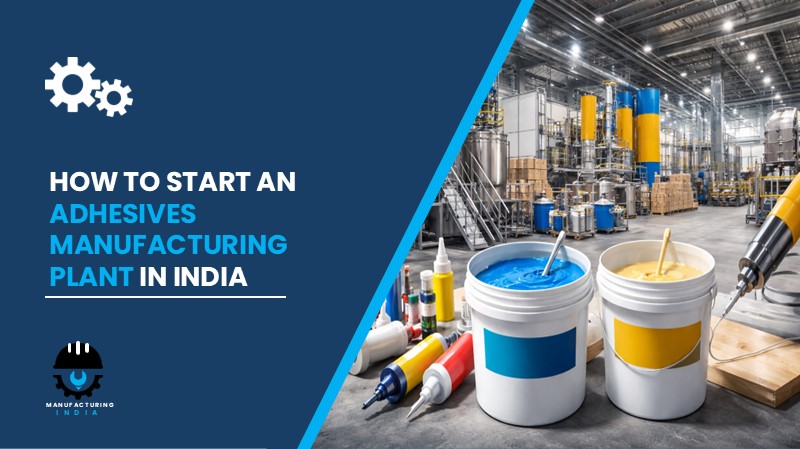
Setting up an adhesives manufacturing plant in India presents a compelling investment case, driven by sustained demand from the construction, automotive, packaging, and consumer goods sectors. As rapid urbanization and large-scale infrastructure development expand across the country, the need for high-performance bonding materials intensifies at every stage of industrial production. From water-based and solvent-based formulations to hot-melt and reactive types, adhesives have become indispensable inputs in woodworking, electronics assembly, and consumer product manufacturing—making domestic production strategically vital for a self-sufficient industrial economy.
India’s expanding manufacturing ecosystem, supported by the Make in India initiative and growing industrial infrastructure across states such as Gujarat, Maharashtra, and Uttar Pradesh, offers investors a cost-competitive environment to establish adhesives production at scale. The country’s diverse base of end-use industries—spanning automotive OEMs, FMCG packaging companies, and residential construction developers—creates a sustained demand structure that reduces revenue risk for new entrants. With rising disposable incomes, expanding organized retail, and increasing e-commerce activity deepening consumption, India is a strategically sound location for this investment.
Setting up an adhesives manufacturing plant in India is supported by strong policy tailwinds, cost-competitive land and labour, and diversified demand from construction, automotive, and packaging sectors. With gross profit margins of 30–40% and net margins of 15–22%, the investment presents compelling profitability and a viable break-even trajectory across multiple plant capacities.
What are Adhesives?
Adhesives are substances used to bond materials together through chemical, mechanical, or physical action. They can be water-based, solvent-based, hot-melt, or reactive types depending on the intended application. Adhesives provide structural strength, durability, and resistance to temperature, moisture, and chemicals, making them indispensable in modern manufacturing processes. Specialty formulations such as epoxy, polyurethane, and acrylic cater to high-performance applications, while general-purpose variants serve everyday household and industrial needs. These products are available in liquid, paste, film, or powder forms and are compatible with automated, semi-automated, and manual bonding processes.
The adhesives manufacturing process involves raw material weighing and batching, mixing and homogenization, reactive processing where required, quality inspection, and packaging. This versatile sequence enables manufacturers to produce a broad portfolio of formulations from a single facility. End-use industries served include construction, automotive, woodworking, packaging, electronics, and consumer goods—spanning applications such as bonding wood, metal, plastic, glass, paper, textiles, and composite materials across industrial, commercial, and household settings.
Cost of Setting Up an Adhesives Manufacturing Plant in India
The total investment required to establish an adhesives manufacturing plant in India depends on several factors, including plant capacity, technology selection, site location, level of automation, and regulatory compliance requirements.
1. Capital Expenditure (CapEx)
Land and site development forms a substantial part of the total investment, encompassing charges for land registration, boundary development, and related site preparation activities. Investors may explore industrial estate locations or Special Economic Zones (SEZs) in Gujarat and Maharashtra for lower land costs and ready-built infrastructure. Civil works cover the production shed, raw material and finished goods warehouses, quality control laboratory, and administrative block, all designed in line with safety regulations and future expansion requirements.
Machinery and equipment represent the largest component of capital expenditure in an adhesives plant. Key machinery required includes:
- Mixing vessels
- Homogenizers
- Reactors (for reactive adhesives)
- Sieving and screening units
- Packaging and sealing equipment
- Quality control instruments
Other capital costs include effluent treatment plant (ETP) installation, pre-operative expenses, commissioning charges, and applicable import duties on specialised equipment.
Request a Sample Report for In-Depth Market Insights: https://www.imarcgroup.com/adhesives-manufacturing-plant-project-report/requestsample
2. Operational Expenditure (OpEx)
Raw material cost is the dominant operational expense, accounting for 60–70% of total OpEx. The primary inputs—polymer emulsions, tackifiers, and solvents—must be sourced from reliable suppliers, and long-term supply contracts are advisable to mitigate price volatility and ensure production continuity. Utility costs, covering electricity, water, and steam, constitute 10–15% of total OpEx. Remaining operational costs include transportation, packaging, salaries and wages, maintenance, depreciation, and taxes. By the fifth year, total OpEx is projected to increase substantially due to inflation, rising raw material costs, supply chain dynamics, and growing end-use demand across sectors.
3. Plant Capacity
The proposed facility is designed with an annual production capacity of 5,000 to 20,000 tons, enabling economies of scale while maintaining operational flexibility. This range can be customized based on investor requirements and target market scope. Profitability improves progressively with higher capacity utilization, making scale-up planning a key consideration from the outset of the project.
4. Profit Margins and Financial Projections
The adhesives plant demonstrates strong profitability potential under normal operating conditions. Gross profit margins typically range between 30–40%, supported by stable multi-sector demand and value-added specialty formulations. Net profit margins stand at 15–22%, reflecting moderate raw material intensity offset by premiumization opportunities across specialty product lines. A comprehensive financial projection covering NPV, IRR, payback period, and sensitivity analysis is available in the detailed feasibility report, providing investors a full picture of long-term financial viability.
Why Set Up an Adhesives Plant in India?
Growing Industrial and Construction Demand. India’s rapid urbanization and large-scale infrastructure projects are generating consistent demand for adhesives across residential, commercial, and industrial construction segments. Bonding solutions for wood, concrete, and composite panels are increasingly preferred over mechanical fasteners for their speed, structural reliability, and weight-reduction advantages.
Expanding Automotive Manufacturing. The automotive sector in India uses adhesives for assembling interior components, glazing, and lightweight material bonding to improve vehicle efficiency. As domestic vehicle production scales up, demand for both structural and specialty adhesives is expected to grow in parallel.
E-Commerce and Packaging Growth. Rising e-commerce activity and organized retail expansion are driving steady consumption of packaging adhesives used for secure sealing of cartons, flexible packaging, and labels—offering high-volume demand that supports consistent plant utilization.
Electronics and Consumer Goods Assembly. High-performance adhesives are essential for assembling devices, circuit boards, and household consumer products, ensuring long-term reliability and durability. The growth of domestic electronics manufacturing is creating high-margin specialty segments within the adhesives market.
Active Industry Investment. In October 2025, Henkel and Dow collaborated to target carbon emission reductions across their joint product portfolio, scaling sustainable technologies and low-emission production processes. In May 2025, Henkel and Nordmeccanica partnered to develop sustainable solutions for the flexible packaging sector by integrating eco-friendly adhesive materials and advanced machinery, underscoring the market’s strong growth trajectory.
Policy and Cost-Competitive Advantages. The Make in India initiative provides policy support, infrastructure investment, and streamlined approvals for domestic manufacturers. Cost-competitive land, labour, and supply chain access across Gujarat, Maharashtra, and Uttar Pradesh reduce the overall investment threshold and enhance project returns.
Manufacturing Process Step by Step
The adhesives manufacturing process uses raw material weighing and batching, mixing and homogenization, and reactive processing as the primary production sequence.
- Raw Material Weighing and Batching: Polymer emulsions, tackifiers, and solvents are weighed and prepared in precise proportions according to product formulation specifications.
- Mixing and Homogenization: Batched raw materials are fed into mixing vessels and homogenizers to achieve uniform blending and consistent viscosity.
- Reactive Processing (if required): For reactive adhesive grades such as polyurethane formulations, reactors are used to initiate and control the chemical bonding process.
- Sieving and Screening: The processed mixture passes through sieving and screening units to remove impurities and ensure particle size consistency.
- Quality Inspection: Each batch undergoes testing for viscosity, bonding strength, chemical resistance, and stability using quality control instruments.
- Packaging and Dispatch: Finished adhesive products are filled into appropriate containers using packaging and sealing equipment and dispatched to end-use industries including construction, automotive, packaging, electronics, and consumer goods.
Key Applications
Adhesives serve a broad range of industries through formulation-specific bonding solutions across industrial, commercial, and household settings:
- Construction Industry: Durable bonding for wood, concrete, and composite panels in residential and commercial construction.
- Automotive Sector: Assembling interior components, glazing, and lightweight material bonding to improve vehicle efficiency.
- Packaging Industry: Secure sealing of cartons, flexible packaging, and labels in industrial and consumer packaging operations.
- Electronics and Consumer Goods: Assembly of devices, circuit boards, and household products ensuring long-term reliability and durability.
- Woodworking: Bonding wood substrates in furniture, cabinetry, and decorative panel applications.
Leading Manufacturers
The global adhesives industry is served by multinational companies with extensive production capacities and diverse application portfolios, catering to end-use sectors such as construction, automotive, packaging, electronics, and consumer goods. Key players include:
- Henkel
- 3M
- Arkema
- H.B. Fuller
- Sika
Timeline to Start the Plant
- Feasibility study and project report preparation
- Land acquisition and site development
- Regulatory approvals and environmental clearances
- Factory licence and fire safety compliance
- Machinery procurement and installation
- Raw material supplier agreements and supply chain setup
- Trial production and quality testing
- Commercial production launch
Licences and Regulatory Requirements
Starting an adhesives manufacturing unit in India requires several approvals:
- Business registration (Proprietorship, LLP, or Pvt Ltd)
- Factory Licence under the Factories Act
- Environmental Clearance from State Pollution Control Board
- GST Registration
- Fire Safety NOC
- Hazardous/Chemical compliance (applicable given the use of solvents in production)
- Effluent Treatment Plant (ETP) operational clearance
- Occupational Health and Safety compliance
Key Challenges to Consider
High Capital Requirements. Establishing an adhesives manufacturing plant involves significant upfront investment across land acquisition, civil works, machinery, and utilities. Investors must plan funding structures carefully to maintain adequate liquidity through the plant ramp-up phase.
Raw Material Price Volatility. The primary inputs—polymer emulsions, tackifiers, and solvents—are subject to global commodity price fluctuations, which can compress margins if not mitigated through long-term supplier contracts or strategic inventory management.
Regulatory Compliance. Adhesives production, particularly solvent-based manufacturing, requires strict adherence to environmental and chemical safety regulations, including effluent treatment requirements and hazardous substance handling protocols.
Technology and Innovation Pressure. The shift toward environmentally friendly and water-based formulations is accelerating globally. Manufacturers that do not invest in sustainable product development risk losing market positioning to eco-compliant competitors.
Competition from Global Players. The market is served by established multinationals including Henkel, 3M, Arkema, H.B. Fuller, and Sika. New entrants must differentiate through formulation specialization, competitive pricing, or regional supply chain advantages.
Skilled Manpower. Operating mixing vessels, homogenizers, and reactors requires technically trained personnel. Attracting and retaining a skilled workforce in chemical manufacturing remains a persistent challenge across Indian industrial clusters.
Frequently Asked Questions
Q1. How much does it cost to set up an adhesives manufacturing plant in India?
The total setup cost of an adhesives manufacturing plant in India depends on several key variables, including plant capacity, technology choice, site location, automation level, and regulatory compliance requirements. Capital expenditure (CapEx) covers four primary heads: land and site development, civil works and construction, machinery and equipment, and other capital costs such as effluent treatment plant (ETP) installation, pre-operative expenses, and commissioning charges. Machinery costs represent the largest portion of CapEx. On the operating cost side, raw materials — primarily polymer emulsions, tackifiers, and solvents — account for 60–70% of total OpEx, while utilities (electricity, water, and steam) account for 10–15%. For a detailed, capacity-specific cost breakdown, refer to the full feasibility report.
Q2. Is adhesives manufacturing profitable in India in 2026?
Yes, adhesives manufacturing is a financially viable and profitable venture in India. The project demonstrates healthy profitability potential under normal operating conditions, with gross profit margins typically ranging between 30–40% and net profit margins of 15–22%. These returns are supported by stable, diversified demand from the construction, automotive, packaging, electronics, and consumer goods sectors. The India adhesives market was valued at USD 2.6 Billion in 2025 and is projected to reach USD 4.5 Billion by 2034, growing at a CAGR of 6.2% from 2026 to 2034 — confirming a long runway of demand-driven growth for domestic producers.
Q3. What machinery is required for an adhesives plant in India?
Setting up an adhesives plant in India requires a set of high-quality, corrosion-resistant machinery tailored for adhesives production. The essential equipment includes: mixing vessels for blending raw materials; homogenizers to achieve uniform consistency and viscosity; reactors (for reactive adhesives) to manage chemical bonding processes for grades such as polyurethane; sieving and screening units to remove impurities and control particle size; packaging and sealing equipment for filling and closing finished product containers; and quality control instruments for batch testing across viscosity, bonding strength, chemical resistance, and stability parameters. The scale of production and level of automation determine the total machinery investment required.
Q4. What licences and approvals are required to start an adhesives plant in India?
Starting an adhesives plant in India requires obtaining several statutory approvals and clearances: Business Registration (as a Proprietorship, LLP, or Private Limited Company); Factory Licence under the Factories Act; Environmental Clearance from the State Pollution Control Board; GST Registration; Fire Safety NOC; Hazardous/Chemical Compliance certifications, given the use of solvents in production; Effluent Treatment Plant (ETP) Operational Clearance; and Occupational Health and Safety Compliance. IMARC Group’s regulatory approvals and licensing services can assist in navigating and securing all required permits efficiently.
Q5. What raw materials are needed for adhesives manufacturing?
The primary raw materials required for adhesives manufacturing are polymer emulsions, tackifiers, and solvents. Polymer emulsions are the most significant input, accounting for approximately 60–70% of total operating expenses. Tackifiers improve adhesion strength and bond performance across different substrates, while solvents are used to adjust viscosity and facilitate application. Reliable procurement from established suppliers is critical to maintaining consistent production quality. Long-term supply contracts are recommended to stabilize raw material pricing and ensure uninterrupted supply, particularly given the exposure of polymer emulsions and solvents to global commodity price volatility.
Q6. What are the environmental compliance requirements for an adhesives plant in India?
An adhesives plant in India — especially one producing solvent-based formulations — is subject to stringent environmental regulations. Key compliance requirements include obtaining Environmental Clearance from the State Pollution Control Board, installing and operating a fully functional Effluent Treatment Plant (ETP) to treat process wastewater before discharge, and implementing Hazardous/Chemical compliance protocols for the safe handling, storage, and disposal of solvents and reactive chemicals. Advanced monitoring systems should be installed to detect leaks or process deviations. Emission standards and solid waste disposal norms under the Environment Protection Act must also be adhered to throughout the plant’s operational lifecycle.
Q7. What is the best location to set up an adhesives plant in India?
The ideal location to set up an adhesives plant in India should offer easy access to key raw materials such as polymer emulsions, tackifiers, and solvents, as well as proximity to target end-use markets to minimise distribution costs. The site must have robust infrastructure, including reliable transportation networks, utilities (electricity, water, and steam), and waste management systems. Compliance with local zoning laws and environmental regulations must also be ensured. Industrial estates and Special Economic Zones (SEZs) in states such as Gujarat, Maharashtra, and Uttar Pradesh are frequently considered due to their established chemical manufacturing ecosystems, skilled labour availability, and connectivity to major demand centres.
Q8. What is the break-even period for this type of plant in India?
The break-even period for an adhesives manufacturing plant in India depends on plant capacity, capital investment level, operating cost structure, capacity utilization rate, and prevailing market prices. The detailed feasibility report developed by IMARC Group includes a comprehensive financial analysis covering the payback period, Net Present Value (NPV), Internal Rate of Return (IRR), profit and loss projections, and sensitivity analysis — all developed based on realistic assumptions related to capital investment, operating costs, production capacity utilization, pricing trends, and demand outlook. Plants with higher capacity utilization and stable raw material procurement tend to achieve break-even faster. Investors are advised to commission a detailed project report for a capacity-specific break-even calculation.
Q9. What government incentives are available for manufacturers in India?
Manufacturers setting up an adhesives manufacturing plant in India can potentially benefit from several government schemes and policy initiatives. The Make in India initiative provides a broad policy framework supporting domestic manufacturing through streamlined regulatory approvals, infrastructure investment, and investor facilitation. Industrial estates and Special Economic Zones (SEZs) offer incentives such as reduced land costs, tax benefits, and ready infrastructure. State-level investment promotion policies in manufacturing-focused states may offer capital subsidies, power tariff concessions, and stamp duty exemptions. Investors should consult the relevant state industrial development corporation and central government ministries for the latest applicable incentives specific to chemical and specialty material manufacturing.
Key Takeaways for Investors
The adhesives manufacturing plant in India represents a robust investment opportunity, underpinned by multi-sector demand from construction, automotive, packaging, electronics, and consumer goods industries. Financial viability is strong across the 5,000 to 20,000 ton annual capacity range, with gross margins of 30–40% and net margins of 15–22% offering compelling returns at multiple investment scales. According to IMARC Group, the India adhesives market was valued at USD 2.6 Billion in 2025 and is projected to reach USD 4.5 Billion by 2034, exhibiting a CAGR of 6.2% from 2026 to 2034. This sustained growth trajectory, fuelled by urbanization, infrastructure investment, and expanding specialty applications in electronics and consumer goods, ensures long-term demand sustainability for domestic manufacturers.
About the Author