Setting up an API manufacturing plant in India presents a compelling investment case driven by the country’s critical role in global pharmaceutical supply chains. APIs are the bioactive foundation of every formulation — from tablets and capsules to injectables, syrups, and suspensions — making their uninterrupted production essential to healthcare systems worldwide. India’s pharmaceutical sector is a key beneficiary, with demand accelerating across generic drug manufacturing, branded pharmaceutical formulations, hospital medicines, and export-oriented pharmaceutical supplies.
India’s structural advantages further strengthen the investment thesis for this type of plant. The country’s robust chemical manufacturing ecosystem, skilled technical manpower, and progressive government policies — including the Make in India initiative and incentives for domestic drug manufacturing — create a highly conducive production environment. Key manufacturing states such as Rajasthan, Gujarat, and Maharashtra offer established industrial infrastructure, with emerging clusters in RIICO industrial zones supporting new facility development. India’s pharmaceutical market is expected to grow 7–9% in FY26, according to IBEF, fuelled by domestic demand, new product innovation, and expansion into European markets.
India’s API sector sits at the intersection of global demand growth, policy-driven localization, and cost-competitive production — making it one of the most financially viable pharmaceutical investments available today. With gross margins of 50–65% and net margins of 25–40%, such a facility offers a compelling break-even profile backed by long-term supply contracts and sustained export demand.
What is API?
Active Pharmaceutical Ingredients (APIs) are bioactive molecules that form the active constituent of any pharmaceutical formulation, producing the desired therapeutic effect upon administration. APIs are prepared under highly stringent regulatory and quality guidelines and must comply with specific attributes pertaining to quality, strength, stability, and safety as per pharmacopoeial standards such as USP, EP, and IP.
The API manufacturing process is a multi-step operation encompassing chemical synthesis, fermentation, purification, and drying. APIs represent the active principle of finished pharmaceutical products such as tablets, capsules, injectables, suspensions, and syrups. End-use industries served include pharmaceutical formulations, biotechnology, and healthcare, with applications spanning generic drug manufacturing, branded formulations, hospital medicines, and export-oriented pharmaceutical supplies.
Cost of Setting Up an API Manufacturing Plant in India
The cost of establishing an API manufacturing plant depends on capacity, technology, location, automation level, and regulatory compliance. A detailed project economics framework covering CapEx, OpEx, and profitability analysis is essential for any investor evaluating this sector.
1. Capital Expenditure (CapEx)
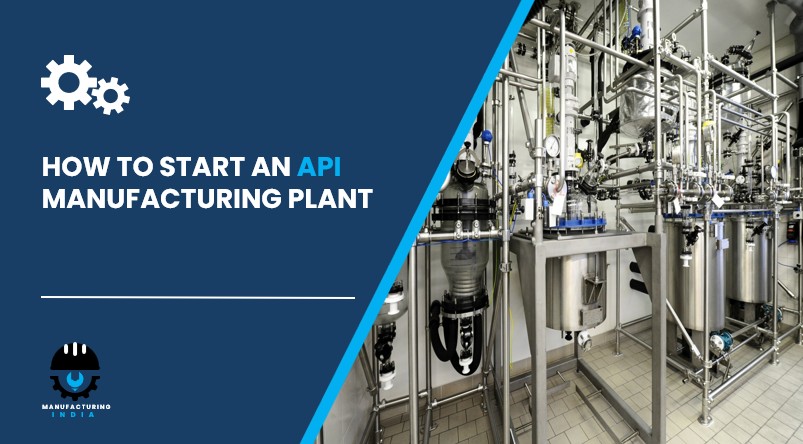
The total capital investment encompasses several major cost heads. Land and site development — covering land registration, boundary development, and infrastructure preparation — forms a substantial portion of the overall outlay. Investors may consider Special Economic Zones (SEZs) or established industrial estates such as RIICO areas to benefit from pre-developed utilities and regulatory streamlining. Civil works and construction cover the production shed, quality control laboratory, raw material storage, finished goods warehouse, and administrative block, all required to meet Good Manufacturing Practice (GMP) standards. Machinery and equipment costs account for the largest share of capital expenditure. Key machinery required includes:
- Reactors and fermenters
- Filtration and separation systems
- Chromatography units
- Crystallizers
- Dryers
- Milling equipment
- Quality control laboratories
- Containment filling lines
Other capital costs include effluent treatment plant (ETP) installation, pre-operative expenses, commissioning charges, and applicable import duties on specialized pharmaceutical equipment.
Request a Sample Report for In-Depth Market Insights: https://www.imarcgroup.com/api-manufacturing-plant-project-report/requestsample
2. Operational Expenditure (OpEx)
Raw material consumption is the primary operating cost driver. Key raw materials — including key organic intermediates, solvents, and catalysts — account for approximately 40–50% of total OpEx, making long-term supplier contracts essential to mitigate price volatility. Utility costs for electricity, water, and steam operations represent 25–35% of total OpEx. Additional costs include transportation, packaging, salaries, maintenance, depreciation, and taxes. By the fifth year, total operational costs are expected to increase substantially due to inflation, market fluctuations, and rising material prices.
3. Plant Capacity
The proposed API manufacturing facility is designed with an annual production capacity of 200–500 TPA, enabling economies of scale while maintaining operational flexibility. Capacity is customizable based on investor requirements, and profitability improves significantly with higher utilisation as fixed costs are absorbed more efficiently.
4. Profit Margins and Financial Projections
The project demonstrates healthy profitability potential. Gross profit margins typically range between 50–65%, supported by stable pharmaceutical demand. Net profit margins range between 25–40%, reflecting the high-value nature of pharmaceutical-grade production. A comprehensive financial analysis covering NPV, IRR, payback period, and sensitivity analysis is integral to the full project report.
Why Set Up an API Manufacturing Plant in India?
Strategic Pharmaceutical Backbone. APIs are the foundation of all pharmaceutical products, making them indispensable to global healthcare systems and drug security initiatives. Every tablet, capsule, injectable, and syrup depends on a consistently available API supply, creating a demand base structurally protected from cyclical downturns.
Alignment with Global Healthcare Trends. Aging populations, rising chronic disease burden, and expanding access to medicines continue to drive long-term API demand worldwide. The global API market was valued at USD 256.4 Billion in 2025 and is projected to reach USD 376.2 Billion by 2034, representing a CAGR of 4.2% from 2026 to 2034, according to IMARC Group.
Policy and Regulatory Tailwinds. Government incentives for domestic drug manufacturing and reduced import dependency support sustained investment in production. India’s Make in India initiative and pharmaceutical policy framework create a favourable environment for establishing an API plant with long-term operational security.
Cost-Competitive Manufacturing. India offers significant cost advantages through land availability, a large pool of skilled pharmaceutical and chemical engineers, and a well-developed domestic chemical supply chain, collectively lowering the CapEx and OpEx profile compared to Western counterparts.
Active Industry Investment. In January 2025, Macsen Labs Group commenced construction of a new API manufacturing facility in the RIICO Industrial Area, Gudli, Udaipur, Rajasthan — covering 25,000 square metres, five times the size of its existing Macsen Drugs plant, and holding USFDA, TGA-GMP, and WHO-GMP certifications. In January 2026, HRV Pharma announced a multi-year strategic partnership with Haleos Labs (formerly SMS LifeSciences) to develop and manufacture orphan and niche APIs for rare diseases and specialised therapies.
Manufacturing Process — Step by Step
The API manufacturing process uses chemical synthesis, fermentation, purification, and drying as its primary production method. This multi-step operation involves several unit operations, material handling, and quality checks:
- Raw Material Preparation: Key organic intermediates, solvents, and catalysts are sourced, quality-tested, and staged for production.
- Chemical Synthesis / Fermentation: Reactors and fermenters facilitate the core chemical transformation or biotechnological fermentation reactions.
- Filtration and Separation: Filtration and separation systems remove by-products and isolate the active compound.
- Chromatography: Chromatography units purify the API to pharmaceutical-grade specification.
- Crystallization: Crystallizers convert the purified compound into a stable crystalline form.
- Drying: Dryers remove residual moisture to achieve required stability and shelf life.
- Milling: Milling equipment reduces particle size to meet pharmacopoeial specifications.
- Quality Control and Testing: Quality control laboratories conduct analytical testing for purity, potency, and stability.
- Containment Filling and Dispatch: Containment filling lines package the finished API for supply to pharmaceutical formulation companies producing tablets, capsules, injectables, and syrups.
Key Applications
APIs serve a wide range of end-use industries within the pharmaceutical and healthcare ecosystem:
- Generic Drug Manufacturing: APIs are the core input for affordable generic medicines across therapeutic categories.
- Branded Pharmaceutical Formulations: Innovator pharmaceutical companies rely on high-purity APIs for proprietary drug formulations.
- Hospital and Injectable Medicines: Critical care segments require injectable-grade APIs with the highest purity and sterility standards.
- Export-Oriented Pharmaceutical Supplies: Indian manufacturers supply regulated global markets, benefitting from cost-competitiveness and GMP compliance.
- Biotechnology: Biotech firms utilise APIs derived from fermentation and biotechnological processes for advanced therapy development.
Leading Manufacturers
The global API industry is served by several multinational companies with extensive production capacities and diverse pharmaceutical application portfolios. Key players include:
- Teva Pharmaceutical Industries
- Aurobindo Pharma
- Sun Pharmaceutical Industries
- Dr. Reddy’s Laboratories
- Cambrex Corporation
Timeline to Start the Plant
- Feasibility study and project report preparation
- Land acquisition and site development
- Regulatory approvals and environmental clearances
- Factory licence and fire safety compliance
- Machinery procurement and installation
- Raw material supplier agreements and supply chain setup
- Trial production and quality testing
- Commercial production launch
Licences and Regulatory Requirements
Starting an API manufacturing unit in India requires several approvals:
- Business registration (Proprietorship, LLP, or Pvt Ltd)
- Factory Licence under the Factories Act
- Environmental Clearance from State Pollution Control Board
- GST Registration
- Fire Safety NOC
- Hazardous and chemical compliance under applicable regulations
- Effluent Treatment Plant (ETP) operational clearance
- Occupational Health and Safety compliance
Key Challenges to Consider
High Capital Requirements. Establishing an API manufacturing plant demands significant upfront investment in GMP-compliant infrastructure, specialized equipment such as reactors, chromatography units, and containment filling lines, plus comprehensive quality assurance systems.
Raw Material Price Volatility. Key organic intermediates, solvents, and catalysts — which account for 40–50% of OpEx — are subject to global price fluctuations and supply chain disruptions that can compress margins.
Regulatory Compliance. The API manufacturing process operates under some of the most stringent global regulations. Meeting USP, EP, and IP standards alongside USFDA, TGA-GMP, and WHO-GMP audit requirements demands continuous investment in quality systems and documentation.
Competition. The global API market features established players such as Teva Pharmaceutical Industries, Aurobindo Pharma, Sun Pharmaceutical Industries, Dr. Reddy’s Laboratories, and Cambrex Corporation. New entrants must differentiate through niche APIs, cost efficiency, or contract manufacturing partnerships.
Skilled Manpower. API manufacturing requires a trained workforce across chemical engineering, analytical chemistry, quality assurance, and regulatory affairs, making talent acquisition a key operational challenge.
Frequently Asked Questions
- How much does it cost to set up an API manufacturing plant in India?
- Is API manufacturing profitable in India in 2026?
- What machinery is required for an API plant in India?
- What licences and approvals are required to start an API plant in India?
- What raw materials are needed for API manufacturing?
- What are the environmental compliance requirements for an API plant in India?
- What is the best location to set up an API plant in India?
- What is the break-even period for this type of plant in India?
- What government incentives are available for manufacturers in India?
Key Takeaways for Investors
Establishing an API manufacturing plant in India offers a strategically sound investment anchored in robust demand from pharmaceutical formulations, generic drug manufacturing, biotechnology, and export-oriented pharmaceutical supplies. The investment demonstrates strong financial viability across 200–500 TPA capacities, with gross margins of 50–65% and net margins of 25–40% achievable under normal operating conditions. The global API market, valued at USD 256.4 Billion in 2025, is projected to reach USD 376.2 Billion by 2034 at a CAGR of 4.2%, while India’s pharmaceutical market is set to grow 7–9% in FY26. Long-term demand sustainability is underpinned by aging global populations, expanding generic medicine access, and rising chronic disease burden worldwide.
About the Author