Setting up an ashwagandha powder manufacturing plant in India presents a compelling investment case, driven by surging demand from the nutraceuticals, pharmaceuticals, cosmetics, food and beverages, and wellness and fitness industries. As consumer awareness around adaptogenic herbs rises globally, ashwagandha has become a critical ingredient in stress relief, energy enhancement, and immunity support products — categories that are expanding rapidly in domestic and international markets alike.
India holds a natural advantage in this sector, combining deep-rooted Ayurvedic traditions, strong Withania somnifera cultivation, and a growing manufacturing ecosystem backed by the Make in India initiative. Notified industrial estates and SEZ-eligible zones across states such as Uttar Pradesh, Maharashtra, and Gujarat offer cost-competitive infrastructure and attractive policy incentives for new entrants. With the Asia-Pacific region commanding a 45.2% share of the global ashwagandha powder market, domestic manufacturers are ideally positioned to serve both local demand and international export clients.
India’s ashwagandha powder manufacturing sector combines government policy support, cost-competitive operations, and robust demand from nutraceutical and pharmaceutical sectors. With gross profit margins of 40–55% and plant capacity scalable to 100 metric tons annually, this is a commercially viable opportunity anchored by long-term demand sustainability.
What is Ashwagandha Powder?
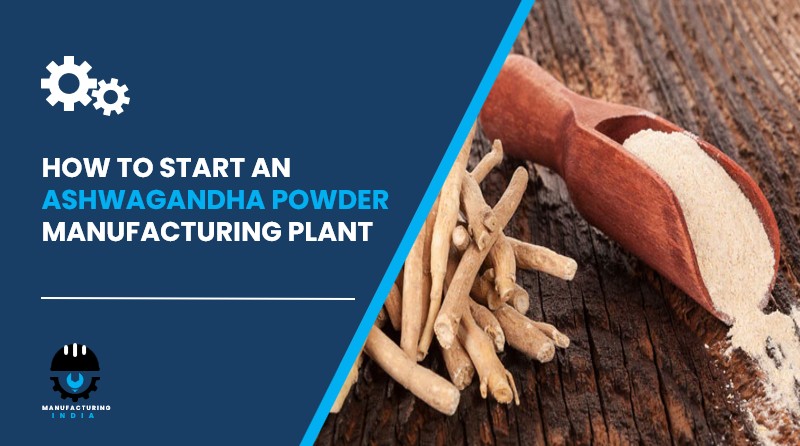
Ashwagandha powder is derived from the root of the Withania somnifera plant, commonly known as ashwagandha or Indian ginseng. This adaptogenic herb is widely recognized in Ayurvedic medicine for its ability to enhance mental health, reduce stress, and increase overall energy levels. The product is made by drying the root of the plant and grinding it into a fine powder. It has a slightly bitter taste and is often mixed with liquids such as water, milk, or fruit juices for consumption.
The powder is rich in alkaloids, withanolides, and steroidal lactones, which contribute to its stress-relieving, anti-inflammatory, and antioxidant properties. The primary ashwagandha powder manufacturing process involves harvesting, drying, grinding, packaging, and quality control. End-use industries served include nutraceuticals, pharmaceuticals, cosmetics, food and beverages, and wellness and fitness, with applications spanning stress and anxiety relief, energy boosting supplements, sleep aid products, immunity boosters, and skin care products.
Cost of Setting Up an Ashwagandha Powder Manufacturing Plant in India
The overall investment required for an ashwagandha powder manufacturing plant in India depends on several variables, including production capacity, technology selection, plant location, degree of automation, and adherence to regulatory compliance frameworks.
1. Capital Expenditure (CapEx)
Land and site development costs form a substantial portion of total capital investment. Investors may consider establishing the unit within a Special Economic Zone (SEZ) or a notified industrial estate to benefit from concessional land rates, tax incentives, and shared infrastructure. Civil works and construction costs cover the production shed, quality control laboratory, raw material and finished goods storage warehouses, and the administrative block.
Machinery and equipment represent the largest share of capital expenditure for the ashwagandha powder manufacturing plant. Key machinery required includes:
- Cold-press machines
- Grinders
- Drying ovens
- Packaging machines
- Filtration systems
Other capital costs include effluent treatment plant (ETP) installation, pre-operative expenses, commissioning charges, and import duties applicable on internationally sourced machinery.
Request a Sample Report for In-Depth Market Insights: https://www.imarcgroup.com/ashwagandha-powder-manufacturing-plant-project-report/requestsample
2. Operational Expenditure (OpEx)
The operating cost structure of an ashwagandha powder manufacturing plant is primarily driven by raw material consumption. Dried ashwagandha roots, along with solvents such as ethanol or water used during the extraction process, account for approximately 60–70% of total operating expenses. Securing long-term supply agreements with agricultural suppliers is strongly recommended to mitigate price volatility and ensure consistent production quality. Utility costs — covering electricity, water, and steam — represent 15–20% of total OpEx. Other ongoing operating costs include transportation, packaging materials, salaries and wages, maintenance, depreciation, and taxes. By the fifth year of operations, total operational costs are projected to increase due to inflation, market fluctuations, and potential rises in key input material costs.
3. Plant Capacity
The proposed ashwagandha powder manufacturing plant is designed with an annual production capacity of 100 metric tons, enabling economies of scale while maintaining operational flexibility. Capacity can be customized per investor requirements based on target markets, capital availability, and demand projections. Profitability improves meaningfully at higher capacity utilization rates, making early-stage ramp-up planning a critical component of the investment strategy.
4. Profit Margins and Financial Projections
The project demonstrates healthy profitability potential under normal operating conditions. Gross profit margins typically range between 40–55%, supported by stable demand and value-added applications. Net profit margins are projected in the range of 20–30%. Financial projections covering NPV, IRR, payback period, gross margin, and net margin are developed based on realistic assumptions related to capital investment, operating costs, production capacity utilization, pricing trends, and the overall demand outlook.
Why Set Up an Ashwagandha Powder Plant in India?
Health and Wellness Demand Surge. The growing focus on holistic health and natural remedies has propelled demand for ashwagandha, particularly among consumers seeking plant-based alternatives for mental health and stress management. This trend is directly expanding the addressable market for domestic manufacturers with access to established Ayurvedic raw material supply chains.
Adaptogenic Properties Driving Nutraceutical Growth. Ashwagandha’s adaptogenic qualities — which help the body resist physical, chemical, and biological stress — align with global trends toward mental well-being and stress reduction. This has expanded its demand across nutraceutical and pharmaceutical sectors, driving consistent product innovation and ingredient sourcing requirements.
Rising Clinical Validation. Clinical studies on ashwagandha rose by 111.58% from 95 studies in 2019 to 201 in 2024, reflecting growing recognition of its therapeutic benefits. This surge in research drives consumer trust and expands applications in health supplements, nutraceuticals, and pharmaceuticals — reinforcing commercial demand for high-quality ashwagandha powder.
Policy and Regulatory Tailwinds. India’s Make in India initiative, combined with Ayush sector promotion policies and agri-processing incentives, creates a supportive regulatory framework for ashwagandha powder producers. Industrial estates in Uttar Pradesh, Maharashtra, and Gujarat provide subsidized infrastructure, reducing overall plant establishment costs.
Cost-Competitive Manufacturing. India offers access to competitive land costs, an affordable skilled labour pool, and a robust domestic cultivation network for Withania somnifera. Proximity to raw material sources reduces input logistics costs and strengthens export competitiveness for Indian manufacturers serving global buyers.
Active Industry Investment and Innovation. In August 2025, Black Girl Vitamins (BGV) introduced Calm Girl, a daily ashwagandha supplement targeting stress reduction, hormone balance, and emotional well-being. In May 2025, AG1 launched AGZ, a sleep-focused supplement featuring ashwagandha as a core adaptogen. These product launches signal sustained brand and investor confidence in the global ashwagandha powder market.
Manufacturing Process — Step by Step
The ashwagandha powder manufacturing process uses harvesting, drying, grinding, packaging, and quality control as the primary production method. Each stage involves specific unit operations, material handling procedures, and quality checks to ensure product consistency and compliance with regulatory standards.
- Harvesting: Withania somnifera roots are collected at optimal maturity to ensure maximum withanolide content and active compound concentration.
- Cleaning and Washing: Harvested roots are thoroughly washed to remove soil, debris, and surface contaminants before further processing.
- Drying: Cleaned roots are subjected to controlled drying using drying ovens to reduce moisture to the level required for stable powder production.
- Grinding: Dried roots are processed using grinders to produce a uniform fine powder of the specified particle size and consistency.
- Extraction: Solvents such as ethanol or water are applied during the extraction process to concentrate active compounds including withanolides and alkaloids.
- Filtration: Filtration systems separate the purified extract from residual plant material to ensure product purity and quality compliance.
- Cold-Press Processing: Cold-press machines are employed where required to preserve the integrity of active alkaloids and steroidal lactones during processing.
- Quality Control: Analytical testing verifies product concentration, purity, and stability against regulatory and customer specifications.
- Packaging: Finished ashwagandha powder is packed using automated packaging machines for dispatch to nutraceutical, pharmaceutical, cosmetic, food and beverage, and wellness end-use industries.
Key Applications
Ashwagandha powder serves a wide range of industries, each leveraging its unique phytochemical properties for distinct commercial applications:
- Nutraceuticals: Widely used in dietary supplements for stress management, energy enhancement, and immune support as a plant-based alternative to pharmaceutical drugs.
- Pharmaceuticals: Incorporated in adaptogenic formulations targeting mental health, cognitive function, focus improvement, and anxiety reduction.
- Cosmetics: Applied in face creams, serums, and mask formulations for anti-aging, antioxidant, and skin health benefits.
- Food and Beverages: Added to smoothies, teas, and health drinks as a natural ingredient for stress relief and energy boosting.
- Wellness and Fitness: Used in fitness supplements for enhanced endurance, muscle strength, and recovery, marketed to athletes and fitness enthusiasts.
Leading Manufacturers
The global ashwagandha powder industry is served by a range of multinational companies with extensive production capacities and diverse application portfolios. Key players in the industry supply end-use sectors including nutraceuticals, pharmaceuticals, cosmetics, food and beverages, and wellness and fitness. Detailed manufacturer profiles, competitive landscape analysis, and market share data are available in the full IMARC Group project report.
Timeline to Start the Plant
- Feasibility study and project report preparation
- Land acquisition and site development
- Regulatory approvals and environmental clearances
- Factory licence and fire safety compliance
- Machinery procurement and installation
- Raw material supplier agreements and supply chain setup
- Trial production and quality testing
- Commercial production launch
Licences and Regulatory Requirements
Starting an ashwagandha powder manufacturing unit in India requires several approvals:
- Business registration (Proprietorship, LLP, or Pvt Ltd)
- Factory Licence under the Factories Act
- Environmental Clearance from State Pollution Control Board
- GST Registration
- Fire Safety NOC
- Hazardous/Chemical compliance for solvents such as ethanol used in the extraction process
- Effluent Treatment Plant (ETP) operational clearance
- Occupational Health and Safety compliance
Key Challenges to Consider
High Capital Requirements. The upfront investment for machinery including cold-press machines, grinders, drying ovens, packaging machines, and filtration systems is substantial, requiring careful financial planning and phased capital deployment strategies.
Raw Material Price Volatility. The cost of dried ashwagandha roots and solvents such as ethanol or water is subject to agricultural seasonality and global market fluctuations. Long-term supplier contracts are essential to protect operating margins and ensure production continuity.
Regulatory Compliance. Manufacturers must simultaneously navigate environmental clearances, effluent treatment obligations, solvent handling norms, Ayurvedic product standards, and food safety regulations — a complex compliance landscape that demands dedicated legal and technical expertise.
Technology and Innovation Pressure. Growing consumer demand for clinically standardized, high-potency formulations requires continuous investment in quality assurance systems, analytical instrumentation, and process refinement to remain competitive.
Competition. The global market is served by multinational players with large production capacities across the nutraceutical, pharmaceutical, cosmetic, and food and beverage sectors. New entrants must differentiate on product quality, supply reliability, and pricing.
Skilled Manpower. Operating specialized equipment such as cold-press machines, filtration systems, and analytical testing instruments requires a trained technical workforce, which may be constrained in certain industrial regions of India.
Frequently Asked Questions
- How much does it cost to set up an ashwagandha powder manufacturing plant in India?
- Is ashwagandha powder manufacturing profitable in India in 2026?
- What machinery is required for an ashwagandha powder plant in India?
- What licences and approvals are required to start an ashwagandha powder plant in India?
- What raw materials are needed for ashwagandha powder manufacturing?
- What are the environmental compliance requirements for an ashwagandha powder plant in India?
- What is the best location to set up an ashwagandha powder plant in India?
- What is the break-even period for this type of plant in India?
- What government incentives are available for manufacturers in India?
Key Takeaways for Investors
An ashwagandha powder manufacturing plant in India offers a well-rounded investment opportunity driven by growing demand across the nutraceuticals, pharmaceuticals, cosmetics, food and beverages, and wellness and fitness sectors. The project demonstrates strong financial viability across scalable plant capacities, with gross profit margins of 40–55% and net profit margins of 20–30% achievable under normal operating conditions. With APAC holding a 45.2% share of the global market and clinical research on ashwagandha rising by 111.58% between 2019 and 2024, the demand fundamentals are firmly established. As consumer preference for natural, adaptogenic, and Ayurvedic products continues to intensify globally, the ashwagandha powder manufacturing sector in India is well-positioned for sustained long-term growth and commercial success.
About the Author