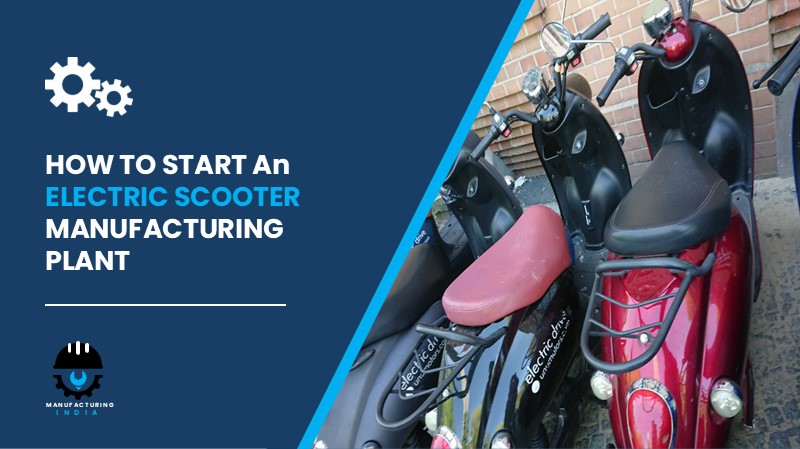
Setting up an electric scooter manufacturing plant in India presents a compelling investment case driven by the country’s accelerating shift toward sustainable urban transportation, government-led electric vehicle incentives, surging demand for last-mile mobility solutions, and the rapid expansion of shared mobility and e-commerce delivery services. India’s two-wheeler market – the world’s largest by volume – is undergoing a structural transformation as consumers, fleet operators, and logistics companies move away from petrol-powered vehicles toward electric alternatives that offer lower operating costs, zero tailpipe emissions, and alignment with smart city mobility goals. The Indian electric scooter market was valued at USD 1.42 billion in 2025 and is projected to reach USD 3.25 billion by 2034, exhibiting a CAGR of 9.6% – making this one of the fastest-growing segments in India’s entire automotive sector.
India’s strategic advantages make it the most compelling location globally for establishing an electric scooter manufacturing plant at this point in the industry’s development cycle. The government’s FAME (Faster Adoption and Manufacturing of Electric Vehicles) scheme, PLI incentives for advanced chemistry cell battery manufacturing and automotive components, and state-level EV policy frameworks in Maharashtra, Tamil Nadu, Gujarat, Rajasthan, and Telangana collectively provide substantial financial and infrastructure support for domestic manufacturers. Combined with India’s large engineering workforce, expanding domestic supply chains for motors, controllers, and chassis components, and a rapidly growing urban consumer base seeking affordable and eco-friendly commuting solutions, the country offers investors in the electric scooter manufacturing space an exceptional combination of demand, policy tailwinds, and cost-competitive production conditions.
An electric scooter manufacturing plant in India is positioned at the intersection of a domestic market growing at 9.6% CAGR toward USD 3.25 billion by 2034, strong government support through FAME subsidies and PLI schemes, and a large urban consumer base actively transitioning to sustainable two-wheeler commuting. With gross profit margins of 20–30% and net margins of 8–15% achievable at scale across a production capacity of 100,000 to 500,000 units per annum, this investment delivers viable and improving returns in one of India’s highest-growth manufacturing categories.
What is an Electric Scooter?
An electric scooter is a two-wheeled vehicle powered by an electric motor, typically designed for short-distance travel in urban areas. It is equipped with a rechargeable battery that powers the motor, allowing users to travel at speeds ranging from 15 to 40 km/h. Electric scooters are increasingly popular for their eco-friendly and convenient transportation, especially in cities where they offer a practical solution to traffic congestion and the need for last-mile connectivity. They are designed with features including portable batteries, app integration, and regenerative braking to enhance user experience and operational efficiency.
The primary production method for this plant type involves six integrated stages: frame design and materials selection, motor selection and integration, battery manufacturing and integration, electrical system assembly, testing, and final assembly. End-use sectors served include the consumer market, shared mobility services, delivery and logistics services, and tourism and recreation. Key product applications span urban commuting, shared micromobility platforms, e-commerce delivery fleets, and leisure and tourism experiences – positioning electric scooters as a multi-sector, high-volume manufactured product with diverse and growing revenue streams.
Cost of Setting Up an Electric Scooter Manufacturing Plant in India
The total investment required to establish an electric scooter manufacturing plant in India depends on plant capacity, technology selection, geographic location, level of automation, and compliance with automotive safety and environmental regulations. Investors must account comprehensively for both one-time capital expenditure and recurring operational costs when preparing a feasibility study or detailed project report (DPR) for this facility.
1. Capital Expenditure (CapEx)
Land and Site Development constitutes a significant foundational cost component. Charges for land registration, boundary wall construction, internal road layout, drainage systems, and site levelling vary based on whether the facility is located within a government-notified automotive or electronics manufacturing zone, a Special Economic Zone (SEZ), or on privately acquired industrial land. Dedicated EV manufacturing clusters and automotive industrial estates in states such as Tamil Nadu, Maharashtra, Gujarat, and Rajasthan typically offer infrastructure-ready plots with access to component supplier ecosystems and logistics networks, reducing pre-development costs and time to production.
Civil Works and Construction encompasses the main assembly hall – which must accommodate high-throughput production lines for frame fabrication, battery integration, and final assembly – along with battery storage and handling areas, motor assembly bays, quality control and testing laboratory, finished goods warehouse, and administrative block. Given that lithium-ion battery storage requires fire suppression infrastructure and special hazard compliance design standards, civil construction costs for electric scooter plants are higher per square metre than for equivalent non-battery manufacturing facilities.
Machinery and Equipment represent the single largest component of capital expenditure. Key machinery required includes:
- Battery manufacturing equipment
- Motor assembly machines
- Frame welding and moulding machines
- Circuit board assembly equipment
- Li-ion battery pack integration and testing systems
- Electrical system assembly and wiring harness equipment
- Quality inspection and testing rigs
- Conveyors and automated material handling equipment
- Packaging equipment
Other Capital Costs include the effluent treatment plant (ETP), battery waste and chemical management systems, pre-operative expenses covering regulatory filings and feasibility study preparation, plant commissioning charges, utility connection fees, and import duties applicable to specialised battery manufacturing or motor assembly equipment sourced internationally.
Request a Sample Report for In-Depth Market Insights: https://www.imarcgroup.com/electric-scooter-manufacturing-plant-project-report/requestsample
2. Operational Expenditure (OpEx)
Raw Material Cost is the dominant driver of operating expenditure, accounting for approximately 75–85% of total OpEx. The primary inputs are Li-ion battery packs, motors, controllers, chassis, and tyres. Li-ion battery packs represent the single largest cost line within raw material expenditure, and their pricing is linked to global lithium, cobalt, and nickel commodity markets, which are subject to significant volatility. Investors are strongly advised to negotiate long-term supply contracts with battery pack manufacturers and component suppliers — prioritising those with domestic or regional sourcing capabilities — to stabilise input costs, reduce import dependency, and benefit from localisation incentives under India’s FAME and PLI frameworks.
Utility Costs — covering electricity for battery assembly and testing equipment, motor integration lines, welding machines, and facility operations — account for approximately 5–10% of total OpEx. Relatively lower utility intensity compared to process-heavy manufacturing plants reflects the assembly-led nature of electric scooter production. Investors in regions with competitive industrial electricity tariffs and strong grid reliability are well-positioned to keep this cost line under control.
Other Operating Costs include outbound transportation to dealer networks, shared mobility operators, and delivery fleet buyers; packaging for finished vehicles and spare parts; employee salaries and wages for assembly line workers, quality technicians, and electrical engineers; equipment maintenance; quality assurance testing for AIS (Automotive Industry Standard) compliance; depreciation on civil and machinery assets; and applicable taxes including GST on vehicle and component sales. By the fifth year of operations, total operational costs are expected to increase substantially due to inflation, market fluctuations, potential rises in the cost of key materials such as Li-ion battery packs, supply chain disruptions, and sustained growth in consumer demand across urban markets.
3. Plant Capacity
The proposed electric scooter manufacturing facility is designed with an annual production capacity ranging between 100,000 and 500,000 units, enabling significant economies of scale while maintaining operational flexibility across different model variants and market segments. This capacity range aligns with the volume requirements of India’s growing urban consumer base, shared mobility fleet operators, and e-commerce logistics companies deploying electric delivery vehicles at scale. Capacity can be customised based on investor requirements, target market coverage, and product portfolio strategy. Profitability improves substantially with higher capacity utilisation, and investors should plan plant infrastructure and production line layout with scalability provisions from the outset to accommodate rapid volume growth as the Indian EV market matures.
4. Profit Margins and Financial Projections
The electric scooter manufacturing plant demonstrates healthy profitability potential under normal operating conditions. Gross profit margins typically range between 20–30%, supported by stable and rapidly growing demand and the value-added, technology-integrated nature of electric scooter products relative to conventional two-wheelers. Net profit margins range between 8–15%, reflecting the raw material intensity of battery pack procurement and the capital requirements of assembly-scale production. A comprehensive financial analysis should include income projections, expenditure forecasts, gross and net margin tracking across Years 1 through 5, net present value (NPV), internal rate of return (IRR), payback period, and a full profit and loss account. Sensitivity analysis covering Li-ion battery price movements and demand volume scenarios is particularly important for investment-grade planning in this sector.
Why Set Up an Electric Scooter Manufacturing Plant in India?
Rapid Domestic Market Growth Backed by Government EV Policy. The Indian electric scooter market, valued at USD 1.42 billion in 2025 and projected to reach USD 3.25 billion by 2034 at a 9.6% CAGR, represents one of the most attractive domestic growth trajectories in India’s entire manufacturing sector. Government incentives including the FAME scheme, PLI for advanced chemistry cells, and state-level EV subsidies are directly driving consumer adoption and manufacturer investment simultaneously — creating a policy-reinforced demand environment that substantially de-risks the commercial viability of new manufacturing entries.
Urbanisation and Smart City Demand for Sustainable Micromobility. Electric scooters offer a viable and cost-effective alternative for short-distance urban commutes in India’s rapidly expanding smart cities, where sustainable and efficient mobility solutions are a stated infrastructure priority. The rising share of transport emissions – accounting for 13.7% of total global greenhouse emissions according to the United Nations Development Programme – is reinforcing consumer, corporate, and government preference for electric over petrol-powered urban vehicles.
Expansion of Shared Mobility and Delivery Fleet Applications. The rise of shared electric scooter services and the incorporation of electric vehicles into delivery and logistics fleets are creating large-volume, recurring commercial demand channels beyond individual consumer purchase. Companies providing urban delivery and shared mobility services are actively deploying electric scooters to reduce carbon emissions, increase operational efficiency, and reduce per-kilometre fuel costs — providing manufacturers with scalable B2B revenue streams alongside consumer retail sales.
Active Global Industry Investment Validating India as a Priority Market. In January 2026, VinFast announced a global expansion strategy targeting five key international markets including India, with plans to introduce battery-swapping e-scooters adapted to local conditions and establish hundreds of retail outlets by 2027. In November 2025, Yamaha Motor Co., Ltd. launched two new electric scooter models for the Indian market — the premium AEROX E sport electric scooter and the EC-06 electric scooter — targeting both premium and broader urban rider segments. These major international OEM commitments to the Indian market signal strong investor and industry confidence in domestic demand growth and validate India as a priority electric scooter manufacturing destination.
Technological Innovation Driving Product Adoption. Advances in battery technology, electric motor efficiency, and smart features such as GPS tracking, remote monitoring, app integration, and regenerative braking are continuously improving the performance and consumer appeal of electric scooters. Manufacturers that invest in modern production technology and smart feature integration are well-positioned to capture the premium urban commuter segment, which is growing alongside India’s expanding middle class and smartphone penetration.
Cost-Competitive Manufacturing and Local Supply Chain Development. India offers competitive land, construction, and labour costs for electric scooter assembly relative to comparable manufacturing locations in Europe or North America. The domestic supply chain for chassis, tyres, controllers, and electrical components is expanding rapidly, reducing import dependency and supporting the localisation compliance thresholds required to qualify for FAME and PLI financial incentives — further improving the economics of domestic production.
Manufacturing Process – Step by Step
The electric scooter manufacturing process uses frame design and materials selection, motor integration, battery manufacturing and integration, electrical system assembly, testing, and final assembly as the primary production method. Below are the main stages involved in the electric scooter manufacturing process flow:
- Raw Material Receipt and Inspection: Li-ion battery packs, motors, controllers, chassis, tyres, and electrical components are received at the facility, inspected against quality specifications, and cleared for production line entry.
- Frame Design and Fabrication: Frame welding and moulding machines process steel or aluminium chassis components into the scooter frame structure, with dimensional accuracy and weld integrity verified through quality inspection checkpoints.
- Motor Selection and Integration: Electric motors are selected based on performance specifications and integrated into the frame assembly, with mounting brackets, shaft alignment, and mechanical connections completed and verified.
- Battery Manufacturing and Integration: Battery manufacturing equipment assembles Li-ion battery packs from individual cells, with cell balancing, thermal management components, and battery management system (BMS) integration completed before packs are fitted into the scooter chassis.
- Electrical System Assembly: Circuit board assembly equipment and wiring harness installation processes connect the motor, battery pack, controller, display unit, lighting systems, regenerative braking circuitry, and app integration hardware into a fully functional electrical system.
- Controller and App Integration: Controllers are programmed and calibrated, and smart features including GPS tracking, remote monitoring, and mobile app connectivity are integrated and tested for functionality and communication reliability.
- Quality Inspection and Testing: Quality inspection and testing rigs subject each assembled unit to functional, safety, and performance testing covering motor output, battery range, braking performance, lighting systems, and electrical system integrity, ensuring compliance with AIS standards and customer specifications.
- Final Assembly and Finishing: Final assembly operations include fitting tyres, handlebars, seats, fairings, and accessories, followed by cosmetic inspection and surface quality sign-off before the unit proceeds to packaging.
- Packaging and Dispatch: Finished electric scooters are packaged using protective materials and dispatched to dealer networks serving the consumer market, shared mobility fleet operators, e-commerce delivery companies, and tourism and recreation rental operators.
Key Applications
Electric scooters manufactured at this type of facility serve a diverse range of consumer, commercial, and mobility service applications across India’s urban and semi-urban markets:
- Consumer Use: Urban commuters, daily riders, and household buyers in cities and towns purchase electric scooters for short-distance travel, replacing petrol two-wheelers in response to fuel cost savings and environmental awareness.
- Shared Mobility Services: Shared electric scooters deployed through mobile app platforms by companies like Lime, Bird, and Spin provide flexible, on-demand transportation for short urban trips, requiring large fleet volumes from manufacturing partners.
- Delivery and Logistics: Companies including Uber Eats, DoorDash, and Postmates are incorporating electric scooters into their delivery fleets to reduce carbon emissions, increase operational efficiency, and lower per-delivery fuel costs.
- Tourism and Recreation: Cities and tourist destinations offer scooter rentals to help visitors explore urban areas, parks, or beachfronts in a sustainable, convenient way — creating a recurring commercial demand segment for manufacturers.
Leading Electric Scooter Manufacturers
The global electric scooter industry is served by a range of manufacturers with growing production capacities and diverse end-use market portfolios. Key players include:
- AllCell Technologies LLC
- BMW Motorrad International
- BOXX Corp.
- Gogoro, Inc.
- Green Energy Motors Corp.
- Greenwit Technologies Inc.
Timeline to Start the Plant
Investors planning to establish an electric scooter manufacturing plant in India should anticipate the following project development phases:
- Feasibility study and project report preparation
- Land acquisition and site development
- Regulatory approvals and environmental clearances
- Factory licence and fire safety compliance
- Machinery procurement and installation
- Raw material supplier agreements and supply chain setup
- Trial production and quality testing
- Commercial production launch
Licences and Regulatory Requirements
Starting an electric scooter manufacturing unit in India requires several approvals:
- Business registration (Proprietorship, LLP, or Private Limited Company)
- Factory Licence under the Factories Act
- Vehicle type approval from the Ministry of Road Transport and Highways (MoRTH) under AIS standards
- Environmental Clearance from the State Pollution Control Board
- GST Registration
- Fire Safety NOC — including battery storage and lithium-ion hazard compliance
- Bureau of Indian Standards (BIS) certification for applicable electrical and battery safety standards
- Effluent Treatment Plant (ETP) operational clearance covering battery chemical waste management
- Occupational Health and Safety compliance for battery handling and assembly line operations
- FAME scheme registration for eligibility to access EV manufacturing subsidies and demand incentives
Key Challenges to Consider
High Capital Requirements. Establishing a commercial-scale electric scooter manufacturing plant — capable of producing 100,000 to 500,000 units annually — requires significant upfront investment in battery manufacturing equipment, motor assembly lines, frame fabrication infrastructure, and quality testing systems. This CapEx intensity may present a financing challenge for investors without access to institutional funding, though FAME and PLI incentives partially offset this burden.
Li-ion Battery Pack Price Volatility. Battery packs — the single largest cost component, driving 75–85% of total OpEx — are priced against global lithium, cobalt, and nickel commodity markets that are subject to significant and ongoing price volatility. Securing long-term supply contracts and investing in domestic battery supply chain localisation are essential strategies to manage this exposure and improve gross margin predictability.
Regulatory and Certification Complexity. Electric scooter manufacturing in India is subject to overlapping regulatory frameworks covering vehicle type approval, electrical safety standards, battery chemistry compliance, and environmental norms. Meeting MoRTH type approval requirements and AIS certification standards demands dedicated compliance resources and testing infrastructure, adding to pre-commercial preparation timelines and costs.
Technology and Innovation Pressure. Advances in battery energy density, motor efficiency, smart connectivity features, and battery-swapping infrastructure — as demonstrated by VinFast’s January 2026 global expansion strategy built around battery-swapping technology — are raising competitive benchmarks at pace. Investors must evaluate technology choices carefully at plant setup to ensure the product remains competitive as performance and feature expectations from urban consumers evolve.
Competition from Established Domestic and Global Manufacturers. The Indian electric scooter market is increasingly competitive, with international players including Yamaha, which launched the AEROX E and EC-06 models in November 2025, entering alongside established domestic brands. New entrants must differentiate through pricing, product innovation, service network strength, or segment-specific focus to build sustainable market share.
Skilled Manpower for EV Assembly. Operating battery integration systems, motor assembly machines, circuit board assembly equipment, and quality testing rigs requires technicians trained in EV electrical engineering, battery management systems, and automotive quality standards. Sourcing and retaining qualified personnel with EV-specific technical skills remains a challenge across many Indian industrial locations, particularly outside established automotive manufacturing clusters.
Frequently Asked Questions
1. How much does it cost to set up an electric scooter manufacturing plant in India?
The total cost depends on plant capacity (100,000–500,000 units per annum), equipment selection, location, and automation level. CapEx covers land, civil construction, and machinery including battery manufacturing equipment, motor assembly machines, frame welding and moulding machines, circuit board assembly systems, and quality testing rigs, along with pre-operative and regulatory costs.
2. Is electric scooter manufacturing profitable in India in 2026?
Yes. With gross profit margins of 20–30% and net margins of 8–15%, supported by a domestic market growing at 9.6% CAGR toward USD 3.25 billion by 2034, government FAME and PLI incentives, and rapidly expanding consumer and commercial demand, the investment presents a strong profitability case at adequate production scale.
3. What machinery is required for an electric scooter manufacturing plant in India?
Key equipment includes battery manufacturing equipment, motor assembly machines, frame welding and moulding machines, circuit board assembly equipment, Li-ion battery pack integration and testing systems, electrical system assembly and wiring harness equipment, quality inspection and testing rigs, conveyors, and packaging equipment.
4. What licences and approvals are required to start an electric scooter manufacturing plant in India?
Required approvals include business registration, Factory Licence, MoRTH vehicle type approval under AIS standards, Environmental Clearance, GST Registration, Fire Safety NOC with battery storage compliance, BIS certification, ETP operational clearance, Occupational Health and Safety compliance, and FAME scheme registration.
5. What raw materials are needed for electric scooter manufacturing?
The primary raw materials are Li-ion battery packs, motors, controllers, chassis, and tyres. Additional components include wiring harnesses, circuit boards, display units, braking systems, lighting components, and fasteners.
6. What are the environmental compliance requirements for an electric scooter manufacturing plant in India?
An operational effluent treatment plant is mandatory for managing battery chemical waste streams, along with Environmental Clearance from the State Pollution Control Board, lithium-ion battery storage and disposal compliance under applicable hazardous waste management rules, and emission norms for manufacturing operations.
7. What is the best location to set up an electric scooter manufacturing plant in India?
States with established automotive and electronics manufacturing infrastructure, strong component supply chains, and active EV policy support — such as Tamil Nadu, Maharashtra, Gujarat, Rajasthan, and Telangana — offer the best combination of raw material access, logistics connectivity, skilled labour availability, and state-level EV manufacturing incentives.
8. What is the break-even period for this type of plant in India?
The break-even period depends on plant scale, production volume, raw material pricing, and market demand growth. A full payback period analysis using NPV and IRR metrics, incorporating sensitivity testing for Li-ion battery price movements, is recommended for investment-grade financial planning.
9. What government incentives are available for electric scooter manufacturers in India?
The FAME scheme provides demand and manufacturing subsidies for electric two-wheelers. PLI incentives cover advanced chemistry cell battery manufacturing and automotive components. State-level EV policies in Tamil Nadu, Maharashtra, Gujarat, Rajasthan, and Telangana offer additional capital subsidies, reduced electricity tariffs, and land cost incentives for qualifying electric vehicle manufacturers.
Key Takeaways for Investors
An electric scooter manufacturing plant in India represents a strategically timed, high-growth investment opportunity anchored by a domestic market expanding at 9.6% CAGR from USD 1.42 billion in 2025 toward USD 3.25 billion by 2034, strong multi-channel demand across consumer, shared mobility, delivery logistics, and tourism segments, and one of the world’s most comprehensive government EV policy and incentive frameworks. Financial viability is supported across a production capacity range of 100,000 to 500,000 units per annum, with gross margins of 20–30% and net margins of 8–15% achievable as the plant scales toward full capacity utilisation. With major global manufacturers including Yamaha and VinFast actively investing in the Indian electric scooter market – the former launching premium models in November 2025 and the latter announcing a targeted India entry plan in January 2026 – the competitive validation of India’s electric scooter market is unambiguous. Ongoing advances in Li-ion battery technology, smart connectivity, and battery-swapping infrastructure will continue to expand consumer adoption and create sustained demand for high-quality, domestically manufactured electric scooters throughout the decade ahead.
About the Author