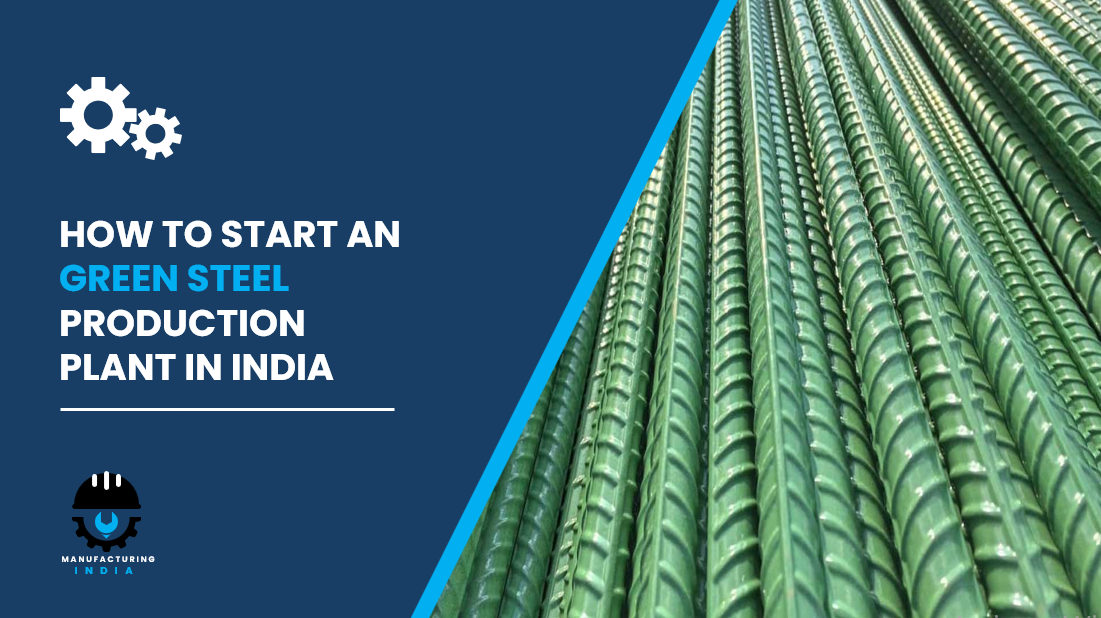
Setting up a green steel production plant in India presents one of the most strategically significant investment opportunities of the decade, as global demand for low-carbon steel accelerates driven by tightening carbon regulations, buyer-led low-carbon procurement in automotive, construction, and appliance sectors, and rapid investment in hydrogen-based direct reduction and renewable-powered electric arc furnace (EAF) technologies. India — with its vast iron ore reserves, growing renewable energy capacity, ambitious net-zero commitments, and major domestic steel industry — is uniquely positioned to become a global hub for green steel production. Leading Indian conglomerates are already committing tens of thousands of crores to scaling green steel capacity, signaling the beginning of a major industrial transformation.
“The global green steel market was valued at USD 60.91 Billion in 2025 and is projected to reach USD 3,256.68 Billion by 2034, exhibiting a remarkable CAGR of 55.6% — making green steel one of the fastest-growing industrial markets in the world and a defining investment opportunity for producers who move early to establish certified low-carbon production capacity.”
What is Green Steel?
Green steel refers to steel produced with substantially lower lifecycle greenhouse gas emissions than conventional blast furnace–basic oxygen furnace (BF-BOF) steel. It is generally achieved by replacing coal and coke as the reducing agent with low-carbon hydrogen in direct reduced iron (H₂-DRI) routes. The product retains the same fundamental metallurgical performance as conventional steel grades, but is differentiated by traceable emissions accounting, verified renewable power sourcing, and low-carbon inputs across ironmaking and steelmaking steps.
The category is increasingly defined by customer specifications, certification schemes, and emerging trade policies that require emissions reporting and, progressively, the internalization of carbon costs. Steel production accounts for nearly 6% of total global CO₂ emissions and about 8% of energy-related emissions when power consumption is included, making the decarbonization of steel one of the highest-impact levers available to heavy industry. As governments implement carbon pricing mechanisms, emissions reporting frameworks, and border adjustment policies, steel producers and downstream buyers are increasingly shifting toward low-carbon alternatives.
Cost of Setting Up a Green Steel Production Plant in India
The green steel production plant cost in India depends on several parameters including production capacity, technology route selected (H₂-DRI vs. renewable-powered EAF), plant location, level of automation, and regulatory compliance. Here is a structured breakdown of all major cost components:
1. Capital Expenditure (CapEx)
The total capital investment in a green steel production plant typically covers the following:
Land and Site Development This includes land acquisition, boundary development, land registration charges, and basic site preparation. The location must offer easy access to key raw materials such as iron ore, green hydrogen or natural gas, and lime. Proximity to renewable energy sources (wind, solar), port infrastructure for ore import, and target markets is strategically critical. Cost varies depending on whether the site is within a designated steel or industrial zone, SEZ, or a privately acquired plot.
Civil Works and Construction Building costs cover the main production complex including raw material handling and storage, the hydrogen production or storage facility, DRI plant building, electric arc furnace bay, secondary metallurgy area, casting and rolling shop, quality control laboratory, utilities block, administrative facilities, and worker amenities. Construction specifications are significant given the industrial scale and safety requirements of a steel facility.
Machinery and Equipment This is the single largest component of CapEx. Key equipment required for a green steel production plant includes:
- Electrolyzer Systems (for green hydrogen production)
- Shaft Furnaces / DRI Plants (Hydrogen-based Direct Reduction)
- Electric Arc Furnaces (EAF)
- Ladle Furnaces and Secondary Metallurgy Equipment
- Continuous Casting Machines (billet, bloom, or slab casters)
- Rolling and Finishing Mills
- Cooling Systems and Water Treatment Plants
- Emissions Monitoring and Control Systems
- Material Handling, Conveyors, and Crane Systems
Other Capital Costs These include pre-operative expenses, commissioning charges, import duties on internationally sourced equipment, renewable energy connection infrastructure, utilities installation, fire safety systems, and effluent and emissions treatment setup.
2. Operational Expenditure (OpEx)
Once the plant is commissioned, the ongoing cost structure is dominated by a few key components:
Raw Material Cost (Iron Ore): 60–70% of Total OpEx Iron ore is the primary raw material and accounts for the majority of operating expenses. Additional key inputs include green hydrogen or natural gas (as the reducing agent), lime (as a flux), and alloying elements required to meet specific steel grade specifications.
Utility Cost: 20–25% of Total OpEx Utilities represent a particularly significant share of green steel OpEx given the energy-intensive nature of electrolysis (for green hydrogen production), electric arc furnace steelmaking, and rolling operations. Access to low-cost renewable electricity is a critical determinant of green steel competitiveness.
Other Operating Costs The remaining budget covers transportation, packaging, salaries and wages, maintenance, depreciation, taxes, carbon accounting and certification costs, and miscellaneous overhead.
Request a Sample Report for In-Depth Market Insights: https://www.imarcgroup.com/green-steel-production-plant-project-report/requestsample
3. Plant Capacity
The proposed production facility is designed with an annual production capacity ranging between 1 to 1.5 million MT, enabling economies of scale while maintaining operational flexibility to serve multiple end-use segments including automotive, construction, appliances, renewable energy equipment, and industrial machinery.
Profitability improves significantly with higher capacity utilization, long-term off-take agreements with automotive OEMs and construction majors, and the ability to command green steel premiums in export markets. Large-scale Indian projects such as JSW Steel’s planned 10 million MT per annum sustainable steel expansion at Salav Works demonstrate the scale ambitions of leading domestic producers.
4. Profit Margins and Financial Projections
- Gross Profit Margin: 25–35%
- Net Profit Margin: 12–20%
- Break-Even Period: Depends on production scale, capacity utilization, green hydrogen cost trajectory, off-take contract terms, and the pace at which green steel premiums mature in domestic and export markets.
Financial projections must account for capital investment, operating costs, capacity utilization rates, pricing trends, and demand outlook. A thorough analysis should also include sensitivity analysis, Net Present Value (NPV), Internal Rate of Return (IRR), and Payback Period.
Why Set Up a Green Steel Production Plant in India?
India presents a uniquely favorable environment for establishing a green steel production plant:
Regulatory Pull is Getting Stronger
Policies that require emissions reporting on steel trade are accelerating adoption of low-emission production routes, pushing producers to invest in H₂-DRI and renewable-powered EAF capacity. India’s own net-zero commitments, carbon market development, and the EU Carbon Border Adjustment Mechanism (CBAM) affecting steel exports are creating an urgent policy imperative for Indian producers to transition to green steel.
Customer Procurement is Shifting Toward Verified Low-Carbon Inputs
Customers are signing supply partnerships and offtake-style arrangements for near-zero and fossil-free steel to reduce supply-chain emissions and meet internal climate targets. Automotive manufacturers, construction firms, and renewable energy developers are actively seeking verified low-emission steel to reduce Scope 3 emissions and meet ESG commitments, creating direct and growing demand for certified Indian green steel.
Decarbonizing Steel is a High-Impact Lever
Large-scale projects integrating electrolysis, hydrogen-based reduction, and greenfield steelmaking are moving from concept to execution, improving supplier ecosystems for electrolyzers, DRI modules, and EAF systems. ACME Group’s planned INR 5,000 crore greenfield DRI facility targeting 1.2 million tons per annum of green HBI and green DRI demonstrates the growing momentum of domestic green steel investment in India.
Premium Markets are Emerging for Low-Carbon Steel
Early market formation, especially in Europe, includes traded volumes and assessed premiums for green flat steel, improving the commercial case for scaling certified low-emission production capacity. Growing investor pressure, green financing availability, and corporate net-zero pledges are encouraging capital allocation toward hydrogen-based DRI and renewable-powered EAF technologies globally.
India’s Iron Ore and Renewable Energy Advantage
India possesses the world’s fourth-largest iron ore reserves and is rapidly scaling renewable energy capacity in wind and solar, providing two of the most critical inputs for cost-competitive green steel production. JSW Steel’s commitment of over INR 50,000 crore to expand green steel capacity at its Salav Works plant in Maharashtra to approximately 10 million tons per annum underscores the scale and seriousness of India’s green steel transition.
Manufacturing Process Overview
The green steel production process primarily uses the following technology routes:
- Hydrogen-based Direct Reduced Iron (H₂-DRI) — the primary low-carbon ironmaking route, replacing coal/coke with green hydrogen to reduce iron ore to metallic iron (DRI/sponge iron) in a shaft furnace without CO₂ emissions
- Renewable-Powered Electric Arc Furnace (EAF) Steelmaking — DRI or scrap is melted in an EAF powered by renewable electricity to produce liquid steel without coal-based blast furnace operations
The complete green steel production process flow involves the following sequential operations:
- Green Hydrogen Production (Electrolysis) — renewable electricity powers electrolyzers that split water into green hydrogen (H₂) and oxygen; the hydrogen is stored and supplied as the reducing agent to the DRI shaft furnace
- Iron Ore Preparation and Handling — high-grade iron ore pellets or lump ore are received, inspected, and prepared for feeding into the DRI shaft furnace with lime and other flux materials
- Hydrogen-Based Direct Reduction (H₂-DRI) — iron ore is fed into a shaft furnace where it reacts with hydrogen gas at high temperature, reducing iron oxides to metallic iron (DRI or hot briquetted iron/HBI) while producing water vapor instead of CO₂
- Electric Arc Furnace (EAF) Steelmaking — DRI/HBI (along with scrap if available) is charged into the EAF where high-powered electric arcs melt the charge to produce liquid steel; alloying additions are made to achieve the required chemistry
- Secondary Metallurgy — liquid steel from the EAF is refined in a ladle furnace for temperature adjustment, desulfurization, deoxidation, and precise alloy composition control to meet customer specifications
- Continuous Casting — refined liquid steel is continuously cast into billets, blooms, or slabs depending on the product range; casting speed and cooling conditions are precisely controlled for quality
- Rolling and Finishing — cast products are reheated and rolled into finished steel products including rebar, sections, flat products, or plates; surface treatment and coating operations are applied as required
- Quality Testing and Certification — finished products are tested for mechanical properties, chemical composition, and dimensional accuracy; emissions data is compiled and verified for green steel certification and customer traceability reporting
Key Applications of Green Steel
Green steel serves a wide variety of end-use industries where verified low-carbon inputs are increasingly required:
- Automotive and EVs: Used in body-in-white components, chassis and structural parts, battery enclosures, and selected safety-critical parts; automotive OEMs are among the most active buyers committing to low-carbon steel procurement to reduce Scope 3 emissions
- Construction and Infrastructure: Applied in rebar, beams and sections, structural plate, and fabricated assemblies for low-carbon buildings and public procurement projects where embodied carbon targets are increasingly mandatory
- Appliances and Consumer Durables: Used in casings, structural frames, fasteners, and formed sheet components where brands are committing to sustainable material sourcing as part of product-level ESG commitments
- Renewable Energy and Power Grid: Applied in wind turbine towers and components, solar mounting structures, substations, transmission hardware, transformers and switchgear enclosures, and industrial cabinets — sectors that demand both structural performance and sustainability credentials
- Industrial Machinery, Rail, and Transportation: Used for frames, housings, brackets, rail components, and heavy fabricated parts where durability and weldability are critical alongside growing low-carbon procurement requirements
Global Market Outlook
The global green steel market was valued at USD 60.91 Billion in 2025 and is projected to reach USD 3,256.68 Billion by 2034, exhibiting a CAGR of 55.6% from 2026 to 2034. This exceptional growth trajectory is driven by accelerating decarbonization commitments across heavy industries, carbon pricing mechanisms, border adjustment policies, and the rapid expansion of electric vehicles, wind and solar infrastructure, and green buildings that all demand sustainably produced steel. Growing investor pressure, green financing availability, and corporate net-zero pledges are further encouraging capital allocation toward hydrogen-based DRI and renewable-powered EAF technologies.
Leading global players in this industry include:
- ArcelorMittal
- China BaoWu Steel Group Corporation Limited
- Emirates Steel Arkan
- Nippon Steel Corporation
- Nucor Corporation
- Outokumpu
Timeline to Start a Green Steel Production Plant
Setting up a green steel production plant from ideation to commissioning typically requires 36 to 60 months given the scale and complexity of the facility. This covers:
- Feasibility study, technology selection, and detailed project report preparation
- Land acquisition and site development
- Regulatory approvals, environmental clearances, and renewable energy connection agreements
- Factory license, fire safety, and hazardous materials compliance
- Electrolyzer, DRI plant, EAF, and rolling mill procurement and civil construction
- Equipment installation, commissioning, and hydrogen supply chain establishment
- Trial production runs, green steel certification, and customer qualification
- Commercial production launch and volume ramp-up with OEM off-take activation
Licenses and Regulatory Requirements
Starting a green steel production unit in India requires several approvals, including:
- Business registration (Proprietorship, LLP, or Private Limited Company)
- Factory License under the Factories Act, 1948
- Environmental Clearance from the Ministry of Environment, Forest and Climate Change (MoEFCC)
- Consent to Establish and Consent to Operate from the State Pollution Control Board (SPCB)
- Explosive and Hazardous Material licenses for hydrogen storage and handling
- GST Registration
- Fire Safety NOC from local fire authority
- BIS Certification for applicable steel product standards
- Green steel certification under recognized international frameworks (e.g., ResponsibleSteel, SteelZero) for export market access
- MSME/Udyam Registration for government incentives and schemes
- Import Export Code (IEC) for businesses targeting export markets
Key Challenges to Consider
Before investing, entrepreneurs should be aware of the common challenges in this business:
- Very High Capital Requirements: Green steel plants require substantially higher CapEx than conventional steel facilities due to the cost of electrolyzer systems, DRI shaft furnaces, and renewable-powered EAF infrastructure. Securing project financing at scale requires robust off-take agreements, government incentives, and green financing instruments.
- Green Hydrogen Cost and Availability: Green hydrogen produced via electrolysis currently costs significantly more than grey or blue hydrogen derived from fossil fuels. The economics of H₂-DRI depend critically on the cost trajectory of renewable electricity and electrolyzer technology, both of which are declining but remain the primary commercial challenge for near-term projects.
- Renewable Energy Access and Grid Infrastructure: Large-scale green steel production requires enormous quantities of low-cost renewable electricity. Securing dedicated renewable power purchase agreements, grid connection capacity, and reliable power supply for 24/7 industrial operations is a major infrastructure and commercial challenge.
- Green Steel Certification and Traceability: Supplying verified green steel to export markets requires rigorous emissions accounting, third-party certification, and transparent documentation of renewable energy sourcing and hydrogen inputs across the entire production chain. Building and maintaining these systems requires significant operational investment.
- Skilled Manpower: Operating electrolyzers, DRI shaft furnaces, EAFs, and advanced quality systems requires highly specialized metallurgical, chemical engineering, and process automation expertise that is currently limited in the domestic market.
Frequently Asked Questions
The following questions are answered in the report:
- How has the green steel market performed so far and how will it perform in the coming years?
- What is the market segmentation of the global green steel market?
- What is the regional breakup of the global green steel market?
- What are the price trends of various feedstocks in the green steel industry?
- What is the structure of the green steel industry and who are the key players?
- What are the various unit operations involved in a green steel production plant?
- What is the total size of land required for setting up a green steel production plant?
- What is the layout of a green steel production plant?
- What are the machinery requirements for setting up a green steel production plant?
- What are the raw material requirements for setting up a green steel production plant?
- What are the packaging requirements for setting up a green steel production plant?
- What are the transportation requirements for setting up a green steel production plant?
- What are the utility requirements for setting up a green steel production plant?
- What are the human resource requirements for setting up a green steel production plant?
- What are the capital costs for setting up a green steel production plant?
- What are the operating costs for setting up a green steel production plant?
- What is the time required to break even?
- What are the profit projections for setting up a green steel production plant?
- What are the key success and risk factors in the green steel industry?
- What are the key regulatory procedures and requirements for setting up a green steel production plant?
- What are the key certifications required for setting up a green steel production plant?
Key Takeaways for Investors
The green steel production industry represents one of the most transformative and high-growth investment opportunities of the current industrial era, with the global market projected to grow from USD 60.91 Billion in 2025 to USD 3,256.68 Billion by 2034 at a CAGR of 55.6%. India is uniquely positioned to be a major beneficiary of this transition, with abundant iron ore reserves, rapidly expanding renewable energy capacity, strong domestic steel industry foundations, and major domestic investment already committed by industry leaders such as JSW Steel and ACME Group. With gross profit margins of 25–35% and net profit margins of 12–20%, a well-planned green steel production plant in India offers strong financial returns for investors who move with strategic purpose. The combination of regulatory pull, shifting customer procurement, premium market formation, and India’s natural resource and energy advantages makes this a compelling long-term platform investment for those prepared to navigate the scale, technology, and certification requirements of this rapidly maturing market.
About the Author