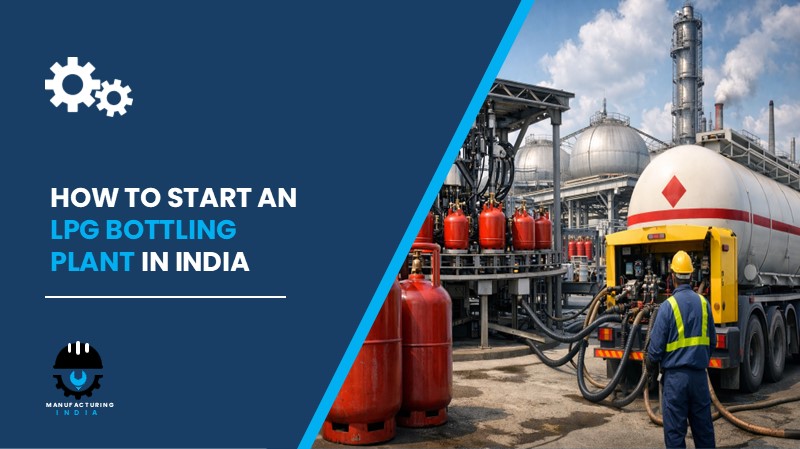
Setting up an LPG bottling plant in India presents a compelling investment case driven by the country’s rapidly expanding domestic household sector, surging commercial energy demand, and an accelerating transition from traditional biomass fuels to cleaner cooking alternatives. Domestic households, commercial establishments such as hotels and restaurants, industrial manufacturers, agricultural operations, and the automotive sector all depend on a reliable, safe, and efficient LPG distribution infrastructure — making a bottling facility a strategically essential asset in India’s energy supply chain. The sector plays a critical role in bridging refineries and imports terminals with end consumers across urban and rural geographies alike.
India’s structural advantages make it one of the most strategically sound destinations for this type of investment. The country’s ongoing urbanisation, government-backed clean energy programs, and the Make in India initiative collectively create a highly favourable operating environment for new manufacturing capacity. States such as Andhra Pradesh, Maharashtra, and Gujarat have already emerged as preferred hubs for energy infrastructure projects, offering strong logistics connectivity, industrial estate access, and proximity to petrochemical supply chains. With LPG consumption in India recording a 12.7% increase in December alone — against a 7.9% rise in the preceding April–December period — the fundamentals underpinning demand are robust and growing.
India’s LPG bottling sector stands at the intersection of policy support, rapidly growing consumption, and essential energy infrastructure — offering investors stable gross margins of 15–25%, diversified demand across five end-use sectors, and a clear pathway to a financially viable, scalable bottling operation.
What is LPG Bottling?
LPG bottling refers to the process of receiving bulk liquefied petroleum gas — primarily composed of propane and butane — from refineries or import terminals and filling it into standardised cylinders for distribution. LPG is stored in liquid form under moderate pressure and vaporizes when released, making it an efficient and portable energy source suitable for a wide range of applications. LPG bottling plants are engineered with strict safety systems, including fire suppression mechanisms, gas detection infrastructure, and pressure control systems, to ensure operational integrity throughout the filling process.
The production method is a multi-step process that involves bulk LPG receipt and storage, cylinder inspection, valve fitting, filling, leak testing, sealing, and labelling. Plants in this sector serve five major end-use industries: domestic households, commercial establishments, industrial manufacturing, the agricultural sector, and the automotive sector. Applications span cooking fuel, space heating, industrial process heating, crop drying, and auto fuel — making the product versatile across both rural and urban demand environments.
Cost of Setting Up an LPG Bottling Plant in India
The total cost of establishing an LPG bottling plant in India depends on plant capacity, technology choices, location, level of automation, and regulatory compliance requirements. A thorough financial analysis covering both capital and operational expenditure is essential before proceeding with investment.
1. Capital Expenditure (CapEx)
The largest single component of capital expenditure in an LPG bottling facility is machinery costs, followed closely by land and site development. Investors should evaluate locations within designated Special Economic Zones (SEZs) or state industrial estates in Andhra Pradesh, Maharashtra, or Gujarat, as these offer competitive land pricing and developed infrastructure.
Civil works costs cover the construction of a filling shed, quality control laboratory, raw material storage area, finished goods storage, and the administrative block. Adequate space for safety buffer zones and future expansion must also be incorporated into the plant layout at the design stage.
Key machinery required includes:
- LPG storage and transfer pumps
- Filling carousel
- Leak detection systems
- Valve fitting machines
- Weighing scales
Other capital costs include effluent treatment plant (ETP) setup, pre-operative expenses, equipment commissioning costs, and applicable import duties on specialised machinery not manufactured domestically.
Request a Sample Report for In-Depth Market Insights: https://www.imarcgroup.com/lpg-bottling-plant-project-report/requestsample
2. Operational Expenditure (OpEx)
Raw material cost is by far the dominant operational cost driver, accounting for approximately 85–90% of total OpEx in the first year. The primary raw materials required are LPG (bulk), cylinders, valves, and seals. Given the price sensitivity of bulk LPG, investors are strongly advised to negotiate long-term contracts with reliable domestic and import-linked suppliers to stabilise procurement costs and manage supply chain risk.
Utility costs — covering electricity, water, and any steam requirements — represent 5–10% of total operational expenditure. Remaining operating costs include transportation, packaging, salaries and wages, maintenance, depreciation, and applicable taxes. By the fifth year of operations, total operational costs are projected to increase substantially, driven by inflation, market fluctuations, potential rises in the cost of key materials, supply chain disruptions, and rising consumer demand.
3. Plant Capacity
The proposed facility is designed with an annual production capacity ranging between 50,000 and 200,000 MT, enabling economies of scale while maintaining operational flexibility. As an illustrative benchmark, the Indian Oil Corporation’s recently inaugurated LPG bottling plant in Andhra Pradesh operates at a capacity of 60,000 tons per year, filling approximately 20,000 cylinders per day. Capacity can be customised per investor requirements, and profitability improves meaningfully with higher capacity utilisation across the production base.
4. Profit Margins and Financial Projections
This type of plant demonstrates healthy profitability potential under normal operating conditions. Gross profit margins typically range between 15–25%, supported by stable multi-sector demand and value-added applications. Net profit margins range from 5–12% on average over the project lifecycle. A comprehensive financial analysis — covering NPV (Net Present Value), IRR (Internal Rate of Return), payback period, gross margin, and net margin — is an integral component of any detailed project report for this investment. The projected break-even timeline and sensitivity analysis results will vary based on actual capacity utilisation, prevailing LPG bulk prices, and local regulatory costs.
Why Set Up an LPG Bottling Plant in India?
Essential Energy Distribution Infrastructure. LPG bottling plants form a critical link between refineries and import terminals on one side and end consumers on the other, ensuring safe and reliable energy distribution. This infrastructure dependency creates long-term, structurally supported demand for well-located bottling facilities.
Government Clean Energy Programs. Many governments, including India’s, actively promote LPG adoption to reduce indoor air pollution and accelerate the transition away from traditional biomass fuels. Subsidy policies and rural electrification initiatives in developing countries like India are directly accelerating LPG demand growth, creating a strong policy tailwind for new bottling capacity.
Stable Demand Across Multiple Sectors. Domestic, commercial, and industrial sectors together provide diversified and steady consumption patterns that de-risk revenue projections. India’s LPG consumption increase of 12.7% recorded in December — compared with a 7.9% growth rate in the April–December period — demonstrates the acceleration in underlying demand fundamentals.
Scalability and Regional Expansion Potential. Plants can be established near consumption hubs to reduce logistics costs and enhance distribution efficiency. The scalable capacity range of 50,000–200,000 MT per year means investors can phase their commitment and grow capacity in line with market penetration.
Active Industry Investment. In October 2025, the Prime Minister of India inaugurated Indian Oil Corporation’s LPG bottling plant in Andhra Pradesh, built with an investment of approximately INR 200 crore (~USD 22.06 million), with a capacity of 60,000 tons per year and serving 80 distributors across Andhra Pradesh, Tamil Nadu, and Karnataka. In June 2025, Confidence Petroleum India Limited secured long-term LPG bottling contracts totalling approximately INR 42.09 crore (~USD 4.64 million) from BPCL, HPCL, and IOCL, covering approximately 510,000 cylinders over periods of up to 10 years.
Local Supply Chain Preference. The expansion of India’s hospitality sector, food processing industry, and small-scale manufacturing base is boosting commercial LPG demand. Locally established bottling units are well-positioned to capture this growth through faster delivery, lower logistics costs, and distributor relationships.
Manufacturing Process Step by Step
The LPG bottling manufacturing process uses bulk LPG receipt and storage as the primary production method, followed by a structured sequence of quality-controlled filling operations.
- Bulk LPG Receipt and Storage: Bulk LPG arrives from refineries or import terminals and is transferred into pressurised storage vessels on-site using LPG storage and transfer pumps.
- Cylinder Inspection: Each cylinder undergoes a pre-fill inspection to check for physical damage, valve condition, and pressure integrity before entering the filling line.
- Valve Fitting: Valves are fitted or inspected on cylinders as required, ensuring a sealed connection before the filling process begins.
- Filling via Carousel: Cylinders are loaded onto the filling carousel, where they are filled with LPG to the precise target weight as measured by calibrated weighing scales.
- Leak Testing: Each filled cylinder passes through the leak detection system to verify that no gas is escaping before it proceeds to sealing.
- Sealing and Labelling: Cylinders that pass leak testing are sealed and labelled in compliance with applicable safety and product standards.
- Quality Assurance and Dispatch: Finished, labelled cylinders are moved to the finished goods storage area and dispatched to distributors serving domestic households, commercial establishments, industrial manufacturers, agricultural operations, and automotive customers.
Key Applications
The LPG bottling plant serves a broad and diverse range of industries, making demand inherently resilient to fluctuation in any single sector.
- Domestic Household Sector: Cylinders are primarily used for cooking, particularly among urban and rural households transitioning from biomass and kerosene fuels.
- Commercial Sector: Hotels, restaurants, and catering businesses use LPG for bulk cooking operations and space heating applications.
- Industrial Sector: Industries utilise LPG for metal cutting, glass manufacturing, ceramic production, and other process heating requirements.
- Agricultural Sector: LPG is applied in crop drying, greenhouse heating, and irrigation pump operations in certain regions.
- Automotive Sector: Auto LPG serves as an alternative automotive fuel in specific markets, helping reduce emissions and fuel costs.
Leading Manufacturers
The global LPG bottling industry is served by a diversified set of multinational and domestic players with extensive production capacities and wide application portfolios. All serve end-use sectors including domestic households, commercial establishments, industrial manufacturing, agriculture, and automotive. Key active players in the Indian market referenced in recent industry developments include:
- Indian Oil Corporation (IOCL)
- Bharat Petroleum Corporation Limited (BPCL)
- Hindustan Petroleum Corporation Limited (HPCL)
- Confidence Petroleum India Limited
Timeline to Start the Plant
- Feasibility study and project report preparation
- Land acquisition and site development
- Regulatory approvals and environmental clearances
- Factory licence and fire safety compliance
- Machinery procurement and installation
- Raw material supplier agreements and supply chain setup
- Trial production and quality testing
- Commercial production launch
Licences and Regulatory Requirements
Starting an LPG bottling manufacturing unit in India requires several approvals:
- Business registration (Proprietorship, LLP, or Pvt Ltd)
- Factory Licence under the Factories Act
- Environmental Clearance from the State Pollution Control Board
- GST Registration
- Fire Safety NOC
- Hazardous and chemical compliance (mandatory given LPG’s classified nature as a pressurised flammable gas)
- Effluent Treatment Plant (ETP) operational clearance
- Occupational Health and Safety compliance
Key Challenges to Consider
High Capital Requirements: Establishing a bottling facility with the land, pressurised storage infrastructure, safety systems, and filling carousel represents a significant upfront capital commitment that demands careful financial planning and project funding strategy.
Raw Material Price Volatility: Bulk LPG accounts for 85–90% of total operating expenditure, making the plant’s cost structure highly sensitive to fluctuations in international LPG prices, refinery gate pricing, and import terminal logistics costs. Cylinders, valves, and seals also contribute to procurement risk.
Regulatory Compliance: LPG bottling facilities are subject to stringent safety, fire, environmental, and hazardous material regulations. Navigating these requirements across central and state-level frameworks adds cost and time to the project setup phase.
Technology and Automation Pressure: Improvements in automated filling technology and safety standards are continuously raising the benchmark for operational efficiency, requiring investors to select machinery that is both current and capable of adaptation.
Competition: The presence of large public-sector players such as IOCL, BPCL, and HPCL — alongside private operators such as Confidence Petroleum India Limited — creates a competitive pricing environment, particularly in established distribution territories.
Skilled Manpower: Operating pressurised LPG filling equipment, safety detection systems, and quality control procedures requires a trained, certified workforce, which may necessitate dedicated recruitment and ongoing training investment.
Frequently Asked Questions
1. How much does it cost to set up an LPG bottling manufacturing plant in India?
The total cost depends on capacity, location, technology, and automation level. Machinery costs form the largest portion of CapEx, followed by land and site development. A recent benchmark investment — IOCL’s Andhra Pradesh plant — was built at approximately INR 200 crore for a 60,000 MT/year capacity.
2. Is LPG bottling manufacturing profitable in India in 2026?
Yes. The sector offers gross profit margins of 15–25% and net margins of 5–12%, supported by stable multi-sector demand and the country’s accelerating shift towards clean cooking fuels.
3. What machinery is required for an LPG bottling plant in India?
Key equipment includes LPG storage and transfer pumps, a filling carousel, leak detection systems, valve fitting machines, and weighing scales.
4. What licences and approvals are required to start an LPG bottling plant in India?
Requirements include business registration, a Factory Licence, Environmental Clearance, GST registration, Fire Safety NOC, hazardous chemical compliance, ETP clearance, and Occupational Health and Safety compliance.
5. What raw materials are needed for LPG bottling manufacturing?
The primary raw materials are LPG (bulk), cylinders, valves, and seals. Bulk LPG alone accounts for 85–90% of total operating costs.
6. What are the environmental compliance requirements for an LPG bottling plant in India?
The facility must obtain Environmental Clearance from the State Pollution Control Board, operate a functional Effluent Treatment Plant, comply with emission standards, and maintain advanced monitoring systems to detect leaks or process deviations.
7. What is the best location to set up an LPG bottling plant in India?
Ideal locations offer proximity to bulk LPG supply sources such as refineries or import terminals, access to industrial infrastructure, and closeness to consumption hubs to minimise distribution costs. Andhra Pradesh, Maharashtra, and Gujarat are among the preferred states.
8. What is the break-even period for this type of plant in India?
The break-even period depends on plant capacity, utilisation rate, and raw material cost management. A detailed project report incorporating NPV, IRR, and payback period analysis will define the specific timeline for a given configuration.
9. What government incentives are available for manufacturers in India?
The Make in India initiative, government subsidy policies supporting LPG adoption, and rural electrification schemes in developing regions collectively support investment in LPG distribution infrastructure. State industrial estate schemes may also offer land and utility concessions.
Key Takeaways for Investors
An LPG bottling plant in India represents a high-relevance investment opportunity anchored by essential demand from five end-use sectors — domestic households, commercial establishments, industrial manufacturing, agriculture, and the automotive segment. The project demonstrates financial viability across a broad capacity range of 50,000–200,000 MT per year, with gross margins of 15–25% and net margins of 5–12% achievable under normal operating conditions. The global LPG market was valued at USD 149.60 billion in 2025 and is projected to reach USD 199.00 billion by 2034, representing a CAGR of 3.2% from 2026 to 2034, with India contributing meaningfully to this trajectory given its documented consumption acceleration. With active public-sector investment, expanding private-sector participation, and sustained government support for clean energy transition, demand sustainability for this type of facility in India is structurally well-supported for the decade ahead.
About the Author