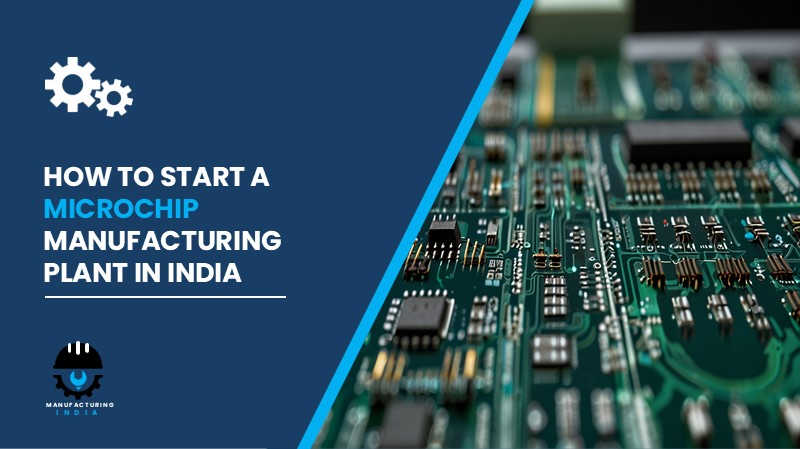
Setting up a microchip manufacturing plant in India presents a compelling investment case at a time when demand from consumer electronics, automotive, telecommunications, data centers, industrial automation, aerospace and defense, and healthcare industries is accelerating at an unprecedented pace. Microchips — the foundational integrated circuits that power everything from smartphones to electric vehicles — are no longer optional components in modern digital systems; they are strategic national assets. India’s rapid digitisation, expanding 5G rollout, and surging electric vehicle adoption are collectively driving domestic chip consumption to levels that the country’s current production base cannot meet, creating a significant supply gap and a corresponding investment opportunity.
India’s structural advantages make it strategically sound for microchip manufacturing investment. The government’s Make in India initiative, combined with dedicated semiconductor incentive programmes, is actively channelling policy support and subsidies toward domestic production capacity. States like Gujarat, Maharashtra, and Uttar Pradesh offer industrial estate infrastructure, competitive land costs, access to skilled engineering talent, and logistics connectivity essential for a capital-intensive, precision-driven facility. As global chip supply chains continue to be restructured for resilience following years of disruption, India stands well-positioned to become a credible node in the global semiconductor manufacturing ecosystem.
Investing in a microchip manufacturing plant in India today aligns government policy support with cost-competitive manufacturing conditions and surging demand from high-growth sectors including consumer electronics, automotive, and data centres. With gross profit margins ranging between 45–55% and net profit margins of 20–30%, the unit economics are compelling, and the break-even viability across a range of plant capacities makes this one of the most strategically significant industrial investments available in the Indian market today.
What is a Microchip?
A microchip, formally known as an integrated circuit (IC), is a compact semiconductor device engineered on silicon wafers to build interconnected electronic components, including transistors, resistors, and capacitors. It performs computing, control, memory, and signal processing functions within electronic systems. The development of nanometer-scale fabrication processes has enabled sustained improvements in microchip performance while simultaneously decreasing power consumption and increasing chip integration capacity, establishing microchips as indispensable components of contemporary digital systems.
Key properties that define microchip value include miniaturisation, high computational throughput, energy efficiency, and signal processing reliability. The production process — spanning silicon wafer preparation, oxidation and deposition, photolithography, etching, ion implantation, metallization, chemical mechanical polishing (CMP), wafer testing, dicing, packaging, and final quality inspection — demands precision at the nanometer scale and strict cleanroom conditions throughout.
Microchips serve a broad range of end-use industries: consumer electronics, automotive, telecommunications, data centers, industrial automation, aerospace and defense, and healthcare. Applications span processors, memory chips, microcontrollers, power management ICs, sensors, communication modules, and embedded systems.
Cost of Setting Up a Microchip Manufacturing Plant in India
The cost of establishing a microchip manufacturing plant in India depends on multiple variables, including plant capacity, technology selection, geographic location, degree of automation, and the regulatory compliance framework applicable to semiconductor production.
1. Capital Expenditure (CapEx)
Land and Site Development forms a foundational component of total capital investment, covering land registration charges, boundary development, drainage, and site infrastructure. Investors may explore Special Economic Zones (SEZs) or established industrial estates in states like Gujarat and Maharashtra, where land acquisition procedures are streamlined and plug-and-play infrastructure is often available, reducing pre-production timelines.
Civil Works and Construction include cleanroom fabrication bays — the most technically demanding construction element for a microchip plant — alongside laboratory spaces, chemical storage with containment systems, finished goods warehousing, an administrative block, and utilities infrastructure. Cleanroom construction to the required ISO classification levels adds significant cost compared to conventional manufacturing sheds.
Machinery and Equipment represent the largest single component of total CapEx for a microchip manufacturing plant. Key machinery required includes:
- Photolithography systems
- Etching tools
- Deposition systems
- Ion implantation units
- Wafer inspection systems
- Automated packaging lines
Other Capital Costs encompass an effluent treatment plant (ETP) to manage chemical waste, pre-operative expenses, commissioning charges, and import duties applicable to specialised semiconductor fabrication equipment not manufactured domestically.
Request a Sample Report for In-Depth Market Insights: https://www.imarcgroup.com/microchip-manufacturing-plant-project-report/requestsample
2. Operational Expenditure (OpEx)
Raw Material Cost is the dominant operational expense, accounting for approximately 35–45% of total OpEx. Key raw materials include silicon wafers, photoresists, specialty gases, and chemicals. Given the price sensitivity of these inputs, long-term supplier contracts are strongly advisable to stabilise procurement costs and ensure supply chain continuity. Sourcing from nearby or domestic suppliers wherever possible will reduce transportation costs and logistics risk.
Utility Cost constitutes the second largest OpEx component at 25–35% of total operating expenses, covering electricity, water, and process utilities required to maintain cleanroom environments and run energy-intensive fabrication equipment around the clock.
Other Operating Costs include transportation and distribution, packaging materials, salaries and wages for engineering and production staff, routine maintenance and equipment calibration, depreciation on high-value fabrication equipment, and applicable taxes. By the fifth year of operations, total operational costs are projected to increase substantially due to inflation, market fluctuations, potential rises in the cost of key materials, supply chain pressures, and rising consumer demand — factors that investors must account for in their long-term financial modelling.
3. Plant Capacity
The proposed manufacturing facility for a microchip plant is designed with a monthly production capacity ranging between 600,000 and 1.2 million wafers, enabling economies of scale while maintaining operational flexibility. Plant capacity can be customised per investor requirements and phased market entry strategies. As with all capital-intensive manufacturing, profitability improves significantly with higher capacity utilisation, making demand secured through supply agreements or anchor customers critical to the business case.
4. Profit Margins and Financial Projections
The financial projections for a microchip manufacturing plant demonstrate healthy profitability potential under normal operating conditions. Gross profit margins typically range between 45–55%, supported by stable demand and value-added applications across high-growth end-use sectors. Net profit margins are projected in the range of 20–30%. A comprehensive financial analysis — covering NPV (net present value), IRR (internal rate of return), payback period, gross margin trajectory, and net margin development across a five-year horizon — is essential before committing capital. The project’s financial viability, long-term sustainability, and return on investment profile are assessed against realistic assumptions related to capital investment, production capacity utilisation, pricing trends, and demand outlook.
Why Set Up a Microchip Plant in India?
Expanding Digital Infrastructure and Consumer Electronics Demand. Rising demand for computing power and connectivity is a structural, long-term driver of chip consumption in India. Smartphones, laptops, gaming devices, and smart home products all depend on microchips, and India’s consumer electronics market continues to expand with urbanisation and rising disposable incomes.
Automotive and Electric Vehicle Growth. The automotive industry is integrating microchips into electric vehicles, advanced driver assistance systems (ADAS), and powertrain control units at a rapidly increasing rate. India’s push toward electric mobility creates sustained domestic demand for automotive-grade chips that an India-based plant can serve with shorter lead times and lower logistics costs.
Telecommunications and 5G Infrastructure Rollout. Microchips are applied in 5G infrastructure, routers, and networking equipment — all areas where India is investing heavily. As domestic telecom operators deploy 5G networks at scale, demand for telecommunications-grade chips will grow significantly, supporting the investment case for local production.
Policy and Regulatory Tailwinds. Government semiconductor incentives, including policy support and subsidies that encourage domestic production capacity, are actively de-risking investment in Indian chip manufacturing. Make in India and sector-specific production-linked incentives (PLI) provide financial and regulatory momentum for investors establishing production capacity domestically.
Active Global Industry Investment. The global microchip industry is witnessing strong expansion as AI, 5G connectivity, and electric mobility solutions achieve wider adoption. GlobalFoundries announced in June 2025 plans to invest USD 16 Billion into semiconductor manufacturing expansion across New York and Vermont to meet AI-driven demand — a signal of the scale of capital being committed globally to chip production capacity. Additionally, in February 2026, the K500 Chip Testing Facility at Michigan State University opened as the first superconducting cyclotron facility dedicated to addressing U.S. microchip testing shortages, backed by USD 14 Million in federal funding.
High Entry Barriers Protect Long-Term Positioning. Advanced fabrication technology limits competition and strengthens the long-term market positioning of established plants. Investors who build credible manufacturing capability in India today benefit from a defensible competitive moat as the domestic market scales.
Manufacturing Process — Step by Step
The microchip manufacturing process uses silicon wafer preparation, oxidation and deposition, photolithography, etching, ion implantation, metallization, chemical mechanical polishing (CMP), wafer testing, dicing, packaging, and final quality inspection as the primary production method. Each stage requires precise process control, cleanroom compliance, and quality assurance at the unit operation level.
- Silicon Wafer Preparation: High-purity silicon wafers are cleaned and surface-prepared as the substrate for all subsequent fabrication steps.
- Oxidation and Deposition: Thin films of oxide and other materials are deposited onto the wafer surface to create insulating and conductive layers.
- Photolithography: Patterns are transferred onto the wafer surface using light and photoresist materials, defining the circuit layout at nanometer precision.
- Etching: Unwanted material is removed from the wafer surface using chemical or plasma-based etching tools to reveal the patterned circuit structures.
- Ion Implantation: Dopant ions are implanted into the silicon to modify its electrical properties and create transistor junctions.
- Metallization: Metal layers are deposited to form the electrical interconnects that link circuit components.
- Chemical Mechanical Polishing (CMP): The wafer surface is planarised using chemical and mechanical action to achieve the flatness required for subsequent layers.
- Wafer Testing: Completed wafers are tested using wafer inspection systems to identify defective dies before dicing.
- Dicing: Individual chips are cut from the wafer using precision dicing equipment.
- Packaging: Chips are enclosed in protective packages using automated packaging lines, with wire bonding or flip-chip interconnects completed.
- Final Quality Inspection: Finished packaged chips undergo final electrical and physical inspection before dispatch to consumer electronics, automotive, telecommunications, data center, industrial, aerospace, and healthcare end-use industries.
Key Applications
Microchips manufactured in India serve a wide range of high-value industries spanning consumer technology, industrial systems, and critical national infrastructure:
- Consumer Electronics: Used in smartphones, laptops, gaming devices, and smart home products.
- Automotive Industry: Integrated into electric vehicles, advanced driver assistance systems (ADAS), and powertrain control units.
- Telecommunications: Applied in 5G infrastructure, routers, and networking equipment.
- Data Centers and Cloud Computing: Used in high-performance processors and memory modules.
- Industrial Automation: Supports robotics, IoT devices, and control systems.
- Aerospace and Defense: Critical components in avionics, radar, guidance, and communications systems.
- Healthcare: Used in medical devices, diagnostic equipment, and patient monitoring systems.
Leading Manufacturers
The global microchip market is served by a concentrated group of multinational corporations with extensive fabrication capacities and diversified application portfolios across consumer, industrial, and defence sectors. Key players in the global microchip industry include:
- Advanced Micro Devices (AMD)
- Broadcom Inc.
- Infineon Technologies AG
- Intel Corporation
- MediaTek Inc.
- Micron Technology
- NVIDIA Corporation
- Qualcomm Incorporated
Timeline to Start the Plant
Establishing a microchip manufacturing plant in India involves a structured multi-phase development sequence. Investors should plan for the following phases:
- Feasibility study and project report preparation
- Land acquisition and site development
- Regulatory approvals and environmental clearances
- Factory licence and fire safety compliance
- Machinery procurement and installation
- Raw material supplier agreements and supply chain setup
- Trial production and quality testing
- Commercial production launch
Licences and Regulatory Requirements
Starting a microchip manufacturing unit in India requires several approvals across business, environmental, and safety domains:
- Business registration (Proprietorship, LLP, or Pvt Ltd)
- Factory Licence under the Factories Act
- Environmental Clearance from the State Pollution Control Board
- GST Registration
- Fire Safety NOC
- Hazardous/Chemical compliance (applicable given the use of specialty gases, photoresists, and chemical etchants in the fabrication process)
- Effluent Treatment Plant (ETP) operational clearance
- Occupational Health and Safety compliance
Key Challenges to Consider
High Capital Requirements. A microchip manufacturing plant is one of the most capital-intensive industrial investments in any sector, with machinery costs — photolithography systems, etching tools, deposition systems, ion implantation units, wafer inspection systems, and automated packaging lines — representing the largest share of total CapEx. Securing adequate project funding and phasing capital deployment appropriately is critical.
Raw Material Price Volatility. Silicon wafers, photoresists, specialty gases, and chemicals are globally traded commodities subject to supply disruptions and price fluctuations. Raw material costs account for 35–45% of total OpEx, making procurement strategy and long-term supplier contracts central to margin management.
Regulatory Compliance. The cleanroom fabrication environment, chemical handling requirements, and effluent management obligations create a complex compliance landscape. Environmental clearances and hazardous chemical approvals require dedicated management resources and ongoing monitoring systems.
Technology and Innovation Pressure. Continuous technological upgrades in process nodes and energy-efficient chip design are a feature of the microchip industry. Investors must plan for ongoing capital reinvestment in equipment and process technology to maintain competitiveness and production relevance.
Competition from Global Players. The competitive landscape is dominated by established multinationals including Intel Corporation, NVIDIA Corporation, Qualcomm Incorporated, and others with significant scale advantages. Differentiation through specialised application focus, customer relationships, or government-supported domestic supply mandates will be important for new entrants.
Skilled Manpower. Semiconductor fabrication requires highly specialised engineering and process chemistry expertise. Attracting, training, and retaining qualified engineers and technicians in the Indian market is a challenge that must be addressed through talent development strategies and competitive compensation structures.
Frequently Asked Questions
1. How much does it cost to set up a microchip manufacturing plant in India?
The total setup cost for a microchip manufacturing plant in India depends on plant capacity, technology selection, location, and automation level. Capital expenditure covers land and site development, civil construction including cleanrooms, fabrication machinery, and other capital costs. A detailed project report covering CapEx and OpEx specifics is available on request.
2. Is microchip manufacturing profitable in India in 2026?
Yes. The microchip manufacturing plant project demonstrates gross profit margins of 45–55% and net profit margins of 20–30% under normal operating conditions, supported by stable demand and value-added applications across multiple high-growth industries.
3. What machinery is required for a microchip plant in India?
Key machinery includes photolithography systems, etching tools, deposition systems, ion implantation units, wafer inspection systems, and automated packaging lines.
4. What licences and approvals are required to start a microchip plant in India?
Required approvals include business registration, a Factory Licence under the Factories Act, Environmental Clearance from the State Pollution Control Board, GST registration, a Fire Safety NOC, hazardous/chemical compliance approvals, ETP operational clearance, and Occupational Health and Safety compliance.
5. What raw materials are needed for microchip manufacturing?
The primary raw materials are silicon wafers, photoresists, specialty gases, and chemicals. Silicon wafers and related inputs account for approximately 35–45% of total operating expenses.
6. What are the environmental compliance requirements for a microchip plant in India?
A microchip manufacturing unit must obtain Environmental Clearance from the State Pollution Control Board, operate a certified Effluent Treatment Plant, comply with chemical and hazardous substance handling regulations, and install advanced monitoring systems to detect process deviations and leaks.
7. What is the best location to set up a microchip plant in India?
Optimal locations offer access to key raw materials, robust transportation and utilities infrastructure, proximity to target markets, and compliance with zoning and environmental regulations. Industrial estates and SEZs in Gujarat, Maharashtra, and Uttar Pradesh are among the strategically relevant options for semiconductor investment.
8. What is the break-even period for this type of plant in India?
The break-even period depends on plant capacity, capacity utilisation rate, pricing trends, and demand conditions. A detailed financial analysis including payback period, NPV, and IRR projections is included in the full project report available via the sample request link.
9. What government incentives are available for manufacturers in India?
Government semiconductor incentives, including policy support and subsidies that encourage domestic production capacity, are actively available for chip manufacturers in India. The Make in India initiative and sector-specific schemes provide financial and regulatory support for investors establishing domestic semiconductor production capacity.
Key Takeaways for Investors
A microchip manufacturing plant in India represents one of the most strategically significant investment opportunities available in the country’s industrial landscape, driven by surging demand from consumer electronics, automotive, telecommunications, data centers, industrial automation, aerospace and defense, and healthcare industries. The project demonstrates financial viability across a range of plant capacities, with gross profit margins of 45–55% and net profit margins of 20–30% confirming the strength of unit economics even under conservative assumptions. The global microchip market, valued at USD 92.91 Billion in 2025, is projected to reach USD 181.29 Billion by 2034, growing at a CAGR of 7.7% from 2026 to 2034 — a trajectory that provides a durable demand foundation for new production capacity established in India today. With artificial intelligence, 5G connectivity, electric mobility, and edge computing all continuing to deepen their dependence on advanced integrated circuits, demand sustainability for India-based microchip production is structurally sound for the foreseeable future.
About the Author