Introduction
Junction boxes are essential electrical components used to protect wire connections and ensure safe electrical installations in residential, commercial, and industrial settings. Starting a junction box manufacturing plant requires careful planning, adequate investment, and compliance with electrical safety standards. This guide outlines the systematic approach to establishing a successful junction box manufacturing facility.
Market Overview
The junction box manufacturing industry is experiencing steady growth driven by expanding construction activities, infrastructure development, and increasing focus on electrical safety. The market encompasses plastic junction boxes (PVC, polycarbonate), metal junction boxes (steel, aluminum, stainless steel), and specialized variants like weatherproof and explosion-proof enclosures. Key applications span residential buildings, commercial complexes, industrial facilities, and renewable energy installations.
Step-by-Step Setup Process
Step 1: Business Planning and Market Research
Develop a comprehensive business plan that includes market analysis, competitor assessment, production capacity planning, and financial projections. Identify your target customer segments including electrical contractors, distributors, builders, and industrial clients. Define your product range based on market demand and production capabilities.
Step 2: Site Selection and Legal Requirements
Choose an appropriate location with access to raw materials, skilled labor, reliable power supply, and good transportation connectivity. Ensure the site complies with industrial zoning regulations and has adequate space for production, storage, and future expansion.
Obtain necessary licenses and approvals including business registration, manufacturing license, factory license, environmental clearances, pollution control approvals, GST registration, fire safety certificate, and electrical safety certifications (ISI mark, CE, UL as applicable).
Step 3: Infrastructure Development
Construct or lease factory premises with adequate production floor space, raw material storage areas, finished goods warehouse, quality testing laboratory, office space, and worker facilities. Install essential utilities including electrical connections, water supply, compressed air systems, ventilation, and fire safety equipment.
Request for a Sample Report: https://www.imarcgroup.com/junction-box-manufacturing-plant-project-report/requestsample
Step 4: Procurement of Machinery and Equipment
Invest in essential manufacturing equipment based on whether you’re producing plastic or metal junction boxes:
For Plastic Junction Boxes: Injection molding machines, blow molding equipment, trimming machines, drilling equipment, and plastic welding tools.
For Metal Junction Boxes: Sheet metal cutting machines (laser cutters, shearing machines), CNC bending machines, punching and stamping equipment, welding machines, and rolling equipment.
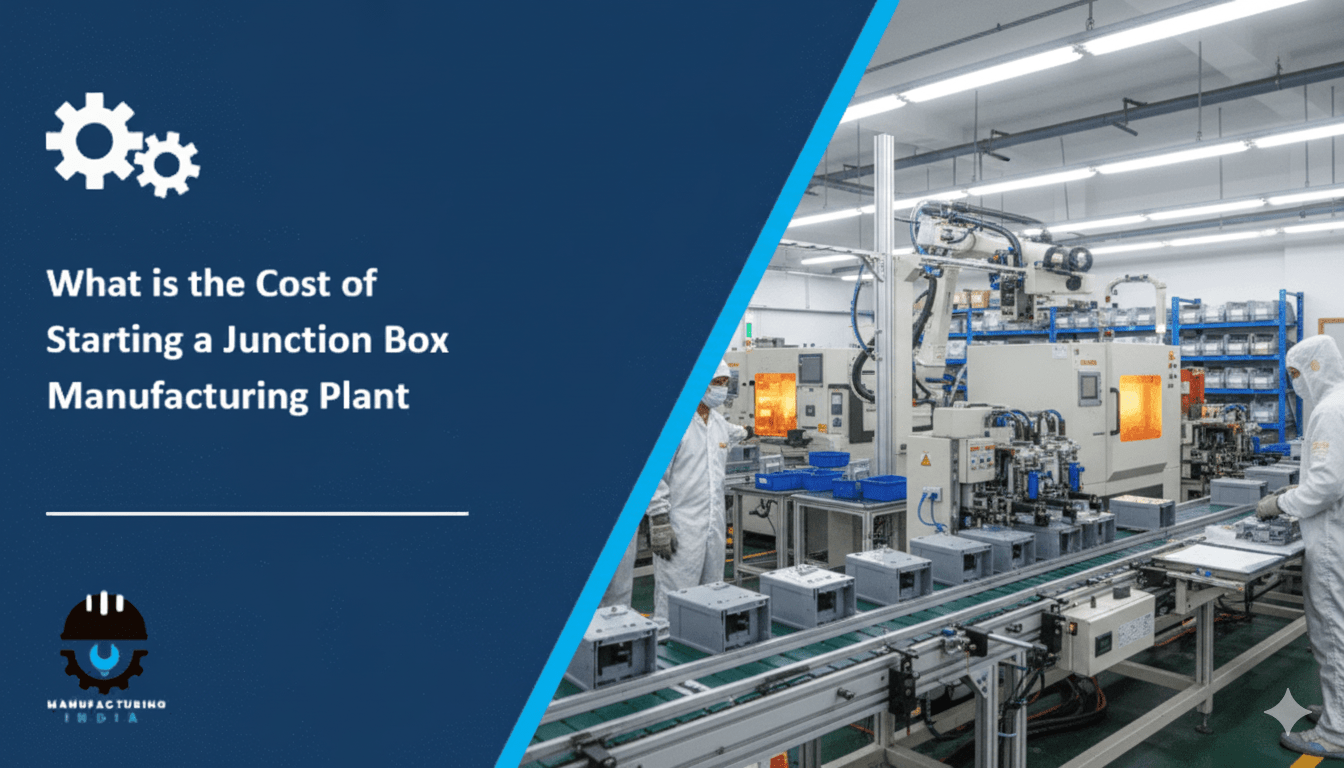
Common Equipment: Powder coating booth and oven, surface treatment systems, assembly workbenches, testing equipment (IP rating testers, insulation testers, impact testing equipment), material handling equipment, and quality control instruments.
Step 5: Raw Material Sourcing
Establish relationships with reliable suppliers for primary materials including plastic compounds (PVC, polycarbonate, ABS), metal sheets (mild steel, galvanized steel, aluminum, stainless steel), components (terminal blocks, cable glands, gaskets, fasteners, mounting brackets), and finishing materials (powder coating, paints, labels, packaging materials).
Step 6: Workforce Recruitment and Training
Hire qualified personnel including production manager, quality control engineers, machine operators, welding technicians, assembly workers, quality inspectors, and administrative staff. Provide comprehensive training on machinery operation, safety protocols, quality standards, and standard operating procedures.
Step 7: Manufacturing Process Setup
Implement a systematic production workflow covering design and mold preparation, material preparation, component fabrication (molding or metal forming), surface treatment (powder coating or painting), assembly (installation of terminals, gaskets, fasteners), quality testing (IP rating, electrical tests, dimensional checks), and packaging with proper labeling.
Step 8: Quality Control Implementation
Establish a robust quality management system aligned with ISO 9001 standards. Implement in-process quality checks, final product inspection, and compliance with relevant standards including IEC 60670, IS 1293 (for metal boxes), IS 9537 (for plastic boxes), and IP rating standards.
Step 9: Marketing and Distribution
Develop a go-to-market strategy including branding, pricing, distribution channel development, dealer network establishment, and promotional activities. Build relationships with electrical contractors, distributors, and direct customers through trade shows, digital marketing, and personal selling.
Cost Components
Capital Investment (One-Time)
Land and Building: Land acquisition or lease, factory construction or renovation, warehouse facilities, office setup, boundary walls, and infrastructure development.
Machinery and Equipment: Production machinery, surface treatment equipment, testing instruments, material handling equipment, tools and fixtures, molds and dies, installation charges, and spare parts inventory.
Utilities Infrastructure: Electrical systems and transformers, water supply, compressed air systems, ventilation and dust collection, fire safety equipment, and backup power systems.
Pre-Operative Expenses: Project planning fees, licensing and legal costs, initial marketing expenses, recruitment and training costs, working capital margin, and trial production expenses.
Operating Costs (Recurring)
Raw Materials: Plastic or metal sheets, components and accessories, finishing materials, packaging supplies, and transportation charges.
Utilities: Electricity, water, fuel, and compressed air generation costs.
Labor: Salaries and wages for all personnel, statutory benefits, insurance, and training expenses.
Maintenance: Preventive maintenance, spare parts, mold maintenance, equipment calibration, and building repairs.
Administrative: Office expenses, communication, travel, professional fees, insurance premiums, and rent if applicable.
Marketing and Sales: Advertising, trade shows, sales commissions, distribution costs, and sample development.
Compliance: License renewals, testing and certification charges, environmental compliance, and quality audits.
Financial Considerations
Conduct thorough financial planning including investment breakdown analysis, revenue projections based on production capacity, profitability analysis with break-even calculation, return on investment estimation, and payback period assessment. Explore funding options such as promoter’s equity, bank term loans, government MSME subsidies, working capital financing, and equipment financing.
Key Success Factors
Success depends on maintaining consistent product quality through robust quality control, competitive pricing strategies, timely delivery and reliable supply, strong distribution networks, excellent customer service, compliance with safety standards, efficient operations with optimal capacity utilization, continuous product innovation, and effective working capital management.
Implementation Timeline
The typical implementation follows a phased approach: Planning and approvals phase covering business planning, site selection, and licensing; Infrastructure development phase including construction, machinery installation, and utility setup; Pre-production phase involving commissioning, staff training, and product testing; and Commercial production phase marking market launch and capacity ramp-up.
About the Author