Introduction
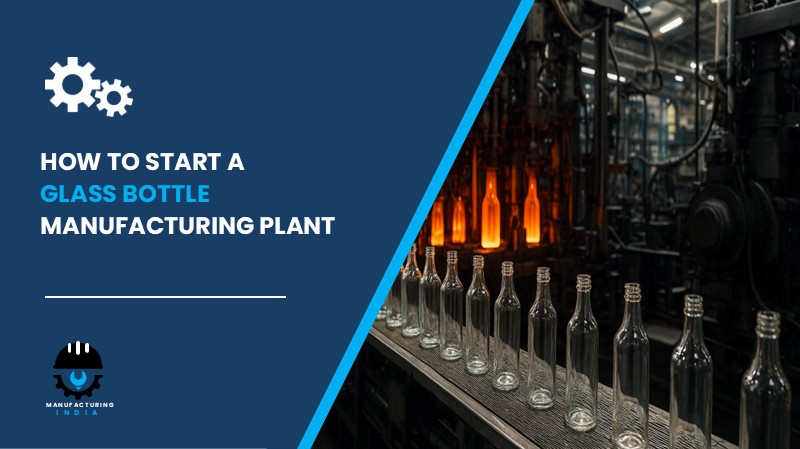
Glass bottles remain one of the most widely used packaging materials across industries—including food and beverages, pharmaceuticals, cosmetics, chemicals, and household products. As consumer preference shifts toward sustainable and recyclable packaging, the demand for glass bottles continues to rise globally. With their durability, chemical stability, and eco-friendly nature, glass bottles offer an attractive alternative to plastic, making glass manufacturing an appealing business opportunity.
If you are planning to set up a glass bottle manufacturing plant, this complete step-by-step guide will help you understand the process, machinery requirements, cost considerations, and key success factors.
Industry Overview
The glass bottle industry is experiencing steady growth due to:
- Increasing demand for sustainable and recyclable packaging
- Rising consumption of bottled beverages, alcohol, sauces, and pharmaceuticals
- Strong acceptance of glass as a premium, safe, and chemical-free packaging option
- Growing regulatory restrictions on single-use plastics
- Rapid expansion of the cosmetics and fragrance market
Glass bottles are 100% recyclable, reusable, and offer better product preservation, making them a preferred packaging solution globally. With continuous innovation in lightweight designs and automated production processes, the industry presents significant opportunities for new entrants.
Understanding the Glass Bottle Manufacturing Business
A glass bottle manufacturing plant converts raw materials like silica sand, limestone, soda ash, and cullet (recycled glass) into molten glass, which is then molded into bottles. The business requires:
- High-temperature furnaces
- Precision molding technology
- Skilled manpower
- Efficient packaging and quality control systems
Manufacturers can produce bottles for beverages, medicines, perfumes, food containers, and specialty glass products depending on mold design and plant capacity.
The business is capital-intensive but offers strong long-term returns, especially when targeting high-demand sectors and export markets.
Request the Sample Report and Discover More: https://www.imarcgroup.com/glass-bottle-manufacturing-plant-project-report/requestsample
Step-by-Step Guide to Start a Glass Bottle Manufacturing Plant
Below is a detailed, practical process to help you build and launch your manufacturing facility.
Step 1: Conduct a Feasibility Study
Before moving forward, analyze:
- Local and global market demand
- Key customer segments (breweries, food industries, pharmaceuticals, cosmetics)
- Competition and pricing trends
- Required production capacity (small, medium, or large scale)
- Raw material availability
- Regulatory and environmental compliance
- Estimated cost and profitability
A feasibility study helps define the scope, investment levels, and operational strategy for your project.
Step 2: Select an Ideal Location
Location selection plays a major role in operational efficiency and cost control.
Consider the following:
- Proximity to raw materials and suppliers
- Access to skilled labor
- Industrial zoning and government permissions
- Reliable electricity and natural gas supply
- Transport connectivity for distribution
- Availability of large space for furnaces, molds, and warehousing
Plants are generally located near raw material sources to reduce transportation costs.
Step 3: Plan the Plant Layout
A glass bottle manufacturing facility requires a well-organized layout to ensure safety and smooth production flow.
Typical layout sections include:
- Raw material storage
- Batch preparation area
- Furnace and melting zone
- Forming and molding section
- Annealing lehr (cooling conveyor system)
- Surface treatment and inspection area
- Packaging and palletizing
- Warehouse and finished goods storage
- Quality control lab
- Administrative building
A clear workflow helps minimize handling time and ensures consistent bottle quality.
Step 4: Machinery and Equipment Procurement
The machinery you choose significantly impacts your project’s cost, capacity, and product range.
Essential equipment includes:
- Raw material batching units
- Glass melting furnace (regenerative, recuperative, or electric)
- Feeder and gob-forming equipment
- IS (Independent Section) machines for forming bottles
- Annealing lehrs
- Surface coating units
- Inspection and quality testing machines
- Conveyors and material handling equipment
- Packaging and palletizing systems
Choose durable, energy-efficient machinery to reduce maintenance and operational costs.
Step 5: Source Raw Materials
Primary raw materials include:
- Silica sand
- Soda ash
- Limestone
- Cullet (recycled glass)
- Feldspar and dolomite (optional)
- Coloring agents (for green, amber, and blue bottles)
Using cullet helps reduce furnace fuel consumption and melting temperature, making the process more energy-efficient and sustainable.
Step 6: Understand the Manufacturing Process
The glass bottle manufacturing process involves several technical stages:
1. Batch Preparation
Dry ingredients are weighed and mixed according to formula requirements.
2. Melting
The mixture is fed into a high-temperature furnace (1,400–1,600°C) to produce molten glass.
3. Conditioning
Molten glass is cooled and homogenized before molding.
4. Forming
The conditioned glass is cut into gobs and fed into molds using IS machines to produce bottle shapes.
5. Annealing
Bottles are passed through an annealing lehr to gradually cool and strengthen the glass.
6. Inspection
Automated testing equipment checks for cracks, stress, thickness, and dimensional accuracy.
7. Surface Treatment
Bottles may be coated to enhance durability and reduce scuffing.
8. Packaging
Bottles are grouped, wrapped, and palletized for transportation.
Understanding this process helps optimize production efficiency and ensures consistent quality output.
Step 7: Hire Skilled Workforce
A typical glass bottle manufacturing plant requires:
- Furnace operators
- Mold and forming machine specialists
- Quality control technicians
- Mechanical and electrical engineers
- Packaging and warehouse staff
- Supervisors and plant managers
Training ensures safety, accuracy, and productivity across all stages.
Step 8: Ensure Regulatory and Environmental Compliance
Glass manufacturing requires strict adherence to industrial and environmental standards.
Key compliance areas:
- Air emissions and pollution control
- Furnace safety standards
- Waste disposal and recycling management
- Workplace safety guidelines
- Fire safety and emergency protocols
Using advanced filtration and dust control systems helps meet regulatory requirements.
Step 9: Calculate the Cost of Starting a Glass Bottle Manufacturing Plant
The cost of setting up a glass bottle manufacturing plant depends on several factors:
Major cost components include:
- Land and building construction
- Furnace installation and energy supply systems
- Machinery and forming equipment
- Raw material procurement
- Labor and training costs
- Pollution control systems
- Packaging equipment
- Utility installation (power, water, gas)
- Working capital
Plant capacity, automation level, and production scale also significantly influence total project cost.
Step 10: Start Production and Build Market Presence
Once trial production is complete and quality targets are met, begin commercial manufacturing. Promote your glass bottles through:
- Packaging companies
- Beverage manufacturers
- Cosmetic brands
- Pharmaceutical suppliers
- Export markets
- Retail distribution networks
Offering custom bottle designs and value-added finishing can help differentiate your brand.
Starting a glass bottle manufacturing plant is a rewarding opportunity in a growing and environmentally sustainable industry. With proper planning, the right machinery, skilled manpower, and a clear understanding of the manufacturing process, you can establish a profitable business serving multiple high-demand markets.
This step-by-step guide provides a strong foundation to begin your journey and evaluate the investment required for long-term success.
About the Author