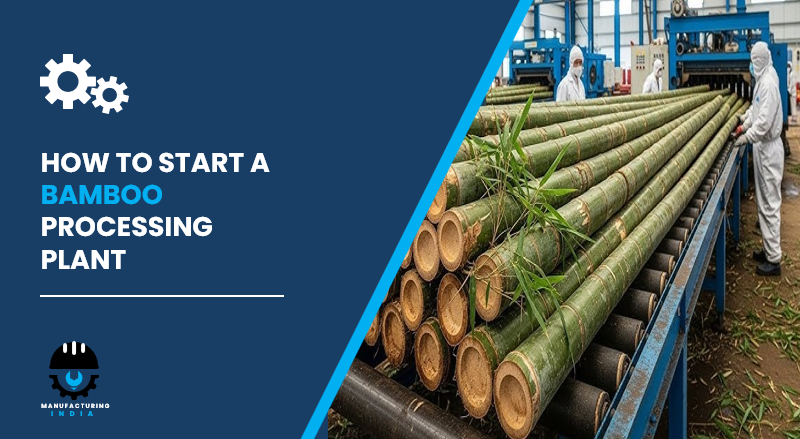
Starting a bamboo processing plant can be a highly profitable and sustainable business venture given the growing global demand for eco-friendly bamboo products. Bamboo is one of the fastest-growing plants on Earth, offering versatile applications in construction, furniture, handicrafts, pulp and paper, textiles, and various consumer goods. This comprehensive guide will walk you through every step of establishing your bamboo processing business.
Market Overview
The bamboo industry is experiencing significant growth worldwide as consumers and industries shift toward sustainable, renewable materials. Bamboo products are increasingly replacing plastic, wood, and other non-renewable resources across multiple sectors. The plant’s rapid growth cycle, minimal environmental impact, and superior strength-to-weight ratio make it an ideal raw material for numerous applications. With proper planning and strategic positioning, a bamboo processing plant can achieve strong profitability while contributing to environmental sustainability.
Step 1: Conduct Market Research and Feasibility Study
Before investing in a bamboo processing plant, comprehensive market research is essential. Analyze the local, regional, and international demand for bamboo products and identify your target market segments including construction companies, furniture manufacturers, handicraft producers, paper mills, textile industries, and direct consumers. Study your competitors to understand their product offerings, processing techniques, pricing strategies, and market positioning. Evaluate the availability and varieties of bamboo in your region, including Moso bamboo, Bambusa bambos, Dendrocalamus species, and other commercially viable varieties. Assess potential distribution channels and export opportunities, particularly to markets with high demand for sustainable materials.
Step 2: Develop a Comprehensive Business Plan
A detailed business plan serves as your roadmap to success. Define your business objectives, processing capacity, and target product range. Decide whether you will focus on specific products such as bamboo flooring, furniture components, handicrafts, bamboo charcoal, bamboo pulp, or multiple product lines. Outline your processing techniques, quality standards, and production workflow. Include comprehensive financial projections covering initial investment, machinery costs, raw material procurement, operational expenses, revenue forecasts, and break-even analysis. Your business plan should also address potential risks including raw material supply fluctuations, market competition, technology requirements, and mitigation strategies.
Step 3: Legal Registration and Licensing
Registering your business and obtaining necessary licenses is crucial. Choose an appropriate business structure such as proprietorship, partnership, or private limited company based on your scale and investment. Register your business with the Registrar of Companies or appropriate authority. Obtain necessary industrial licenses and clearances from the State Industries Department. Apply for environmental clearances from pollution control boards, as bamboo processing may involve chemical treatments or emissions. Secure forest department permissions if harvesting bamboo from forest areas, complying with bamboo cultivation and harvesting regulations. Register for GST and obtain trade licenses from local municipal authorities. Depending on your products, you may need to comply with Bureau of Indian Standards certifications, export licenses, and quality certifications.
Step 4: Arrange Finance and Investment
Determine your total capital requirement including land acquisition or lease, building construction or modification, machinery and equipment, raw material procurement, working capital, and initial operational expenses. Bamboo processing plants typically require moderate to high capital investment depending on processing capacity and automation level. Explore various financing options such as bank loans with collateral, government subsidies and schemes promoting agro-processing and sustainable industries, private equity investors interested in green businesses, or self-financing and partnership capital. Prepare detailed project reports with technical specifications, financial projections, and feasibility studies to present to financial institutions. Many governments offer incentives for bamboo-based industries given their environmental benefits.
Request a Sample Report for In-Depth Market Insights: https://www.imarcgroup.com/bamboo-processing-plant-project-report/requestsample
Step 5: Select Suitable Location and Infrastructure
Location selection significantly impacts operational efficiency and profitability. Choose a site with good connectivity to bamboo cultivation areas or suppliers to minimize transportation costs and ensure fresh raw material supply. Ensure availability of adequate power supply for machinery operations, abundant water supply for processing and treatment, and good road connectivity for raw material inbound and finished product outbound logistics. The location should comply with industrial zoning regulations and environmental norms. Consider proximity to your target markets or export hubs to reduce distribution costs. Ensure sufficient land area for raw material storage, processing units, seasoning yards, finished goods warehouses, and future expansion. The site should have proper drainage systems and waste management facilities.
Step 6: Design Factory Layout and Construction
Plan your factory layout efficiently to optimize production flow and minimize handling time. Designate separate areas for raw bamboo storage and seasoning yards, cutting and splitting section, treatment and preservation area, drying killers or chambers, processing and manufacturing units based on your product line, quality control laboratory, finished goods warehouse with proper stacking and storage systems, and administrative offices. The facility should incorporate proper ventilation especially in chemical treatment areas, adequate lighting for quality inspection, fire safety systems and equipment, waste treatment facilities for chemical and organic waste, and worker amenities including safety equipment and rest areas. Design the layout to allow smooth material flow from raw bamboo to finished products, minimizing backtracking and congestion.
Step 7: Procure Machinery and Equipment
The machinery required varies based on your chosen product line. Essential equipment includes bamboo cutting and splitting machines for sizing, planning and smoothing machines for surface finishing, treatment tanks or chambers for preservative treatment, drying kilns or chambers for moisture reduction, carbonization equipment if producing bamboo charcoal, lamination and pressing machines for engineered bamboo products, sanding and polishing equipment for finishing, packaging machinery for final products, and quality control equipment including moisture meters, strength testing apparatus, and dimensional measuring tools. For specialized products, you may need weaving machines for handicrafts, pulping equipment for paper production, or textile processing machinery for bamboo fabric. Choose machinery based on your production capacity, automation level desired, and budget. Consider energy-efficient equipment to reduce operational costs.
Step 8: Establish Raw Material Supply Chain
Securing a consistent supply of quality bamboo is crucial for sustainable operations. Establish relationships with bamboo cultivators, farmers, and plantation owners. Consider contracting with growers for dedicated supply at predetermined prices. Identify the bamboo species best suited for your products based on strength, flexibility, and processing characteristics. Common commercial species include Moso bamboo for construction and furniture, Bambusa bambos for handicrafts and pulp, and Dendrocalamus species for structural applications. Understand seasonal availability and harvesting cycles, typically three to five years for most species. Consider establishing your own bamboo plantations for long-term supply security, though this requires significant land and patient capital. Develop quality standards for incoming bamboo including age, moisture content, straightness, and freedom from pests or disease. Plan for adequate storage to maintain inventory during processing cycles.
Step 9: Hire and Train Workforce
Recruit skilled personnel for various roles including production manager with expertise in bamboo processing, quality control officer with knowledge of industry standards, machine operators trained in specific equipment operation, treatment and preservation specialists for chemical handling, skilled craftsmen for handicraft production if applicable, maintenance technicians for equipment upkeep, and administrative and sales staff. Provide comprehensive training on bamboo species identification and selection, proper cutting and handling techniques, treatment and preservation methods, safety protocols especially for chemical handling, equipment operation and maintenance, quality standards and inspection procedures, and workplace safety and environmental compliance. Regular skill development programs help maintain production quality and worker safety. Consider partnering with bamboo research institutes or industry associations for specialized training.
Step 10: Implement Treatment and Processing Techniques
Proper treatment is essential for producing durable bamboo products. Implement appropriate preservation treatments to protect against insects, fungi, and weathering. Common methods include boric acid-borax treatment for indoor products, chromated copper arsenate for outdoor applications, and thermal modification or carbonization for enhanced durability. Establish seasoning and drying protocols to reduce moisture content to appropriate levels, typically twelve to fifteen percent for most applications. Implement quality control measures to ensure uniform treatment penetration and moisture levels. Develop processing techniques specific to your product line such as splitting and weaving methods for handicrafts, lamination processes for engineered bamboo, or pulping procedures for paper production. Document standard operating procedures for each process to ensure consistency and quality.
Step 11: Establish Quality Control Systems
Quality assurance is paramount for market acceptance and long-term success. Establish a quality control laboratory with necessary testing equipment. Implement standard operating procedures for all processing stages. Conduct regular testing of raw bamboo for age, species verification, moisture content, straightness, and pest or disease presence. Monitor in-process quality during cutting, treatment, and drying stages. Perform finished product testing for dimensional accuracy, moisture content, treatment penetration, strength properties, surface finish quality, and durability indicators. Maintain detailed quality control records and implement traceability systems from raw material to finished product. Consider obtaining certifications such as ISO nine thousand and one for quality management, FSC or PEFC for sustainable sourcing, or product-specific standards for construction materials or consumer goods. Regular internal audits ensure consistent quality maintenance.
Step 12: Design Products and Packaging
Product design and packaging significantly influence market success. Develop products that meet market demands while showcasing bamboo’s unique characteristics including natural aesthetics, strength, and sustainability. For construction materials, focus on standardized dimensions and specifications. For furniture and handicrafts, emphasize design innovation and finish quality. For consumer products, prioritize functionality and contemporary aesthetics. Design packaging that protects products during transportation and storage while highlighting sustainability aspects. Use eco-friendly packaging materials consistent with bamboo’s environmental benefits. Include clear labeling with product specifications, care instructions, sustainability certifications, and brand information. Create attractive visual branding that communicates quality and environmental consciousness. Consider developing product variations to cater to different market segments and price points.
Step 13: Set Up Distribution Network
Effective distribution ensures your products reach target customers efficiently. Identify and establish relationships with appropriate distribution channels based on your product type. For construction materials, connect with building material dealers, construction companies, and architects. For furniture components, partner with furniture manufacturers and retailers. For handicrafts and consumer products, approach specialty stores, home décor retailers, and gift shops. Consider modern retail channels including home improvement chains and lifestyle stores. Develop relationships with exporters or establish direct export capabilities for international markets with high bamboo product demand. Create an online presence through e-commerce platforms and your own website for direct sales. Develop a logistics system ensuring proper handling and transportation to prevent product damage. Provide attractive trade margins and incentives to distribution partners. Consider offering technical support and product training to retailers and end users.
Step 14: Implement Marketing and Sustainability Messaging
Create awareness and demand through strategic marketing emphasizing sustainability. Highlight bamboo’s environmental benefits including rapid renewability, carbon sequestration, and biodegradability. Utilize digital marketing through social media campaigns showcasing product applications, website content educating about bamboo benefits, and search engine optimization for relevant keywords. Engage in content marketing with blogs, videos, and case studies demonstrating product performance and sustainability impact. Participate in green building exhibitions, sustainable living events, and trade fairs. Seek certifications and awards for sustainable practices and product quality. Build relationships with architects, interior designers, and environmental organizations for product specifications and recommendations. Offer product samples and conduct demonstrations. Consider influencer partnerships with sustainability advocates and green lifestyle promoters. Develop case studies showing successful implementations of your products.
Profitability and Growth Potential
The bamboo processing business offers excellent profit margins when managed efficiently, particularly as global demand for sustainable materials continues rising. Focus on optimizing processing efficiency, maintaining consistent quality, and building a strong sustainable brand. Product diversification across multiple bamboo applications reduces market risk and increases revenue stability. As your business grows, consider expanding processing capacity, introducing value-added products with higher margins, developing integrated backward linkages through bamboo cultivation, and exploring export opportunities to premium markets in Europe, North America, and Japan where sustainability commands premium pricing. Innovation in product design, processing techniques, and sustainability practices will help sustain long-term competitive advantage and profitability. The combination of environmental benefits and strong market potential makes bamboo processing an attractive business proposition for the future.
About the Author