Starting a cocoa processing plant can be a profitable venture given the consistent demand for chocolate products, cocoa derivatives, and the growing confectionery industry worldwide. This comprehensive guide will walk you through every step of establishing your cocoa processing business with detailed cost analysis and investment requirements.
Market Overview
The cocoa processing industry continues to grow steadily due to increasing consumption of chocolate and cocoa-based products in both developed and emerging markets. The business enjoys strong demand across various sectors including chocolate manufacturing, confectionery production, cosmetics, and pharmaceuticals. With proper planning and execution, a cocoa processing plant can achieve sustainable profitability with attractive margins ranging from 15-25% depending on operational efficiency and market positioning.
Step 1: Conduct Market Research and Feasibility Study
Before investing in a cocoa processing plant, thorough market research is essential. Analyze the local and regional demand for cocoa products including cocoa liquor, cocoa butter, and cocoa powder. Identify your target customer segments including chocolate manufacturers, confectionery companies, bakeries, ice cream producers, cosmetic industries, and export buyers. Study your competitors to understand their product range, pricing strategies, quality standards, and market positioning. Evaluate the availability of cocoa beans, both from domestic sources in Kerala, Karnataka, Tamil Nadu, and Andhra Pradesh, and from international markets like West Africa and South America. Assess potential distribution channels and establish relationships with reliable suppliers and buyers. Understanding import-export dynamics, seasonal price fluctuations, and quality requirements of different market segments will help you position your business effectively.
Step 2: Develop a Comprehensive Business Plan
A detailed business plan serves as your roadmap to success. Define your business objectives, production capacity ranging from small scale at 500 kilograms per day to large scale operations exceeding 10,000 kilograms per day, and target market segments. Outline your product portfolio whether focusing on intermediate products like cocoa liquor and butter for industrial buyers or finished products like cocoa powder for retail markets. Include financial projections covering initial investment requirements, operational costs including raw materials and labor, revenue forecasts based on realistic capacity utilization, and break-even analysis typically achieved within 18 to 30 months for medium-scale operations.
Step 3: Legal Registration and Licensing
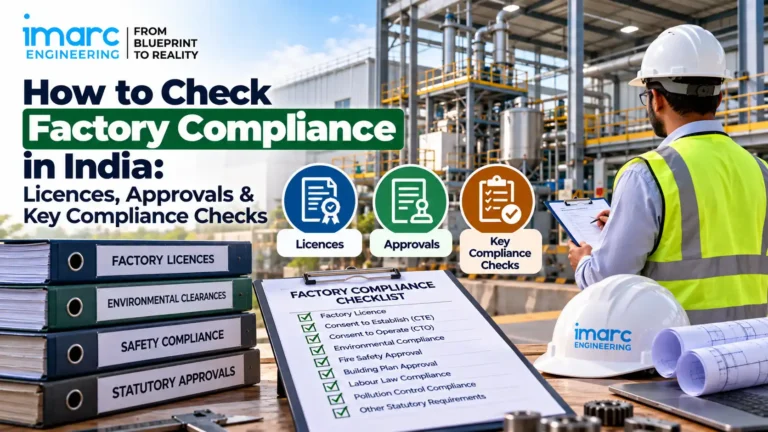
Registering your business and obtaining necessary licenses is a critical step. Choose an appropriate business structure such as proprietorship, partnership, limited liability partnership, or private limited company based on your investment scale and growth plans. Register your business with the Registrar of Companies or appropriate authority and obtain Goods and Services Tax registration which is mandatory for all food processing businesses. Apply for FSSAI license from the Food Safety and Standards Authority of India, with state license required for annual turnover up to 12 crore rupees costing 2,000 to 5,000 rupees annually, and central license mandatory for turnover exceeding 12 crore rupees costing 7,500 to 25,000 rupees annually. Obtain factory license under the Factories Act if employing ten or more workers with power or twenty or more without power, with costs ranging from 5,000 to 15,000 rupees. Secure environmental clearances including Consent to Establish from State Pollution Control Board before construction costing 10,000 to 30,000 rupees, and Consent to Operate before commercial operations with annual fees of 15,000 to 50,000 rupees. Apply for trade license from local municipal authorities costing 2,000 to 10,000 rupees and fire safety NOC from the fire department essential for insurance purposes.
Step 4: Arrange Finance and Investment
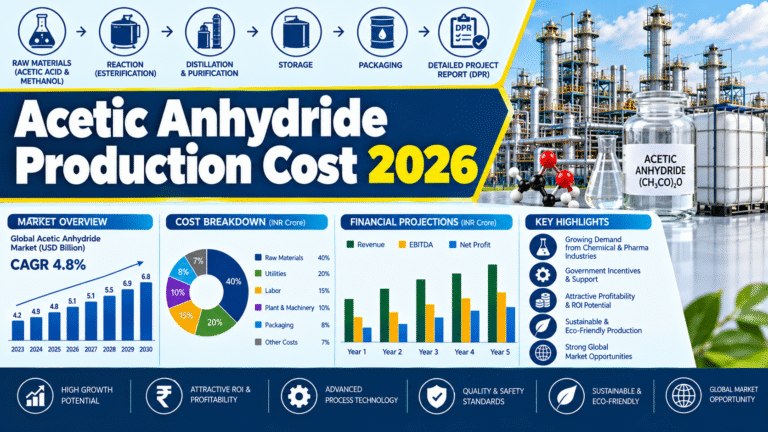
Determine your total capital requirement including land acquisition or rental, building construction or renovation, machinery and equipment purchase, installation and commissioning costs, initial working capital for raw materials and operations, and contingency reserves. For a small scale plant processing 500 to 1,000 kilograms daily, expect total investment between 80 lakh to 1.5 crore rupees. Medium scale operations processing 2,000 to 5,000 kilograms daily require investment of 2.5 to 4.5 crore rupees. Large scale plants processing 10,000 kilograms or more daily need substantial investment ranging from 7 to 12 crore rupees. Explore various financing options such as term loans from commercial banks offering up to 75 percent financing with interest rates of 9 to 12 percent annually, government subsidies under schemes supporting food processing industries including PMFME scheme for micro food processing enterprises offering 35 percent credit-linked subsidy, and PMKSY scheme providing infrastructure support. Consider approaching NABARD for agriculture-linked financing, private equity investors for larger operations, or utilizing personal savings for smaller ventures.
Step 5: Select Suitable Location and Infrastructure
Location plays a vital role in cocoa processing success. Choose a site with good connectivity to cocoa bean sources, particularly proximity to cocoa growing regions in South India or major ports like Mumbai, Chennai, Cochin, and Visakhapatnam if relying on imported beans which constitute a significant portion of raw material for most processors. Ensure availability of adequate three-phase electricity supply with sufficient load capacity, clean water source providing 5,000 to 20,000 liters daily depending on processing scale, and excellent road connectivity for transportation of raw materials and finished products. The location should comply with industrial zoning regulations and have sufficient space for bean storage requiring controlled temperature and humidity conditions, processing areas, finished product warehousing, quality control laboratory, and administrative facilities with provision for future expansion. Consider proximity to your target markets including chocolate manufacturers and confectionery companies to minimize distribution costs and enable faster delivery. For small scale plants, allocate 2,000 to 4,000 square feet of land with built-up area of 1,500 to 3,000 square feet. Medium scale operations require 8,000 to 15,000 square feet with built-up area of 6,000 to 12,000 square feet. Large scale facilities need 20,000 to 50,000 square feet with corresponding built-up areas. Land costs vary significantly with industrial areas priced at 1,000 to 3,000 rupees per square foot, rural and semi-urban locations at 500 to 1,500 rupees per square foot, and cocoa growing regions offering more affordable options at 300 to 1,200 rupees per square foot. Rental options provide flexibility with industrial areas charging 20 to 50 rupees per square foot monthly and rural locations at 8 to 25 rupees per square foot monthly.
Request a Sample Report for In-Depth Market Insights: https://www.imarcgroup.com/cocoa-processing-plant-project-report/requestsample
Step 6: Design Factory Layout and Construction
Plan your factory layout efficiently to optimize processing flow from raw material reception to finished product dispatch. Designate separate areas for cocoa bean reception and storage with proper ventilation maintaining 18 to 20 degrees Celsius and humidity below 70 percent to prevent mold growth and quality deterioration, cleaning and sorting section equipped with appropriate machinery and adequate lighting, roasting area with proper ventilation and temperature control systems, winnowing and nib processing zone, grinding and refining section for cocoa liquor production, hydraulic pressing area for cocoa butter extraction and cake production, pulverizing section for cocoa powder manufacturing, optional conching and tempering areas if producing chocolate products, packaging and labeling station with adequate space for different product types, cold storage facility maintaining 15 to 20 degrees Celsius for cocoa butter storage, quality control laboratory equipped with testing apparatus including moisture analyzers, fat content analyzers, pH meters, and microbial testing equipment, raw material and finished goods warehouses with proper inventory management systems, machinery maintenance workshop, worker amenities including changing rooms and rest areas, and administrative offices.
Step 7: Procure Machinery and Equipment
The machinery required for cocoa processing represents the largest capital investment and significantly impacts product quality and operational efficiency. Essential equipment includes cocoa bean cleaning and sorting machines with pre-cleaning units, destoners, magnetic separators, and size sorting conveyors, with costs ranging from 3 to 5 lakh rupees for small scale, 8 to 12 lakh rupees for medium scale, and 15 to 25 lakh rupees for large scale operations. Roasting machines represent critical equipment for flavor development, available in batch or continuous configurations with temperature control systems operating at 120 to 150 degrees Celsius, priced between 5 to 8 lakh rupees for small capacity units processing 50 to 100 kilograms per hour, 12 to 20 lakh rupees for medium capacity, and 25 to 45 lakh rupees for large industrial roasters handling 500 kilograms or more hourly. Winnowing machines that separate cocoa nibs from shells using cracking units and air classification systems cost 4 to 6 lakh rupees for small scale, 10 to 15 lakh rupees for medium operations, and 20 to 35 lakh rupees for large scale facilities. Grinding and refining machines converting nibs into cocoa liquor with particle sizes of 18 to 25 microns, utilizing stone mills or ball mills with stainless steel construction and temperature control, require investment of 8 to 12 lakh rupees for small units, 18 to 30 lakh rupees for medium capacity, and 40 to 70 lakh rupees for high-capacity industrial grinders. Hydraulic press machines extracting cocoa butter from liquor at pressures of 400 to 600 bar and temperatures of 90 to 100 degrees Celsius, producing both cocoa butter and cake, represent major investment items costing 10 to 15 lakh rupees for small batch units, 25 to 40 lakh rupees for medium operations, and 50 to 90 lakh rupees for large continuous pressing systems. Pulverizing machines converting cocoa cake into fine powder with mesh sizes of 75 to 200 microns using pin mills or impact pulverizers with dust collection systems cost 4 to 7 lakh rupees for small capacity, 10 to 18 lakh rupees for medium scale, and 20 to 35 lakh rupees for large operations. Optional equipment for chocolate production includes conching machines for texture and flavor refinement costing 15 to 25 lakh rupees for medium scale and 35 to 60 lakh rupees for large units, and tempering machines for controlling chocolate crystallization priced at 8 to 15 lakh rupees for medium capacity and 18 to 35 lakh rupees for industrial scale. Supporting infrastructure includes storage tanks and silos for beans, liquor, and butter in stainless steel construction with temperature control costing 3 to 12 lakh rupees per unit, packaging machines for powder filling, vacuum packaging of cocoa butter, and labeling priced from 5 to 8 lakh rupees for small scale, 10 to 18 lakh rupees for medium operations, and 20 to 35 lakh rupees for fully automated lines.
Step 8: Establish Cocoa Bean Supply Chain
Cocoa bean procurement requires careful planning as raw materials typically constitute 60 to 70 percent of total operational costs. The primary cocoa varieties include Forastero representing 80 percent of global production with robust flavor and higher yields suitable for mass market products priced at 280 to 380 rupees per kilogram, Criollo offering premium quality fine flavor ideal for high-end chocolate but with lower yields commanding prices of 450 to 600 rupees per kilogram, and Trinitario hybrid varieties balancing good flavor with reasonable yields priced at 350 to 480 rupees per kilogram. Establish reliable sourcing relationships through multiple channels including domestic procurement from Indian cocoa production of 15,000 to 18,000 metric tons annually from Kerala, Karnataka, Tamil Nadu, and Andhra Pradesh offering advantages of freshness, traceability, and lower logistics costs with prices ranging from 300 to 500 rupees per kilogram depending on quality and season though facing challenges of limited volume and seasonal availability. Import options from West Africa particularly Ivory Coast and Ghana supplying 70 percent of global cocoa, South American origins like Ecuador, Peru, and Brazil offering premium varieties, and Southeast Asian sources in Indonesia and Malaysia providing cost-effective options, with CIF prices ranging from 250 to 400 rupees per kilogram including duties and logistics though requiring minimum container orders of 20 to 25 metric tons. Direct farmer partnerships through contract farming arrangements ensure consistent supply 10 to 20 percent cheaper than market rates while supporting sustainable sourcing and building long-term relationships requiring advance planning and payments. Evaluate beans based on critical quality parameters including moisture content of 6 to 8 percent, fermentation quality with well-fermented brown beans preferred, defect rates below 5 percent, size consistency with 90 to 110 beans per 100 grams, minimal mold and insect damage, and foreign matter content less than 1 percent. Additional raw materials include alkalizing agents for Dutch-processed cocoa costing 80 to 150 rupees per kilogram, packaging materials at 15 to 40 rupees per kilogram of finished product, and additives like lecithin and vanilla for chocolate production priced at 200 to 600 rupees per kilogram.
Step 9: Hire and Train Workforce
Recruit skilled personnel for various operational roles with manpower requirements varying by plant scale. Small scale plants processing 500 kilograms daily typically require a plant manager overseeing overall operations, production supervisor managing daily processing, three to four machine operators for running equipment, quality control staff conducting testing, four to five helpers and laborers for material handling, two packaging staff, one maintenance technician, and accountant or administrative personnel, totaling 14 to 16 employees with monthly salary costs of 4 to 6 lakh rupees. Medium scale operations processing 2,500 kilograms daily need one plant manager, two production supervisors for shift management, two shift in-charges, eight to ten machine operators, two to three quality control staff, ten to twelve helpers and laborers, four to five packaging personnel, two to three maintenance team members, one storekeeper, and two to three accounts and administrative staff, totaling 35 to 42 employees with monthly salary expenses of 12 to 18 lakh rupees. Large scale facilities processing 10,000 kilograms daily require comprehensive staffing including one general manager, one plant manager, two production managers, four shift supervisors, twenty to twenty-five machine operators, five to six quality control team members, two to three research and development staff, twenty-five to thirty laborers and helpers, ten to twelve packaging staff, five to six maintenance team members, three to four stores and logistics personnel, and five to six administrative and accounts staff, totaling 85 to 100 employees with monthly salary costs of 35 to 50 lakh rupees.
Step 10: Develop Processing Methods and Procedures
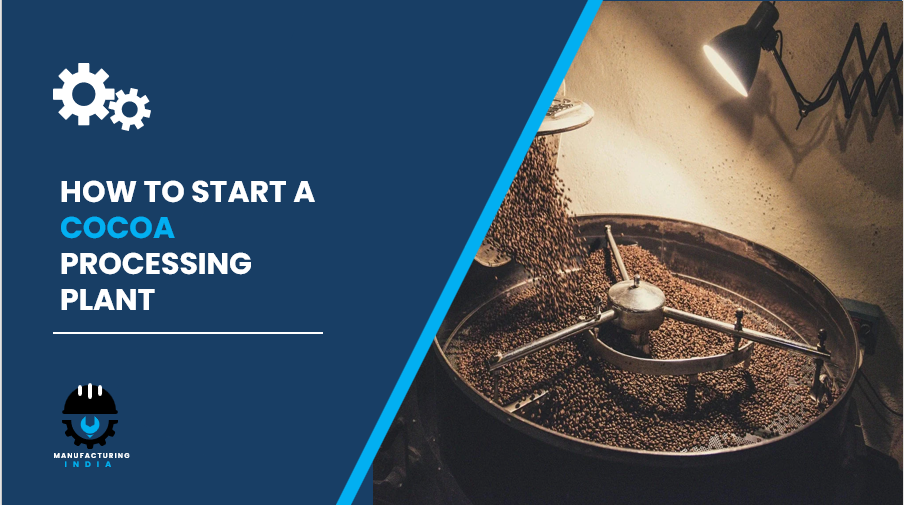
Creating the right processing procedures is crucial for operational success and product quality. Work with food processing experts and experienced cocoa technologists to develop your manufacturing methodology covering the complete process flow from bean reception through finished product packaging. The process begins with bean reception and storage where incoming cocoa beans in jute bags or bulk containers undergo quality checks for moisture content ideally between 6 to 8 percent, visual inspection for mold, insects, and foreign matter, and storage in well-ventilated warehouses maintaining 18 to 20 degrees Celsius with humidity below 70 percent to prevent deterioration. Cleaning and sorting operations remove stones, dust, metal particles, and foreign contaminants using magnetic separators and destoners while sorting beans by size for uniform roasting, with typical yield loss of 2 to 4 percent during this stage. Roasting represents the most critical step for flavor development operating at temperatures of 120 to 150 degrees Celsius for durations of 20 to 40 minutes depending on variety and desired flavor profile, reducing moisture content to 2 to 3 percent while developing characteristic chocolate flavor through Maillard reactions and other chemical transformations, with different roast profiles creating light, medium, or dark characteristics. Winnowing operations crack roasted beans and separate cocoa nibs from shells using air classification systems, with shells constituting 10 to 12 percent by weight sold as valuable byproducts for animal feed or garden mulch. Grinding and refining processes convert nibs into cocoa liquor or mass using stone mills or ball mills, generating heat through friction raising temperature to 45 to 50 degrees Celsius while achieving particle sizes of 18 to 25 microns for smooth texture, with the resulting cocoa liquor containing 53 to 55 percent natural cocoa butter and available for storage as liquid at 40 to 50 degrees Celsius or solidified into blocks.
Step 11: Implement Quality Control Measures
Quality assurance is paramount in cocoa processing to ensure product safety and meet customer specifications. Establish a dedicated quality control laboratory equipped with necessary testing apparatus including moisture analyzers measuring water content in beans and finished products, fat content analyzers using Soxhlet extraction method for determining cocoa butter percentage, pH meters for monitoring acidity levels particularly important for alkalized cocoa, particle size analyzers ensuring proper grinding and consistency, and microbial testing equipment for detecting contamination and ensuring food safety. Implement comprehensive standard operating procedures for all processing stages beginning with incoming raw material inspection where bean samples undergo testing for moisture content, fermentation quality, defect percentage, bean size distribution, shell content, and presence of foreign matter before acceptance into storage. Conduct in-process quality checks at critical control points including monitoring roasting temperatures and times to ensure consistent flavor development, checking winnowing efficiency to minimize nib loss in shells, testing cocoa liquor for particle size and fat content, verifying pressing parameters to achieve desired butter yield and cake specifications, and confirming pulverizing performance to meet powder fineness requirements. Perform finished product testing before packaging and dispatch covering parameters like moisture content typically below 5 percent for cocoa powder, fat content verification against specifications ranging from 10 to 24 percent for different powder grades, pH measurement particularly for alkalized products, particle size distribution ensuring uniformity, microbiological analysis for total plate count, yeast and mold, coliforms, and pathogens, and sensory evaluation for color, aroma, and taste characteristics. Maintain detailed records of all quality tests, batch processing parameters, and any deviations from standard procedures to enable traceability and continuous improvement.
Step 12: Design Branding and Market Positioning
Strong branding and market positioning differentiate your business in the competitive cocoa processing market. Create awareness about your product quality, processing capabilities, and reliability as a supplier to industrial customers and potential retail markets. Design informative marketing materials showcasing your product specifications including fat content ranges, particle size options, color values, and flavor profiles suitable for different applications. Develop comprehensive technical data sheets that comply with food safety regulations detailing nutritional information, processing methods, quality certifications, and handling recommendations enabling customers to evaluate product suitability for their formulations. Create a memorable brand name and professional logo reflecting quality and reliability that resonates with your target market segments. Consider developing distinct product lines for different applications such as premium cocoa butter for cosmetic and pharmaceutical industries commanding higher prices, alkalized cocoa powder for beverage applications, natural cocoa powder for baking uses, and specialty products like organic or single-origin cocoa for premium chocolate manufacturers. Establish clear positioning whether competing on price for commodity markets, quality differentiation for premium segments, specialized capabilities like organic certification or fair trade compliance, or service excellence through reliable supply and technical support. Develop attractive packaging that protects product quality while communicating brand values and product attributes, with industrial packaging in food-grade materials suitable for bulk handling and optional retail packaging for branded consumer products. Build reputation for consistent quality, on-time delivery, and technical expertise that encourages customer loyalty and repeat business.
Step 13: Set Up Distribution and Sales Network
Effective distribution ensures reaching target customers efficiently while managing logistics costs. Identify and establish relationships with primary buyers in your target regions including chocolate manufacturers representing the largest customer segment requiring consistent supply of cocoa liquor, butter, and powder meeting specific technical specifications, confectionery companies using cocoa products for various candy and sweet applications, industrial bakeries consuming cocoa powder for cakes, biscuits, and pastries, ice cream manufacturers incorporating cocoa products for flavor and texture, beverage companies utilizing cocoa powder for chocolate drinks and ready-to-drink products, cosmetic companies purchasing pharmaceutical-grade cocoa butter for lotions, creams, and personal care products, and export buyers in international markets offering premium pricing opportunities. Develop a direct sales approach for major accounts establishing long-term supply contracts providing business stability and predictable revenue streams, offering customized products meeting specific customer requirements, providing technical support for product applications, and ensuring consistent quality and delivery schedules building strong partnerships.
Step 14: Implement Marketing Strategies
Create awareness and demand for your products through strategic marketing initiatives targeting business customers and potential retail markets. Utilize digital marketing including professional website showcasing your products, processing capabilities, quality certifications, and customer testimonials establishing credibility with potential buyers, social media presence on LinkedIn for B2B connections and industry engagement, search engine optimization ensuring visibility when potential customers search for cocoa product suppliers, and online advertising targeting food industry professionals and procurement managers. Engage in traditional marketing through participation in food processing trade shows and exhibitions displaying products and meeting potential customers face-to-face, advertising in food industry publications and directories reaching decision makers, and direct outreach to chocolate manufacturers and confectionery companies through personalized presentations and product samples. Build relationships with industry associations and business groups accessing networking opportunities, staying informed about industry trends and regulatory changes, and enhancing business credibility through memberships.
Profitability and Growth Potential
The cocoa processing business offers good profit margins when managed efficiently. Focus on optimizing processing costs, maintaining high recovery rates, and building strong market presence. As your business grows, consider expanding processing capacity, investing in advanced recovery technologies, and exploring international markets for cocoa products. Continuous innovation in processing methods, sourcing strategies, and value-added services will help sustain long-term growth.
About the Author