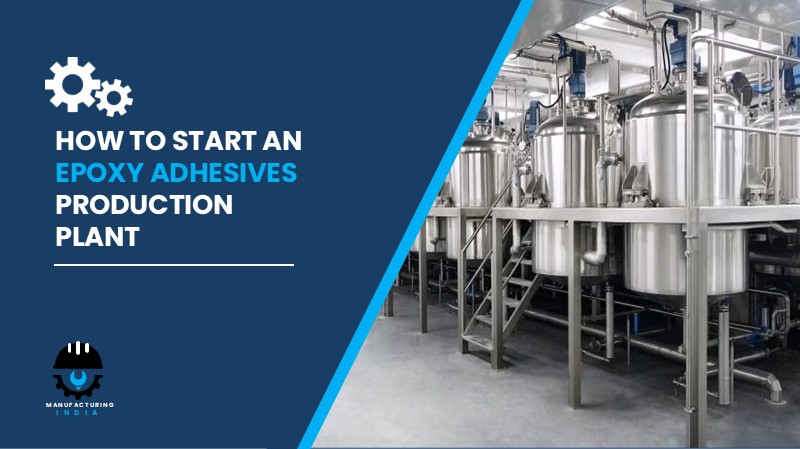
Setting up an epoxy adhesives manufacturing plant in India presents a compelling investment case driven by the country’s accelerating infrastructure development, rapid expansion of the automotive and aerospace sectors, growing electronics manufacturing ecosystem, and the broad-based shift across multiple industries from mechanical fastening toward high-performance structural bonding solutions. Epoxy adhesives high-performance structural bonding agents composed of a resin and a hardener that create a strong, durable thermoset plastic when mixed deliver exceptional strength often exceeding 30 MPa, chemical and moisture resistance, and thermal stability that no mechanical fastener or solvent-based adhesive can replicate across the same range of demanding industrial applications. The global epoxy adhesives market was valued at USD 8.79 billion in 2025 and is projected to reach USD 13.61 billion by 2034 at a CAGR of 4.7%, driven by the emerging trend toward automation in manufacturing, which is increasing the need for reliable and precise bonding solutions across every major industrial sector globally.
India’s structural advantages make it a strategically sound location for establishing an epoxy adhesives manufacturing plant at this stage of the market’s development. The residential construction sector, which expanded at 6.8% during FY2024-25, is projected to reach USD 350 billion by 2030 generating sustained demand for epoxy-based structural adhesives, crack injection systems, and flooring coatings across both residential and commercial construction applications. Government investments in smart cities, transportation infrastructure, renewable energy, and domestic manufacturing under Make in India and PLI schemes for electronics and automotive are simultaneously driving demand across construction, assembly, and industrial applications. Industrial chemical manufacturing clusters in Gujarat, Maharashtra, Andhra Pradesh, and Rajasthan provide investors with access to epoxy resin and hardener supply chains, chemical engineering talent, and established distribution networks reaching construction, automotive OEM, and industrial equipment buyer markets across the country.
An epoxy adhesives manufacturing plant in India is positioned within a global market growing at 4.7% CAGR from USD 8.79 billion in 2025 toward USD 13.61 billion by 2034, driven by automation-led bonding demand, infrastructure expansion, automotive lightweighting, renewable energy growth, and electronics miniaturisation. With gross profit margins of 35–45% and net margins of 18–25% at 10,000–30,000 tons annual production capacity, and India’s residential construction sector alone projected to reach USD 350 billion by 2030, this investment delivers strong, multi-sector-backed financial returns.
What are Epoxy Adhesives?
Epoxy adhesives are high-performance structural bonding agents composed of a resin and a hardener that create a strong, durable thermoset plastic when mixed. Unlike solvent-based glues, they cure via an exothermic chemical reaction, forming a rigid or flexible three-dimensional polymer network. Renowned for their exceptional strength often exceeding 30 MPa they are used to bond diverse materials including metal, glass, ceramics, and wood. They are highly resistant to chemicals, moisture, and high temperatures, making them ideal for heavy-duty industrial, automotive, and aerospace applications. Their ability to fill gaps and resist fatigue further cements their role in repairing and assembling structural components.
The primary production method involves resin synthesis, compounding, curing agent blending, and quality testing a multi-step chemical manufacturing process integrating raw material handling, precision reactor chemistry, blending and formulation, and rigorous quality verification at each stage. End-use industries served include construction, automotive, aerospace, electronics, wind energy, marine, and industrial assembly. Key applications include structural bonding, composite laminating, floor coatings, crack injection, electronic encapsulation, and high-strength assembly in HVAC, renewable energy systems, and hydraulic equipment — providing manufacturers with a single production investment that addresses multiple high-value, specification-intensive buyer markets across India’s growing industrial base.
Cost of Setting Up an Epoxy Adhesives Manufacturing Plant in India
The total investment required to establish an epoxy adhesives manufacturing plant in India depends on plant capacity, product range complexity, geographic location, level of automation, and compliance with chemical safety and environmental regulatory requirements. Investors must account comprehensively for both one-time capital expenditure and recurring operational costs when preparing a feasibility study or detailed project report (DPR).
1. Capital Expenditure (CapEx)
Land and Site Development constitutes a substantial foundational investment. Costs for land registration, boundary construction, internal road layout, drainage infrastructure, and site levelling vary based on whether the facility is within a government-notified chemical industrial zone, a specialty chemicals processing estate, or on privately acquired industrial land. Chemical manufacturing clusters in Gujarat, Maharashtra, and Andhra Pradesh offer infrastructure-ready sites with proximity to epoxy resin and hardener supply chains, established logistics networks for industrial adhesive distribution, and experienced chemical engineering workforces.
Civil Works and Construction encompasses the resin reactor building requiring chemical-resistant construction, spill containment, and ventilation systems appropriate for handling reactive epoxy resin and amine hardener materials along with the hardener mixing and compounding area, filler storage and drying facility, quality control laboratory, finished goods warehouse, packaging hall, effluent treatment facility, and administrative block. Chemical-resistant flooring, explosion-proof electrical installations in reactive material handling areas, and adequate ventilation for organic vapour management add to civil construction costs relative to standard light manufacturing facilities.
Machinery and Equipment represent the single largest component of capital expenditure. Key machinery required for an epoxy adhesives manufacturing plant includes:
- Resin reactors
- Hardener mixing tanks
- Filler dryers
- High-shear dispersers
- Degassing units
- Three-roll mills
- Batch homogenisers
- Filling and packaging machines
Other Capital Costs include the effluent treatment plant (ETP) for managing chemical process waste and solvent streams, pre-operative expenses covering regulatory filings and feasibility study preparation, plant commissioning charges, utility connection fees, and import duties applicable to specialised high-shear dispersers, three-roll mills, or automated filling and packaging systems sourced internationally.
Request a Sample Report for In-Depth Market Insights: https://www.imarcgroup.com/epoxy-adhesives-manufacturing-plant-project-report/requestsample
2. Operational Expenditure (OpEx)
Raw Material Cost is the dominant driver of operating expenditure, accounting for approximately 60–70% of total OpEx. The primary and most cost-significant inputs are epoxy resins, hardeners including amines and anhydrides, and fillers. Liquid epoxy resin based on the reaction of bisphenol A (BPA) and epichlorohydrin represents the largest single raw material cost line, with its price linked to global epichlorohydrin and BPA commodity markets subject to petrochemical cycle volatility. Amine and anhydride hardeners represent the second-largest raw material cost category, with their pricing driven by specialty chemical intermediates markets. Fillers including calcium carbonate, silica, and alumina are used to modify rheology, thermal expansion, and mechanical properties. Investors are advised to negotiate long-term supply contracts with domestic epoxy resin manufacturers including established producers in Gujarat and Maharashtra and with hardener and specialty chemical suppliers to stabilise input costs. Sourcing epoxy resins and hardeners domestically where quality specifications are met reduces import dependency and benefits from supply chain cost advantages.
Utility Costs – covering electricity and steam for resin reactors, high-shear dispersers, three-roll mills, filler dryers, and facility operations account for approximately 10–15% of total OpEx. High-shear dispersing and three-roll milling are the most energy-intensive process steps, and investors in regions with competitive industrial electricity tariffs and reliable utility supply are better positioned to manage this cost component over the plant’s operational life. Cooling water infrastructure for reactor temperature management adds further utility requirements.
Other Operating Costs include outbound transportation to construction contractors, automotive OEM tier suppliers, electronics manufacturers, aerospace fabricators, wind energy system assemblers, and industrial equipment manufacturers; packaging materials for cartridges, cans, drums, and bulk containers depending on the customer format; employee salaries and wages for chemical engineers, formulation chemists, quality assurance technicians, and application technical support personnel; equipment maintenance; quality assurance testing for adhesive strength, viscosity, pot life, and chemical resistance compliance; depreciation on civil and machinery assets; and applicable taxes including GST. By the fifth year of operations, total operational costs are expected to increase substantially due to inflation, market fluctuations, potential rises in epoxy resin and hardener prices, supply chain disruptions, rising consumer demand, and shifts in the global economy.
3. Plant Capacity
The proposed epoxy adhesives production facility is designed with an annual production capacity ranging between 10,000 and 30,000 tons, enabling significant economies of scale while maintaining operational flexibility across different adhesive grades, cure systems, and application-specific product formulations. This capacity range is well-aligned with the requirements of construction contractors, automotive OEM tier suppliers, electronics manufacturers, and industrial equipment assemblers across India’s growing domestic market and export channels. Capacity can be customised based on investor requirements, raw material procurement network scale, and target market segment focus. Profitability improves consistently with higher capacity utilisation, and epoxy adhesive manufacturing plants support phased capacity expansion through additional reactor and disperser capacity with contained incremental investment.
4. Profit Margins and Financial Projections
The epoxy adhesives manufacturing plant demonstrates strong profitability potential under normal operating conditions. Gross profit margins typically range between 35–45%, supported by stable multi-sector demand and the high-performance, specification-intensive nature of formulated epoxy adhesive products relative to commodity raw material inputs. Net profit margins range between 18–25%, reflecting the moderate raw material intensity and utility costs of the chemical formulation production model. A comprehensive financial analysis should include income projections, expenditure forecasts, gross and net margin tracking across Years 1 through 5, net present value (NPV), internal rate of return (IRR), payback period, and a full profit and loss account. Sensitivity analysis covering epoxy resin and hardener price movements and demand volume variability across construction, automotive, and electronics segments is recommended for investment-grade financial planning.
Why Set Up an Epoxy Adhesives Manufacturing Plant in India?
India’s Construction Sector Boom Driving Structural Adhesive Demand. The residential construction sector expanded at 6.8% during FY2024-25 and is projected to reach USD 350 billion by 2030. This exceptional construction growth trajectory is creating sustained large-volume demand for epoxy adhesives in structural bonding, floor coating, crack injection, and concrete repair applications across residential, commercial, and infrastructure construction projects. India’s smart city initiatives, metro rail expansions, and housing programmes further amplify this structural adhesive demand pipeline.
Automation and Advanced Manufacturing Driving Industrial Bonding Solutions Adoption. The emerging trend toward automation in manufacturing is increasing the need for reliable and precise bonding solutions across automotive assembly, electronics manufacturing, and industrial equipment production. The shift toward replacing mechanical fasteners with adhesive bonding solutions driven by weight reduction requirements, vibration dampening needs, and the desire to join dissimilar materials is accelerating adoption of structural epoxy adhesives across every major industrial manufacturing sector in India.
Renewable Energy and Wind Turbine Blade Manufacturing Creating New Application Demand. Growth in renewable energy installations, particularly wind energy, is driving significant demand for epoxy composite laminating adhesives used in wind turbine blade manufacturing and structural assembly. India’s national wind energy capacity expansion targets combined with the government’s push for domestic manufacturing of wind turbine components create a dedicated industrial buyer segment for high-performance structural epoxy systems that Indian manufacturers are well-positioned to serve.
Electronics Miniaturisation and PCB Encapsulation Requiring Specialised Formulations. The expanding electronics manufacturing sector in India supported by PLI incentives for mobile phones and electronics components is driving demand for epoxy-based encapsulation compounds, potting materials, and PCB bonding adhesives used in circuit board assembly, component protection, and connector sealing. This high-value, specification-intensive application segment offers epoxy adhesive manufacturers access to a premium pricing tier alongside construction and automotive volume markets.
Bio-Based Raw Material Innovation Validating Sustainability-Driven Premium Segments. In February 2026, Henkel Adhesive Technologies entered into a strategic collaboration with Swedish chemical company Sekab to accelerate the transition from fossil-based to bio-based raw materials in adhesive production, focusing on replacing conventional ethyl acetate with a sustainable bio-based alternative supporting Henkel’s ambition to lead with innovation and sustainability in advanced industrial adhesive solutions. This strategic direction from the world’s leading adhesive manufacturer signals the emerging premium positioning of sustainably formulated epoxy adhesives, creating early-mover differentiation opportunities for Indian manufacturers who invest in green chemistry formulation capability.
DIC Corporation’s Production Capacity Expansion Confirming Global Sectoral Confidence. In August 2025, DIC Corporation announced a decision to build a new epoxy resins production facility at its Chiba Plant in Ichihara, Chiba Prefecture, with the investment approved as a plan for ensuring stable supply under Japan’s national economic security legislation attracting a subsidy of up to ¥3 billion from the Ministry of Economy, Trade and Industry. This government-backed capacity expansion by a major global epoxy resin producer confirms the strategic importance of the epoxy value chain and the sustained investment confidence that characterises this sector globally.
Manufacturing Process – Step by Step
The epoxy adhesives manufacturing process uses resin synthesis, compounding, curing agent blending, and quality testing as the primary production method. Below are the main stages involved in the epoxy adhesives manufacturing process flow:
- Raw Material Receipt and Inspection: Epoxy resins, hardeners including amines and anhydrides, fillers, reactive diluents, and additives are received, inspected against specification, and cleared for the production area following quality verification of appearance, viscosity, epoxide equivalent weight, and amine value as applicable.
- Filler Drying: Filler dryers process calcium carbonate, silica, alumina, and other solid fillers to the target moisture content specification before incorporation into the adhesive formulation preventing moisture-induced curing defects and maintaining product shelf life.
- Resin Component Preparation Reactor Stage: Resin reactors blend liquid epoxy resin with reactive diluents, coupling agents, toughening agents, and specified filler loadings at controlled temperature and mixing conditions to produce the Part A resin component of the finished adhesive system, with viscosity, gel time, and chemical composition verified at this stage.
- High-Shear Dispersion: High-shear dispersers incorporate solid fillers and pigments into the resin matrix at high mixing intensity and controlled tip speed, achieving the target particle size distribution, filler dispersion uniformity, and rheological profile including sag resistance and application viscosity specified for each product formulation.
- Three-Roll Milling: Three-roll mills process high-viscosity adhesive formulations containing fine solid fillers through controlled gap compression between counter-rotating rolls, achieving the final dispersion quality, gloss, and texture properties required for specific automotive, electronics, and precision bonding applications.
- Degassing: Degassing units apply vacuum to the mixed adhesive components to remove entrained air bubbles introduced during mixing and dispersion operations critical for electronic encapsulation and potting applications where void-free performance is a mandatory product specification.
- Curing Agent Blending Hardener Component Preparation: Hardener mixing tanks blend amine or anhydride hardeners with accelerators, reactive modifiers, and fillers to produce the Part B curing agent component, with amine hydrogen equivalent weight, viscosity, and pot life verified against specification.
- Batch Homogenisation: Batch homogenisers ensure complete blending uniformity and consistent rheological properties across the full production batch of each adhesive component before packaging critical for maintaining the consistent cure kinetics and adhesive performance that specification-sensitive OEM and industrial buyers require.
- Quality Inspection and Testing: Analytical instruments and quality inspection systems test finished adhesive components for viscosity, mixed adhesive pot life, gel time, Shore hardness after cure, tensile lap shear strength, peel strength, chemical resistance, and temperature resistance. Batch release is conditional on all parameters meeting product specification and customer acceptance criteria.
- Filling and Packaging: Filling and packaging machines dispense finished adhesive components into the specified packaging formats including dual-cartridge systems for automated and manual dispensing, cans and drums for bulk industrial supply, and retail packaging for construction and maintenance applications with batch coding and hazard labelling applied for transport and regulatory compliance.
- Dispatch to End-Use Industries: Finished epoxy adhesive systems are dispatched to construction contractors, automotive OEM tier suppliers, aerospace fabricators, electronics manufacturers, wind energy system assemblers, marine fabricators, and industrial equipment manufacturers through direct sales and distribution channel networks.
Key Applications
Epoxy adhesives produced at this type of facility serve four primary end-use sectors with specific formulation chemistry, performance specification, and packaging requirements for each:
- Automotive: Structural bonding, component assembly, and adhesive sealing in vehicles including bonding of body panels, underbody reinforcement, and lightweight composite components that require high fatigue resistance and dimensional stability over the vehicle’s service life.
- Electronics: Encapsulation of circuit boards, potting compounds for protection of electronic assemblies against moisture and vibration, and precision component bonding requiring void-free cured systems with controlled dielectric properties and thermal conductivity.
- Construction: Structural adhesives for concrete repair and strengthening, crack injection systems for infrastructure rehabilitation, flooring systems providing chemical and abrasion resistance, and protective coatings for industrial floor and wall surfaces.
- Telecommunication: Fibre optic bonding, cable assembly, and protective encapsulation of communication infrastructure components requiring long-term environmental stability and mechanical protection in outdoor and underground installations.
Leading Epoxy Adhesives Producers
The global epoxy adhesives industry is served by several large-scale multinational manufacturers with diversified product portfolios and strong multi-sector application expertise. Key players include:
- Henkel AG & Co. KGaA
- 3M Company
- Sika AG
- H.B. Fuller Company
- Huntsman International LLC
Timeline to Start the Plant
Investors planning to establish an epoxy adhesives manufacturing plant in India should anticipate the following project development phases:
- Feasibility study and project report preparation
- Land acquisition and site development
- Regulatory approvals and environmental clearances
- Factory licence and fire safety compliance
- Machinery procurement and installation
- Raw material supplier agreements and supply chain setup
- Trial production and quality testing
- Commercial production launch
Licences and Regulatory Requirements
Starting an epoxy adhesives manufacturing unit in India requires several approvals:
- Business registration (Proprietorship, LLP, or Private Limited Company)
- Factory Licence under the Factories Act
- Environmental Clearance from the State Pollution Control Board — including compliance with chemical manufacturing emission and effluent standards
- Hazardous chemical safety compliance under the Manufacture, Storage and Import of Hazardous Chemical (MSIHC) Rules for reactive epoxy resins and amine hardeners
- GST Registration
- Fire Safety NOC including flammable solvent and reactive chemical hazard compliance where applicable
- Effluent Treatment Plant (ETP) operational clearance for chemical process waste and wash water management
- Occupational Health and Safety compliance covering epoxy resin skin sensitisation risk, amine vapour exposure monitoring, and chemical handling protocols
- Bureau of Indian Standards (BIS) certification for applicable adhesive product standards where required for construction or automotive OEM supply qualification
- Material Safety Data Sheet (MSDS) documentation and chemical product registration compliance under applicable regulatory frameworks
Key Challenges to Consider
Epoxy Resin Price Volatility as the Dominant Cost Variable. Epoxy resins accounting for 60–70% of total OpEx are priced against epichlorohydrin and bisphenol A feedstock markets subject to global petrochemical cycle volatility and capacity availability dynamics. Any significant increase in resin prices directly compresses gross margins. Long-term supply contracts with domestic resin manufacturers and a multi-supplier qualification strategy are the primary risk mitigation tools for managing this dominant cost exposure.
OEM Customer Qualification Timelines and Technical Service Requirements. Supplying automotive OEM tier suppliers, aerospace fabricators, and electronics manufacturers with structural epoxy adhesives requires passing extensive customer qualification programs including adhesive performance testing, process compatibility validation, and quality system audits that typically require 12 to 24 months from sample submission to approved supplier status. Investors must plan for extended revenue ramp-up timelines and invest in technical service and application engineering capabilities that are essential to winning and retaining these high-value customers.
Formulation Expertise as a Critical Competitive Asset. Epoxy adhesive manufacturing demands precise formulation expertise, curing chemistry knowledge, and application engineering capability not just raw material blending. Developing proprietary formulations with differentiated performance for specific applications, and building technical application support infrastructure, is essential for competing against established multinationals like Henkel, 3M, and Sika. Recruiting and retaining experienced formulation chemists with specialised epoxy system design expertise is a persistent talent challenge.
Environmental and Chemical Safety Compliance Management. Epoxy resins are classified as skin sensitisers and potential allergens, and amine hardeners carry inhalation hazard classifications. Managing occupational exposure limits, personal protective equipment compliance, waste chemical disposal, and MSIHC regulatory obligations adds ongoing environmental health and safety management overhead that must be built into facility design and operational systems from the outset.
Competition from Established Global and Domestic Producers. The Indian epoxy adhesives market is served by globally scaled multinationals including Henkel, 3M, Sika, and Huntsman with strong brand recognition, extensive application development resources, and long-standing OEM supply relationships. New domestic entrants must build competitive positioning through application-specific formulation differentiation, competitive pricing for construction and maintenance market segments, localisation compliance advantages for government infrastructure procurement, or technical service capability that exceeds what import-dependent competitors can offer from distant supply bases.
Sustainability and Bio-Based Raw Material Transition Pressure. Henkel’s February 2026 strategic collaboration with Sekab for bio-based solvent substitution signals the direction of global adhesive industry sustainability investment. Indian manufacturers entering the market now must evaluate their formulation development roadmap to incorporate sustainability credentials including bio-based raw material options, reduced VOC formulations, and environmental product declarations that will increasingly be required by multinational OEM buyers and government infrastructure procurement specifications over the coming decade.
Frequently Asked Questions
1. How much does it cost to set up an epoxy adhesives manufacturing plant in India?
The total cost depends on plant capacity (10,000–30,000 tons per annum), product range complexity, location, and automation level. CapEx covers land, chemical-grade civil construction, and machinery including resin reactors, hardener mixing tanks, filler dryers, high-shear dispersers, degassing units, three-roll mills, batch homogenisers, and filling and packaging machines, along with pre-operative and regulatory costs.
2. Is epoxy adhesives manufacturing profitable in India in 2026?
Yes. With gross margins of 35–45% and net margins of 18–25%, supported by strong multi-sector demand across construction, automotive, electronics, wind energy, and industrial assembly, a global market growing at 4.7% CAGR toward USD 13.61 billion by 2034, and India’s residential construction sector projected to reach USD 350 billion by 2030, the investment presents a strong and multi-channel-backed profitability case.
3. What machinery is required for an epoxy adhesives manufacturing plant in India?
Key equipment includes resin reactors, hardener mixing tanks, filler dryers, high-shear dispersers, degassing units, three-roll mills, batch homogenisers, and filling and packaging machines.
4. What licences and approvals are required to start an epoxy adhesives manufacturing plant in India?
Required approvals include business registration, Factory Licence, Environmental Clearance, MSIHC hazardous chemical compliance for epoxy resins and amine hardeners, GST Registration, Fire Safety NOC, ETP operational clearance, Occupational Health and Safety compliance, and BIS certification where required for construction or automotive supply applications.
5. What raw materials are needed for epoxy adhesives manufacturing?
The primary raw materials are epoxy resins, hardeners including amines and anhydrides, and fillers. Additional formulation inputs include reactive diluents, toughening agents, accelerators, coupling agents, pigments, and thixotropic additives depending on the specific product formulation and application performance requirements.
6. What are the environmental compliance requirements for an epoxy adhesives manufacturing plant in India?
Environmental Clearance from the State Pollution Control Board is required, along with MSIHC compliance for reactive chemical storage and handling, an operational ETP for chemical process waste and wash water management, compliance with VOC emission standards where solvent-based process aids are used, and Occupational Health and Safety protocols for epoxy resin and amine hardener exposure management.
7. What is the best location to set up an epoxy adhesives manufacturing plant in India?
States with established chemical manufacturing infrastructure, access to epoxy resin and specialty chemical supply chains, and proximity to construction, automotive, and electronics manufacturing buyer markets such as Gujarat, Maharashtra, Andhra Pradesh, and Tamil Nadu offer the best combination of raw material access, logistics connectivity, skilled chemical engineering talent, and industrial buyer proximity for epoxy adhesives manufacturing investment.
8. What is the break-even period for this type of plant in India?
The break-even period depends on plant scale, product mix across construction, automotive, and industrial segments, capacity utilisation, and OEM customer qualification timeline. A full NPV and IRR analysis incorporating sensitivity testing for epoxy resin price movements and demand volume variability is recommended for investment-grade financial planning.
9. What government incentives are available for epoxy adhesives manufacturers in India?
Make in India manufacturing investment incentives, PLI scheme benefits for chemicals and materials manufacturing where applicable, state-level chemical industrial zone incentive schemes in Gujarat and Maharashtra, construction sector procurement preferences for domestically manufactured adhesive systems under government infrastructure projects, and export promotion support through chemical export councils provide relevant financial and market access support for qualifying epoxy adhesives manufacturing investments.
Key Takeaways for Investors
An epoxy adhesives manufacturing plant in India represents a high-margin, multi-sector investment opportunity anchored by a global market valued at USD 8.79 billion in 2025 growing at 4.7% CAGR toward USD 13.61 billion by 2034, driven by automation-led bonding demand, infrastructure expansion, automotive lightweighting, renewable energy growth, and electronics miniaturisation across India’s rapidly industrialising economy. Financial viability is demonstrated across a production capacity range of 10,000 to 30,000 tons per annum, with gross margins of 35–45% and net margins of 18–25% achievable under competitive raw material procurement and efficient formulation-led manufacturing operations among the strongest profitability profiles in India’s specialty chemical manufacturing landscape. India’s residential construction sector’s 6.8% FY2024-25 expansion rate and USD 350 billion 2030 projection provide a large, rapidly growing domestic buyer market that directly sustains construction-grade epoxy adhesive demand at scale. Active global industry investment including Henkel’s February 2026 bio-based raw material collaboration with Sekab and DIC Corporation’s August 2025 government-backed epoxy resin capacity expansion in Japan confirms the sustained strategic investment and innovation momentum that is driving the epoxy adhesive industry forward. With India’s manufacturing sector deepening across automotive, electronics, wind energy, and construction all supported by active government policy and investment incentives the long-term demand sustainability and investment returns for epoxy adhesives manufacturing in India are comprehensively and multiply well-supported throughout the decade ahead.
About the Author