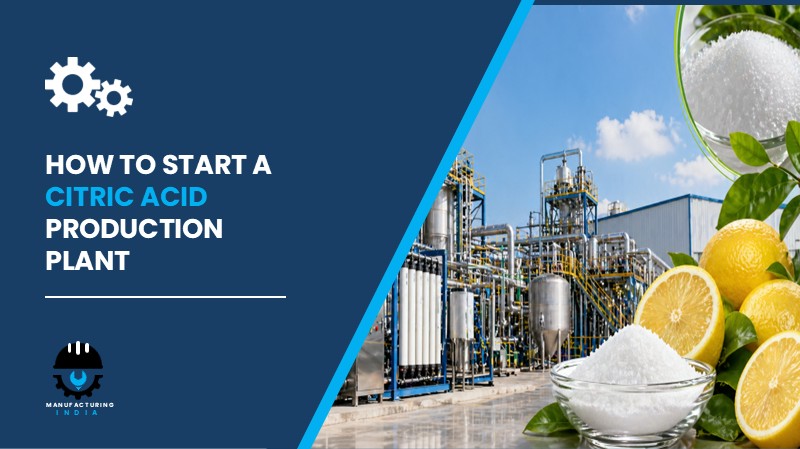
Setting up a citric acid production plant in India presents a compelling investment case, driven by surging demand from the food and beverage, pharmaceutical, personal care, cleaning, and industrial processing sectors. Citric acid is a foundational ingredient across these industries – functioning as an acidulant, preservative, flavor enhancer, chelating agent, and pH regulator. As India’s processed food consumption expands, pharmaceutical output scales, and domestic demand for eco-friendly cleaning products rises, the need for consistent, locally sourced citric acid supply has never been stronger.
India’s structural advantages make it an ideal location for this investment. The country’s rapidly growing urban population, expanding infrastructure, and the government’s Make in India initiative collectively create a highly supportive environment for chemical and food-grade manufacturing. Industrial hubs in states such as Gujarat, Maharashtra, and Uttar Pradesh offer established supply chains, chemical-grade utilities, and proximity to both raw material suppliers and end-use industries. For investors evaluating fermentation-based chemical production, India offers cost-competitive land, a large skilled and semi-skilled labour pool, and a growing domestic market that reduces dependence on export volatility.
Setting up a citric acid production plant in India is a financially sound and strategically well-timed move. With gross profit margins in the range of 30-40% and net margins of 12-18%, this investment benefits from policy support under Make in India, a cost-competitive production environment, and deep demand across food, pharma, and cleaning segments – all of which point toward strong break-even viability and long-term profitability.
What is Citric Acid?
Citric acid is a naturally occurring organic acid found in citrus fruits such as lemons, limes, and oranges. Commercially, it is primarily produced through the fermentation of carbohydrate sources using the microorganism Aspergillus niger. It presents as a white, crystalline, water-soluble powder with a strong acidic taste. Its key functional properties include the ability to regulate acidity, enhance flavour, and preserve products across a wide range of formulations. It also serves as an effective chelating agent, binding metal ions to improve product stability across multiple applications.
The production process – fermentation using Aspergillus niger – aligns with sustainability objectives because it relies on renewable carbohydrate feedstocks, making it attractive to manufacturers facing ESG pressure. End-use industries served by citric acid production include food and beverages, pharmaceuticals, personal care and cosmetics, cleaning and detergents, and chemical and industrial processing. Within these sectors, citric acid functions as an acidulant and flavor enhancer, a preservative and antioxidant, a chelating agent, a pH regulator, and a scale removal and cleaning formulation ingredient.
Cost of Setting Up a Citric Acid Production Plant in India
The cost of establishing a citric acid production plant depends on a range of variables, including plant capacity, technology selection, geographic location, degree of automation, and regulatory compliance requirements. Investors must account for both one-time capital expenditure and recurring operational expenditure in their financial planning.
1. Capital Expenditure (CapEx)
Capital investment for a citric acid production plant covers several major cost heads.
Land and Site Development: involves acquisition charges, land registration, boundary development, and related site preparation expenses – this forms a substantial portion of total CapEx and should ideally be evaluated within an SEZ or industrial estate to benefit from infrastructure support and duty advantages.
Civil Works and Construction: includes the production shed, fermentation hall, quality control laboratory, raw material storage, finished goods warehouse, and administrative block – all of which must meet chemical-grade construction and safety standards.
The largest single component of CapEx is Machinery and Equipment. Key machinery required includes:
- Fermentation tanks
- Seed tanks
- Filtration and separation units
- Centrifuges
- Evaporators
- Precipitation and crystallization equipment
- Dryers
- Packaging and sealing machines
- Sterilizers and pumps
- Quality control and analytical instruments
Other Capital Cost: include effluent treatment plant (ETP) installation, pre-operative expenses (feasibility studies, legal fees, project management), commissioning charges, and any applicable import duties on specialised fermentation or separation equipment.
Request a Sample Report for In-Depth Market Insights: https://www.imarcgroup.com/citric-acid-manufacturing-plant-project-report/requestsample
2. Operational Expenditure (OpEx)
Raw Material Cost: is the dominant component of operating expenditure for a citric acid production plant, accounting for approximately 55-65% of total OpEx. Core raw materials required include molasses or corn syrup (as the primary carbohydrate feedstock), Aspergillus niger strain, calcium carbonate, sulfuric acid, nutrients, water, and anti-foaming agents. Investors are advised to negotiate long-term supplier contracts to stabilise pricing and mitigate the impact of feedstock price volatility on margins.
Utility Cost: covering electricity, water, and steam – accounts for approximately 20-25% of OpEx. Fermentation-based production is energy-intensive, and proximity to reliable power infrastructure is a critical site selection criterion.
Other Operating Cost: include transportation, packaging, salaries and wages, equipment maintenance, depreciation, taxes, and miscellaneous operational expenses. By the fifth year of operations, total operational cost is projected to increase substantially, driven by inflation, market fluctuations, rising key material costs, supply chain dynamics, and growing consumer demand.
3. Plant Capacity
The proposed production facility referenced in IMARC Group’s report is designed with an annual production capacity ranging between 50,000-100,000 MT, enabling economies of scale while maintaining operational flexibility. Capacity can be customized to align with the investor’s capital budget, market access, and strategic intent. As a general principle, profitability improves with higher capacity utilisation – plants operating near full rated capacity benefit from better fixed-cost absorption and stronger margins.
4. Profit Margins and Financial Projections
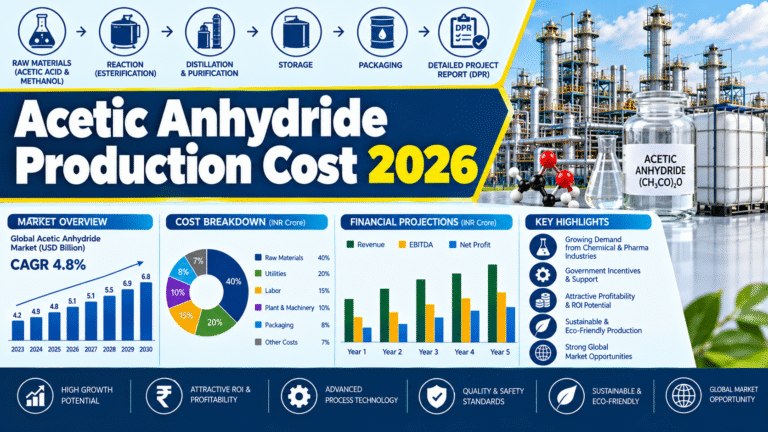
The financial projections for this investment reflect a healthy profitability profile under normal operating conditions. Gross profit margins for a citric acid production plant typically range between 30-40%, while net profit margins are in the 12-18% range. Detailed financial modelling should incorporate NPV (Net Present Value), IRR (Internal Rate of Return), and payback period analysis alongside year-on-year income and expenditure projections. Break-even in a citric acid production plant typically ranges from 3 to 5 years, depending on feedstock cost, production efficiency, and market pricing dynamics.
Why Set Up a Citric Acid Production Plant in India?
Strong Demand from the Food and Beverage Sector: India’s expanding consumption of processed foods, soft drinks, juices, confectionery, jams, and packaged foods continues to generate steady, large-volume demand for citric acid as a key food additive. As India’s urban middle class grows, so does the consumption of processed and convenience food products – making this one of the most resilient demand drivers for the facility.
Rising Pharmaceutical and Nutraceutical Use: Citric acid plays a critical role in pharmaceutical formulations including effervescent tablets, syrups, and injectables – stabilising formulations, improving solubility, and enhancing palatability. India’s expanding pharmaceutical manufacturing base and rising nutraceutical consumption are creating strong, sustained demand for pharmaceutical-grade citric acid.
Growth of Eco-Friendly Cleaning Products: Citric acid’s biodegradability and effectiveness as a natural descaler and chelating agent have made it a preferred ingredient in sustainable cleaning formulations. As Indian consumers and institutional buyers increasingly shift to biodegradable, environmentally responsible cleaning products, demand for citric acid from this segment is accelerating.
Fermentation-Based, Renewable Production: The production process relies on renewable feedstocks and fermentation technology aligned with sustainability objectives – an advantage as Indian manufacturers face growing pressure from global buyers and domestic regulators to adopt greener production methods. This positioning also supports export competitiveness.
Active Industry Investment: The global citric acid industry continues to attract investment and innovation. In November 2024, Jungbunzlauer partnered with the Technical University of Vienna (TU Wien) to advance research at the newly established Christian Doppler (CD) Laboratory, focusing on optimising Aspergillus niger strains to improve production efficiency and process performance.
Cost-Competitive Manufacturing: India’s competitive advantage in land costs, labour availability, and established chemical supply chains positions a domestic citric acid production plant to serve both local industries and export markets efficiently, while maintaining cost structures that support strong margin realisation.
Production Process – Step by Step
The citric acid production process uses fermentation using Aspergillus niger as the primary production method, converting carbohydrate feedstocks into commercial-grade citric acid through a multi-step operation.
- Raw Material Selection: Carbohydrate feedstocks such as molasses or corn syrup are sourced and quality-checked for consistency.
- Preparation of Fermentation Medium: The selected feedstock is prepared and conditioned with nutrients, water, and anti-foaming agents to create the optimal growth environment.
- Fermentation Using Aspergillus niger: The prepared medium is inoculated with Aspergillus niger in fermentation tanks and seed tanks; the microorganism converts the carbohydrate substrate into citric acid over the fermentation cycle.
- Separation of Citric Acid: Filtration and separation units, along with centrifuges, are used to separate citric acid from the fermentation broth and remove solid residues.
- Precipitation: Calcium carbonate and sulfuric acid are used to precipitate citric acid from the filtered broth in the precipitation and crystallization equipment.
- Purification and Filtration: The precipitated citric acid undergoes further purification using filtration systems to remove impurities and achieve food- or pharmaceutical-grade purity.
- Crystallization and Drying: Evaporators and crystallizers produce the crystalline citric acid product; dryers bring the material to the required moisture specification.
- Quality Control and Testing: Analytical instruments monitor product concentration, purity, and stability at each stage; documentation is maintained for traceability and regulatory compliance.
- Packaging and Dispatch: Packaging and sealing machines package the finished citric acid for dispatch to food and beverage manufacturers, pharmaceutical producers, personal care companies, cleaning product formulators, and industrial processors.
Key Applications
Citric acid serves a broad range of industries where its multifunctional properties – acidity regulation, flavour enhancement, preservation, and chelation – deliver tangible product performance benefits:
- Food and Beverage Industry: Used in soft drinks, juices, confectionery, jams, and processed foods to enhance flavour, control acidity, and extend shelf life.
- Pharmaceutical Industry: Used in effervescent tablets, syrups, and injectables to stabilise formulations and improve solubility and taste.
- Personal Care and Cosmetics: Used as a pH adjuster and chelating agent in skin care, hair care, and oral care products to improve stability and performance.
- Cleaning and Detergents: Functions as a natural descaler and chelating agent in eco-friendly and biodegradable cleaning formulations.
- Industrial Applications: Applied in metal treatment, water treatment, and chemical processing due to its metal-binding and buffering properties.
Leading Manufacturers
The global citric acid market is served by several large multinational producers with extensive production capacities and diversified application portfolios. Key players in the industry include:
- Pfizer, Inc.
- Tate & Lyle PLC
- Danisco A/S
- Cargill
- Kenko Corporation
- ADM
Timeline to Start the Plant
- Feasibility study and project report preparation
- Land acquisition and site development
- Regulatory approvals and environmental clearances
- Factory licence and fire safety compliance
- Machinery procurement and installation
- Raw material supplier agreements and supply chain setup
- Trial production and quality testing
- Commercial production launch
The overall timeline from feasibility study to commercial production launch typically ranges from 12 to 18 months, depending on project scale, fermentation setup complexity, and the speed of regulatory clearances.
Licences and Regulatory Requirements
Starting a citric acid production unit in India requires several approvals:
- Business registration (Proprietorship, LLP, or Pvt Ltd)
- Factory Licence under the Factories Act
- Environmental Clearance from State Pollution Control Board
- GST Registration
- Fire Safety NOC
- Hazardous and Chemical compliance (relevant given use of sulfuric acid and calcium carbonate)
- Effluent Treatment Plant (ETP) operational clearance
- Occupational Health and Safety compliance
Key Challenges to Consider
High Capital Requirements: Establishing a fermentation-based citric acid production plant involves significant upfront investment in specialised fermentation tanks, separation and crystallization equipment, and ETP infrastructure – requiring careful financial planning and funding strategy.
Raw Material Price Volatility: The primary feedstocks – molasses, corn syrup, Aspergillus niger strain, calcium carbonate, and sulfuric acid – are subject to market fluctuations linked to agricultural cycles, commodity pricing, and global supply chain disruptions. Long-term supplier contracts are advisable to manage this risk.
Regulatory Compliance: Chemical and food-grade production involves environmental, safety, and quality compliance obligations across multiple regulatory bodies. Managing clearances from the State Pollution Control Board, Factory Inspectorate, and food/pharma regulators simultaneously requires dedicated compliance resources.
Technology and Innovation Pressure: Active industry R&D – exemplified by Jungbunzlauer’s partnership with TU Wien in November 2024 to optimize Aspergillus niger strains – means that production efficiency benchmarks are continuously evolving. Investors must plan for technology upgrades to remain competitive.
Competition: The global market is served by established multinational producers including Tate & Lyle PLC, Cargill, and ADM, which operate at significant scale. Domestic facilities must differentiate on cost, turnaround speed, and local supply reliability.
Skilled Manpower: Fermentation-based production requires trained microbiologists, chemical engineers, and quality control specialists – a workforce segment that requires structured recruitment and retention strategies in the Indian context.
Frequently Asked Questions
1. How much does it cost to set up a citric acid production plant in India?
The total cost depends on plant capacity, technology, location, and automation level. Cost components include land and site development, civil works, machinery (fermentation tanks, separation units, dryers, packaging machines), ETP, and pre-operative expenses. Capacity in the range of 50,000-100,000 MT per annum is referenced as a benchmark in industry feasibility reports.
2. Is citric acid production profitable in India in 2026?
Yes. The investment demonstrates healthy profitability potential, with gross margins of 30-40% and net margins of 12-18% under normal operating conditions. Profitability improves with higher capacity utilisation rates.
3. What machinery is required for a citric acid production plant in India?
Key machinery includes fermentation tanks, seed tanks, filtration and separation units, centrifuges, evaporators, precipitation and crystallization equipment, dryers, packaging and sealing machines, sterilizers, pumps, and quality control and analytical instruments.
4. What licences and approvals are required to start a citric acid production plant in India?
Required approvals include business registration, Factory Licence under the Factories Act, Environmental Clearance from the State Pollution Control Board, GST Registration, Fire Safety NOC, chemical/hazardous material compliance, ETP operational clearance, and Occupational Health and Safety compliance.
5. What raw materials are needed for citric acid production?
Core raw materials include molasses or corn syrup (carbohydrate feedstock), Aspergillus niger strain, calcium carbonate, sulfuric acid, nutrients, water, and anti-foaming agents.
6. What are the environmental compliance requirements for a citric acid production plant in India?
The facility must obtain Environmental Clearance from the State Pollution Control Board, operate a compliant Effluent Treatment Plant (ETP), and adhere to emission standards. Chemical handling and waste disposal must comply with hazardous material regulations.
7. What is the best location to set up a citric acid production plant in India?
Ideal locations offer access to molasses or corn syrup supply chains, reliable utilities (electricity, water, steam), and proximity to food, pharmaceutical, and industrial end-users. Industrial estates and SEZs in Gujarat, Maharashtra, and Uttar Pradesh are well-positioned for this type of facility.
8. What is the break-even period for this type of plant in India?
Break-even for a citric acid production plant typically ranges from 3 to 5 years, influenced by feedstock costs, production efficiency, capacity utilisation, and market pricing dynamics.
9. What government incentives are available for manufacturers in India?
The Indian government offers incentives including capital subsidies, tax exemptions, reduced utility tariffs, export benefits, and interest subsidies under various national and regional industrial promotion schemes such as Make in India.
Key Takeaways for Investors
A citric acid production plant in India represents a well-rounded investment opportunity, driven by simultaneous demand from the food and beverage, pharmaceutical, personal care, cleaning, and industrial processing sectors – all of which are growing in India’s expanding economy. The financial profile is viable across a range of plant capacities, with gross margins of 30-40% and net margins of 12-18% providing meaningful upside relative to capital outlay. With the global citric acid market expected to grow from 3.07 million tons in 2025 to 3.84 million tons by 2034 at a CAGR of 2.5%, demand fundamentals are structurally supportive. The combination of renewable fermentation-based production, India’s cost-competitive operating environment, and sustained multi-sector demand makes this a production category with durable long-term growth potential.
About the Author