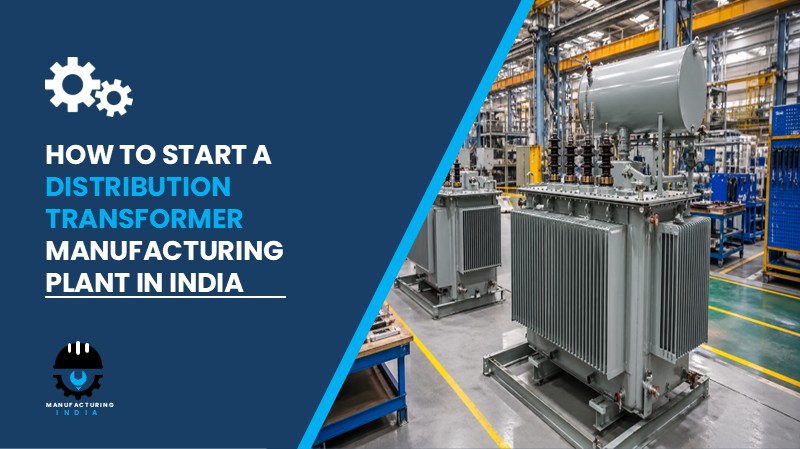
Setting up a distribution transformer manufacturing plant in India presents a compelling investment case at a time when the country’s electricity demand is surging, its grid infrastructure is being systematically modernised, rural electrification is reaching its final frontier, and the integration of renewable energy at grid scale is creating sustained and multi-decade demand for one of the most fundamental pieces of electrical infrastructure equipment in the power sector. Distribution transformers — the electrical instruments that lower high-voltage power from transmission grids to safer voltage levels for use by consumers — are the indispensable link between India’s expanding generation capacity and the homes, businesses, hospitals, factories, and farms that consume that electricity. Without distribution transformers, every watt of power generated — from coal plants, solar farms, wind installations, or hydroelectric stations — cannot reach its end destination. As global electricity demand increased by 4.3% in 2024 and is forecast to continue growing at close to 4% until 2027 according to the International Energy Agency, India’s own rapidly expanding electricity consumption is driving utilities to expand and upgrade distribution networks at a pace that makes new transformer manufacturing capacity both commercially necessary and strategically vital.
India’s structural positioning for distribution transformer manufacturing is well-established and actively improving. The country’s power distribution sector — served by a combination of state distribution companies, private utilities, and government infrastructure programmes — represents one of Asia’s largest and most consistently growing procurement markets for distribution transformers. The Revamped Distribution Sector Scheme (RDSS), the PM Surya Ghar rooftop solar programme, and industrial expansion across every manufacturing state are all generating new transformer procurement cycles. Industrial manufacturing clusters in Maharashtra, Gujarat, Rajasthan, Uttar Pradesh, and Tamil Nadu offer proximity to CRGO steel, copper, aluminium, and transformer oil supply chains — the four dominant raw material inputs — alongside the electrical engineering workforce, testing infrastructure, and BIS compliance regulatory ecosystem that a distribution transformer manufacturing facility requires to produce specification-compliant equipment and qualify as an approved supplier to state electricity distribution companies.
Investing in a distribution transformer manufacturing plant in India today aligns expanding electricity demand, grid modernisation programmes, renewable energy integration, and rural electrification with a global distribution transformer market growing from USD 21.96 Billion in 2025 to USD 32.13 Billion by 2034 at a 4.32% CAGR. With gross profit margins of 20–30% and net profit margins of 10–18%, the unit economics are commercially sound at the proposed 7,000-unit annual capacity, and the investment’s scalable production model supports reliable, long-term returns across a well-defined power infrastructure investment horizon.
What are Distribution Transformers?
A distribution transformer is an electrical instrument that lowers high-voltage power from transmission grids to safer voltage levels for use by consumers. Distribution transformers come in a variety of arrangements including ground-mounted, pad-mounted, and pole-mounted units, and can be either oil-filled or dry-type, depending on the needs of the application. Their standardised designs guarantee compatibility with grid infrastructure, and their durable construction allows them to run continuously under different load circumstances across the full service life of the distribution network.
These transformers are designed to provide a steady power output while reducing energy losses during distribution. Better insulation systems, better cooling mechanisms, and lower core losses are features included in more sophisticated models to increase operational efficiency and lifespan — improvements that directly reduce utility operating costs and support compliance with BEE energy efficiency standards for distribution transformers. They are widely used throughout utility grids to guarantee a steady voltage supply for homes, businesses, and industrial facilities, serving as the final voltage conversion step in the power delivery chain from generation through to the consumer.
The primary production process covers core fabrication and lamination, winding and insulation, core and coil assembly, tank fabrication, oil filling or resin casting, testing and quality inspection, and final assembly and dispatch. End-use industries served include power utilities and grid operators, residential and commercial infrastructure, industrial manufacturing facilities, renewable energy projects, and rural electrification programmes. Applications span voltage step-down for residential distribution, commercial power supply, industrial equipment operation, renewable energy interconnection, and rural and urban electricity networks.
Cost of Setting Up a Distribution Transformer Manufacturing Plant in India
The cost of establishing a distribution transformer manufacturing plant in India depends on plant capacity in units per year, transformer rating range from 25 kVA to 6,000 kVA, product mix between oil-filled and dry-type variants, geographic location — particularly proximity to CRGO steel and copper supply chains — degree of automation, and the BIS quality compliance and BEE star rating certification requirements applicable to distribution transformers supplied to Indian electricity utilities.
1. Capital Expenditure (CapEx)
Land and Site Development forms a foundational component of total capital investment, covering land acquisition charges, site registration, boundary development, drainage infrastructure, and site utilities. Investors may explore established electrical equipment manufacturing clusters or Special Economic Zones (SEZs) in Nashik, Vadodara, Jaipur, Noida, and Coimbatore — industrial locations with established electrical engineering supplier ecosystems, CRGO steel stockists, and proximity to state electricity utility procurement offices that facilitate qualification as an approved vendor for government distribution companies.
Civil Works and Construction cover the main manufacturing building housing core cutting and stacking areas, winding shops with overhead cranes for heavy coil handling, tank fabrication and welding bays, oil filling and impregnation areas, a high-voltage testing laboratory with impulse and power frequency test capability, finished goods storage for assembled transformers, raw material storage for CRGO steel coils, copper wire, and oil drums, and an administrative block.
Machinery and Equipment represent the largest single component of total CapEx for a distribution transformer manufacturing plant. Key machinery required includes:
- Core cutting machines
- Coil winding machines
- Insulation processing systems
- Transformer tank fabrication units
- Oil filtration and filling systems
- Testing and quality control equipment
- Material handling systems
Other Capital Costs include an effluent treatment plant (ETP) for managing oil-contaminated process water and transformer oil spill containment, pre-operative expenses, BIS licence application and type testing costs, BEE star rating certification costs, commissioning charges, and any import duties on specialised automatic core cutting lines or high-voltage impulse test equipment not available through domestic suppliers at the required specification.
Request a Sample Report for In-Depth Market Insights: https://www.imarcgroup.com/distribution-transformer-manufacturing-plant-project-report/requestsample
2. Operational Expenditure (OpEx)
Raw Material Cost is the overwhelmingly dominant operational expense, accounting for approximately 70–75% of total OpEx. The primary raw materials are CRGO (Cold Rolled Grain Oriented) steel core, copper or aluminium winding wire, transformer oil, and tank and accessories. CRGO steel — the grain-oriented silicon steel used for the magnetic core — is the most technically critical and one of the most cost-significant inputs, driving core loss performance and energy efficiency star rating achievement. India has limited domestic CRGO steel production, creating a structural import dependence for a significant portion of requirements from suppliers in Japan, South Korea, and Europe. Copper or aluminium winding wire is the second most significant material input, with copper commanding better electrical performance but aluminium offering cost advantages that have made it dominant in the Indian distribution transformer market at lower kVA ratings. Transformer oil provides insulation and cooling in oil-filled units. Long-term procurement contracts for all raw material categories are essential for cost stability.
Utility Cost is the second-largest OpEx component, representing only 5–10% of total operating expenses — reflecting the assembly-intensive rather than energy-intensive nature of distribution transformer manufacturing, where the primary value addition is precision engineering and quality compliance rather than energy-intensive material transformation.
Other Operating Costs include transportation and distribution to state electricity distribution companies, EPC contractors for renewable energy and industrial projects, rural electrification contractors, and private utility customers — with oversize load permits required for large kVA units — protective packaging for finished transformers during transit, salaries and wages for electrical engineers and winding technicians, routine machinery maintenance including core cutting blade replacement and winding machine calibration, depreciation on production equipment, and applicable taxes. By the fifth year of operations, total operational costs are projected to increase substantially due to inflation, CRGO steel and copper price movements, supply chain disruptions, rising consumer demand, and shifts in the global economy.
3. Plant Capacity
The proposed manufacturing facility for distribution transformers is designed with an annual production capacity of 7,000 units, enabling economies of scale across the full rating range from 25 kVA to 6,000 kVA while maintaining operational flexibility to serve utility, industrial, commercial, and renewable energy project customers. Plant capacity can be customised per investor requirements and scaled through additional winding bays and test bays as state utility order volumes and qualification approvals grow. Transformer manufacturing processes can be scaled with controlled capital investment to support large-volume utility orders — a scalability advantage that allows progressive capacity expansion aligned with market penetration milestones.
4. Profit Margins and Financial Projections
The financial projections for a distribution transformer manufacturing plant demonstrate healthy profitability potential under normal operating conditions. Gross profit margins typically range between 20–30%, supported by stable demand from electricity utilities and infrastructure development programmes. Net profit margins are projected at 10–18%. A comprehensive financial analysis covering NPV (net present value), IRR (internal rate of return), payback period, gross margin progression, and net margin development across a five-year horizon is essential before committing capital. The project’s ROI profile and long-term sustainability are assessed against realistic assumptions on capital investment, production capacity utilisation, CRGO steel and copper pricing trends, and demand outlook from power utilities and grid operators, residential and commercial infrastructure, industrial manufacturing facilities, renewable energy projects, and rural electrification programme customers.
Why Set Up a Distribution Transformer Plant in India?
Growing Electricity Demand Driving Grid Infrastructure Investment. According to the International Energy Agency, global electricity demand increased by 4.3% in 2024 and is forecast to continue to grow at close to 4% until 2027. India is among the world’s fastest-growing electricity markets, with increasing consumption in urban and semi-urban regions driving utilities to expand and upgrade distribution networks across the country’s rapidly urbanising geography. Every new home connected, every new factory commissioned, and every new commercial building energised requires distribution transformers as the final voltage conversion step — creating immediate, recurring, and volume-driven demand for transformer manufacturers across the domestic market.
Grid Expansion, Modernisation, and RDSS Investment Programme. Upgrading ageing power infrastructure creates sustained demand for advanced distribution transformers with better energy efficiency and reliability. The Revamped Distribution Sector Scheme (RDSS) is deploying large-scale investment in distribution infrastructure including smart metering, feeder separation, and underground cabling — all of which involve significant distribution transformer procurement cycles for state electricity distribution companies across the country.
Renewable Energy Integration Requiring Transformer Deployment. The shift toward renewable energy integration and decentralised power generation further supports market growth, as transformers play a critical role in voltage regulation and grid stability at solar and wind power project interconnection points. Every rooftop solar installation, every utility-scale solar farm, and every wind project requires distribution transformers to step voltage up or down at the interconnection point — adding a growing renewable energy-driven procurement layer on top of the established utility and industrial customer base.
Energy Efficiency Focus Creating Premium Product Demand. Demand for energy-efficient and compact transformer designs is increasing as utilities aim to reduce losses and improve network reliability. The Bureau of Energy Efficiency’s star labelling scheme for distribution transformers has created a defined quality upgrade market where utilities are replacing older, high-loss transformers with BEE star-rated, low-loss designs — a replacement cycle that creates sustained procurement volumes independent of grid expansion activity.
Active Global Investment Confirming Market Strength. In June 2025, JST Power Equipment Inc. announced the opening of a new transformer manufacturing facility in Port Klang, Malaysia, producing pad-mounted distribution transformers from 25 kVA to 6,000 kVA up to 35 kV, ramping capacity from 700 units in 2025 to 3,500 units in 2026 — a scale-up trajectory that reflects the commercial confidence of experienced manufacturers in the Asia-Pacific distribution transformer market. In April 2025, R&S Group Holding AG inaugurated a new greenfield oil distribution transformer plant under the Rauscher & Stoecklin brand in Krzeczów, Poland, reinforcing distribution transformer production capacity and integrating advanced manufacturing technology with sustainability-focused plant design.
Customisation and Technical Flexibility Creating Value Differentiation. Manufacturers who offer customised transformer ratings, cooling methods — ONAN, ONAF, KNAN — and mounting options including pole-mounted, pad-mounted, and ground-mounted configurations to meet diverse utility requirements can differentiate beyond price competition and build technical relationships with engineering departments of state distribution companies and industrial customers that create switching costs and long-term supply security.
Manufacturing Process — Step by Step
The distribution transformer manufacturing process uses core fabrication and lamination, winding and insulation, core and coil assembly, tank fabrication, oil filling or resin casting, testing and quality inspection, and final assembly and dispatch as the primary production method. Each stage requires precisely controlled dimensional tolerances, insulation application standards, and quality verification to deliver distribution transformers meeting the voltage ratio, impedance, core loss, and insulation withstand specifications required under IS 1180 and BEE star rating standards for India’s electricity distribution utilities.
- CRGO Steel Core Cutting and Lamination: CRGO silicon steel coils are processed through core cutting machines to produce laminations of the specified width and length for the transformer core design. Laminations are deburred, coated with insulating varnish where required, and stacked in the specified sequence — step-lap or butt-lap joint pattern — to build the transformer core with minimum core loss and magnetising current.
- Core Stacking and Clamping: Cut laminations are manually or mechanically stacked with precision alignment into the specified core geometry — single-phase or three-phase, depending on the transformer design — and clamped with bolted frames to achieve the dimensional accuracy and stacking factor required for the target core loss and no-load current performance.
- Conductor Winding: Copper or aluminium winding wire of the specified conductor size is wound onto mandrels or directly onto core limbs using coil winding machines to produce low-voltage and high-voltage coils with the specified turn count, interlayer insulation, and dimensional geometry.
- Insulation Processing: Wound coils are processed through insulation processing systems including prepress operations, drying under vacuum and temperature, and oil impregnation or resin casting — depending on whether oil-filled or dry-type construction is specified — to achieve the insulation quality and moisture resistance required for long service life in outdoor utility applications.
- Core and Coil Assembly: Insulated coils are assembled onto the transformer core on assembly benches, with inter-winding insulation barriers, tapping links, and terminal connections installed and secured. The assembled active part — core and coil assembly — is dimensionally inspected before tank fitment.
- Tank Fabrication: Transformer tanks are fabricated from mild steel plate using transformer tank fabrication units including shearing, bending, and welding operations to produce oil-tight tanks with cooling fins, conservator provisions, bushing mounting flanges, and drain and filter valve connections.
- Oil Filling: The core and coil assembly is installed into the fabricated tank, and degassed transformer oil is processed through oil filtration and filling systems and filled under vacuum to displace moisture and air from the insulation system, achieving the dielectric quality and moisture content required for high-voltage service.
- Testing and Quality Inspection: Assembled transformers are subjected to comprehensive testing at testing and quality control equipment stations covering ratio test, polarity test, no-load loss and current measurement, load loss and impedance measurement, insulation resistance test, high-voltage induced voltage test, separate source voltage withstand test, and temperature rise test for type test units — verifying compliance with IS 1180 and BEE star rating requirements before dispatch clearance.
- Final Assembly and Dispatch: Type-tested and routine-tested approved transformers receive nameplate, rating plate, BIS mark, and BEE star label fitment using material handling systems, and are prepared for dispatch with protective packaging on skids or in crates suitable for road transport to power utility substations, renewable energy project sites, and industrial and commercial customer locations.
Key Applications
Distribution transformers manufactured in India serve the entire electricity consumption value chain across residential, commercial, industrial, and public infrastructure sectors:
- Residential Sector: Distribution transformers ensure safe and stable electricity supply to households for lighting, appliances, and daily energy needs across urban apartment complexes, peri-urban townships, and rural habitations connected under electrification programmes.
- Utilities and Power Grids: Electric utilities use distribution transformers to efficiently deliver electricity from substations to end users across the full distribution voltage hierarchy from 33 kV/11 kV down to 415V/240V serving residential and small commercial consumers.
- Infrastructure and Public Services: Hospitals, transportation hubs, educational institutions, and municipal facilities require reliable transformer-based power distribution with high uptime and voltage regulation performance.
- Commercial Establishments and Industrial Facilities: Offices, shopping complexes, commercial buildings, manufacturing plants, and processing units depend on distribution transformers for consistent voltage supply to equipment, machinery, and production systems across India’s expanding commercial and industrial economy.
Leading Manufacturers
The global distribution transformer industry is served by a group of large multinational electrical equipment companies with extensive production capacities and diverse application portfolios across utility, industrial, and commercial power distribution segments. Key players in the global market include:
- CG Power & Industrial Solutions Ltd.
- Eaton Corporation
- GE Grid Solutions, LLC
- Hammond Power Solutions
- HD Hyundai Electric Co., Ltd.
Timeline to Start the Plant
Establishing a distribution transformer manufacturing plant in India involves a structured multi-phase development sequence. Investors should plan for the following phases:
- Feasibility study and project report preparation
- Land acquisition and site development
- Regulatory approvals and environmental clearances
- Factory licence and fire safety compliance
- Machinery procurement and installation
- Raw material supplier agreements and supply chain setup
- Trial production and quality testing
- Commercial production launch
Licences and Regulatory Requirements
Starting a distribution transformer manufacturing unit in India requires several approvals spanning business registration, product quality certification, environmental, petroleum product handling, and industrial compliance domains:
- Business registration (Proprietorship, LLP, or Pvt Ltd)
- Factory Licence under the Factories Act
- Environmental Clearance from the State Pollution Control Board
- GST Registration
- Fire Safety NOC
- BIS licence under IS 1180 mandatory for distribution transformers sold to Indian electricity utilities and qualifying for government procurement under mandatory BIS certification requirements
- BEE star rating certification under the Bureau of Energy Efficiency’s distribution transformer star labelling programme, required for supply to state distribution companies under RDSS energy efficiency mandates
- Petroleum Act compliance for transformer oil storage above prescribed quantities
- Effluent Treatment Plant (ETP) operational clearance for managing oil-contaminated process water and transformer oil spill containment
- Occupational Health and Safety compliance
Key Challenges to Consider
CRGO Steel Import Dependence and Price Volatility. CRGO steel accounts for the largest individual material share within the 70–75% raw material OpEx proportion, with India’s domestic CRGO production capacity insufficient to meet industry demand — creating a structural import dependence on Japanese, Korean, and European CRGO suppliers. CRGO steel pricing moves with global silicon steel markets and USD exchange rates, creating margin pressure that can be significant during adverse currency or commodity cycles. Establishing reliable import supply contracts and maintaining strategic CRGO inventory positions are essential for production continuity and cost stability.
Copper and Aluminium Price Volatility. Winding wire — whether copper or aluminium — represents the second-largest material cost within the raw material budget, with copper pricing tied to LME copper markets and aluminium to LME aluminium. Both metals experience significant price cycles that directly affect transformer manufacturing margins. Copper forward purchasing, conductor pricing clauses in customer contracts, and product design flexibility between copper and aluminium windings across kVA ratings are important cost risk management tools.
BIS Certification, Type Testing, and Utility Vendor Qualification. Distribution transformers sold in India must carry BIS certification under IS 1180, which requires successful type testing at a NABL-accredited test laboratory and ongoing surveillance audits. BEE star rating certification adds an additional testing and compliance dimension. Most significantly, state electricity distribution company procurement requires passage through vendor empanelment and approved vendor registration processes that can take 12–24 months and require type test certificates, factory assessment, and demonstrated production and quality management system compliance.
Competition from Established Indian and Multinational Players. The competitive landscape includes large established Indian transformer manufacturers — including CG Power & Industrial Solutions — alongside multinational players with significant scale, manufacturing technology, and long-standing state utility relationships. New entrants must compete on price, delivery reliability, product quality, and the ability to customise transformer ratings and configurations for specific utility requirements to establish commercially meaningful market positions.
Energy Efficiency Standard Evolution. Progressive tightening of BEE energy efficiency star rating norms for distribution transformers — requiring lower core losses and improved no-load performance — creates ongoing product development pressure for manufacturers to source better CRGO steel grades and optimise core and winding designs to maintain compliance with advancing star rating thresholds across the product range.
Skilled Electrical Engineering Workforce. Maintaining winding quality, core stacking accuracy, insulation processing consistency, and high-voltage testing integrity across a production volume of 7,000 units annually requires experienced electrical engineers, trained winding technicians, and certified high-voltage testing personnel — a specialised industrial workforce requiring ongoing investment in recruitment, technical training, and competitive retention.
Frequently Asked Questions
1. How much does it cost to set up a distribution transformer manufacturing plant in India?
The total setup cost depends on plant capacity in units per year, transformer rating range, product mix between oil-filled and dry-type, location, and automation level. CapEx covers land and site development, electrical equipment manufacturing-grade civil construction including high-bay winding and assembly halls, core machinery including core cutting machines, coil winding machines, insulation processing systems, transformer tank fabrication units, oil filtration and filling systems, testing and quality control equipment, and material handling systems, along with BIS type testing, BEE certification, ETP, and other capital costs. A detailed project report with full CapEx and OpEx breakdowns is available on request.
2. Is distribution transformer manufacturing profitable in India in 2026?
Yes. The project demonstrates gross profit margins of 20–30% and net profit margins of 10–18% under normal operating conditions, supported by growing electricity demand, RDSS infrastructure investment, renewable energy integration, and sustained rural and urban electrification procurement — collectively creating one of India’s most consistent and government-backed electrical equipment demand environments.
3. What machinery is required for a distribution transformer plant in India?
Key machinery includes core cutting machines, coil winding machines, insulation processing systems, transformer tank fabrication units, oil filtration and filling systems, testing and quality control equipment, and material handling systems. High-voltage testing equipment — capable of impulse and power frequency withstand testing — is the most technically critical and capital-intensive category, as it enables type testing compliance with IS 1180 and BEE star rating requirements.
4. What licences and approvals are required to start a distribution transformer plant in India?
Required approvals include business registration, a Factory Licence under the Factories Act, Environmental Clearance from the State Pollution Control Board, GST registration, a Fire Safety NOC, BIS licence under IS 1180, BEE star rating certification, Petroleum Act compliance for transformer oil storage, ETP operational clearance, and Occupational Health and Safety compliance.
5. What raw materials are needed for distribution transformer manufacturing?
The primary raw materials are CRGO steel core, copper or aluminium winding wire, transformer oil, and tank and accessories. CRGO steel and winding wire together account for approximately 70–75% of total operating expenses, making CRGO import procurement, copper or aluminium sourcing strategy, and metal price risk management the most critical cost management levers for the investment.
6. What are the environmental compliance requirements for a distribution transformer plant in India?
The unit must obtain Environmental Clearance from the State Pollution Control Board, operate a certified ETP for managing transformer oil-contaminated process water and oil spill containment, comply with Petroleum Act requirements for transformer oil storage, and maintain monitoring systems for wastewater discharge in line with applicable state pollution control standards for electrical equipment manufacturing facilities.
7. What is the best location to set up a distribution transformer plant in India?
Optimal locations offer proximity to CRGO steel stockists and copper or aluminium wire suppliers, established electrical equipment manufacturing ecosystems, reliable high-capacity utilities, access to state electricity utility procurement offices for vendor qualification, and logistics connectivity to distribution network installation sites. Electrical equipment manufacturing clusters in Nashik, Vadodara, Jaipur, Noida, and Coimbatore are among the most strategically relevant options.
8. What is the break-even period for this type of plant in India?
The break-even period depends on plant capacity, utility vendor qualification timelines, capacity utilisation rate, CRGO and copper pricing trends, and demand conditions across state utility, industrial, and renewable energy project customer segments. A detailed financial analysis including payback period, NPV, and IRR projections is included in the full project report, available via the sample request link.
9. What government incentives are available for manufacturers in India?
The Make in India initiative, RDSS procurement preference for domestically manufactured distribution transformers, state-level electrical equipment manufacturing zone incentives, and PLI schemes for advanced electrical machinery components provide financial and regulatory support for distribution transformer manufacturing investments. State investment promotion boards in Rajasthan, Gujarat, and Maharashtra may offer capital subsidies, power tariff concessions, and land cost benefits depending on the chosen plant location and production scale.
Key Takeaways for Investors
A distribution transformer manufacturing plant in India represents a commercially well-grounded investment in the foundational electrical equipment that enables every home, business, factory, and farm to receive electricity — a product whose demand is directly and inescapably linked to India’s electricity consumption growth, grid expansion, renewable energy integration, and rural electrification trajectory. The project demonstrates financial viability at an annual production capacity of 7,000 units, with gross profit margins of 20–30% and net profit margins of 10–18% confirming commercially sound unit economics supported by stable utility procurement cycles and the recurring replacement demand generated by ageing distribution transformer populations across India’s large installed base. The global distribution transformer market, valued at USD 21.96 Billion in 2025, is projected to reach USD 32.13 Billion by 2034, growing at a CAGR of 4.32%, with India’s accelerating electricity demand — growing close to the global 4% annual rate — and RDSS infrastructure investment placing the domestic market among the world’s most active distribution transformer procurement environments. With JST Power Equipment expanding Asia-Pacific manufacturing capacity in June 2025 and R&S Group inaugurating a new greenfield transformer plant in April 2025, the global investment momentum in distribution transformer manufacturing confirms both the commercial strength and the long-term strategic importance of this essential power infrastructure product across the full investment horizon.
About the Author