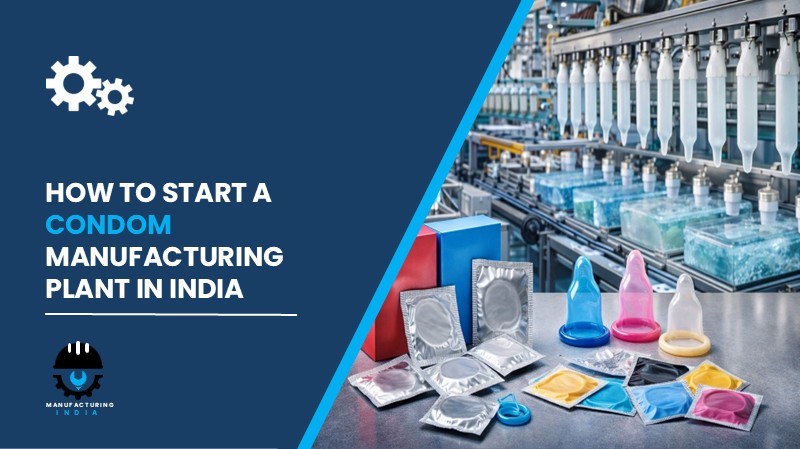
Setting up a condom manufacturing plant in India presents a compelling investment case driven by robust demand across the healthcare and medical sector, pharmaceutical distribution networks, public health programs, and retail and e-commerce platforms. Condoms barrier devices made from natural rubber latex, polyurethane, or polyisoprene serve the dual purpose of contraception and prevention of sexually transmitted infections, making them a cornerstone of India’s reproductive health and sexual wellness ecosystem. With rising sexual health awareness, government-supported family planning programs, and expanding access through both physical and online retail channels, domestic demand for this product continues to grow at a steady pace.
India’s structural advantages a large and young population, deepening healthcare infrastructure, an active Make in India policy framework, and cost-competitive manufacturing hubs in states such as Gujarat, Maharashtra, and Uttar Pradesh make it strategically sound for setting up a condom production facility. The growing acceptance of contraceptive products among urban and rural consumers alike, combined with NGO-led distribution programs and private-label retail growth, provides manufacturers with multiple high-volume demand channels, ensuring sustainable capacity utilisation from the early years of operation.
India offers an exceptional opportunity for condom manufacturing investment, combining strong policy support, low-cost production infrastructure, and expanding demand across public health, retail, and e-commerce sectors. With gross margins in the range of 50–60% and net margins of 25–30%, this investment demonstrates strong profitability and break-even viability for entrepreneurs across multiple plant capacity levels.
What is a Condom?
A condom is a slender barrier device commonly manufactured from natural rubber latex, polyurethane, or polyisoprene, designed to prevent pregnancy and reduce the risk of sexually transmitted infections (STIs). Serving as a simple yet highly effective contraceptive method, condoms are available in both male and female versions, catering to diverse preferences and anatomical needs. They come in a variety of sizes, textures, flavours, and functional types including extra-thin, ribbed, and lubricated variants that enhance comfort and overall user experience.
Valued for their affordability, accessibility, and dual protection benefits, condoms are used across the globe within the healthcare and medical sector, pharmaceutical distribution channels, public health programs, and retail and e-commerce platforms. The primary applications include contraception, prevention of sexually transmitted infections, and broader reproductive health protection. The production method involves latex compounding, dipping and forming, vulcanization, washing and drying, testing and quality inspection, lubrication, packaging, and final sterilization — a well-established, scalable multi-step process suited to high-volume automated manufacturing.
Cost of Setting Up a Condom Manufacturing Plant in India
The total investment required to establish a condom manufacturing plant depends on several interdependent variables: plant capacity, technology and automation level, geographic location, regulatory compliance requirements, and site infrastructure. Investors must account for both capital expenditure at project inception and recurring operational expenditure to arrive at a realistic financial plan.
1. Capital Expenditure (CapEx)
Capital investment for a condom manufacturing plant in India covers several major cost heads that together determine the total project outlay.
Land and Site Development costs include land registration charges, boundary development, site levelling, and drainage infrastructure. Locating the facility within a Special Economic Zone (SEZ) or a designated industrial estate can reduce land acquisition costs and unlock fiscal incentives, making such locations particularly attractive for first-time investors.
Civil Works and Construction expenditure covers the construction of the production shed, quality control laboratory, raw material and finished goods storage areas, and the administrative block. The layout must incorporate separate zones for production, testing, and storage, along with space designated for future capacity expansion.
Machinery and Equipment represent the single largest component of CapEx for this type of plant. Key machinery required includes:
- Latex compounding tanks
- Dipping machines
- Vulcanization ovens
- Washing lines
- Electronic testing systems
- Lubrication units
- Packaging machines
Other Capital Costs include the effluent treatment plant (ETP), pre-operative expenses, commissioning costs, and applicable import duties on specialised machinery components sourced from international suppliers.
Request a Sample Report for In-Depth Market Insights: https://www.imarcgroup.com/condom-manufacturing-plant-project-report/requestsample
2. Operational Expenditure (OpEx)
Raw Material Cost constitutes the dominant portion of ongoing operating expenditure, accounting for approximately 50–60% of total OpEx. Core raw materials include natural rubber latex or synthetic polyisoprene, dipping molds, and packaging materials. Securing long-term contracts with reliable domestic and international suppliers is essential to mitigate price volatility and ensure an uninterrupted supply of materials at stable cost.
Utility Cost covering electricity, water, and steam used in the vulcanization and washing processes accounts for 15–20% of total OpEx and should be factored into the annual operating budget from the outset.
Other Operating Costs include transportation and outbound logistics, packaging materials, salaries and wages, routine maintenance, depreciation on capital assets, and applicable taxes. By the fifth year of operations, total operational costs are projected to increase substantially due to inflation, market fluctuations, potential rises in key material prices, supply chain disruptions, and rising consumer demand. Investors should build this trajectory into their five-year financial model.
3. Plant Capacity
The proposed facility for a condom manufacturing plant is typically designed with an annual production capacity ranging between 500 million and 1 billion units, enabling economies of scale while maintaining operational flexibility. Capacity can be customised based on specific investor requirements from a smaller pilot-scale plant to a fully automated large-scale facility. Profitability improves progressively with higher capacity utilisation, as fixed costs are spread over a greater number of units produced.
4. Profit Margins and Financial Projections
The financial profile of a condom manufacturing plant in India is highly attractive by manufacturing sector standards. Gross profit margins typically range between 50–60%, supported by stable demand and value-added product applications. Net profit margins average 25–30% under normal operating conditions. Financial projections cover net present value (NPV), internal rate of return (IRR), payback period, gross margin analysis, and net margin trajectories across a five-year horizon. These projections are built on realistic assumptions relating to capital investment, operating costs, production capacity utilisation, pricing trends, and long-term demand outlook.
Why Set Up a Condom Plant in India?
Rising Sexual Health Awareness. Education campaigns and public health initiatives continue to drive sustained demand growth across both urban and rural segments in India. Societal changes coupled with wider awareness have brought contraceptive usage to the forefront of consumer behaviour, providing a durable and expanding customer base for domestic manufacturers.
Government Support Programs. Government-backed and NGO-led free and subsidised distribution programs ensure stable, high-volume bulk demand for condom manufacturers supplying public health channels. These programs function as a predictable off-take mechanism, reducing revenue risk especially in the early years of plant operations.
Expanding Youth Population. India’s large and growing youth demographic, combined with changing social attitudes toward sexual wellness, drives per-capita consumption growth. Increasing acceptance of contraceptive products across all income segments reinforces the long-term volume trajectory for this market.
Product Differentiation Scope. The condom manufacturing sector offers significant opportunity for product innovation including flavoured, textured, ultra-thin, extra-lubricated, and non-latex variants. These differentiated formats command premium pricing and improve gross margin realisation, enhancing overall plant profitability for value-added manufacturers.
Active Industry Investment. In September 2025, Mankind Pharma’s Manforce Condoms launched an AI brand ambassador to drive digital consumer engagement, reflecting the sector’s embrace of technology-led marketing. Mankind Pharma operates 30 manufacturing units and reaches over 500,000 doctors nationwide, illustrating the scale achievable for well-capitalised Indian players. In the same month, HANX launched two new product varieties developed with community feedback from 1,000 women, demonstrating the global trend toward consumer-informed product development.
E-commerce and Retail Channel Expansion. Online health and wellness platforms, pharmacies, and privacy-focused delivery services are extending the reach of condom products to both city and countryside customers in India. This multi-channel distribution model creates broad and diversified revenue streams for manufacturers selling under branded or private-label formats.
Manufacturing Process Step by Step
The condom manufacturing process uses latex compounding, dipping and forming, vulcanization, washing and drying, testing and quality inspection, lubrication, packaging, and final sterilization as the primary production method. Each stage is critical to achieving consistent product quality and regulatory compliance.
- Latex Compounding: Natural rubber latex or synthetic polyisoprene is blended with chemical additives in compounding tanks to achieve the required viscosity, stability, and performance properties.
- Dipping and Forming: Precision glass or ceramic molds are dipped repeatedly into the compounded latex on automated dipping machines to build up the required wall thickness in successive layers.
- Vulcanization: The formed latex film is passed through vulcanization ovens at controlled temperatures, cross-linking the polymer chains to deliver the finished product’s mechanical strength and elasticity.
- Washing and Drying: Products pass through washing lines to remove residual chemicals, followed by controlled drying to ensure surface integrity and hygiene compliance.
- Testing and Quality Inspection: Electronic testing systems subject every unit to air inflation and other technical tests including pinhole and burst tests to verify conformity with international quality standards.
- Lubrication: Approved lubricants are applied via lubrication units to enhance user comfort, with silicone oil quantities calibrated to product-specific specifications.
- Packaging and Final Sterilization: Finished units are individually foil-wrapped, packaged into retail or bulk formats on automated packaging machines, and subjected to final sterilization before dispatch to end-use industries.
Key Applications
Condoms manufactured in India serve a diverse set of end-use industries and distribution channels, ensuring year-round demand across multiple customer segments.
- Public Health Programs: Supplied in bulk through government and NGO-led family planning and reproductive health initiatives.
- Retail and Pharmacies: Sold under branded and private-label formats through pharmacy chains, supermarkets, and general trade outlets.
- E-commerce Platforms: Distributed through online health and wellness channels with privacy-focused packaging and delivery.
- Institutional Healthcare: Used in hospitals, clinics, and medical centres as part of sexual health and STI prevention protocols.
Leading Manufacturers
The global condom market is served by a concentrated group of multinational and regional companies with extensive production capacities and diversified application portfolios. Key players operating in the industry include:
- Reckitt Benckiser Group PLC
- LIFESTYLES HEALTHCARE PTE. LTD.
- KAREX INDUSTRIES SDN. BHD.
- Mankind Pharma Ltd
- SAGAMI RUBBER INDUSTRIES
- Okamoto Industries
Timeline to Start the Plant
Investors planning to establish a condom production facility in India should anticipate the following eight phases from concept to commercial production:
- Feasibility study and project report preparation
- Land acquisition and site development
- Regulatory approvals and environmental clearances
- Factory licence and fire safety compliance
- Machinery procurement and installation
- Raw material supplier agreements and supply chain setup
- Trial production and quality testing
- Commercial production launch
Licences and Regulatory Requirements
Starting a condom manufacturing unit in India requires several approvals from central and state authorities before commercial operations can commence:
- Business registration (Proprietorship, LLP, or Pvt Ltd)
- Factory Licence under the Factories Act
- Environmental Clearance from State Pollution Control Board
- GST Registration
- Fire Safety NOC
- Effluent Treatment Plant (ETP) operational clearance
- Occupational Health and Safety compliance
Key Challenges to Consider
High Capital Requirements. The machinery-intensive nature of automated condom manufacturing covering dipping machines, vulcanization ovens, electronic testing systems, and packaging lines — requires significant upfront CapEx, which can be a barrier for smaller investors without access to term financing.
Raw Material Price Volatility. Natural rubber latex, the primary raw material accounting for 50–60% of OpEx, is subject to global commodity price cycles. Disruptions in supply from key latex-producing countries can significantly affect input costs and compress margins if not hedged through long-term supplier contracts.
Regulatory Compliance. Condom manufacturing is subject to stringent quality, safety, and environmental standards. Maintaining continuous compliance with effluent treatment norms, product testing requirements, and occupational health regulations requires dedicated resources and ongoing management attention.
Technology and Innovation Pressure. The market’s shift toward ultra-thin, extra-lubricated, and non-latex variants, along with AI-driven marketing strategies adopted by major players such as Mankind Pharma’s Manforce brand, means manufacturers must invest in product development and modern marketing to remain competitive.
Competition from Established Players. The presence of well-resourced global manufacturers — including Reckitt Benckiser Group PLC, KAREX INDUSTRIES SDN. BHD., and Okamoto Industries — alongside established domestic players such as Mankind Pharma Ltd creates a competitive landscape that necessitates clear product and channel differentiation.
Skilled Manpower. Operating electronic testing systems, maintaining vulcanization process controls, and managing quality assurance protocols require a trained technical workforce, which may need to be sourced or developed through structured in-house training programs.
Frequently Asked Questions
1. How much does it cost to set up a condom manufacturing plant in India? The total cost depends on plant capacity, automation level, location, and technology chosen. The project covers land, civil works, machinery (including dipping machines, vulcanization ovens, and electronic testing systems), utilities, and pre-operative expenses. A detailed CapEx and OpEx breakdown is available in the full project report.
2. Is condom manufacturing profitable in India in 2026? Yes. The sector demonstrates gross profit margins of 50–60% and net profit margins of 25–30% under normal operating conditions, making it one of the more attractive segments within the healthcare manufacturing space.
3. What machinery is required for a condom plant in India? Key equipment includes latex compounding tanks, dipping machines, vulcanization ovens, washing lines, electronic testing systems, lubrication units, and packaging machines.
4. What licences and approvals are required to start a condom plant in India? Required approvals include business registration, Factory Licence under the Factories Act, Environmental Clearance from the State Pollution Control Board, GST Registration, Fire Safety NOC, ETP operational clearance, and Occupational Health and Safety compliance.
5. What raw materials are needed for condom manufacturing? The core raw materials are natural rubber latex or synthetic polyisoprene, along with dipping molds and packaging materials. Natural rubber latex alone accounts for 50–60% of total operating costs.
6. What are the environmental compliance requirements for a condom plant in India? Plants must install and operate an effluent treatment system to manage process wastewater, obtain Environmental Clearance from the State Pollution Control Board, and comply with applicable emission and discharge standards throughout operations.
7. What is the best location to set up a condom plant in India? Locations offering proximity to raw material suppliers, reliable utilities, good transportation connectivity, and access to a skilled workforce such as industrial zones in Gujarat, Maharashtra, or Uttar Pradesh are strategically advantageous. SEZs and industrial estates offer additional cost and regulatory incentives.
8. What is the break-even period for this type of plant in India? The payback period is determined through detailed financial analysis covering NPV, IRR, and profitability projections across five operating years. Higher capacity utilisation and efficient raw material procurement significantly shorten the break-even timeline.
9. What government incentives are available for manufacturers in India? India’s Make in India initiative, state-level industrial policies, and schemes under the Ministry of Health and Family Welfare for contraceptive manufacturing provide a range of fiscal and non-fiscal incentives including capital subsidies, power tariff concessions, and expedited regulatory approvals for qualifying units.
Key Takeaways for Investors
A condom manufacturing plant in India represents a well-rounded investment opportunity, with end-use demand anchored across public health programs, retail pharmacy, institutional healthcare, and a rapidly growing e-commerce channel. The facility demonstrates strong financial viability across a range of plant capacities from 500 million to 1 billion units annually with gross margins of 50–60% and net margins of 25–30% providing a robust return on invested capital. The global condom market, valued at USD 13.32 billion in 2025, is projected by IMARC Group to reach USD 25.34 billion by 2034, expanding at a CAGR of 7.4% from 2026 to 2034. With governments, NGOs, and private retail channels all actively driving demand, and with India’s cost-competitive manufacturing base offering a structural advantage, demand sustainability for this investment is well supported over the long term.
About the Author