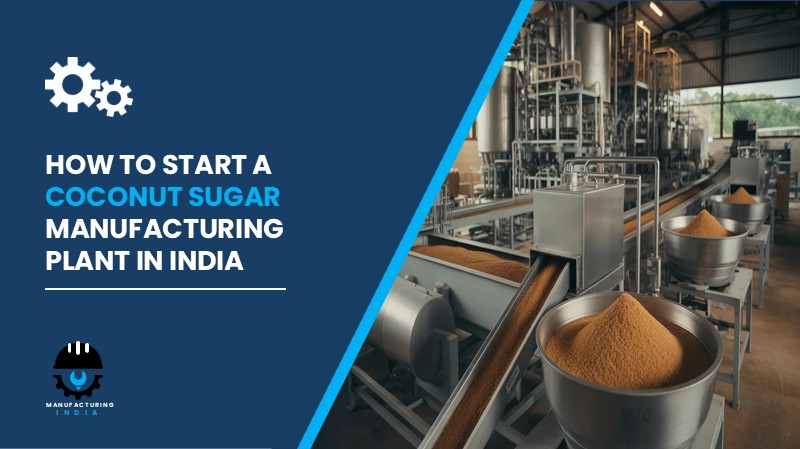
Setting up a coconut sugar manufacturing plant in India presents a compelling investment case as the country rapidly emerges as one of the most cost-competitive and high-demand destinations for natural sweeteners and health-focused food processing manufacturing. Driven by booming demand from the food and beverage, confectionery, bakery, organic foods, and health and wellness sectors, coconut sugar has become an indispensable part of India’s growing natural products economy.
“With over 1.4 billion consumers, a rapidly urbanizing population, make in India policy support, and a booming organic food and health-conscious consumer sector, India offers one of the most financially attractive environments for coconut sugar manufacturing with gross margins of 40-50% and a break-even window of 3-5 years.”
What is Coconut Sugar?
Coconut sugar exists as a natural sweetener which people extract from the sap of coconut palm flowers (Cocos nucifera). The low glycemic index and nutritious profile of coconut sugar, together with its distinctive caramel flavor, make it a popular choice among people who want a more nutritious sweetener than refined sugar. These products are prized for being unrefined, mineral-rich, sustainable, and suitable for health-conscious consumers. They are widely used across several industries for sweetening beverages, desserts, bakery products, sauces, confectionery, and health supplements.
Globally respected health and nutrition institutions have recognized coconut sugar as a natural alternative to refined sugar. In India, the growing push for organic, low-glycemic-index, and minimally processed sweeteners is further accelerating coconut sugar demand across both urban and health-focused markets.
Cost of Setting Up a Coconut Sugar Manufacturing Plant in India
The coconut sugar manufacturing plant cost in India depends on several parameters including production capacity, technology used, plant location, level of automation, raw material sourcing strategy, and regulatory compliance. Here is a structured breakdown of all major cost components:
1. Capital Expenditure (CapEx)
The total capital investment in a coconut sugar manufacturing plant typically covers the following:
Land and Site Development: This includes land acquisition, boundary development, land registration charges, and basic site preparation. Cost varies significantly depending on whether the land is in an industrial estate, food processing park, coconut-producing region, or a privately purchased plot.
Civil Works and Construction: Building costs cover the main processing shed, sap collection area, evaporation and crystallization hall, drying unit, quality control laboratory, raw material staging area, administrative block, and worker amenities. Construction specifications depend on plant scale, food safety requirements, and local compliance norms.
Machinery and Equipment: This is the single largest component of CapEx. Key machinery required for a coconut sugar plant includes:
- Coconut sap collection tools and containers
- Sap filtration units for removing impurities
- Evaporation pans or evaporators for water removal
- Boiling pans for concentrating sap into syrup
- Crystallization tanks for solidifying sugar
- Drying equipment (tray dryers, vacuum dryers)
- Grinding and milling machines for powdering
- Sieving machines for uniform particle size
- Packaging machines (filling, sealing, labeling)
- Quality control equipment (moisture analyzers, glycemic index testers, color comparators)
- Storage containers and silos
Machinery costs represent the largest share of overall capital expenditure, reflecting the specialized equipment involved in maintaining the natural properties and low glycemic index of coconut sugar.
Other Capital Costs: These include pre-operative expenses, commissioning charges, utilities installation (steam generation, water supply), food safety infrastructure (FSSAI compliance), and waste management systems.
2. Operational Expenditure (OpEx)
Once the plant is commissioned, the ongoing cost structure is dominated by a few key components:
Raw Material Cost (Coconut Sap): 60-70% of Total OpEx
Coconut sap (or coconut flower sap) is the primary raw material and accounts for the majority of operating expenses. The sap is tapped from the flower buds of coconut palm trees. Additional costs may include filtration materials and packaging supplies.
Utility Cost: 20-25% of Total OpEx
Utilities include fuel/energy (for evaporation and boiling processes, which are energy-intensive), water (for cleaning and processing), and electricity (for grinding, packaging, and quality control equipment).
Other Operating Costs: The remaining budget covers transportation, primary and secondary packaging materials, salaries and wages, maintenance, depreciation, taxes, and miscellaneous overhead.
Request for a Sample Report: https://www.imarcgroup.com/coconut-sugar-manufacturing-plant-project-report/requestsample
3. Plant Capacity
The proposed manufacturing facility is designed with an annual production capacity ranging between 1,000 to 3,000 MT (metric tons). This range allows the plant to achieve economies of scale while maintaining flexibility to serve multiple end-use segments including retail packaged coconut sugar, bulk supply to bakeries and confectionery manufacturers, and export to international organic food markets.
Smaller artisanal setups with manual sap collection may start at lower capacity, but profitability significantly improves with higher capacity utilization and efficient sap-to-sugar conversion rates.
4. Profit Margins and Financial Projections
- Gross Profit Margin: 40-50%
- Net Profit Margin: 20-25%
- Break-Even Period: 3 to 5 years, depending on production scale, market positioning (organic vs. conventional), raw material sourcing efficiency, brand development, and sales channels.
Financial projections must account for capital investment, operating costs, capacity utilization rates, coconut sap pricing trends, and demand outlook. A thorough analysis should also include sensitivity analysis, Net Present Value (NPV), Internal Rate of Return (IRR), and Payback Period.
Why Set Up a Coconut Sugar Manufacturing Plant in India?
India presents a uniquely favorable environment for establishing a coconut sugar manufacturing plant:
Surging Domestic Demand: India’s health and wellness, organic food, diabetic-friendly products, and premium confectionery industries are growing rapidly. The organized segment of the food services industry is expected to grow at a CAGR of 13.2%, achieving a market share of 52.9% by 2028 (IBEF), creating massive demand for natural sweeteners like coconut sugar across retail and industrial channels.
Policy and Regulatory Tailwinds: The Government of India’s emphasis on organic farming, natural product manufacturing under the Make in India initiative, MSME development schemes, and support for coconut farmers through the Coconut Development Board is creating a policy-friendly environment for coconut sugar manufacturers.
Cost-Competitive Manufacturing: India offers competitive land costs, abundant coconut cultivation in coastal states (Kerala, Tamil Nadu, Karnataka, Goa, West Bengal, Andhra Pradesh), a large pool of trained agricultural labor, and well-established coconut supply chains, making it one of the most cost-effective locations for coconut sugar production globally.
Export Opportunities: India-based manufacturers can tap into growing export demand from North America, Europe, Australia, and Middle Eastern markets, where demand for organic, low-glycemic natural sweeteners is rising rapidly and premium prices are commanded.
Local Supply Chain Preference: Food and beverage companies, bakery chains, health food retailers, and organic product brands increasingly prefer sourcing natural sweeteners locally to reduce logistics costs, ensure product freshness, support sustainable practices, and maintain better quality control – a direct opportunity for domestic coconut sugar manufacturers.
Abundant Raw Material Availability: India is the third-largest coconut-producing country globally, with extensive coconut plantations providing a stable and scalable source of coconut sap for sugar production.
Global Market Outlook
The global coconut sugar market was valued at USD 423.82 Million in 2025 and is projected to reach USD 668.84 Million by 2034, growing at a CAGR of 5.2% from 2026 to 2034. This sustained growth is driven by rising health consciousness, increasing demand for low-glycemic sweeteners, growth in organic and vegan food products, expanding specialty food retail, and consumer preference for natural, minimally processed ingredients.
Leading global players in this industry include:
- Big Tree Farms
- The Coconut Company
- Nutiva
- Madhava Natural Sweeteners
- Tradin Organic
- Wholesome Sweeteners
- NOW Foods
- BetterBody Foods
Manufacturing Process Overview
The coconut sugar manufacturing process involves several precision-controlled stages:
Sap Collection:
- Tapping the flower buds of coconut palm trees to collect fresh sap
- Collection typically occurs twice daily (morning and evening)
- Fresh sap must be processed within hours to prevent fermentation
Processing:
- Filtering the sap to remove impurities and debris
- Evaporation by heating the sap in large pans or evaporators to remove water content
- Boiling the concentrated sap to form thick syrup
- Crystallization as syrup cools and solidifies into granular sugar
- Drying crystals to achieve final moisture content (typically 2-3%)
- Grinding sugar into desired particle size (granular or powder)
- Sieving for uniform texture and quality
Quality Control and Packaging:
- Testing for moisture content, glycemic index, mineral composition, and color
- Packaging in moisture-proof containers (pouches, jars, bulk bags)
- Labeling with nutritional information and organic certifications (if applicable)
- Storage in cool, dry conditions and dispatch
The complete process flow involves raw material sourcing and sap collection, filtration, evaporation, boiling, crystallization, drying, grinding, sieving, quality inspection, and final packaging for dispatch.
Key Applications of Coconut Sugar
Coconut sugar manufactured in India serves a wide variety of end-use industries:
- Food and Beverages: Natural sweetener for beverages, smoothies, coffee, tea, energy drinks, and health drinks
- Bakery and Confectionery: Ingredient for cakes, cookies, muffins, chocolates, candies, and artisanal desserts
- Health and Wellness Products: Low-glycemic sweetener for diabetic-friendly foods, organic products, protein bars, and nutritional supplements
- Food Service and Restaurants: Premium sweetener for health-conscious cafes, organic restaurants, and specialty food establishments
- Export Markets: Supply to international organic food distributors, health food stores, and premium grocery chains
Timeline to Start a Coconut Sugar Manufacturing Plant
Setting up a coconut sugar manufacturing plant from ideation to commissioning typically requires 12 to 18 months. This covers:
- Feasibility study and detailed project report (DPR) preparation
- Land acquisition in coconut-producing regions and site development
- Regulatory approvals and environmental clearances
- FSSAI license and food safety compliance
- Factory license under the Factories Act
- Organic certification (if targeting organic market segment)
- Machinery procurement and installation
- Establishing sap collection network with coconut farmers
- Trial production, quality testing, and process optimization
- Commercial production launch and market entry
Licenses and Regulatory Requirements
Starting a coconut sugar manufacturing unit in India requires several approvals, including:
- Business registration (Proprietorship, LLP, or Private Limited Company)
- Factory License under the Factories Act
- FSSAI (Food Safety and Standards Authority of India) License – mandatory for food production
- Environmental Clearance from the State Pollution Control Board (if applicable)
- GST Registration
- Fire Safety NOC
- Organic Certification (NPOP, USDA Organic, EU Organic) – for organic coconut sugar
- BIS Certification (optional but recommended for quality assurance)
- Import Export Code (IEC) if engaging in international trade
- Trademark registration for brand protection
Key Challenges to Consider
Before investing, entrepreneurs should be aware of the common challenges in this business:
Sap Collection Dependency: Coconut sap collection is labor-intensive and time-sensitive. Fresh sap must be processed quickly to prevent fermentation. Establishing a reliable network of skilled sap tappers and coconut farmers is essential for consistent raw material supply.
Seasonal Variations: Coconut sap yield can vary based on weather conditions, monsoon patterns, and coconut palm health, potentially affecting production consistency and raw material costs.
Energy-Intensive Processing: The evaporation and boiling stages require significant fuel/energy consumption, directly impacting operating costs. Efficient evaporator design and alternative energy sources (biomass, solar) can help reduce costs.
Quality Consistency: Maintaining consistent color, moisture content, particle size, and mineral composition requires careful process control and quality management throughout production.
Competition from Refined Sugar: Despite health benefits, coconut sugar is priced higher than refined white sugar, limiting mass-market penetration. Clear positioning in health-focused and premium segments is necessary.
Market Education: Consumers may not be fully aware of coconut sugar’s benefits (low glycemic index, mineral content). Investment in marketing and consumer education is essential for brand building.
Regulatory Compliance: Meeting FSSAI food-grade standards, organic certification requirements, labeling regulations, and shelf-life specifications requires continuous investment in quality systems.
Frequently Asked Questions
The following questions are answered in the detailed project report:
- How much does it cost to set up a coconut sugar manufacturing plant in India?
- Is coconut sugar manufacturing profitable in India in 2026?
- What machinery is required for a coconut sugar manufacturing plant in India?
- What licenses and approvals are required to start a coconut sugar plant in India?
- How long does it take to commission a coconut sugar manufacturing plant in India?
- What is the best state or location to set up a coconut sugar plant in India?
- What government incentives are available for coconut sugar manufacturers in India?
- What is the break-even period for a coconut sugar plant in India?
- What are the FSSAI and organic certification requirements for coconut sugar manufacturing in India?
- How do I establish a sap collection network with coconut farmers?
- What is the typical shelf life of coconut sugar?
- How can I differentiate my coconut sugar products in a competitive market?
Key Takeaways for Investors
The coconut sugar manufacturing industry in India represents a strong and scalable investment opportunity backed by growing health consciousness, rising demand for natural sweeteners, and supportive agricultural policies. With gross margins of 40-50% and a break-even window of 3-5 years, a well-planned coconut sugar manufacturing plant cost in India remains competitive and financially viable across plant capacities.
The sector benefits from multiple revenue streams including retail packaged products (granular and powder forms), bulk B2B supply to bakeries and confectionery manufacturers, organic certified premium segments, and high-value export opportunities. Success factors include:
- Raw Material Security: Establishing strong relationships with coconut farmers and sap tappers
- Quality Consistency: Maintaining strict process control for color, moisture, and mineral content
- Brand Positioning: Clear differentiation through organic certification, sustainable sourcing stories, and health benefits
- Distribution Network: Strong presence in health food stores, organic retail chains, e-commerce, and export markets
- Cost Management: Efficient energy use in evaporation, optimal capacity utilization, and waste minimization
- Regulatory Compliance: Adherence to FSSAI, organic standards, and quality certifications
Latest Industry Developments
January 2026: CIRANDA, a prominent North American provider of certified organic, non-GMO, and fair-trade food ingredients, unveiled two new baking chips: organic plant-based white chips and organic chocolate chips sweetened with coconut sugar.
February 2025: Burlap and Barrel expanded its portfolio of single-origin sweeteners with the introduction of a powdered coconut sugar sourced from Kulon Progo, Indonesia. The New York–based spice company, known for working directly with smallholder farmers, said its new product can be used in both sweet and savory cooking.
The Indian market is also witnessing strong growth in coconut sugar adoption among health-conscious urban consumers, organic food brands, and premium bakery chains driven by diabetes awareness and preference for natural, low-glycemic alternatives to refined sugar.
How IMARC Can Help?
IMARC Group is a global management consulting firm that helps the world’s most ambitious changemakers to create a lasting impact. The company provides a comprehensive suite of market entry and expansion services. IMARC offerings include thorough market assessment, feasibility studies, company incorporation assistance, factory setup support, regulatory approvals and licensing navigation (FSSAI, Organic Certification, Factory License), branding, marketing and sales strategies, competitive landscape and benchmarking analyses, pricing and cost research, and procurement research.
Our expertise in the food processing and natural products sector enables us to provide:
- Detailed Project Reports (DPR) with complete techno-economic feasibility analysis
- Site Selection Services based on coconut availability, farmer networks, and market access
- Machinery Supplier Identification for evaporators, crystallization equipment, dryers, grinders, and packaging lines
- Raw Material Sourcing Support including sap tapper network development and farmer collaboration models
- Regulatory Compliance Assistance for FSSAI licensing, organic certifications (NPOP, USDA, EU), and quality standards
- Financial Modeling including CapEx, OpEx, revenue projections, NPV, IRR, and sensitivity analysis
- Market Linkage Support for connecting with organic retailers, export buyers, and B2B food manufacturers
About the Author