Setting up a frozen vegetable processing plant in India presents a compelling investment case anchored in the country’s vast agricultural production base, rapidly growing organised retail and foodservice sectors, and rising consumer demand for convenient, healthy, and ready-to-cook food options. India’s position as one of the world’s largest producers of vegetables – including peas, corn, carrots, beans, and spinach – gives domestic frozen vegetable processors a fundamental raw material cost advantage over competitors in import-dependent markets. As urbanisation accelerates and busy working households increasingly seek nutritious, time-saving food solutions, frozen vegetables have emerged as one of the fastest-growing categories within India’s processed food industry, offering year-round availability of produce harvested at peak nutritional value.
India’s structural advantages make the country strategically well-suited for establishing a frozen vegetable processing facility at this point in the market’s development. The government’s active support for food processing through the Ministry of Food Processing Industries (MoFPI), the Production-Linked Incentive (PLI) scheme for food processing, and Pradhan Mantri Kisan Sampada Yojana infrastructure grants provide substantial financial and policy backing for investors. Agro-industrial clusters in Uttar Pradesh, Maharashtra, Punjab, Haryana, Karnataka, and Gujarat offer proximity to agricultural supply chains, cold-chain logistics infrastructure, and access to the retail distribution networks and foodservice operators that form the primary buyer base for processed frozen vegetables – both domestically and in export markets across the Middle East, Southeast Asia, and Europe.
A frozen vegetable processing plant in India draws on one of the world’s most diverse and cost-competitive fresh vegetable supply chains, a global market valued at USD 5.81 billion in 2025 and growing at 5.06% CAGR toward USD 9.06 billion by 2034, and strong domestic demand driven by plant-based diet adoption, home cooking trends, and foodservice expansion. With gross profit margins of 20–30% and net margins of 8–15%, and backed by government food processing incentives under Make in India, this investment delivers commercially viable returns with meaningful export upside.
What are Frozen Vegetables?
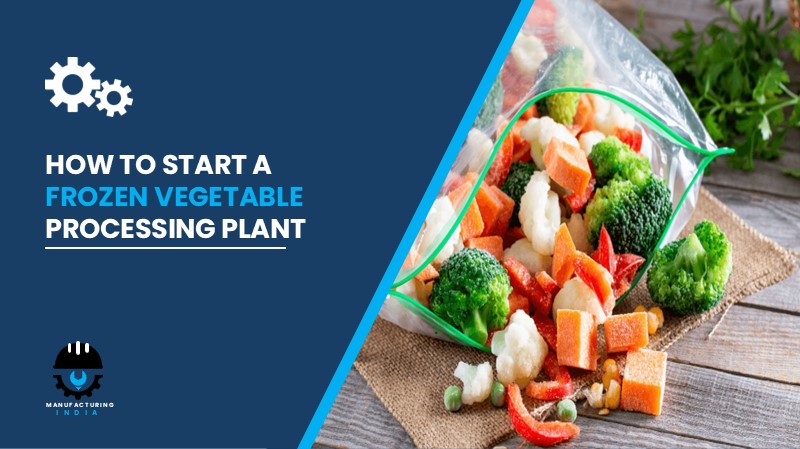
Frozen vegetables are fresh vegetables that are harvested at peak ripeness, washed, blanched, and then frozen to preserve their flavour, texture, and nutritional value. This method allows them to retain their vitamins and minerals while offering a convenient, long-lasting alternative to fresh produce. The freezing process prevents spoilage and extends shelf life, making frozen vegetables ideal for year-round consumption regardless of seasonal availability. Commonly processed vegetables include peas, corn, carrots, beans, and spinach, which are used across a variety of consumer, foodservice, and industrial food manufacturing applications.
The primary production method involves harvesting, washing, blanching, freezing, and packaging – a multi-step process that integrates agricultural raw material management, food-grade processing operations, cold-chain infrastructure, and quality control at each stage. Advancements in individual quick freezing (IQF) technology have significantly improved the texture and quality of frozen vegetables by freezing each piece individually rather than in blocks, maintaining the produce’s original form, taste, and nutritional profile more effectively than conventional bulk freezing methods. End-use industries served include the retail sector, foodservice and HoReCa operations, and industrial food processing companies producing ready meals, soups, sauces, and convenience food products.
Cost of Setting Up a Frozen Vegetable Processing Plant in India
The total investment required to establish a frozen vegetable processing plant in India depends on plant capacity, technology selection – particularly the choice between IQF tunnel freezing and blast freezing – geographic location, level of automation, and compliance with food safety and cold-chain regulatory requirements. Investors must plan comprehensively for both one-time capital expenditure and recurring operational costs when preparing a feasibility study or detailed project report (DPR).
1. Capital Expenditure (CapEx)
Land and Site Development constitutes a foundational and substantial investment. Costs for land registration, boundary development, drainage and effluent management infrastructure, internal access roads, and site levelling are influenced by whether the facility is located within a government-notified food processing cluster, an agro-processing Special Economic Zone (SEZ), a Mega Food Park under MoFPI schemes, or on privately acquired agricultural or industrial land. Food processing zones in states such as Punjab, Haryana, Uttar Pradesh, and Karnataka offer infrastructure-ready plots with competitive land costs and proximity to fresh vegetable production belts.
Civil Works and Construction encompasses the receiving and raw material inspection hall, washing and blanching processing area, freezing tunnel room with insulated construction to maintain sub-zero temperatures, cold storage for finished goods, quality control laboratory, packaging and despatch hall, effluent treatment facility, and administrative block. The insulated construction requirements for the freezing and cold storage sections – including floor heating systems to prevent frost heave, vapour barriers, and high-performance refrigeration infrastructure – add significantly to civil works expenditure compared to ambient-temperature food processing facilities.
Machinery and Equipment represent the single largest component of capital expenditure. Key machinery required includes:
- Receiving hoppers
- Mechanical washers
- Blanchers
- Industrial freezers (IQF tunnel or blast freezers)
- Sorting and inspection belts
- Packaging machines
- Cold storage systems
Other Capital Costs include the effluent treatment plant (ETP) for processing vegetable wash and blanching wastewater, pre-operative expenses covering regulatory filings and feasibility study preparation, plant commissioning charges, utility connection fees, and import duties applicable to specialised IQF tunnel freezing equipment or automated sorting technology sourced internationally.
Request a Sample Report for In-Depth Market Insights: https://www.imarcgroup.com/frozen-vegetable-processing-plant-project-report/requestsample
2. Operational Expenditure (OpEx)
Raw Material Cost is the dominant driver of operating expenditure, accounting for approximately 60–70% of total OpEx. The primary inputs are fresh vegetables and packaging materials including poly bags and cartons. Fresh vegetable prices are subject to pronounced seasonal and weather-related fluctuation, and procurement strategy directly determines both cost stability and product quality outcomes. Investors are advised to establish long-term supply contracts and forward procurement arrangements with farmer producer organisations (FPOs), agricultural cooperatives, and contract farming networks to stabilise input pricing, ensure produce quality standards, and manage supply continuity across harvest seasons. Selecting processing plant locations within close geographic proximity to major vegetable production zones reduces inbound transportation costs and time-in-transit, preserving raw material freshness and reducing pre-processing losses.
Utility Costs – covering electricity for industrial freezers, IQF tunnels, cold storage refrigeration, blanching equipment, and facility operations – account for approximately 25–30% of total OpEx, the highest utility cost proportion across the food processing plant types reviewed in this series. The continuous refrigeration requirements of frozen vegetable processing and storage make electricity the most significant non-raw-material cost variable in this business model. Investors in regions with competitive industrial electricity tariffs, access to renewable energy options, or captive solar power generation capability are materially better positioned to manage this cost line over the plant’s operational life.
Other Operating Costs include outbound refrigerated transportation to retail distribution centres, foodservice distributors, and industrial food manufacturers; packaging materials for consumer packs, bulk institutional packs, and export cartons; employee salaries and wages for production operators, quality inspectors, and cold-chain logistics staff; equipment maintenance; quality assurance testing for FSSAI compliance; depreciation on civil and machinery assets; and applicable taxes. By the fifth year of operations, total operational costs are expected to increase substantially due to inflation, market fluctuations, potential rises in fresh vegetable procurement costs, supply chain disruptions, and rising consumer demand placing volume pressure on processing capacity.
3. Plant Capacity
The proposed frozen vegetable processing facility is designed with an annual production capacity of approximately 20,000 metric tons, enabling economies of scale while maintaining operational flexibility across different vegetable types, product formats, and seasonal supply cycles. This capacity level is well-aligned with the requirements of organised retail chains, institutional foodservice distributors, and industrial food manufacturers sourcing frozen vegetable ingredients for ready meals, soups, and convenience food production. Capacity can be customised based on investor requirements, target market scale, and vegetable variety focus. Profitability improves consistently with higher capacity utilisation, and plants designed with scalability provisions in the initial layout can expand through additional freezing lines or cold storage bays with contained incremental investment.
4. Profit Margins and Financial Projections
The frozen vegetable processing plant demonstrates viable and stable profitability under normal operating conditions. Gross profit margins typically range between 20–30%, supported by consistent multi-channel demand across retail, foodservice, and industrial food processing segments. Net profit margins range between 8–15%, reflecting the high utility cost intensity of refrigerated processing and cold-chain operations relative to ambient food processing businesses. A comprehensive financial analysis should include income projections, expenditure forecasts, gross and net margin tracking across Years 1 through 5, net present value (NPV), internal rate of return (IRR), payback period, and a full profit and loss account. Sensitivity analysis covering fresh vegetable price volatility and electricity tariff movements is particularly important for investment-grade financial planning in this sector.
Why Set Up a Frozen Vegetable Processing Plant in India?
Rising Consumer Preference for Convenient, Healthy, and Plant-Based Food. The growing preference for plant-based, clean-label diets is significantly driving demand for frozen vegetables across India’s urban and semi-urban consumer base. As per the Plant Based Products Council, in 2025, 71% of Americans reported familiarity with plant-based products – reflecting a multi-year increase signalling that plant-based materials have firmly entered mainstream consumption. This global trend is equally relevant in India, where the combination of health awareness, plant-forward dietary traditions, and time-constrained urban lifestyles is creating strong and expanding demand for frozen vegetable products across retail channels.
Growing Trend of Home Cooking Boosting Retail Frozen Vegetable Sales. The growing trend of cooking at home has led to a surge in frozen vegetable consumption, as time-conscious households increasingly rely on pre-washed, pre-cut, and ready-to-cook frozen produce to reduce meal preparation time without compromising nutritional quality. This retail demand channel provides frozen vegetable processors with a large and recurring consumer buyer base that is accessible through modern trade, e-commerce grocery, and neighbourhood retail networks.
Strong Foodservice and Industrial Food Processing Demand. The foodservice sector relies heavily on frozen vegetables for their convenience, consistency, and cost-effectiveness across restaurant, hotel, and institutional catering applications. Industrial food manufacturers producing ready meals, soups, sauces, and convenience food products represent a parallel high-volume, contract-based buyer category that provides processing plants with stable, predictable order volumes well-suited to full-capacity production planning.
IQF Technology Improving Product Quality and Consumer Acceptance. Innovations in freezing technology, particularly individual quick freezing (IQF), have significantly improved the texture, taste, and nutritional value of frozen vegetables relative to earlier bulk-freezing methods, making them more appealing to quality-conscious consumers and demanding foodservice buyers. IQF-processed vegetables closely replicate the sensory qualities of fresh produce, reducing the quality gap that historically limited consumer adoption.
Active Global Industry Investment Signalling Market Confidence. In October 2025, Birds Eye and Tefal announced a strategic partnership combining frozen food brands with smart cooking appliances, united by a mission to make everyday household life easier and more nutritious – reinforcing the strong and growing consumer relevance of frozen vegetables in mainstream diet culture. In April 2024, McCain Foods strengthened its strategic partnership with Strong Roots, the Dublin-based frozen food producer, to expand vegetable-forward, environmentally responsible food choices to more consumers globally. These investments by leading industry players signal sustained confidence in the frozen vegetable sector’s growth trajectory.
India’s Agricultural Base and Government Support Providing Competitive Advantages. India’s vast and diverse vegetable production base provides frozen vegetable processors with access to a broad range of raw materials at globally competitive prices. Government support through Mega Food Parks, cold-chain infrastructure grants under MoFPI, the PLI scheme for food processing, and subsidies under Pradhan Mantri Kisan Sampada Yojana further reduce the effective CapEx and OpEx burden for qualifying investors, making India one of the most commercially attractive locations globally for establishing a frozen vegetable processing plant.
Processing Process – Step by Step
The frozen vegetable processing plant uses harvesting, washing, blanching, freezing, and packaging as the primary production method. Below are the main stages involved in the frozen vegetable processing process flow:
- Raw Material Receipt and Inspection: Fresh vegetables arrive at the facility from farm suppliers or FPOs, are weighed, and inspected for size, colour, ripeness, and absence of defects or contamination before being cleared for the processing line.
- Pre-Washing: Receiving hoppers feed incoming vegetables into mechanical washers that remove soil, pesticide residues, and surface contamination using high-pressure water jets and mechanical agitation, with effluent directed to the treatment plant.
- Sorting and Grading: Sorting and inspection belts allow visual and automated optical sorting to remove damaged, discoloured, or undersized pieces, ensuring only market-grade produce proceeds to blanching and freezing.
- Peeling, Cutting, and Preparation: Where required by product specification, vegetables are peeled, cut, diced, or sliced to the defined dimensions for the target product format – consumer packs, foodservice bulk packs, or industrial ingredient specification.
- Blanching: Blanchers apply controlled steam or hot water treatment to the prepared vegetables to inactivate enzymes that would otherwise cause colour loss, flavour deterioration, and nutritional degradation during frozen storage, while preserving vegetable texture and appearance.
- Cooling: Immediately following blanching, vegetables are cooled rapidly in cold water or chilled air to halt the heat treatment process and stabilise the product before freezing.
- Freezing – IQF Tunnel or Blast Freezing: Industrial freezers – either IQF tunnel freezers that freeze individual pieces in a continuous airflow at temperatures well below -30°C, or blast freezers for batch processing — rapidly bring the product to the required core temperature for long-term frozen storage. IQF technology ensures individual pieces remain separate and free-flowing rather than clumped, preserving product quality and consumer presentation.
- Quality Inspection: Inspection belts and quality control instruments check frozen product for colour consistency, absence of foreign matter, correct sizing, and moisture content, with failed units rejected and batch release conditional on passing acceptance criteria.
- Packaging: Packaging machines fill and seal frozen vegetables into consumer poly bags or retail packs, and bulk cartons for institutional and industrial supply, applying labelling with product name, weight, ingredients, nutritional information, and batch coding for FSSAI compliance and supply chain traceability.
- Cold Storage and Dispatch: Finished frozen vegetable packs are transferred to cold storage systems maintained at the required temperature for inventory management before despatch via refrigerated transport to retail distribution centres, foodservice distributors, and industrial food processing customers.
Key Applications
Frozen vegetables produced at this type of facility serve three primary end-use sectors and a range of specific product applications within each:
- Retail: Frozen vegetable packs sold through supermarkets, convenience stores, and online grocery platforms to household consumers for use in home cooking across meals, stir-fries, side dishes, snacks, and salads.
- Foodservice: Supplied to restaurants, hotels, catering companies, and quick-service restaurants for use as side dishes, meal components, soup ingredients, and bulk preparation applications requiring consistent quality and convenient ready-to-use formats.
- Industrial Food Processing: Used as ingredients in ready meals, soups, sauces, frozen convenience food products, and packaged meal kits by food manufacturers requiring specification-consistent vegetable ingredients with extended shelf life and year-round availability.
Leading Frozen Vegetable Processors
The global frozen vegetable processing industry is served by several large-scale producers with diversified product portfolios and strong retail, foodservice, and industrial buyer relationships. Key players include:
- Green Giant
- Birds Eye
- Bonduelle
- Ardo
- McCain Foods
Timeline to Start the Plant
Investors planning to establish a frozen vegetable processing plant in India should anticipate the following project development phases:
- Feasibility study and project report preparation
- Land acquisition and site development
- Regulatory approvals and environmental clearances
- Factory licence and fire safety compliance
- Machinery procurement and installation
- Raw material supplier agreements and supply chain setup
- Trial production and quality testing
- Commercial production launch
Licences and Regulatory Requirements
Starting a frozen vegetable processing unit in India requires several approvals:
- Business registration (Proprietorship, LLP, or Private Limited Company)
- Factory Licence under the Factories Act
- FSSAI (Food Safety and Standards Authority of India) licence for food processing and packaging of frozen vegetables
- Environmental Clearance from the State Pollution Control Board
- GST Registration
- Fire Safety NOC
- Effluent Treatment Plant (ETP) operational clearance for vegetable washing and blanching wastewater management
- Cold storage licence under applicable state warehousing and cold-chain regulatory frameworks
- Occupational Health and Safety compliance covering food-grade processing and cold-room operations
- Export registration with APEDA (Agricultural and Processed Food Products Export Development Authority) where export to international markets is targeted
Key Challenges to Consider
High Utility Cost Intensity. The continuous refrigeration requirements of IQF freezing, cold storage, and refrigerated dispatch make electricity the second-largest cost item in the operating model, accounting for 25–30% of total OpEx. Any disruption to power supply or significant increase in industrial electricity tariffs directly impacts production economics and margin outcomes, making utility cost management a persistent and critical operational priority.
Raw Material Price and Quality Volatility. Fresh vegetables – accounting for 60–70% of total OpEx — are subject to pronounced seasonal, weather-related, and market-driven price volatility. Crop failures, excessive rainfall, pest outbreaks, or logistics disruptions during peak harvest seasons can simultaneously increase procurement costs and reduce raw material quality, compressing margins and challenging production scheduling.
Cold-Chain Infrastructure Requirements. Maintaining unbroken cold-chain integrity from the processing plant through refrigerated transport to retail distribution or industrial buyer sites requires significant infrastructure coordination and ongoing investment. Any temperature breach in the cold chain can result in product quality failure, regulatory non-compliance, and buyer contract penalties – making cold-chain management a critical operational competency.
Regulatory Compliance Under FSSAI. Frozen vegetable processing in India is subject to FSSAI standards governing food safety, labelling, hygiene, and traceability. Maintaining compliance across raw material sourcing, processing operations, cold storage, and distribution requires documented quality management systems, regular internal and third-party audits, and comprehensive batch traceability records.
Competition from Established Global and Domestic Processors. The market is served by large-scale multinational processors including Birds Eye, Bonduelle, and McCain Foods, alongside established Indian domestic players. New entrants must differentiate through product quality, vegetable variety specialisation, organic or clean-label positioning, or competitive pricing for institutional and export buyers to build sustainable market share.
Skilled Manpower for Food-Grade Cold-Chain Operations. Operating IQF freezing systems, cold storage infrastructure, automated sorting lines, and food-grade packaging equipment requires technicians and supervisors trained in cold-chain food safety, HACCP implementation, and quality management. Recruiting and retaining this talent pool, particularly for remote or agricultural cluster locations, presents an ongoing operational challenge.
Frequently Asked Questions
1. How much does it cost to set up a frozen vegetable processing plant in India?
The total cost depends on plant capacity (approximately 20,000 MT per annum), freezing technology selection (IQF tunnel vs. blast freezer), location, and level of automation. CapEx covers land, insulated cold-room civil construction, and machinery including receiving hoppers, mechanical washers, blanchers, IQF or blast freezers, sorting and inspection belts, packaging machines, and cold storage systems, along with pre-operative and regulatory costs.
2. Is frozen vegetable processing profitable in India in 2026?
Yes. With gross margins of 20–30% and net margins of 8–15%, supported by growing multi-channel demand across retail, foodservice, and industrial food processing, and a global market expanding at 5.06% CAGR toward USD 9.06 billion by 2034, the investment presents a commercially viable and improving profitability case for well-located and efficiently operated facilities.
3. What machinery is required for a frozen vegetable processing plant in India?
Key equipment includes receiving hoppers, mechanical washers, blanchers, industrial freezers (IQF tunnel or blast freezers), sorting and inspection belts, packaging machines, and cold storage systems.
4. What licences and approvals are required to start a frozen vegetable processing plant in India?
Required approvals include business registration, FSSAI licence for frozen food processing, Factory Licence, Environmental Clearance, GST Registration, Fire Safety NOC, ETP operational clearance, cold storage licence, Occupational Health and Safety compliance, and APEDA export registration where applicable.
5. What raw materials are needed for frozen vegetable processing?
The primary raw materials are fresh vegetables — including peas, corn, carrots, beans, and spinach — and packaging materials such as poly bags and cartons. Additional inputs include water, steam for blanching, and refrigerants for freezing and cold storage systems.
6. What are the environmental compliance requirements for a frozen vegetable processing plant in India?
An operational effluent treatment plant is mandatory for managing vegetable washing and blanching wastewater, along with Environmental Clearance from the State Pollution Control Board and compliance with food processing waste management and water discharge standards applicable under state environmental regulations.
7. What is the best location to set up a frozen vegetable processing plant in India?
Locations with strong fresh vegetable production proximity, cold-chain logistics infrastructure, and food processing cluster support — such as Punjab, Haryana, Uttar Pradesh, Maharashtra, and Karnataka — offer the best combination of raw material access, logistics connectivity, utility reliability, and government food processing incentive access.
8. What is the break-even period for this type of plant in India?
The break-even period depends on plant capacity utilisation, product mix, raw material procurement costs, and electricity tariff levels. A full NPV and IRR analysis incorporating sensitivity testing for vegetable price and utility cost scenarios is recommended for investment-grade financial planning.
9. What government incentives are available for frozen vegetable processors in India?
The PLI scheme for food processing, Mega Food Park infrastructure grants under MoFPI, Pradhan Mantri Kisan Sampada Yojana cold-chain and food processing subsidies, APEDA export development support, and state-level agro-processing industrial incentive schemes in Punjab, Uttar Pradesh, and Maharashtra provide meaningful financial and infrastructure support for qualifying frozen vegetable processing investments.
Key Takeaways for Investors
A frozen vegetable processing plant in India represents a strategically sound, agriculturally anchored investment opportunity driven by strong and growing demand across retail, foodservice, and industrial food processing channels, supported by India’s globally competitive fresh vegetable supply base and active government food processing incentive framework. Financial viability is demonstrated across a plant capacity of approximately 20,000 MT per annum, with gross margins of 20–30% and net margins of 8–15% achievable under normal operating and procurement conditions. The global frozen vegetable market, valued at USD 5.81 billion in 2025, is projected to reach USD 9.06 billion by 2034 at a 5.06% CAGR – with Asia-Pacific identified as the fastest-growing region, driven by rising incomes and expanding middle-class populations that increasingly favour convenient, nutritious, and affordable frozen food options. With IQF technology improving product quality, plant-based diet adoption broadening the consumer base, and global industry leaders including McCain Foods and Birds Eye actively investing in partnership-led capacity expansion, long-term demand sustainability for Indian frozen vegetable processing investors is firmly and comprehensively supported.
About the Author