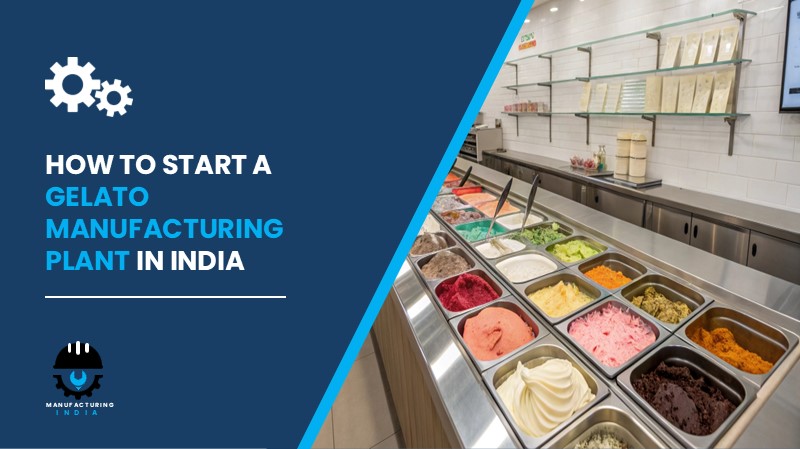
Setting up a gelato manufacturing plant in India presents a compelling investment case driven by surging consumer appetite for premium frozen desserts, rapid expansion of cafes, ice cream parlors, hotels, restaurants, and specialty dessert outlets across urban and semi-urban markets. Gelato — the Italian-style high-end frozen dessert — is increasingly becoming a product category of strategic importance in India’s food and beverage sector, as rising disposable incomes, urbanisation, and a growing middle class align perfectly with demand for artisanal, natural, and quality-led frozen treats. The foodservice sector, retail chains, specialty outlets, and home consumption segments are all generating parallel demand streams that support large-scale and boutique-scale production alike.
India’s structural advantages make this an especially strong moment to invest in gelato production. The country’s accelerating urbanisation, a young aspirational consumer base, and robust infrastructure growth across states like Maharashtra, Uttar Pradesh, and Telangana create the right conditions for scaling a premium frozen food brand. India’s Make in India initiative further incentivises domestic food manufacturing by reducing import dependencies and encouraging local value-addition. With cold chain infrastructure improving, e-commerce platforms expanding packaged food access, and a retail ecosystem rapidly professionalising, establishing a gelato manufacturing plant in India is both strategically sound and commercially viable.
India’s gelato sector sits at the intersection of premiumisation, foodservice growth, and health-conscious innovation — making a domestic manufacturing unit cost-competitive, policy-supported, and commercially well-positioned to deliver gross margins of 45–55% and net margins of 20–25% at efficient capacity utilisation, with a clear break-even pathway for investors across plant sizes.
What is Gelato?
Gelato is a premium Italian-style frozen dessert produced from milk, cream, sugar, natural flavorings, and stabilizers. What distinguishes gelato from conventional ice cream is its lower fat content, denser texture, and richer flavour profile — a direct result of its slower churning speed that incorporates minimal air into the product. The gelato manufacturing process places strong emphasis on natural ingredients, freshness, and textural precision, which accounts for its premium positioning at cafes, retail outlets, and restaurants worldwide.
Gelato is available in a wide variety of flavours — from classic profiles such as chocolate, vanilla, and pistachio to fruit-based and innovative seasonal options — giving producers significant room for product differentiation and flavour innovation. The product can be manufactured using both large-scale industrial batch production methods and small-scale boutique-style production units, making it accessible for a wide range of investor profiles and plant capacities.
The core production method involves milk and cream pasteurization, mixing and flavoring, freezing and batch churning, homogenization, portioning, and packaging. End-use industries served include the foodservice sector, cafes, ice cream parlors, retail chains, hotels, restaurants, and specialty dessert outlets. Applications span cups, cones, and packaged tubs, as well as gelato cakes, milkshakes, and bases for specialty frozen creations.
Cost of Setting Up a Gelato Manufacturing Plant in India
The cost of establishing this type of plant depends on several interconnected variables including production capacity, technology selection, level of automation, geographic location, and regulatory compliance requirements. Below is a structured breakdown of the key cost components that investors must account for.
1. Capital Expenditure (CapEx)
Land and Site Development represents a substantial component of total capital investment, covering land acquisition, registration charges, boundary development, and site preparation. Investors can reduce land costs significantly by locating the facility within an SEZ (Special Economic Zone) or a designated industrial estate in states such as Maharashtra, Gujarat, or Uttar Pradesh, where food processing zones often provide infrastructure subsidies and tax incentives.
Civil Works and Construction encompass the construction of the production shed, raw material storage areas, cold storage facilities, quality control laboratory, administrative block, and finished goods warehouse. Proper plant layout is critical in gelato production to ensure workflow efficiency, safety, and minimal cross-contamination risk between raw and finished product zones. Space for future capacity expansion must also be factored in at the design stage.
Machinery and Equipment account for the largest single portion of total CapEx. Key machinery required includes:
- Pasteurizers
- Batch freezers
- Mixers
- Portioning machines
- Packaging units
- Inspection systems
All machinery must comply with food-grade safety standards and industry norms for efficiency and reliability. High-quality, corrosion-resistant equipment specifically tailored for gelato production is recommended to ensure consistent batch quality and product shelf life.
Other Capital Costs include the Effluent Treatment Plant (ETP), pre-operative expenses, plant commissioning charges, quality assurance systems, and monitoring equipment. Import duties on specialised equipment should also be factored into the CapEx budget where machinery is being sourced internationally.
Request a Sample Report for In-Depth Market Insights: https://www.imarcgroup.com/gelato-manufacturing-plant-project-report/requestsample
2. Operational Expenditure (OpEx)
Raw Material Cost is the dominant driver of OpEx, accounting for approximately 60–65% of total operating expenses. The primary raw materials required for gelato production are milk cream, sugar, stabilizers, and flavors. Given this concentration, investors are strongly advised to negotiate long-term supplier contracts with reliable regional dairy processors and food ingredient manufacturers to stabilise pricing and protect margins against supply chain volatility.
Utility Cost — covering electricity, water, and steam — represents approximately 8–10% of total OpEx. Gelato manufacturing is energy-intensive, particularly in refrigeration and freezing operations, and a reliable power supply with backup infrastructure is a non-negotiable requirement for plant operations in India.
Other Operating Costs include transportation and logistics, packaging materials, salaries and wages, maintenance and repair, depreciation, and applicable taxes. By the fifth year of operations, total operational costs are projected to increase substantially due to inflation, market fluctuations, and potential rises in the cost of key raw materials. Additional factors including supply chain disruptions, rising consumer demand, and shifts in the broader economy are expected to contribute to this upward trajectory.
3. Plant Capacity
The proposed gelato manufacturing facility is designed with an annual production capacity ranging between 2,000 and 5,000 MT, enabling economies of scale while maintaining operational flexibility. Capacity can be customised per investor requirements — both boutique-scale and industrial-scale configurations are viable. As with most food manufacturing operations, profitability improves significantly with higher capacity utilisation, making early demand-side strategy a key lever for financial performance.
4. Profit Margins and Financial Projections
The gelato plant demonstrates healthy profitability potential under normal operating conditions. Gross profit margins typically range between 45–55%, supported by stable demand and value-added product applications. Net profit margins are projected at 20–25%, making this one of the more financially attractive segments in Indian food manufacturing. A comprehensive financial analysis covering NPV (Net Present Value), IRR (Internal Rate of Return), payback period, gross and net margin trajectories, profit and loss projections, and sensitivity analysis is essential before committing to full investment.
Why Set Up a Gelato Plant in India?
Rising Premium Dessert Demand. Indian consumers are increasingly moving toward high-quality, natural, and premium frozen desserts, with gelato emerging as a preferred category among urban millennials and Gen Z consumers. The shift is being driven by changing taste preferences and growing awareness of artisanal food products.
Expanding Cafe and Foodservice Ecosystem. More ice cream parlors, specialty cafes, hotels, and restaurants are actively incorporating gelato into their dessert offerings. As of December 2025, the state of Telangana alone hosted approximately 6,200 ice cream shops, with Hyderabad accounting for about 43.7% of the total — a strong indicator of the dense retail infrastructure that already exists to distribute premium frozen desserts.
Retail and E-Commerce Channel Growth. The retail expansion of supermarkets and e-commerce platforms is making packaged gelato accessible to consumers across India’s geographies, extending reach far beyond metro cities into Tier 2 and Tier 3 markets.
Flavor Innovation Opportunities. The industry supports significant product differentiation through low-fat, sugar-free, vegan, and organic flavor variants — categories that are growing rapidly among health-conscious Indian consumers and represent a large addressable market.
Cost-Competitive Manufacturing. India offers significant cost advantages in land, labour, and supply chain relative to Western markets. Access to domestic dairy supply chains and a growing food ingredients manufacturing sector supports competitive raw material procurement for gelato producers.
Active Industry Investment. In October 2025, Italian gelato maker Sammontana expanded its U.S. presence after its official debut in summer 2025, building its North American strategy through partnerships with Eataly USA and planning further global acquisitions — signaling that global players are in active growth mode. In July 2025, Pistachio Papi partnered with Elato Gelato to expand distribution across retail and convenience outlets in Australia, reflecting the category’s global momentum across new markets.
Manufacturing Process Step by Step
The gelato manufacturing process uses milk and cream pasteurization as the primary production method, followed by a series of controlled steps to achieve the characteristic dense, creamy texture and rich flavour profile.
- Milk and Cream Pasteurization: Raw milk and cream are heat-treated to eliminate pathogens and extend shelf life while preserving flavor integrity.
- Mixing and Flavoring: Pasteurized base is blended with sugar, stabilizers, and natural flavorings in precise ratios to achieve consistent taste and texture profiles.
- Freezing and Batch Churning: The mix is introduced into batch freezers where it is churned at slow speed, incorporating minimal air to achieve gelato’s signature dense consistency.
- Homogenization: The product undergoes homogenization to ensure uniform texture and prevent separation of fat components.
- Portioning: The finished gelato is portioned into cups, cones, tubs, or bulk containers based on the target application and customer specification.
- Packaging and Dispatch: Portioned product is packed using food-grade packaging units, inspected for quality compliance, and dispatched to end-use industries including cafes, retail chains, hotels, restaurants, and specialty dessert outlets.
Key Applications
Gelato serves a broad range of industries and consumption contexts, making it a versatile product with multiple revenue channels for manufacturers:
- Foodservice Sector: Gelato adds premium value to dessert menus at cafes, restaurants, and hotels, appealing to high-end customers and supporting price premiums.
- Retail Chains and Specialty Outlets: Packaged gelato is sold through supermarkets, dessert shops, and takeaway counters, enabling volume-driven revenue streams.
- Frozen Dessert Production: Gelato serves as a base for milkshakes, gelato cakes, and other frozen confections produced by food manufacturers.
- Home Consumption: Premium packaged gelato is increasingly targeted at urban households seeking luxurious frozen treats as an everyday indulgence.
Leading Manufacturers
The global gelato industry features a mix of multinational corporations, regional specialists, and artisanal producers operating across foodservice, retail, and industrial segments. Key players in the global market include:
- Unilever Ltd.
- Minus30
- The Gelato Factory
- Amore Gelato
- G.S. Gelato
- Gelato Italia Ltd.
Timeline to Start the Plant
- Feasibility study and project report preparation
- Land acquisition and site development
- Regulatory approvals and environmental clearances
- Factory licence and fire safety compliance
- Machinery procurement and installation
- Raw material supplier agreements and supply chain setup
- Trial production and quality testing
- Commercial production launch
Licences and Regulatory Requirements
Starting a gelato manufacturing unit in India requires several approvals:
- Business registration (Proprietorship, LLP, or Pvt Ltd)
- Factory Licence under the Factories Act
- Environmental Clearance from State Pollution Control Board
- GST Registration
- Fire Safety NOC
- Effluent Treatment Plant (ETP) operational clearance
- Occupational Health and Safety compliance
- FSSAI (Food Safety and Standards Authority of India) licence for food manufacturing
Key Challenges to Consider
High Capital Requirements: Setting up a gelato manufacturing facility with compliant cold chain infrastructure, batch freezers, pasteurizers, and packaging systems demands significant upfront capital, which can be a barrier for smaller investors without access to project financing or institutional credit.
Raw Material Price Volatility: The primary raw materials — milk cream, sugar, stabilizers, and flavors — are subject to seasonal and market-driven price fluctuations. Milk cream alone accounts for 60–65% of total OpEx, making margin management heavily dependent on effective procurement strategy and long-term supplier contracts.
Regulatory Compliance: Food manufacturing in India is subject to FSSAI regulations, cold chain standards, ETP requirements, and environmental compliance norms, all of which require ongoing investment in systems, documentation, and personnel.
Competition: Established global players including Unilever Ltd., Minus30, The Gelato Factory, Amore Gelato, G.S. Gelato, and Gelato Italia Ltd. set high benchmarks for product quality and brand equity, making differentiation essential for new market entrants.
Skilled Manpower: Gelato manufacturing demands technically trained personnel for batch processing, quality assurance, cold chain management, and flavour development — skill sets that may require investment in specialised training programs or talent acquisition.
Technology and Innovation Pressure: Consumer demand for low-fat, sugar-free, vegan, and organic gelato variants is intensifying, requiring producers to continuously invest in formulation innovation and production flexibility to remain competitive.
Frequently Asked Questions
1. How much does it cost to set up a gelato manufacturing plant in India?
The setup cost depends on plant capacity, technology, location, and automation level. A comprehensive feasibility study covering CapEx, OpEx, and financial projections is essential to arrive at an accurate investment figure for your specific configuration.
2. Is gelato manufacturing profitable in India in 2026?
Yes. With gross margins of 45–55% and net margins of 20–25%, the gelato manufacturing plant demonstrates strong profitability potential, particularly as premium frozen dessert demand continues to grow across India’s urban and semi-urban markets.
3. What machinery is required for a gelato plant in India?
Key machinery includes pasteurizers, batch freezers, mixers, portioning machines, packaging units, and inspection systems — all of which must meet food-grade safety and efficiency standards.
4. What licences and approvals are required to start a gelato plant in India?
Investors require business registration, a Factory Licence, FSSAI licence, Environmental Clearance, GST registration, Fire Safety NOC, and ETP operational clearance, among other state-specific approvals.
5. What raw materials are needed for gelato manufacturing?
The primary raw materials are milk cream, sugar, stabilizers, and flavors. Milk cream is the dominant input, accounting for the bulk of total raw material costs.
6. What are the environmental compliance requirements for a gelato plant in India?
Producers must operate a compliant Effluent Treatment Plant (ETP), obtain environmental clearance from the State Pollution Control Board, and maintain monitoring systems to manage waste and emissions in line with regulatory standards.
7. What is the best location to set up a gelato plant in India?
Ideal locations offer proximity to dairy supply chains, reliable cold chain infrastructure, access to urban distribution markets, and availability of industrial zones with utility support — states like Maharashtra, Gujarat, and Uttar Pradesh are strong candidates.
8. What is the break-even period for this type of plant in India?
Break-even timelines vary by plant capacity and capital structure. A detailed financial analysis covering NPV, IRR, and payback period is recommended to determine project-specific break-even horizons.
9. What government incentives are available for manufacturers in India?
India offers a range of incentives under the Make in India initiative, PLI (Production Linked Incentive) schemes for food processing, state-level industrial subsidies, SEZ benefits, and MSME credit support schemes that can significantly reduce effective investment costs.
Key Takeaways for Investors
A gelato manufacturing plant in India represents a high-potential investment opportunity anchored by strong demand from foodservice, retail chains, specialty outlets, and premium home consumption segments — all of which are growing in parallel. The production unit is financially viable across a range of plant capacities, with gross margins of 45–55% and net margins of 20–25% providing a robust return framework when production is efficiently managed. The global gelato market, valued at USD 37.83 billion in 2025 and projected to reach USD 67.99 billion by 2034 at a CAGR of 6.7%, reflects a durable and expanding demand base that Indian producers are well-positioned to serve domestically. With urbanisation accelerating, retail infrastructure deepening, and consumer preferences trending decisively toward premium, natural, and artisanal frozen desserts, demand sustainability for gelato in India over the medium and long term is firmly supported.
About the Author