Setting up an LPG bullet tanker manufacturing plant in India presents a compelling investment case as the country rapidly emerges as one of the most cost-competitive and high-demand destinations for pressure vessel and specialized industrial equipment manufacturing. Driven by surging demand from the LPG distribution, petrochemical storage, industrial gas handling, and energy infrastructure sectors, LPG bullet tankers have become an indispensable part of India’s energy supply chain and hydrocarbon logistics network.
“With over 1.4 billion consumers, a rapidly expanding LPG distribution network, Make in India policy support, a booming infrastructure and energy sector, and the Government’s Pradhan Mantri Ujjwala Yojana driving LPG penetration to every household, India offers one of the most financially attractive environments for LPG bullet tanker manufacturing — with gross margins of 18–28% and a break-even window of 3–5 years.”
What is an LPG Bullet Tanker?
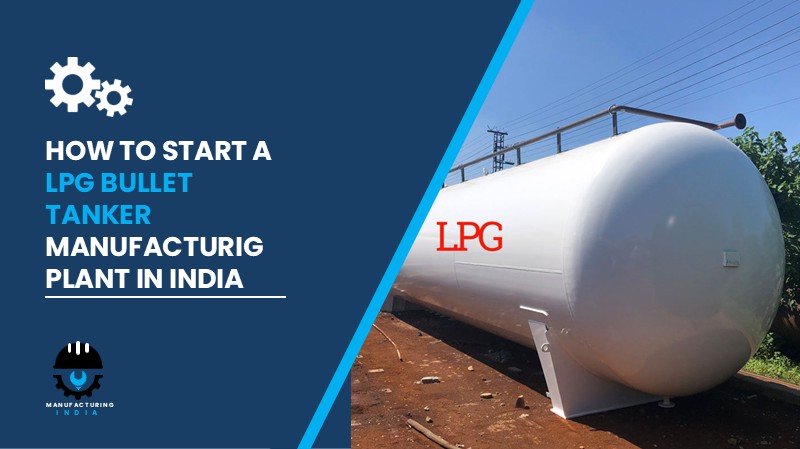
An LPG bullet tanker is a horizontally oriented, cylindrical pressure vessel mounted on a road transport chassis, designed and engineered for the safe bulk transportation and storage of liquefied petroleum gas (LPG) — primarily a mixture of propane and butane. The term “bullet” refers to the characteristic elongated, cylindrical shape with dished ends that resembles a projectile. These vessels are constructed from high-tensile carbon steel or alloy steel and are designed to withstand the internal pressure generated by LPG under various temperature and operating conditions.
LPG bullet tankers are subject to stringent design, fabrication, inspection, and certification standards governed by the Petroleum and Explosives Safety Organisation (PESO) in India, and internationally by ASME, EN 13530, and ADR standards. They are a critical link in the LPG supply chain — transporting bulk LPG from refineries, import terminals, and bottling plants to industrial consumers, commercial establishments, auto-LPG stations, and large storage installations.
Cost of Setting Up an LPG Bullet Tanker Manufacturing Plant in India
The LPG bullet tanker manufacturing plant cost in India depends on several parameters including production capacity (number of units per year), vessel capacity range (from 5 KL to 60 KL), fabrication technology, level of automation, plant location, and regulatory compliance with PESO and ASME standards. Here is a structured breakdown of all major cost components:
1. Capital Expenditure (CapEx)
The total capital investment in an LPG bullet tanker manufacturing plant typically covers the following:
Land and Site Development
This includes land acquisition, boundary development, land registration charges, and basic site preparation. LPG bullet tanker fabrication requires substantial open yard space for vessel assembly, shot blasting, painting, and testing in addition to the covered fabrication shop. Cost varies significantly depending on whether the land is in an industrial estate, Special Economic Zone (SEZ), or a privately purchased plot.
Civil Works and Construction
Building costs cover the main fabrication shop (with crane gantry infrastructure), plate preparation area, welding bays, shot blasting chamber, painting booth, hydrostatic testing area, quality control laboratory, administrative block, and worker facilities. Construction must comply with industrial fire safety and explosive atmosphere (ATEX) regulations applicable to LPG equipment manufacturing.
Machinery and Equipment
This is the single largest component of CapEx. Key machinery required for an LPG bullet tanker manufacturing plant includes:
- CNC Plasma/Flame Cutting Machines for steel plate cutting
- Plate Rolling Machines (shell rolling mills for cylindrical shell fabrication)
- Dish End Pressing and Forming Machines (hydraulic press for dished end fabrication)
- Submerged Arc Welding (SAW) Machines
- MIG/MAG and TIG Welding Equipment
- Overhead EOT Cranes (for heavy plate and vessel handling)
- Shot Blasting and Grit Blasting Equipment
- Industrial Painting Booth and Spray Equipment
- Hydrostatic Test Pumps and Pressure Testing Equipment
- Radiographic Testing (RT) and Ultrasonic Testing (UT) Equipment (NDT)
- Magnetic Particle Inspection (MPI) and Dye Penetrant Testing Equipment
- Stress Relief Furnace (Post Weld Heat Treatment — PWHT)
- CNC Drilling and Machining Centers
- Sandblasting Cabinets and Surface Preparation Equipment
Machinery costs represent the largest share of overall capital expenditure, reflecting the heavy engineering nature and the critical safety requirements of pressure vessel fabrication for LPG service.
Other Capital Costs
These include pre-operative expenses, commissioning charges, import duties (if specialized CNC or welding equipment is sourced internationally), utilities installation (heavy power supply for welding and cranes), fire detection and suppression systems, and costs associated with obtaining PESO fabricator approval and BIS/ASME certification for the manufacturing facility.
Request a Sample Report for In-Depth Market Insights: https://www.imarcgroup.com/lpg-bullet-tanker-manufacturing-plant-project-report/requestsample
2. Operational Expenditure (OpEx)
Once the plant is commissioned, the ongoing cost structure is dominated by a few key components:
Raw Material Cost (Steel Plates, Fittings & Components): 70-80% of Total OpEx
High-tensile carbon steel plates (IS 2062, SA 516 Gr. 70, or equivalent) and alloy steel as required by design standards are the primary raw materials and account for the majority of operating expenses. Additional materials include dished ends (if outsourced), nozzle forgings, flanges, valves, safety relief valves, gauges, fittings, insulation materials, primers, and paints. Steel prices are subject to domestic and global market fluctuations and directly impact vessel manufacturing margins.
Utility Cost: 10-15%of Total OpEx
Utilities include electricity (heavily consumed by welding machines, cranes, shot blasting, and CNC equipment), industrial gases (argon, CO2, oxygen, and acetylene for welding and cutting), and compressed air supply for pneumatic tools and shot blasting operations.
Other Operating Costs
The remaining budget covers transportation of raw materials and finished tankers (heavy-duty trailers), salaries and wages (including certified welders, NDT technicians, and PESO-qualified inspectors), maintenance, consumables (welding electrodes, wire, nozzles), third-party inspection and certification fees, depreciation, taxes, and miscellaneous overhead.
3. Plant Capacity
The proposed manufacturing facility is designed with an annual production capacity ranging between 50 to 300 LPG bullet tanker units per year, covering vessel capacities from 5 KL to 60 KL. This range allows the plant to achieve economies of scale while maintaining flexibility to serve multiple segments including road tankers for LPG distribution companies, bulk storage bullets for industrial consumers, and auto-LPG station storage vessels. Smaller fabrication shops may start at lower throughput, but profitability significantly improves with higher capacity utilization and larger vessel size mix.
4. Profit Margins and Financial Projections
- Gross Profit Margin: 25-35%
- Net Profit Margin: 12-18%
- Break-Even Period: 3 to 5 years, depending on production scale, vessel capacity mix, order book strength, raw material cost management, and operational efficiency.
Financial projections must account for capital investment, operating costs, capacity utilization rates, steel price trends, order-to-delivery cycles, and demand outlook from oil marketing companies and industrial gas distributors. A thorough analysis should also include sensitivity analysis, Net Present Value (NPV), Internal Rate of Return (IRR), and Payback Period.
Why Set Up an LPG Bullet Tanker Manufacturing Plant in India?
India presents a uniquely favorable environment for establishing an LPG bullet tanker manufacturing plant:
Surging LPG Infrastructure Demand
India’s LPG consumption has grown dramatically over the past decade, driven by the Pradhan Mantri Ujjwala Yojana scheme which has connected over 100 million below-poverty-line households to LPG cooking fuel. This has necessitated massive expansion of the LPG bulk distribution infrastructure — bottling plants, storage terminals, and road transport fleet — all of which require LPG bullet tankers. India’s three major oil marketing companies (IOCL, BPCL, HPCL) continue to invest in bulk LPG transport fleet expansion.
Policy and Regulatory Tailwinds
The Government of India’s push for universal clean cooking fuel access, city gas distribution network expansion, and auto-LPG promotion under various energy policy initiatives is creating sustained demand for LPG infrastructure equipment. The Make in India initiative further incentivizes domestic fabrication of specialized equipment like pressure vessels, replacing imports.
Cost-Competitive Manufacturing
India offers competitive steel procurement costs through large integrated steel plants, a well-developed pool of certified welders and pressure vessel fabricators, competitive fabrication labor rates, and a growing domestic supply chain for valves, fittings, and pressure vessel components — making it one of the most cost-effective locations for LPG bullet tanker manufacturing in Asia.
Export Opportunities
India-based manufacturers can tap into growing export demand from the Middle East, Southeast Asia, and Africa, where LPG distribution infrastructure is expanding rapidly and local heavy engineering fabrication capacity remains limited. Indian ASME and PESO-certified fabricators are increasingly recognized for quality and competitive pricing in export markets.
City Gas Distribution Expansion
India’s city gas distribution (CGD) network is expanding aggressively across hundreds of new geographical areas, driving demand for LPG and CNG storage and transport equipment. This creates a sustained, long-term pipeline of orders for pressure vessel and tanker manufacturers with PESO-approved fabrication capabilities.
Manufacturing Process Overview
The LPG bullet tanker manufacturing process involves a sequence of precision heavy engineering operations:
- Steel Plate Procurement and Inspection — procurement of certified steel plates with material test certificates (MTC) as per design specifications
- Plate Marking and Cutting — CNC plasma or flame cutting of shell plates, nozzle pads, and reinforcement rings to precise dimensions
- Shell Rolling — rolling of steel plates into cylindrical shell sections using heavy plate rolling machines
- Dished End Fabrication — pressing of dished (torispherical or hemispherical) ends from steel plates using hydraulic press
- Shell and Dished End Assembly — fit-up and tack welding of shell sections and dished ends
- Welding — longitudinal and circumferential seam welding using Submerged Arc Welding (SAW) and other qualified welding processes as per WPS/PQR
- Nozzle and Fitting Attachment — cutting openings and welding nozzles, manholes, and pressure fittings
- Post Weld Heat Treatment (PWHT) — stress-relieving treatment in furnace as required by design code
- Non-Destructive Testing (NDT) — radiographic testing (RT) of all pressure welds, UT, MPI, and DPT as applicable
- Hydrostatic Pressure Testing — hydraulic proof testing of the completed vessel to the specified test pressure
- Shot Blasting and Surface Preparation — abrasive blasting of vessel exterior to Sa 2.5 standard
- Painting and Coating — application of primer and topcoat in designated LPG tanker colors
- Chassis Mounting and Outfitting — mounting of vessel on tanker chassis with saddle supports, fitting of valves, safety relief valves, gauges, and pipework
- Final Inspection and PESO Certification — third-party inspection, statutory testing, and obtaining PESO approval before dispatch
Key Applications of LPG Bullet Tankers
LPG bullet tankers manufactured in India serve a wide variety of end-use applications:
- Bulk LPG Road Transport: Transportation of bulk LPG from refineries and import terminals to bottling plants and large consumers operated by IOCL, BPCL, HPCL, and private LPG distributors
- Industrial LPG Storage: Fixed horizontal bullet storage vessels at industrial plants, glass factories, ceramic units, forging shops, and large commercial consumers
- Auto-LPG Dispensing Stations: Storage bullets at autogas stations supplying LPG as vehicle fuel
- City Gas Distribution: Bulk LPG storage for PNG/CNG city gas distribution networks during network development phase
- Agricultural and Rural LPG: Bulk LPG supply to decentralized communities, rural piped gas projects, and agricultural drying applications
- Petrochemical and Refinery Use: Storage and transport of propane, butane, and LPG mixtures at refineries and petrochemical facilities
Global Market Outlook
The global LPG equipment and pressure vessel market continues to expand, underpinned by growing LPG consumption across Asia, Africa, and Latin America. India’s domestic LPG consumption is expected to grow at a CAGR of 4–6% through 2030, driven by continued household LPG expansion, industrial fuel switching, and auto-LPG growth. The Indian pressure vessel fabrication market, which includes LPG bullet tankers, is valued at several thousand crore rupees annually and is expected to grow significantly with CGD expansion and refinery capacity additions.
Leading players in India’s LPG bullet tanker and pressure vessel fabrication sector include:
- SABOO Engineers Pvt. Ltd.
- Bharat Tanks and Vessels
- Tarun Engineering Works
- Prism Tanks and Vessels Pvt. Ltd.
- Sudarshan Saur Shakti Pvt. Ltd.
- IMC Limited
- Godrej Process Equipment (Godrej & Boyce)
Timeline to Start an LPG Bullet Tanker Manufacturing Plant
Setting up an LPG bullet tanker manufacturing plant from ideation to commissioning typically requires 18 to 24 months. This covers:
- Feasibility study and Detailed Project Report (DPR) preparation
- Land acquisition and site development (including crane gantry foundation and shot blast chamber construction)
- Regulatory approvals and environmental clearances
- Factory license and fire safety compliance
- Machinery procurement and installation (heavy rolling mill, welding equipment, NDT systems)
- Welding Procedure Specification (WPS) and Procedure Qualification Records (PQR) development and qualification
- PESO fabricator registration and approval
- ASME certification (if targeting export or international quality standards)
- Trial production and statutory inspection
- Commercial production launch
Licenses and Regulatory Requirements
Starting an LPG bullet tanker manufacturing unit in India requires several approvals, including:
- Business registration (Proprietorship, LLP, or Private Limited Company)
- Factory License under the Factories Act
- Environmental Clearance from the State Pollution Control Board (SPCB)
- GST Registration
- Fire Safety NOC
- PESO Fabricator Approval (Petroleum and Explosives Safety Organisation) — mandatory for manufacturing LPG pressure vessels in India
- BIS Certification for applicable steel materials and fittings
- ASME U-Stamp or National Board Certification (optional, for export-oriented or international-standard production)
- Welding Procedure Qualification (WPS/PQR) as per applicable ASME or IS codes
- Third-Party Inspection Agency (TPIA) empanelment for statutory vessel inspections
Key Challenges to Consider
Before investing, entrepreneurs should be aware of the common challenges in this business:
- High Capital Requirements: The investment in heavy fabrication machinery (plate rolling mills, PWHT furnaces, hydrostatic test equipment) and the large shop floor infrastructure required is substantial.
- Steel Price Volatility: Structural and pressure vessel steel plate prices are subject to domestic and global commodity fluctuations, directly impacting manufacturing margins and order pricing.
- Regulatory Compliance: PESO fabricator approval and ongoing statutory inspection requirements demand continuous investment in quality systems, certified personnel, and NDT infrastructure.
- Skilled Manpower Availability: Certified pressure vessel welders (qualified as per ASME Section IX or IS standards) and experienced NDT technicians are in high demand and limited supply.
- Long Working Capital Cycle: LPG bullet tanker fabrication involves long production cycles (4–12 weeks per unit depending on size) and significant raw material investment before customer payment.
- Competition from Established Players: The market has several well-entrenched fabricators with long-standing relationships with oil marketing companies, requiring new entrants to invest heavily in quality certifications and client development.
Frequently Asked Questions
The following questions are answered in the report:
- How much does it cost to set up an LPG bullet tanker manufacturing plant in India?
- Is LPG bullet tanker manufacturing profitable in India in 2026?
- What machinery is required for an LPG bullet tanker fabrication plant in India?
- What licences and approvals are required to start an LPG bullet tanker plant in India?
- How long does it take to commission an LPG bullet tanker manufacturing plant in India?
- What is the best state or location to set up an LPG bullet tanker plant in India?
- What government incentives are available for pressure vessel and LPG equipment manufacturers in India?
- What is the break-even period for an LPG bullet tanker plant in India?
- What PESO certifications are required to manufacture LPG bullet tankers in India?
- What is the typical capacity range and pricing of LPG bullet tankers manufactured in India?
Key Takeaways for Investors
The LPG bullet tanker manufacturing industry in India represents a strong and scalable investment opportunity backed by India’s expanding LPG distribution infrastructure, city gas distribution rollout, and the Government’s clean cooking fuel mission. With gross margins of 18–28% and a break-even window of 3–5 years, a well-planned LPG bullet tanker manufacturing plant cost in India remains competitive and financially viable — particularly for operators who secure PESO fabricator approval, develop certified welding and NDT capabilities, and establish supply relationships with India’s major oil marketing companies, city gas distribution entities, and industrial gas consumers.
About the Author