Setting up a millet processing plant in India presents a highly compelling investment opportunity as global demand for nutritious, gluten-free, and sustainably produced cereal grains continues to surge across food processing, foodservice, ready-to-eat, and household consumption segments. Millet has emerged as a superfood of the 21st century, driven by its exceptional nutritional profile, climate resilience, and alignment with the global shift toward preventive health, clean-label diets, and environmentally sustainable food systems.
“With a rapidly expanding global market projected to grow at a CAGR of 3.9% through 2034, increasing adoption in health food retail, organic and fortified product innovation, and foodservice diversification, and gross margins of 25–35%, millet processing offers one of the most financially attractive opportunities in the agro-food ingredient sector — with a break-even window of 3–6 years.”
What is Millet?
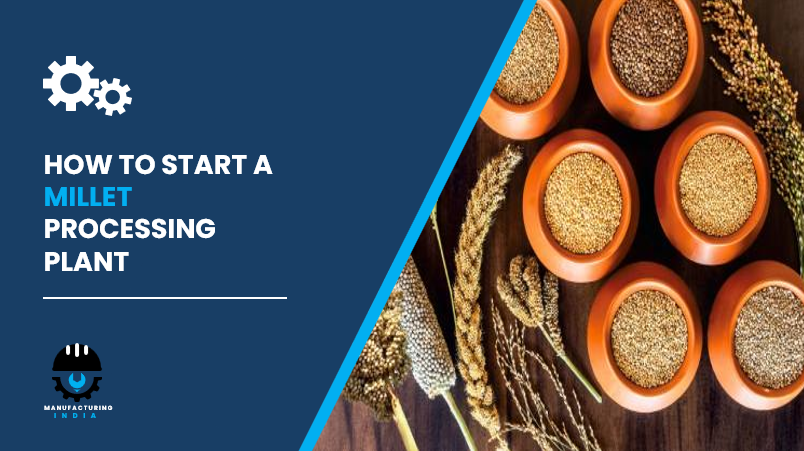
Millet is a group of small-seeded cereal grains that have been cultivated for thousands of years as staple food crops across Asia and Africa. Known for their exceptional hardiness, millets grow well in dry, semi-arid regions with poor soils and require significantly less water, fertilizer, and agricultural inputs than competing crops such as rice or wheat. This agro-ecological resilience makes millet one of the most climate-adaptive and water-efficient food crops available, positioning it centrally in discussions about food security and sustainable agriculture in the face of changing climate patterns.
Common commercial varieties include pearl millet (bajra), finger millet (ragi), foxtail millet (kangni), sorghum (jowar), kodo millet, barnyard millet, and little millet — each offering distinct nutritional profiles and processing characteristics suited to different food formulations and end-use applications. Nutritionally, millets are rich in dietary fiber, plant protein, essential minerals such as iron, magnesium, and phosphorus, and B-vitamins including niacin, thiamine, and riboflavin. They are naturally gluten-free and widely valued for supporting digestive health, steady energy release, blood sugar management, and overall dietary diversity.
Globally, regulatory bodies, nutritional organizations, and food standards authorities recognize millet as a health-promoting, high-value cereal ingredient. The United Nations declared 2023 the International Year of Millets — a designation that significantly elevated global awareness, policy support, and commercial interest in millet-based products. India, as the world’s largest millet producer accounting for approximately 40% of global output, is uniquely positioned to lead the next phase of commercial millet processing and value-added product development.
Cost of Setting Up a Millet Processing Plant in India
The millet processing plant cost depends on several parameters including production capacity, technology configuration, plant location, level of automation, raw material sourcing strategy, and regulatory compliance requirements. Here is a structured breakdown of all major cost components:
1. Capital Expenditure (CapEx)
The total capital investment in a millet processing plant typically covers the following:
Land and Site Development
This includes land acquisition, boundary development, land registration charges, and basic site preparation. Cost varies significantly depending on whether the land is in a designated agro-processing zone, food park, Special Economic Zone (SEZ), or a privately purchased plot. Proximity to key millet-producing regions — particularly Rajasthan, Maharashtra, Karnataka, Andhra Pradesh, and Uttar Pradesh — and established transportation corridors is a critical factor in site selection to minimize raw grain procurement and inbound logistics costs.
Request a Sample Report for In-Depth Market Insights: https://www.imarcgroup.com/millet-processing-plant-project-report/requestsample
Civil Works and Construction
Building costs cover the main processing facility, raw grain reception and dry storage areas, processing and milling sections, blending and packaging zones, quality control laboratory, administrative block, utility area, and worker amenities. Construction must comply with food-grade processing plant safety norms including hygiene and sanitation standards, pest control infrastructure, ventilation systems, dust containment, and environmental management requirements applicable to agro-food processing facilities.
Machinery and Equipment
This is the single largest component of CapEx. Key machinery required for a millet processing plant includes:
- Grain Reception, Weighing, and Pre-Cleaning Systems
- Destoners and Magnetic Separators
- Grain Cleaning and Grading Machines
- De-Husking and Pearling Machines
- Roller Mills and Impact Mills for Flour Production
- Multi-Deck Vibrating Sieves and Sorting Equipment
- Optical Colour Sorters
- Blending and Mixing Units
- Flaking and Puffing Equipment (for Value-Added Products)
- Packaging and Sealing Machines (Pouches, Bags, and Bulk)
- Cold Storage and Controlled Atmosphere Storage Systems
- Process Control and Automation Systems (SCADA/PLC)
Machinery costs represent the largest share of overall capital expenditure, reflecting the precision grain handling, food-grade material construction, and processing flexibility required to handle multiple millet varieties and produce diverse product formats including whole grain, flour, flakes, and ready-to-cook mixes.
Other Capital Costs
These include pre-operative expenses, commissioning charges, import duties (if specialized machinery is sourced internationally), utilities installation, fire safety systems, dust extraction and collection infrastructure, Effluent Treatment Plant (ETP) setup for process water management, and environmental management systems for husk and bran byproduct handling.
2. Operational Expenditure (OpEx)
Once the plant is commissioned, the ongoing cost structure is dominated by a few key components:
Raw Material Cost (Raw Millet Grains): 70–80% of Total OpEx
Raw millet grains — including pearl millet, finger millet, foxtail millet, and other varieties depending on the product portfolio — are the primary raw material and account for the overwhelming share of operating expenses. Procurement strategy, seasonal availability, and grain quality consistency are central to cost management. Establishing direct procurement relationships with farmer-producer organizations (FPOs) and millet cooperatives can meaningfully improve raw material cost competitiveness.
Utility Cost: 10–15% of Total OpEx
Utilities include electricity consumed by cleaning machines, mills, sieves, colour sorters, and packaging equipment, as well as water for facility cleaning and dust suppression. Compared to wet-process food manufacturing, millet processing is relatively energy-efficient, though investment in energy-efficient motors, variable frequency drives, and solar rooftop installations can further reduce utility costs and improve long-term plant economics.
Other Operating Costs
The remaining budget covers transportation and inbound logistics for raw grain procurement, outbound distribution, packaging materials (moisture-resistant pouches, multi-wall bags, and retail packs), salaries and wages, maintenance, depreciation, insurance, environmental compliance costs, quality certification expenses, taxes, and miscellaneous overhead.
3. Plant Capacity
The proposed processing facility can be designed across a range of production scales:
- Small-Scale Operations: 2,000–5,000 metric tons annually — suitable for specialty organic millet products, regional retail distribution, and niche health food brands with flexible, multi-variety processing equipment.
- Mid-Scale Plants: 5,000–10,000 metric tons annually — designed for national food retail and institutional foodservice markets with semi-continuous processing, moderate automation, and diversified product portfolio spanning whole grain, flour, flakes, and ready-to-cook mixes.
- Large-Scale Plants: 10,000–20,000 metric tons annually — built for national and export markets with continuous processing lines, high automation, multi-variety handling capability, and comprehensive product portfolio covering consumer retail, food industry ingredient supply, and private-label manufacturing.
Profitability significantly improves with higher capacity utilization and product mix optimization. Larger plants benefit from economies of scale in raw grain procurement, energy efficiency, and distribution logistics, while value-added product lines such as fortified millet flour, millet-based ready-to-cook mixes, and organic certified products command premium pricing and higher margins.
4. Profit Margins and Financial Projections
- Gross Profit Margin: 25–35%
- Net Profit Margin: 10–15%
- Break-Even Period: 3 to 6 years, depending on production scale, market positioning, raw grain cost management, product mix, and sales channel strategy.
Financial projections must account for capital investment, operating costs, capacity utilization rates, pricing trends, and demand outlook. A thorough analysis should also include sensitivity analysis, Net Present Value (NPV), Internal Rate of Return (IRR), and Payback Period. Revenue diversification through value-added product lines — such as fortified millet flour, sprouted millet powder, organic certified grains, and ready-to-cook mixes — can meaningfully improve overall plant financial returns.
Why Set Up a Millet Processing Plant in India?
The global market environment presents a uniquely favorable opportunity for establishing a millet processing facility:
Surging Demand for Nutritious and Healthy Foods
Increasing health awareness and evolving lifestyle priorities are driving accelerating consumer demand for high-fiber, high-protein, low glycemic index, and naturally gluten-free food products. Millet products — including flour, flakes, ready-to-cook mixes, and fortified cereals — are well-positioned at the intersection of these powerful health food trends, supporting consistent demand growth across retail, foodservice, and institutional channels.
International Year of Millets Legacy and Policy Support
India’s government has designated millets as ‘Shree Anna’ (the great grain) and implemented comprehensive policy support including minimum support prices, subsidized procurement, export promotion initiatives, and integration of millet products into government nutrition programs such as PM-POSHAN and PDS schemes. This institutional demand base provides a stable foundation for millet processors alongside growing commercial market opportunities.
Rapidly Growing Organized Retail and E-Commerce Access
Organised retail expansion and online grocery platforms have dramatically improved millet product accessibility across urban, semi-urban, and tier-2 and tier-3 markets in India and internationally. The proliferation of health food brands, direct-to-consumer e-commerce channels, and modern trade retail has created broad and scalable distribution infrastructure for value-added millet products.
Expanding Foodservice and HoReCa Adoption
Restaurants, cafés, cloud kitchens, corporate canteens, and institutional catering operators are incorporating millet-based dishes — including porridges, salads, grain bowls, flatbreads, and snacks — into their menus to cater to health-conscious diners. This growing foodservice demand channel creates high-volume, consistent procurement opportunities for millet processors supplying institutional-grade processed grain products.
Strong Export Market Potential
The Indian millet industry is increasingly oriented toward global export markets, supported by growing diaspora communities and rising interest in ancient grain products across North America, Europe, and the Middle East. India’s natural cost advantages in millet production, combined with internationally certified processing capabilities, position domestic processors well to capture premium export pricing across organic, conventional, and specialty millet product categories.
Manufacturing Process Overview
The millet processing procedure involves several carefully controlled stages designed to clean, de-husk, mill, sort, blend, and package millet grains into finished products meeting food safety and quality specifications. The key processing stages are:
- Raw Grain Reception and Weighing — Incoming millet grain lots are received, weighed, and sampled for moisture content, foreign matter, and grain quality parameters before being accepted into storage.
- Pre-Cleaning — Raw millet passes through pre-cleaning screens, destoners, and magnetic separators to remove coarse impurities, stones, metal fragments, dust, and foreign seeds before primary processing.
- Cleaning and Grading — Cleaned grain is passed through multi-deck vibratory sieves and aspiration channels to grade by size and remove fine impurities, damaged grains, and lightweight chaff, producing uniform, high-quality grain for milling.
- De-Husking and Pearling — Millet grain is passed through abrasive or friction-based de-huskers and pearlers to remove the outer husk and bran layers, producing polished or lightly pearled whole grain millet. Husk and bran are separated as co-products for animal feed or value-added applications.
- Milling and Size Reduction — For flour products, de-husked millet is milled through roller mills or impact mills to the required particle size distribution. Multi-stage milling circuits produce fine millet flour, semolina-grade rava, or coarse meal depending on product specifications.
- Sieving and Classification — Milled products are sieved through vibrating screens or plansifters to separate flour grades, ensuring consistent particle size distribution and removing bran particles to achieve target flour purity.
- Colour Sorting — Optical colour sorters identify and reject discoloured, damaged, or foreign grain particles from finished whole grain or split products, ensuring visual quality standards for retail and export markets.
- Blending — Where multi-grain or fortified millet products are produced, blending units combine millet flour with other grain flours, micronutrient premixes, or functional ingredients in precisely controlled ratios.
- Packaging — Finished millet products are filled and sealed into consumer retail packs, institutional bags, or bulk containers using automated weighing and packaging lines with nitrogen flushing for extended shelf life.
Key Applications of Millet
Millet serves a wide variety of end-use industries and consumer segments:
- Household Consumption and Traditional Cooking: Millet flour, flakes, and whole grain are used in producing flatbreads (rotis), porridges, upma, idli, dosa, and traditional dishes. Ready-to-cook millet mixes serve modern households seeking convenient, nutritious meal options.
- Health Food and Snack Products: Millet flour and grain are used in producing health snacks, breakfast cereals, muesli, granola bars, multigrain biscuits, and gluten-free baked goods that command premium positioning in modern trade and online retail.
- Bakery and Confectionery: Millet flour serves as an allergen-friendly, gluten-free baking ingredient in bread, muffins, crackers, and specialty baked goods for health-conscious and celiac consumer segments.
- Foodservice and HoReCa: Restaurants, cloud kitchens, corporate cafeterias, and institutional caterers use processed millet products to develop innovative health-positioned menu items including grain bowls, salads, and specialty cuisines.
- Health and Nutrition Sector: Millet is incorporated in nutritional supplements, meal replacement powders, protein blends, sports nutrition formulations, and wellness products due to its dense micronutrient and dietary fiber content.
- Animal Feed and Co-Products: Millet bran, husk, and processing co-products serve as high-fiber, energy-dense animal feed ingredients for poultry, cattle, and aquaculture operations.
Global Market Outlook
The global millet market size was valued at USD 13.93 Billion in 2025. According to IMARC Group estimates, the market is expected to reach USD 19.70 Billion by 2034, exhibiting a CAGR of 3.9% from 2026 to 2034. This sustained growth is driven by expanding health food consumption, growing demand for gluten-free and high-fiber products, increasing adoption of millet in foodservice and institutional channels, rising organized retail penetration in emerging markets, and the legacy of the United Nations International Year of Millets initiative that significantly elevated global consumer awareness and policy support.
Asia Pacific dominates the global millet market, led by India, China, and sub-Saharan African nations as major production and consumption centers. India accounts for approximately 40% of global millet production and is the primary origin for a growing volume of value-added millet exports destined for health food markets in North America, Europe, and the Middle East.
Leading global processors in this industry include:
- Cargill, Incorporated
- ADM
- Seedway, LLC.
- Ernst Conservation Seeds
- Eastern Colorado Seeds, LLC.
Timeline to Start a Millet Processing Plant
Setting up a millet processing plant from ideation to commissioning typically requires 18 to 30 months. This covers:
- Feasibility study and detailed project report (DPR) preparation
- Land acquisition and site development
- Environmental impact assessment and regulatory approvals
- Plant design and engineering
- Machinery procurement and installation
- Utility setup and infrastructure commissioning
- Trial production and quality testing
- Food safety certification and product compliance verification
- Commercial production launch
Licenses and Regulatory Requirements
Starting a millet processing unit requires several approvals, which may vary by country and jurisdiction, including:
- Business registration and incorporation
- Factory License under applicable labor and manufacturing laws
- FSSAI License (Food Safety and Standards Authority of India) for food-grade processing
- Environmental Clearance from relevant pollution control authorities
- Dust Control and Occupational Health Compliance
- Fire Safety and Plant Safety Certification (NOC)
- Agmark Certification (for graded grain products targeting regulated markets)
- Organic Certification (for organic millet product lines — NPOP/NOP/EU Organic)
- REACH Compliance (for EU export markets)
- ISO 9001 Quality Management Certification
- ISO 22000 / HACCP Food Safety Management System Certification
- ISO 14001 Environmental Management Certification
Key Challenges to Consider
Before investing, entrepreneurs and investors should be aware of the common challenges in this business:
Raw Grain Price and Seasonal Availability: Millet grain procurement is subject to seasonal supply patterns, monsoon dependency, and regional price fluctuations. Establishing robust direct procurement relationships with farmer-producer organizations, cooperative societies, and mandis — along with adequate grain storage infrastructure — is essential to ensure supply continuity and input cost stability throughout the year.
Consumer Awareness and Taste Preferences: Despite growing health awareness, millet products face perception and palatability challenges among urban consumers accustomed to wheat and rice-based diets. Significant investment in consumer education, recipe development, and product innovation is required to drive trial, repeat purchase, and category expansion across mainstream retail and foodservice channels.
Quality Consistency Across Varieties: Managing processing parameters across multiple millet varieties — each with distinct grain size, hardness, moisture absorption, and flavor profiles — requires flexible equipment configurations and robust quality management systems to deliver consistent product specifications across retail and institutional customer requirements.
Competition: The market is served by a fragmented mix of large agro-processing companies, regional processors, and emerging health food startups. New entrants must develop a clear differentiation strategy through certified organic products, fortified formulations, premium branding, regional focus, or private-label manufacturing to establish sustainable competitive positioning.
Cold Chain and Shelf Life Management: Millet products — particularly whole grain and flour — have a shorter shelf life than refined grain products due to higher natural oil content that can lead to rancidity. Appropriate packaging technology including nitrogen flushing, moisture-barrier films, and temperature-controlled storage is essential to maintain product quality through distribution and retail channels.
Frequently Asked Questions
The following questions are answered in the report:
- How much does it cost to set up a millet processing plant?
- Is millet processing a profitable business in 2026?
- What machinery and equipment are required for a millet processing plant?
- What licenses and approvals are required to start a millet processing facility?
- How long does it take to commission a millet processing plant?
- What is the best location to set up a millet processing plant in India?
- What government incentives are available for millet processors in India?
- What is the break-even period for a millet processing plant?
- What are the FSSAI and organic certification requirements for millet processing?
- What are the key raw materials and their sourcing strategies for millet processing?
Key Takeaways for Investors
The millet processing industry represents a strong and scalable investment opportunity backed by growing global demand across food retail, foodservice, health nutrition, and export markets, supported by powerful policy tailwinds and India’s natural competitive advantage as the world’s largest millet producer. With gross margins of 25–35% and a break-even window of 3–6 years, a well-planned millet processing plant cost remains competitive and financially viable across plant capacities. The convergence of accelerating health food consumption trends, the International Year of Millets legacy, expanding organized retail and e-commerce distribution infrastructure, government procurement support, and rising global export demand creates a robust and diversified revenue base for millet processors entering or expanding in this market. Recent industry developments — including HETC Foods launching Navdhan’s science-backed sprouted millet powders in December 2025 and Nav Bharat Jagriti Kendra’s solar-powered finger millet processing initiative in October 2025 — underscore the dynamic momentum and innovation-driven growth trajectory of India’s millet processing sector.
About the Author