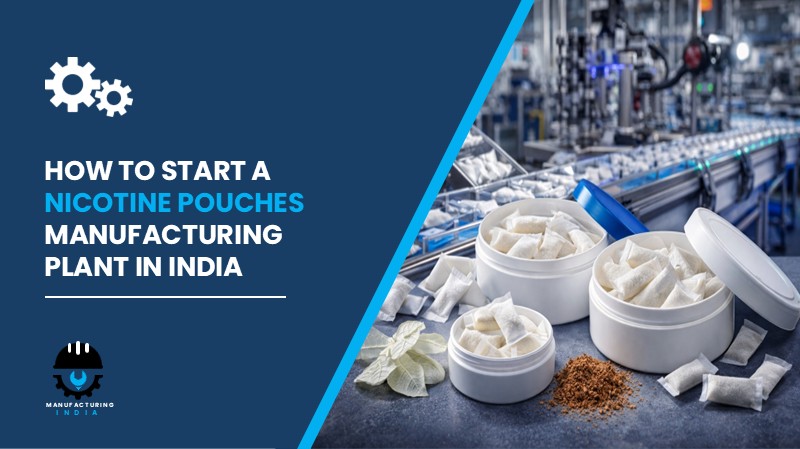
Setting up a nicotine pouches manufacturing plant in India presents a compelling investment case driven by powerful structural tailwinds most notably the rapid global and domestic shift away from combustible tobacco products. Nicotine pouches serve the consumer goods sector, the tobacco alternatives industry, and the wellness and harm-reduction segment, making them a cross-industry product with resilient, diversified demand. As regulatory pressure on conventional cigarettes intensifies and consumers increasingly seek discreet, smoke-free nicotine formats, the market window for domestic Indian manufacturers is opening fast.
India’s advantages as a production base are well aligned with this opportunity. A large working-age population, competitive land and labour costs, and an improving industrial infrastructure across states such as Maharashtra, Gujarat, and Uttar Pradesh lower the entry barriers for first-mover investors. The Make in India initiative and the government’s broader push to develop pharmaceutical and consumer goods manufacturing corridors add policy momentum to the economic logic. For entrepreneurs and institutional investors evaluating this space, India represents a strategically sound location combining cost competitiveness with proximity to a rapidly modernising consumer base.
A nicotine pouches manufacturing plant in India offers a rare convergence of strong export potential, cost-competitive production, and domestic demand growth. With gross margins in the 50-60% range and a market projected to reach USD 72.33 billion globally by 2034, this investment offers viable break-even timelines alongside long-term demand sustainability.
What are Nicotine Pouches?
Nicotine pouches are oral, smokeless, and tobacco-free products designed to deliver nicotine without combustion or inhalation. Each product takes the form of a small white pouch placed between the upper lip and the gum, allowing nicotine to be absorbed through the oral mucosa. Unlike conventional smokeless tobacco, nicotine pouches contain pharmaceutical-quality nicotine, plant-based fibres, flavouring agents, sweeteners, stabilisers, and pH regulators with no tobacco leaf at all. They produce no odour, require no spitting, and can be used discreetly indoors and in public spaces.
The primary production method is a multi-step process involving nicotine blending, pouch forming, filling, sealing, drying, and packaging. The products serve three core end-use industries: the tobacco alternatives industry, where they are positioned as non-combustible replacements for cigarettes and traditional smokeless tobacco; the consumer packaged goods industry, where they are marketed as convenience lifestyle products with diverse flavour profiles; and the wellness and harm-reduction segment, where they function as transitional products for health-conscious smokers seeking lower-risk alternatives.
Cost of Setting Up a Nicotine Pouches Manufacturing Plant in India
The total investment required for a nicotine pouches manufacturing plant depends on several interdependent variables: plant capacity, chosen technology level, geographic location, degree of automation, and the scope of regulatory compliance infrastructure. Understanding both capital and operational cost components is essential before committing to a project.
1. Capital Expenditure (CapEx)
The capital investment for this type of facility spans several major categories. Land and site development costs include land registration charges, boundary development, and related site preparation expenses and investors may reduce per-unit land costs by targeting Special Economic Zones (SEZs) or designated industrial estates in states with investor-friendly policies. Civil works costs cover construction of the production shed, quality control laboratory, raw material and finished goods storage, and administrative block each designed to meet Good Manufacturing Practice (GMP) norms appropriate for a pharmaceutical-grade production environment.
Machinery costs represent the largest single component of total capital expenditure. Key machinery required includes:
- Nicotine dosing and mixing units
- High-shear blenders
- Pouch forming and filling machines
- Heat sealing machines
- Drying and conditioning chambers
- Automated packaging and labelling lines
Other capital costs include effluent treatment plant (ETP) construction, pre-operative expenses, import duties on specialised equipment, and commissioning charges.
Request a Sample Report for In-Depth Market Insights: https://www.imarcgroup.com/nicotine-pouches-manufacturing-plant-project-report/requestsample
2. Operational Expenditure (OpEx)
Raw material cost is the dominant recurring expense, accounting for approximately 40-50% of total operating expenditure. The primary raw materials are nicotine and cellulose fibres, supplemented by flavouring agents, sweeteners, stabilisers, and pH regulators. Negotiating long-term contracts with reliable, geographically proximate suppliers is essential to managing price volatility and ensuring supply continuity. Utility costs covering electricity, water, and steam represent a further 5-10% of OpEx. Additional operating costs include transportation, packaging materials, salaries and wages, depreciation, taxes, and routine maintenance. By the fifth year of operations, total OpEx is projected to increase substantially due to inflationary pressures, market fluctuations, and potential rises in the cost of key input materials including nicotine and cellulose fibres.
3. Plant Capacity
The proposed manufacturing facility is designed with an annual production capacity ranging between 800 million and 1,200 million pouches, enabling economies of scale while maintaining operational flexibility. This capacity range can be customised to suit specific investor requirements, whether for a focused domestic supply strategy or an export-oriented model. As with most manufacturing operations, profitability improves materially with higher capacity utilisation investors targeting the upper end of this range benefit from significantly better per-unit economics.
4. Profit Margins and Financial Projections
The financial profile of this investment is attractive relative to comparable manufacturing categories. Gross profit margins typically range between 50-60%, supported by stable demand across the tobacco alternatives and wellness segments. Net profit margins average 20-25% under normal operating conditions. A detailed financial analysis covering NPV, IRR, payback period, gross margin progression, and net margin by year is available in the full project report. Projections are built on realistic assumptions around capacity utilisation, pricing trends, and demand outlook, and include uncertainty and sensitivity analysis to support investor decision-making.
Why Set Up a Nicotine Pouches Plant in India?
Strong Shift Toward Smoke-Free Alternatives. Non-combustible nicotine products are experiencing accelerating global demand as consumers move away from traditional cigarettes and vaping products. Growing health awareness combined with tightening regulatory scrutiny on combustible tobacco has made tobacco-free nicotine delivery formats one of the fastest-growing consumer goods categories worldwide, creating a strong pull for domestic Indian production.
Expanding Global Footprint and Export Opportunity. Acceptance of nicotine pouches is expanding across Europe, North America, and parts of Asia-Pacific. An India-based facility can serve as a cost-competitive export hub for regional and global markets, leveraging the country’s established pharmaceutical and consumer goods supply chains.
Regulatory Tailwinds Supporting Reduced-Risk Alternatives. Regulatory frameworks in major markets are progressively recognising nicotine pouches as lower-risk alternatives to combustible tobacco. In January 2025, the U.S. Food and Drug Administration authorised the marketing of 20 ZYN nicotine pouch products following a comprehensive scientific review under the PMTA pathway, concluding that these products pose lower health risks than cigarettes. Such authorisations signal expanding regulatory acceptance and strengthen the long-term market case for manufacturers.
Active Industry Investment and Innovation. The global competitive landscape reflects high levels of investment and product innovation. In December 2025, Philip Morris International expanded its partnership with Scuderia Ferrari HP to introduce ZYN nicotine pouch branding at Formula 1 races, reinforcing smoke-free product positioning at a global scale. In May 2025, ALP Supply Co. LLC signed a one-year agreement appointing Nicokick and Northerner as preferred U.S. online retailers, expanding digital reach through Haypp Group-owned platforms. In April 2025, ALP Supply Co. also partnered with on-demand delivery firm Gopuff to enable near-instant delivery of nicotine pouches across the U.S. market.
Scalable Manufacturing with Brand Differentiation. Flavour innovation, pouch strength variation, and premium packaging give manufacturers the ability to build strong brand identities and exercise pricing power. In 2023, Nordic Spirit launched a higher-strength Spearmint variant a segment that currently dominates the category with an 83.1% share demonstrating the revenue upside available to manufacturers who invest in product differentiation.
Cost-Competitive Manufacturing Base. India’s combination of competitive land costs, a large and trainable labour pool, and an improving industrial infrastructure makes it a favourable location for high-volume, quality-sensitive manufacturing. Proximity to raw material suppliers particularly for cellulose fibres and pharmaceutical inputs further reduces input logistics costs and supports supply chain resilience.
Manufacturing Process – Step by Step
The nicotine pouches manufacturing process uses nicotine blending, pouch forming, filling, sealing, drying, and packaging as the primary production method, executed across a series of closely controlled unit operations.
- Nicotine Dosing and Mixing: Pharmaceutical-quality nicotine is precisely dosed using nicotine dosing and mixing units, then combined with plant-based fibres, flavouring agents, sweeteners, stabilisers, and pH regulators to achieve a homogenous blend.
- High-Shear Blending: The mixture is processed in high-shear blenders to ensure uniform distribution of all active and inactive ingredients, meeting defined concentration and purity standards.
- Pouch Forming: Pouch forming machines shape the blended fill material into the characteristic small white pouch format, with consistent weight and dimensional control at each unit.
- Filling: Filling machines deposit a precise quantity of the blended mixture into each formed pouch, ensuring consistent nicotine dose per unit.
- Heat Sealing: Heat sealing machines close and seal each pouch to prevent spillage and ensure structural integrity during use.
- Drying and Conditioning: Sealed pouches pass through drying and conditioning chambers to achieve target moisture levels, ensuring stability, shelf life, and consistent release characteristics.
- Quality Control and Testing: Each production batch is subject to analytical testing for product concentration, purity, and stability before clearance for packaging.
- Automated Packaging and Labelling: Finished pouches are loaded into consumer cans or packs using automated packaging and labelling lines and dispatched to end-use sectors including tobacco alternatives retailers, consumer packaged goods distributors, and wellness product channels.
Key Applications
Nicotine pouches serve a focused but high-value set of industries, each with distinct demand drivers:
- Tobacco Alternatives Industry: Promoted as non-combustible, completely tobacco-free products aimed at cigarette smokers and users of traditional smokeless tobacco seeking a lower-risk nicotine source.
- Consumer Packaged Goods Industry: Positioned as lifestyle products offering convenience, a wide flavour range, and discretion — appealing to a broad adult consumer demographic across retail and e-commerce channels.
- Wellness and Harm-Reduction Segment: Supplied as transitional products to health-conscious smokers who want to switch to a less harmful alternative while managing nicotine dependency.
Leading Manufacturers
The global nicotine pouches market is served by a concentrated group of multinational companies with extensive production capacities and diverse application portfolios. Key players active in this industry include:
- Swisher
- SnusCentral
- Skruf Snus AB
- Nicopods ehf.
- Altria Group, Inc.
- GN Tobacco Sweden AB
- Tobacco Concept Factory
- Japan Tobacco International
- British American Tobacco PLC
- NIQO Co. (Swedish Match AB)
Timeline to Start the Plant
Establishing a production facility from concept to commercial launch typically involves the following sequential phases:
- Feasibility study and project report preparation
- Land acquisition and site development
- Regulatory approvals and environmental clearances
- Factory licence and fire safety compliance
- Machinery procurement and installation
- Raw material supplier agreements and supply chain setup
- Trial production and quality testing
- Commercial production launch
Licences and Regulatory Requirements
Starting a nicotine pouches manufacturing unit in India requires several approvals:
- Business registration (Proprietorship, LLP, or Pvt Ltd)
- Factory Licence under the Factories Act
- Environmental Clearance from the State Pollution Control Board
- GST Registration
- Fire Safety NOC
- Chemical and pharmaceutical-grade nicotine handling compliance under applicable hazardous substance regulations
- Effluent Treatment Plant (ETP) operational clearance
- Occupational Health and Safety compliance
Key Challenges to Consider
High Capital Requirements. The machinery-intensive nature of this production spanning nicotine dosing units, high-shear blenders, pouch forming machines, and automated packaging lines means that initial capital outlay is substantial and must be carefully structured through a mix of equity and debt financing.
Raw Material Price Volatility. Nicotine and cellulose fibres, the two primary raw material inputs, are subject to price fluctuations driven by global supply dynamics, pharmaceutical-grade quality requirements, and currency movements. Long-term supplier contracts can mitigate but not eliminate this risk.
Regulatory Compliance. Operating a facility that handles pharmaceutical-quality nicotine requires ongoing compliance with chemical handling, effluent treatment, and consumer product safety regulations demanding dedicated quality assurance resources and continuous monitoring systems.
Technology and Innovation Pressure. The competitive landscape is evolving rapidly with innovation in nicotine strength customisation, biodegradable pouch materials, and premium flavour formulations. Manufacturers must allocate R&D investment to remain competitive against established global players.
Competition from Global Players. The market includes well-capitalised multinationals such as Altria Group, British American Tobacco PLC, Japan Tobacco International, and NIQO Co. (Swedish Match AB), all of which benefit from scale, distribution, and brand equity advantages that new entrants must strategically address.
Skilled Manpower. Producing a pharmaceutical-grade oral consumer product requires trained technicians for blending, quality control, and automated line management — creating a dependency on specialised workforce availability and ongoing training investment.
Frequently Asked Questions
1. How much does it cost to set up a nicotine pouches manufacturing plant in India? The total setup cost depends on plant capacity, technology level, location, and automation. The capital expenditure covers land and site development, civil works, machinery (including nicotine dosing units, blenders, filling and sealing machines, and packaging lines), and other pre-operative costs. Request the full project report for detailed CapEx figures.
2. Is nicotine pouches manufacturing profitable in India in 2026? Yes. The production facility demonstrates gross profit margins of 50-60% and net profit margins of 20-25% under normal operating conditions, making it financially viable across a range of capacity configurations.
3. What machinery is required for a nicotine pouches plant in India? Essential equipment includes nicotine dosing and mixing units, high-shear blenders, pouch forming and filling machines, heat sealing machines, drying and conditioning chambers, and automated packaging and labelling lines.
4. What licences and approvals are required to start a nicotine pouches plant in India? Required approvals include business registration, a Factory Licence, Environmental Clearance from the State Pollution Control Board, GST Registration, Fire Safety NOC, hazardous/chemical compliance for nicotine handling, ETP clearance, and Occupational Health and Safety compliance.
5. What raw materials are needed for nicotine pouches manufacturing? Primary raw materials are pharmaceutical-quality nicotine and cellulose fibres. Additional inputs include flavouring agents, sweeteners, stabilisers, and pH regulators.
6. What are the environmental compliance requirements for a nicotine pouches plant in India? The facility must install an operational Effluent Treatment Plant, obtain Environmental Clearance from the relevant State Pollution Control Board, and implement advanced monitoring systems to detect process deviations and ensure adherence to emission standards.
7. What is the best location to set up a nicotine pouches plant in India? Ideal locations offer proximity to pharmaceutical raw material suppliers, reliable utility infrastructure, access to transportation networks, and availability of skilled labour. Industrial estates and SEZ locations in Maharashtra, Gujarat, or Uttar Pradesh are worth evaluating based on state-specific incentive schemes.
8. What is the break-even period for this type of plant in India? The break-even period depends on capacity utilisation, pricing strategy, and cost management. The full financial projections — including payback period, NPV, and IRR — are detailed in the project feasibility report.
9. What government incentives are available for manufacturers in India? Eligible investors may access incentives under the Make in India initiative, state-level industrial promotion schemes, capital subsidy programmes for MSME manufacturers, and sector-specific PLI (Production Linked Incentive) schemes where applicable.
Key Takeaways for Investors
The nicotine pouches manufacturing plant represents a high-potential investment opportunity positioned at the convergence of the tobacco alternatives industry, consumer packaged goods, and the wellness and harm-reduction segment three sectors all experiencing concurrent demand growth. The financial viability of the project is strong across plant capacities, with gross margins of 50–60% and net margins of 20–25% providing a robust buffer even during the ramp-up phase. The global nicotine pouches market was valued at USD 6.988 billion in 2025 and is projected to reach USD 72.33 billion by 2034, reflecting a CAGR of 29.7% from 2026 to 2034 one of the highest growth trajectories in the consumer goods manufacturing space. For Indian investors, the combination of regulatory tailwinds, cost-competitive manufacturing conditions, and an expanding export addressable market makes the long-term demand case for this investment highly sustainable.
About the Author