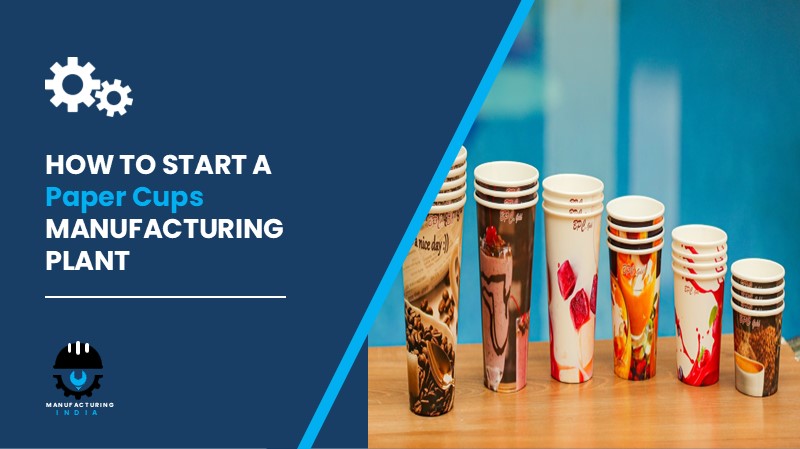
Setting up a paper cups manufacturing plant in India presents a highly compelling investment opportunity as the paper cups market is primarily driven by the rapid expansion of the foodservice and beverage industry, rising consumption of takeaway beverages, increasing restrictions on plastic-based disposables, and growing preference for hygienic and sustainable packaging solutions.
“With a rapidly expanding global market projected to grow at a CAGR of 2.9% from 2026 to 2034, rising from USD 7.20 Billion in 2025 to USD 9.32 Billion by 2034, and gross margins of 20-30%, paper cups manufacturing in India offers one of the most financially attractive opportunities in the packaging sector.”
What are Paper Cups?
Paper cups are disposable vessels made using food-grade paperboard, usually with a very thin layer of either polyethylene or plant-based materials applied to them for making them liquid-proof. The primary application of the cups is in serving hot and cold drinks, like tea, coffee, soft drinks, and juices, which makes them a common item in the food service and retail industries. They are available in different sizes and wall constructions, such as single-wall, double-wall, and ripple wall, and they can be printed with custom designs for branding purposes. Ease of disposal and the lightweight nature of paper cups together with their hygienic properties, make them a major convenience for consumers and businesses alike. In addition, paper cups also support the green movement with their recyclable and compostable options, thus gradually making them the packaging of choice in institutional, catering, and takeaway applications, where eco-friendly and practical beverage packaging is increasingly in demand.
- Process Used: Paper roll feeding, printing (if required), cutting and forming, side wall sealing, bottom sealing, rim curling, quality inspection, and packing.
- End-use Industries: Foodservice and HoReCa sector, quick-service restaurants, beverage outlets, institutional catering, and retail packaging.
- Applications: Hot beverage cups, cold drink cups, takeaway beverage packaging, vending machine cups, and event catering supplies.
Cost of Setting Up a Paper Cups Manufacturing Plant in India
The paper cups manufacturing plant setup cost is provided in detail covering project economics, capital investments (CapEx), project funding, operating expenses (OpEx), income and expenditure projections, fixed costs vs. variable costs, direct and indirect costs, expected ROI and net present value (NPV), profit and loss account, financial analysis, and more. Here is a structured breakdown of all major cost components:
1. Capital Expenditure (CapEx)
The total capital investment in a paper cups manufacturing plant in India typically covers the following:
Land and Site Development The cost of land and site development, including charges for land registration, boundary development, and other related expenses, forms a substantial part of the overall investment. The location must offer easy access to key raw materials such as paper rolls, PE coating, printing inks, and bottom discs. Proximity to target markets will help minimize distribution costs. The site must have robust infrastructure, including reliable transportation, utilities, and waste management systems. Compliance with local zoning laws and environmental regulations must also be ensured.
Request a Sample Report for In-Depth Market Insights: https://www.imarcgroup.com/paper-cups-manufacturing-plant-project-report/requestsample
Civil Works and Construction Building costs cover the main production facility and supporting infrastructure. The layout should be optimized to enhance workflow efficiency, safety, and minimize material handling. Separate areas for raw material storage, production, quality control, and finished goods storage must be designated. Space for future expansion should be incorporated to accommodate business growth.
Machinery and Equipment Machinery costs account for the largest portion of the total capital expenditure. High-quality, corrosion-resistant machinery tailored for paper cups manufacturing must be selected. Essential equipment includes:
- Paper Cup Forming Machines
- Printing Units
- Bottom Sealing Systems
- Rim Curling Machines
- Compressors
- Inspection Tools
The scale of production and automation level will determine the total cost of machinery. All machinery must comply with industry standards for safety, efficiency, and reliability.
Other Capital Costs These include pre-operative expenses and other related costs. This allocation ensures a solid foundation for safe and efficient plant operations.
2. Operational Expenditure (OpEx)
In the first year of operations, the operating cost for the paper cups manufacturing plant in India is projected to be significant, covering raw materials, utilities, depreciation, taxes, packing, transportation, and repairs and maintenance. By the fifth year, the total operational cost is expected to increase substantially due to factors such as inflation, market fluctuations, and potential rises in the cost of key materials. Additional factors, including supply chain disruptions, rising consumer demand, and shifts in the global economy, are expected to contribute to this increase.
Raw Material Cost (Paper Rolls): 75-85% of Total OpEx Raw materials, including core ingredients like paper rolls, PE coating, printing inks, and bottom discs, are a major part of operating costs. Long-term contracts with reliable suppliers will help mitigate price volatility and ensure a consistent supply of materials.
Utility Cost: 5-10% of Total OpEx Costs associated with utilities including electricity, water, and steam must be considered in the financial plan.
Other Operating Costs The remaining budget covers transportation, packaging, salaries and wages, depreciation, taxes, repairs and maintenance, and other expenses.
3. Plant Capacity
The proposed paper cups manufacturing facility in India is designed with an annual production capacity ranging between 200 – 500 million pieces, enabling economies of scale while maintaining operational flexibility.
4. Profit Margins and Financial Projections
The project demonstrates healthy profitability potential under normal operating conditions:
- Gross Profit Margin: 20-30%
- Net Profit Margin: 8-12%
The financial projections for the proposed project have been developed based on realistic assumptions related to capital investment, operating costs, production capacity utilization, pricing trends, and demand outlook. These projections provide a comprehensive view of the project’s financial viability, ROI, profitability, and long-term sustainability. A detailed financial analysis including income projections, expenditures, and break-even points must be conducted, as this aids in securing funding and formulating a clear financial strategy.
Why Set Up a Paper Cups Manufacturing Plant in India?
The global market environment presents a uniquely favorable opportunity for establishing a paper cups manufacturing facility in India:
Growth in Takeaway Beverage Consumption Increasing demand for on-the-go drinks is driving consistent usage of disposable cups. According to Project Café India 2025, the Indian branded coffee shop market expanded by 600 outlets, reflecting 12.7% growth over the past year and reaching a total of 5,339 stores, directly reinforcing demand for paper cups across India.
Shift Away from Plastic Cups Regulatory restrictions and sustainability goals are accelerating the adoption of paper-based alternatives. Stringent regulatory actions aimed at reducing plastic waste are encouraging product adoption across foodservice and retail channels.
Hygiene and Safety Preferences Single-use paper cups reduce contamination risks in food and beverage service. Growing consumer preference for eco-friendly, hygienic packaging is further accelerating the shift away from plastic to paper cups.
Branding and Custom Printing Potential Paper cups offer strong surface compatibility for branding and promotional printing. Ongoing innovations in recyclable, compostable, and bio-based cup coatings are improving sustainability and performance, making paper cups increasingly attractive for branded beverage operators.
Scalable and Capital-Efficient Operations Paper cup manufacturing requires moderate capital investment and allows modular expansion. The continued expansion of organized retail, food delivery services, and institutional catering such as offices, schools, and healthcare facilities also contributes to consistent demand, reinforcing long-term market growth.
Manufacturing Process Overview
Setting up a paper cups manufacturing plant in India requires evaluating several key factors, including technological requirements and quality assurance. The manufacturing process is a multi-step operation that involves several unit operations, material handling, and quality checks. The main stages involved in the paper cups manufacturing process flow include:
- Unit Operations Involved
- Mass Balance and Raw Material Requirements
- Quality Assurance Criteria
- Technical Tests
Key considerations in the manufacturing setup include:
- Raw Material Sourcing: Reliable suppliers must be secured for raw materials like paper rolls, PE coating, printing inks, and bottom discs to ensure consistent production quality. Minimizing transportation costs by selecting nearby suppliers is essential. Sustainability and supply chain risks must be assessed, and long-term contracts should be negotiated to stabilize pricing and ensure a steady supply.
- Safety and Environmental Compliance: Safety protocols must be implemented throughout the manufacturing process of paper cups. Advanced monitoring systems should be installed to detect leaks or deviations in the process. Effluent treatment systems are necessary to minimize environmental impact and ensure compliance with emission standards.
- Quality Assurance Systems: A comprehensive quality control system should be established throughout production. Analytical instruments must be used to monitor product concentration, purity, and stability. Documentation for traceability and regulatory compliance must be maintained.
Key Applications of Paper Cups
Paper cups serve a wide variety of end-use industries and applications:
- Foodservice and HoReCa Sector: Paper cups are widely used for serving hot and cold beverages in cafés, restaurants, and hotels.
- Quick-Service Restaurants and Beverage Chains: Standardized cup sizes support consistent service and branding.
- Institutional and Corporate Catering: Paper cups ensure hygiene and ease of disposal.
- Retail and Event Catering: Used for packaged beverages, outdoor events, and promotional activities.
Global Market Outlook
The global paper cups market size was valued at USD 7.20 Billion in 2025. According to IMARC Group estimates, the market is expected to reach USD 9.32 Billion by 2034, exhibiting a CAGR of 2.9% from 2026 to 2034. The paper cups industry is witnessing steady growth driven by the rapid expansion of café culture and the rising consumption of packaged hot and cold beverages. According to Project Café India 2025, the Indian branded coffee shop market expanded by 600 outlets, reflecting 12.7% growth over the past year and reaching a total of 5,339 stores.
Leading manufacturers in the global paper cups industry include:
- Huhtamaki Oyj
- Kap Cones Private Limited
- Graphic Packaging International LLC
- Dart Container Corporation
- Converpack Inc.
All of which serve end-use sectors such as foodservice and HoReCa sector, quick-service restaurants, beverage outlets, institutional catering, and retail packaging industries.
Latest Industry Developments
- May 2025: WinCup’s phade PHA-lined paper cups and lids for hot beverages were made available at Walmart nationwide. Made with a marine biodegradable and compostable PHA lining, the world-first cups replace plastic coatings. Walmart also introduced phade Flex straws, expanding access to sustainable alternatives to petroleum-based plastics.
- February 2025: Huhtamaki launched ProDairy, a recyclable single-coated paper cup for yogurt and dairy products. Containing less than 10% plastic, the solution maintains high food safety and performance standards. Manufactured in Europe from sustainably sourced paperboard, ProDairy supports reduced plastic use while meeting sealing, barrier, and recyclability requirements.
Licenses and Regulatory Requirements in India
Starting a paper cups manufacturing unit in India requires several regulatory approvals and certifications. The report covers regulatory procedures, financial assistance, and necessary certifications, ensuring all legal and compliance requirements are met, including:
- Business registration and incorporation
- Factory License under applicable labor and manufacturing laws
- Environmental Clearance from relevant pollution control authorities
- Industrial permits and business licenses
- Industry-specific regulatory licensing
- Intellectual property rights (IPR) registrations and licensing
Frequently Asked Questions
The following questions are answered in the report:
- How has the paper cups market performed so far and how will it perform in the coming years in India?
- What is the market segmentation of the global paper cups market?
- What is the regional breakup of the global paper cups market?
- What are the price trends of various feedstocks in the paper cups industry in India?
- What is the structure of the paper cups industry and who are the key players?
- What are the various unit operations involved in a paper cups manufacturing plant in India?
- What is the total size of land required for setting up a paper cups manufacturing plant in India?
- What is the layout of a paper cups manufacturing plant in India?
- What are the machinery requirements for setting up a paper cups manufacturing plant in India?
- What are the raw material requirements for setting up a paper cups manufacturing plant in India?
- What are the packaging requirements for setting up a paper cups manufacturing plant in India?
- What are the transportation requirements for setting up a paper cups manufacturing plant in India?
- What are the utility requirements for setting up a paper cups manufacturing plant in India?
- What are the human resource requirements for setting up a paper cups manufacturing plant in India?
- What are the infrastructure costs for setting up a paper cups manufacturing plant in India?
- What are the capital costs for setting up a paper cups manufacturing plant in India?
- What are the operating costs for setting up a paper cups manufacturing plant in India?
- What should be the pricing mechanism of the final product?
- What will be the income and expenditures for a paper cups manufacturing plant in India?
- What is the time required to break even?
- What are the profit projections for setting up a paper cups manufacturing plant in India?
- What are the key success and risk factors in the paper cups industry in India?
- What are the key regulatory procedures and requirements for setting up a paper cups manufacturing plant in India?
- What are the key certifications required for setting up a paper cups manufacturing plant in India?
Key Takeaways for Investors
The paper cups manufacturing industry in India represents a strong and scalable investment opportunity backed by growing global demand across foodservice, beverage, retail, and institutional catering sectors. This report provides the comprehensive blueprint needed to transform your paper cups manufacturing plant cost in India vision into a technologically advanced and highly profitable reality. With gross margins of 20-30% and net margins of 8-12%, a well-planned paper cups manufacturing plant remains competitive and financially viable. The convergence of the rapid expansion of the foodservice and beverage industry, rising consumption of takeaway beverages, increasing restrictions on plastic-based disposables, and growing preference for hygienic and sustainable packaging solutions creates a robust and diversified revenue base for paper cups manufacturers entering or expanding in this market.
About the Author