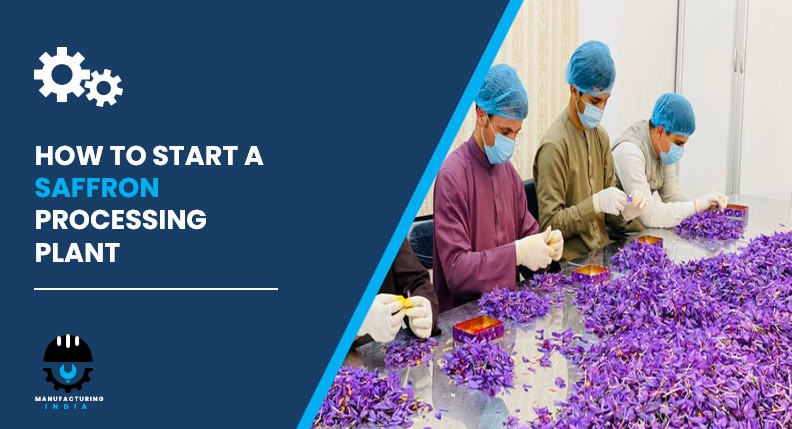
Starting a saffron processing plant can be a highly lucrative business venture given the premium value of saffron as the world’s most expensive spice. With growing demand in culinary, pharmaceutical, cosmetic, and textile industries, establishing a saffron processing facility presents significant profit potential. This comprehensive guide will walk you through every step of setting up your saffron processing business.
Market Overview
The global saffron market continues to expand due to increasing consumer awareness of its health benefits, culinary applications, and medicinal properties. Saffron is valued for its distinctive flavor, aroma, and color, making it essential in gourmet cooking, traditional medicines, natural dyes, and premium cosmetics. With proper quality control and strategic market positioning, a saffron processing plant can achieve substantial returns on investment.
Step 1: Conduct Market Research and Feasibility Study
Before investing in a saffron processing plant, comprehensive market research is crucial. Analyze global and regional demand for processed saffron across different grades and forms. Identify your target customer segments including spice exporters, pharmaceutical companies, cosmetic manufacturers, gourmet food retailers, and restaurants. Study your competitors to understand their processing methods, quality standards, pricing strategies, and market share. Evaluate the availability and cost of raw saffron in your region, considering that major saffron-producing areas include Iran, Kashmir, Spain, and Greece. Assess export opportunities and international quality certifications required for different markets.
Step 2: Develop a Comprehensive Business Plan
A detailed business plan serves as your strategic roadmap. Define your business objectives, processing capacity, and target market segments. Outline your value proposition, whether focusing on premium quality grades, organic certification, or competitive pricing. Include marketing and distribution strategies covering branding, packaging design, and channel partnerships. Develop financial projections including initial capital requirements, operating expenses, revenue forecasts, break-even analysis, and profitability timelines. Your business plan should address raw material procurement strategies, quality assurance protocols, regulatory compliance requirements, and risk mitigation measures including price volatility and supply chain management.
Step 3: Legal Registration and Licensing
Registering your business and obtaining necessary licenses is essential for legal operations. Choose an appropriate business structure such as proprietorship, partnership, limited liability company, or corporation. Register your business with relevant government authorities and obtain a business license. Apply for FSSAI license or equivalent food safety certification in your country, which is mandatory for food processing businesses. Register for GST or applicable tax identification numbers. Obtain trade licenses from local municipal authorities and environmental clearance certificates. If planning to export, obtain Import Export Code and necessary export licenses. Consider certifications like ISO 22000 for food safety management, organic certification if processing organic saffron, and GMP certification for pharmaceutical-grade products.
Step 4: Arrange Finance and Investment
Determine your total capital requirement including land acquisition or rental, building construction or renovation, processing machinery and equipment, raw material procurement, working capital, and marketing expenses. Explore various financing options such as bank loans with favorable terms for agricultural processing units, government subsidies and grants for spice processing industries, venture capital or private equity for larger operations, and self-financing through personal savings or family investment. Prepare a detailed project report with technical specifications, financial projections, and market analysis to present to financial institutions. Ensure adequate working capital to maintain operations during initial months when cash flow may be limited.
Request a Sample Report for In-Depth Market Insights: https://www.imarcgroup.com/saffron-processing-plant-project-report/requestsample
Step 5: Select Suitable Location and Infrastructure
Location selection significantly impacts operational efficiency and profitability. Choose a site with proximity to saffron cultivation areas to minimize transportation costs and ensure raw material freshness. Ensure availability of reliable power supply for climate-controlled storage and processing equipment. Access to clean water is essential for processing operations. The location should have good road connectivity for receiving raw materials and distributing finished products. Comply with industrial zoning regulations and environmental norms. Ensure adequate space for processing areas, climate-controlled storage facilities, quality control laboratory, packaging section, and administrative offices. Consider proximity to export hubs if targeting international markets. The facility should have proper security measures to protect valuable saffron inventory.
Step 6: Design Factory Layout and Construction
Plan your facility layout to optimize workflow and maintain product quality. Designate separate areas for raw material inspection and quarantine, processing and grading section with climate control, drying facilities if processing fresh saffron, quality control laboratory with testing equipment, packaging and labeling area with controlled humidity, finished goods warehouse with proper storage conditions, and administrative office space. The facility must comply with food safety regulations regarding hygienic processing environments. Install proper ventilation systems, temperature and humidity control, pest control measures, and fire safety equipment. Include adequate lighting for color grading operations. Design separate personnel and material flow paths to prevent cross-contamination. Ensure proper drainage systems and waste management facilities. Include space for worker amenities including changing rooms, restrooms, and break areas.
Step 7: Procure Machinery and Equipment
Essential machinery for saffron processing includes cleaning and sorting equipment to remove impurities and foreign matter, dehumidification systems or drying equipment if processing fresh saffron, grading tables or automated grading systems for sorting by quality parameters, moisture meters for quality control, color measurement instruments for standardization, metal detectors for food safety compliance, packaging machines for different package sizes, sealing equipment for airtight packaging, labeling machines for product information, and climate-controlled storage units. Additionally, procure quality testing equipment including spectrophotometers for color analysis, moisture analyzers, weighing scales with high precision, and laboratory equipment for chemical analysis. Choose equipment based on your processing capacity, automation level desired, and budget constraints. Invest in energy-efficient machinery to reduce operational costs.
Step 8: Establish Raw Material Supply Chain
Securing a reliable supply of quality saffron is critical for success. Establish direct relationships with saffron farmers or farmer cooperatives in major growing regions. Consider contracting with farmers for guaranteed supply at predetermined prices to manage cost volatility. Implement stringent quality parameters for raw material acceptance including moisture content, color strength, flavor profile, and freedom from adulteration. Since saffron harvest season is limited, plan for adequate procurement during harvest periods and proper storage throughout the year. Store raw saffron in airtight containers in cool, dark, and dry conditions to preserve quality. Consider multiple sourcing locations to ensure supply continuity. If processing imported saffron, establish relationships with international suppliers and understand import regulations and quality standards.
Step 9: Hire and Train Workforce
Recruit skilled personnel for various roles including plant manager with experience in spice processing, quality control officer with knowledge of saffron standards, experienced saffron graders who can identify quality parameters, machine operators for processing equipment, packaging staff trained in food handling, laboratory technicians for quality testing, warehouse supervisors for inventory management, and administrative staff for operations coordination. Provide comprehensive training on food safety and hygiene practices, saffron quality parameters and grading standards, equipment operation and maintenance, quality control procedures, proper storage and handling techniques, and regulatory compliance requirements. Since saffron processing requires specialized knowledge, invest in continuous skill development. Ensure all workers understand the value of saffron and importance of preventing contamination or adulteration.
Step 10: Implement Quality Grading and Processing Standards
Establishing rigorous quality standards is paramount in the saffron industry. Understand international grading systems including ISO 3632 standards which classify saffron based on crocin content, picrocrocin, and safranal levels. Common grades include Sargol or All Red, Pushal or Premium, and Bunch or Standard grade. Implement quality control procedures at every stage including raw material inspection upon receipt, cleaning to remove floral waste and impurities, moisture control to achieve optimal levels, color and aroma assessment, grading into different quality categories, and final product testing before packaging. Monitor critical parameters such as moisture content typically between 8-12%, color strength measured by crocin content, flavor profile determined by safranal, and bitterness from picrocrocin. Maintain detailed quality records and implement traceability systems from source to final product.
Step 11: Establish Quality Control Laboratory
Set up a dedicated quality control laboratory with necessary testing equipment and trained personnel. Essential tests include moisture content analysis to prevent spoilage, color strength measurement using spectrophotometry to determine crocin levels, sensory evaluation for aroma and flavor profile, microscopic examination to detect adulteration, and chemical analysis for key compounds including crocin, picrocrocin, and safranal. Test for contamination including pesticide residues, heavy metals, and microbial load. Implement regular calibration of testing equipment and participate in proficiency testing programs. Maintain comprehensive records of all test results and implement corrective actions for any deviations from standards. Consider third-party certification for credibility in export markets.
Step 12: Design Packaging and Branding
Packaging plays a crucial role in preserving saffron quality and attracting customers. Choose packaging materials that protect against light, moisture, and air exposure such as dark glass containers, aluminum foil pouches, or vacuum-sealed packages. Package sizes should cater to different market segments including small retail packs for consumers, bulk packages for food service, and industrial quantities for pharmaceutical or cosmetic manufacturers. Design premium packaging that reflects the luxury status of saffron. Labels must comply with food labeling regulations including grade designation, net weight, origin information, manufacturing and expiry dates, storage instructions, and nutritional information if required. Create a distinctive brand name and logo that conveys quality and authenticity. Consider incorporating traditional design elements if targeting markets that value heritage. Include tamper-evident sealing for consumer confidence. For export markets, ensure packaging and labeling meet destination country requirements.
Step 13: Set Up Distribution Network
Develop a comprehensive distribution strategy to reach your target markets. For domestic distribution, establish relationships with specialty spice retailers, gourmet food stores, high-end supermarkets, pharmaceutical distributors, and cosmetic manufacturers. Appoint regional distributors or agents in key markets. For export markets, identify importers and distributors in target countries including Middle East, Europe, and North America where saffron demand is strong. Participate in international food and spice trade exhibitions to establish contacts. Consider direct-to-consumer online sales through your website or e-commerce platforms. Ensure your distribution partners maintain proper storage conditions during transportation and warehousing. Provide training on saffron handling and storage requirements. Develop attractive margin structures and incentive programs for distribution partners. Implement a robust logistics system ensuring timely delivery while preserving product quality.
Step 14: Implement Marketing Strategies
Create awareness and demand through strategic marketing initiatives. Develop a strong brand identity emphasizing quality, purity, and authenticity. Utilize digital marketing including a professional website showcasing your product grades and certifications, social media campaigns highlighting saffron’s culinary uses and health benefits, and content marketing with recipes and usage guides. Engage in B2B marketing by participating in food industry trade shows, spice exhibitions, and pharmaceutical conferences. Build relationships with chefs, food bloggers, and influencers for product endorsements. Offer samples to potential bulk buyers including restaurants, hotels, and food manufacturers. Educate consumers about quality parameters and how to identify genuine saffron. Highlight your quality certifications, traceability systems, and sustainable sourcing practices. For export markets, comply with destination country advertising regulations and cultural preferences. Consider obtaining geographical indication or organic certifications as marketing advantages.
Profitability and Growth Potential
The saffron processing business offers excellent profit margins due to the premium value of the product. Success depends on maintaining consistent quality standards, building strong supplier relationships, and establishing credible brand presence in target markets. Focus on optimizing processing efficiency to minimize waste, implementing strict quality control to command premium pricing, and diversifying product offerings across different grades and package sizes. As your business grows, consider vertical integration by establishing direct farming contracts or developing value-added products like saffron extracts, saffron-infused oils, or standardized pharmaceutical ingredients. Export markets offer particularly attractive opportunities given the limited global supply and high international demand. Continuous innovation in processing technology, quality enhancement, and market development will drive sustainable long-term growth and profitability.
About the Author