Setting up a stainless steel pipe manufacturing plant in India presents a compelling investment case as global demand for high-performance piping solutions continues to surge across construction, oil and gas, chemical processing, power generation, and water infrastructure sectors. Driven by urbanization, industrialization, and energy infrastructure expansion, stainless steel pipes have become an indispensable component across both developed and emerging markets.
“With growing infrastructure investments, rising energy sector demand, and increasing adoption of corrosion-resistant piping, stainless steel pipe manufacturing offers gross margins of 15–25% and a strong long-term growth outlook across global markets.”
What is a Stainless Steel Pipe?
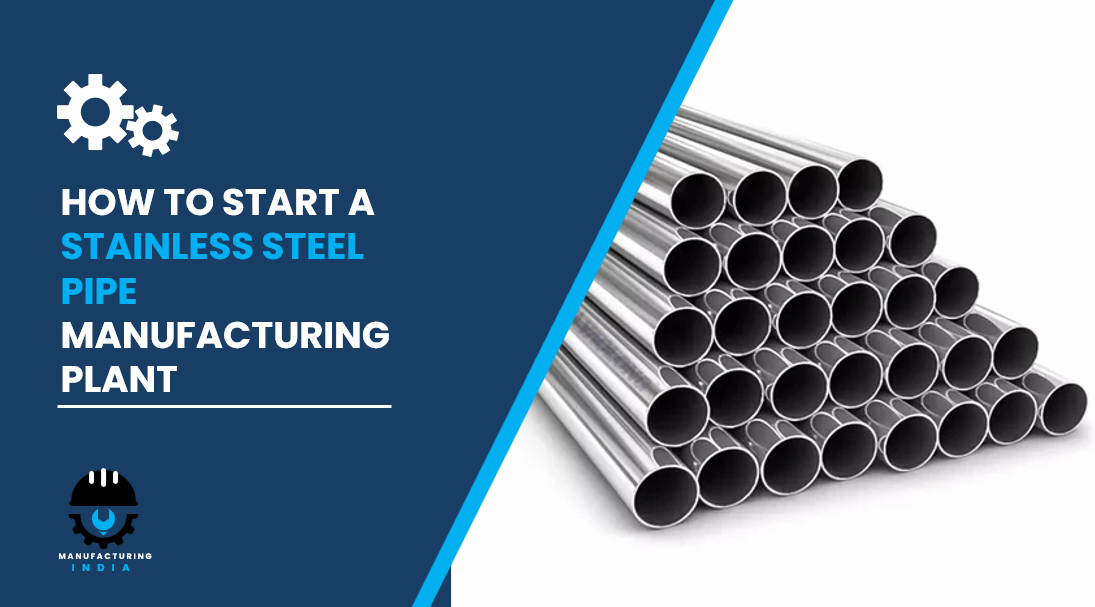
Stainless steel pipes are cylindrical hollow sections made from stainless steel alloys which contain chromium, nickel and additional elements. The materials display high tensile strength together with excellent resistance to corrosion and heat while maintaining their strength throughout extreme conditions. Stainless steel pipes serve three main functions which include transporting pressurized liquids and gases, providing structural support, and supporting essential industrial operations.
The manufacturing process uses seamless extrusion together with electric resistance welding (ERW) and cold or hot rolling methods to create products which maintain consistent wall thickness, accurate dimensions, and exceptional mechanical characteristics. The construction industry, oil and gas sector, water treatment plants, chemical processing facilities, and food and beverage industry widely use these pipes in their operations.
Cost of Setting Up a Stainless Steel Pipe Manufacturing Plant in India
The stainless steel pipe manufacturing plant in India depends on several parameters including production capacity, technology used, plant location, level of automation, and regulatory compliance. Here is a structured breakdown of all major cost components:
1. Capital Expenditure (CapEx)
The total capital investment in a stainless steel pipe manufacturing plant typically covers the following:
Land and Site Development
This includes land acquisition, boundary development, land registration charges, and basic site preparation. Cost varies significantly depending on whether the land is in an industrial estate, Special Economic Zone (SEZ), or a privately purchased plot. Proximity to raw material suppliers and industrial hubs is a key consideration.
Civil Works and Construction
Building costs cover the main manufacturing shed, utility area, raw material storage, quality control laboratory, administrative block, and worker amenities. Construction specifications depend on plant scale and local compliance norms.
Machinery and Equipment
This is the single largest component of CapEx. Key machinery required for a stainless steel pipe manufacturing plant includes:
- Welding Machines (ERW or TIG/MIG welding units)
- Rolling Mills
- Annealing Furnaces
- Cutting Machines
- Straighteners
- Finishing Tools and Polishing Equipment
- Hydraulic Testing Equipment
- Non-Destructive Testing (NDT) Systems
Machinery costs represent the largest share of overall capital expenditure, reflecting the high degree of precision engineering involved in stainless steel pipe production.
Other Capital Costs
These include pre-operative expenses, commissioning charges, import duties (if machinery is sourced internationally), utilities installation, fire safety systems, and Effluent Treatment Plant (ETP) setup.
2. Operational Expenditure (OpEx)
Once the plant is commissioned, the ongoing cost structure is dominated by a few key components:
- Raw Material Cost (Stainless Steel Coils/Plates): 80–85% of Total OpEx
Stainless steel coils and plates are the primary raw materials and account for the majority of operating expenses. Additional materials include welding wire, shielding gas, and finishing agents depending on the product grade and application.
- Utility Cost: 5–10% of Total OpEx
Utilities include electricity (heavily consumed by rolling mills, welding equipment, and annealing furnaces), water (used in cooling systems), and compressed air supply.
Other Operating Costs
The remaining budget covers transportation, secondary packaging, salaries and wages, maintenance, depreciation, taxes, and miscellaneous overhead.
3. Plant Capacity
The proposed manufacturing facility is designed with an annual production capacity ranging between 10,000 to 50,000 MT. This range allows the plant to achieve economies of scale while maintaining flexibility to serve multiple end-use segments including construction, oil and gas, chemical processing, and water infrastructure.
Smaller pilot setups with limited automation may start at a lower capacity, but profitability significantly improves with higher capacity utilization.
4. Profit Margins and Financial Projections
- Gross Profit Margin: 15–25%
- Net Profit Margin: 8–15%
Financial projections must account for capital investment, operating costs, capacity utilization rates, pricing trends, and demand outlook. A thorough analysis should also include sensitivity analysis, Net Present Value (NPV), Internal Rate of Return (IRR), and Payback Period.
Request a Sample Report for In-Depth Market Insights: https://www.imarcgroup.com/stainless-steel-pipe-manufacturing-plant-project-report/requestsample
Why Set Up a Stainless Steel Pipe Manufacturing Plant?
The global landscape presents a uniquely favorable environment for establishing a stainless steel pipe manufacturing plant:
High Demand Across Key Industries
Stainless steel pipes serve as vital components for infrastructure, energy, and industrial projects due to their strength, corrosion resistance, and dependable performance. The construction, oil and gas, and chemical processing sectors continue to generate consistent demand worldwide.
Moderate Entry Barriers
Industrial clients provide manufacturers with stable revenue streams through long-term contracts, which require both capital investment and quality standards compliance. Experienced manufacturers benefit from established relationships and recurring orders.
Megatrend Alignment
Demand grows as urban areas expand, industries develop, energy infrastructure systems grow, and oil and gas pipelines are built. The market expansion process receives additional backing through rising use of renewable energy sources and development of water treatment facilities.
Policy and Infrastructure Push
Government construction projects together with energy infrastructure development and water infrastructure development programs create higher demand for stainless steel pipes. Policy incentives for domestic manufacturing further support industry growth.
Localization and Supply Chain Reliability
Factories that establish operations close to industrial hubs and raw material destinations benefit from reduced costs, stable supply chains, and competitive market pricing. This positions domestic manufacturers advantageously against imports.
Manufacturing Process Overview
The stainless steel pipe manufacturing process primarily uses the following technologies:
- Seamless Extrusion — used to produce seamless pipes from solid billets through extrusion or piercing
- Electric Resistance Welding (ERW) — used to form welded pipes by rolling steel strips and welding the seam
- Cold or Hot Rolling — used to achieve precise wall thickness and dimensional accuracy
The complete process flow involves raw material sourcing and inspection, forming and welding (or extrusion), annealing and heat treatment, sizing and straightening, surface finishing and polishing, quality inspection and testing (including hydrostatic and NDT tests), and final packaging for dispatch.
Key Applications of Stainless Steel Pipes
Stainless steel pipes manufactured serve a wide variety of end-use industries:
- Construction: Used in scaffolding, plumbing systems, and structural frameworks
- Oil and Gas: Utilized in pipelines for crude oil, natural gas, and petrochemical transport
- Chemical Processing: Used for transport of corrosive liquids, acids, and industrial chemicals
- Power Generation: Applied in heat exchangers, condensers, and high-pressure steam lines
- Water Infrastructure: Used in water supply systems, desalination plants, and sewage treatment
- Food and Beverage: Used in hygienic piping systems for food processing and dairy applications
Global Market Outlook
The global stainless steel pipe market was valued at USD 2.40 Billion in 2025 and is projected to reach USD 5.17 Billion by 2034, growing at a CAGR of 8.9% from 2026 to 2034. This sustained growth is driven by urbanization, increasing infrastructure investment, energy sector expansion, and rising demand for corrosion-resistant piping in industrial applications.
Leading global players in this industry include:
- APEX TUBES Private Limited
- AB Steel
- Baosteel
- Centravis
- Nippon Steel Corporation
- Continental Steel & Tube Company
- Thyssenkrupp
Timeline to Start a Stainless Steel Pipe Plant
Setting up a stainless steel pipe manufacturing plant from ideation to commissioning typically requires 12 to 18 months. This covers:
- Feasibility study and project report preparation
- Land acquisition and site development
- Regulatory approvals and environmental clearances
- Factory license and fire safety compliance
- Machinery procurement and installation
- Trial production and quality testing
- Commercial production launch
Licenses and Regulatory Requirements
Starting a stainless steel pipe manufacturing unit requires several approvals, including:
- Business registration (Proprietorship, LLP, or Private Limited Company)
- Factory License under the Factories Act
- Environmental Clearance from the State Pollution Control Board
- GST Registration
- Fire Safety NOC
- BIS Certification (for specific industrial and pressure piping applications)
- ISO 9001 Quality Management System Certification
- Industry-specific certifications (e.g., ASTM, API standards for oil and gas applications)
Key Challenges to Consider
Before investing, entrepreneurs should be aware of the common challenges in this business:
- High Capital Requirements: Initial CapEx for machinery and infrastructure is significant, especially for mid to large-scale plants with advanced automation.
- Raw Material Price Volatility: Stainless steel coil and plate prices are linked to nickel and chromium commodity markets and can fluctuate, directly impacting margins.
- Regulatory Compliance: Meeting industrial, pressure piping, and environmental standards requires continuous investment in quality systems.
- Competition: The market has both organized large players and regional manufacturers, requiring a clear differentiation strategy on quality and grade specialization.
- Skilled Manpower: Operating welding, rolling, and annealing equipment requires trained technical staff and metallurgical expertise.
Frequently Asked Questions
The following questions are answered in the report:
- How much does it cost to set up a stainless steel pipe manufacturing plant in India?
- Is stainless steel pipe manufacturing profitable in India?
- What machinery is required for a stainless steel pipe plant in India?
- What licences and approvals are required to start a stainless steel pipe plant in India?
- How long does it take to commission a stainless steel pipe manufacturing plant in India?
- What is the best location to set up a stainless steel pipe plant in India?
- What government incentives are available for stainless steel pipe manufacturers in India?
- What is the break-even period for a stainless steel pipe plant in India?
- What are the key certifications required for stainless steel pipe manufacturing in India?
- What are the raw material requirements for setting up a stainless steel pipe plant in India?
Key Takeaways for Investors
The stainless steel pipe manufacturing industry represents a strong and scalable investment opportunity backed by growing global infrastructure demand and robust industrial consumption. With gross margins of 15–25% and a healthy net profit range of 8–15%, a well-planned stainless steel pipe manufacturing plant remains competitive and financially viable across plant capacities. The combination of high demand from construction, oil and gas, and chemical processing sectors, along with favorable policy environments for industrial manufacturing, makes this a compelling greenfield investment opportunity for strategic investors.
About the Author